Culture / Brief
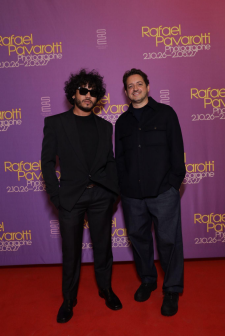
Rafael Pavarotti brings his colour to Paris
The photographer from Pará moves from fashion pages to the Musée des Arts Décoratifs, with a visual language shaped in northern Brazil.

THE CURATED GLOBE.
Reportage / São Paulo
Between Paraguay and Brazil, a painter turns family photographs, empty interiors and lace into a language of memory.
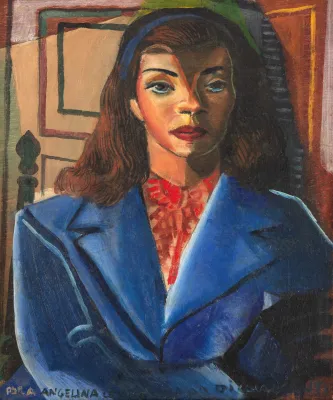
Lilian Camelli paints houses that seem to remember their occupants. A door opens onto another door. A chair is pushed towards the edge of a room. Laundry hangs without anyone attending to it. These are domestic scenes, but their subject is less the home itself than what remains when people leave it.
Born in Ypacaraí, Paraguay, in 1958, Camelli has lived in São Paulo since 1983. She began painting around 2011. One of her first subjects was her grandmother, working from a photograph. Other ancestors followed, turning a family album into a painted record. The interiors belong to the same investigation: how much of a life can an object, a colour or a threshold hold?
In El labirinto II (2024), one doorway leads to the next. The perspective is deliberately flattened. The floor appears to rise, shadows are reduced, and furniture is cropped by the threshold. Nothing quite settles into the expected position. The architecture guides the eye, then makes it hesitate.
Camelli’s colours carry the wear of inhabited space: faded pink, sea-green frames, petrol-blue tiles, dining-room red and the off-white of linen. In places, the weave of the canvas remains visible beneath the paint. The support becomes part of the image, like fabric that has been handled over many years.
Her titles often name ordinary things in Spanish: La silla del fondo, El mueble verde, La cortina III, Papel de pared, El cuarto de María. The specificity matters. A room is not an interchangeable interior. It belongs to someone, even when that person cannot be seen.
Curator Danilo Garcia reads this intimacy as fragmentary and partly inaccessible. The viewer supplies what is missing. The space beyond the frame carries as much weight as the painted scene.
In El vestidito colgado (2025), three small white dresses stand against a night-blue ground. The children are absent. Their clothing gives the picture a human scale without resolving its story.
The numbered Fragmentos, small works measuring 24 by 18 centimetres, develop this method through repetition. The series has grown to more than 170 paintings. In Fragmento 165 (2025), a sea-green wall, paving and a brown form suggest a scene from which someone has just departed. In Fragmento 87 (2025), suspended toy horses suggest a carousel or a mobile, placing childhood inside a compact field of colour.
Writing about Camelli in 2018, curator Vera Novis described that repeated return as a declaration of purpose: “Obsessive repetition in Lilian is the affirmation of her search.”
Paraguay remains present through ñandutí, the lace whose Guaraní name means spider’s web. Its radial patterns, passed between generations of women, enter Camelli’s work through drawing, cut and overlaid lace, and experiments with silverpoint and watercolour. A craft associated with the domestic sphere becomes a way of thinking about structure, transmission and time.
Her path has crossed the first and second Asunción Biennials, in 2015 and 2017, the Sesc Arts Biennial, and exhibitions in Paraguay, Brazil and Spain. Encruzilhada, at Galeria Pilar in 2023, was her first exhibition devoted to abstraction. Soledades followed at the Centro Cultural Manzana de la Rivera in Asunción in 2024.
Seen together, the paintings build a house no single canvas contains. Objects recur. Doors lead onwards. Rooms begin to answer one another. Camelli leaves the viewer with something more demanding than a recognisable interior: the task of inhabiting a memory that is not entirely their own.
Gabriel Silveirado, for WAYFARER.
From the WAYFARER Brazil archive. Originally published 2026-10-05; adapted and edited for the English edition on 6 October 2026. Read the original in Portuguese.
CONTINUE READING
Culture / Brief
The photographer from Pará moves from fashion pages to the Musée des Arts Décoratifs, with a visual language shaped in northern Brazil.
Culture / Reportage
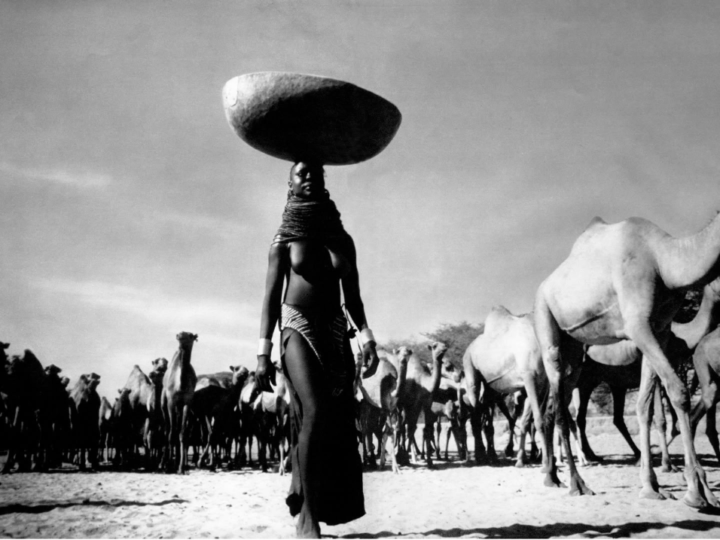
A 2026 exhibition at Galeria Mario Cohen placed Amazônia and Vanishing Africa in a dialogue about portraiture and territory.
Culture / Reportage
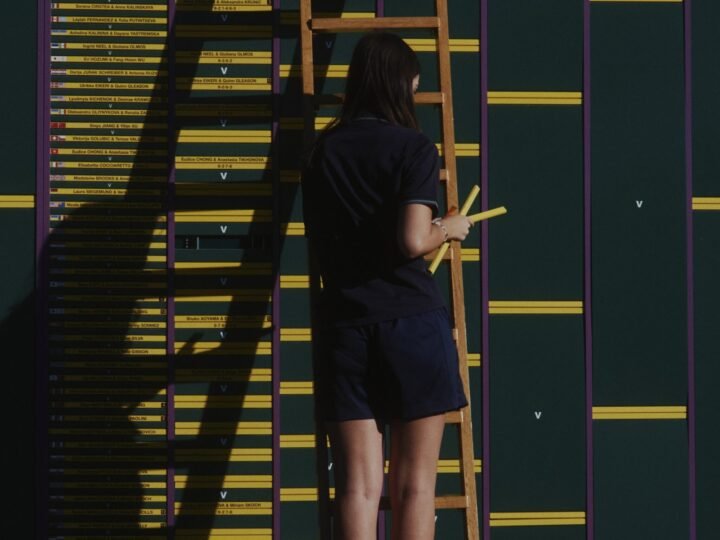
A photographic account looked away from the score towards repetition, colour and the rituals surrounding the courts.