Dining / Reportage
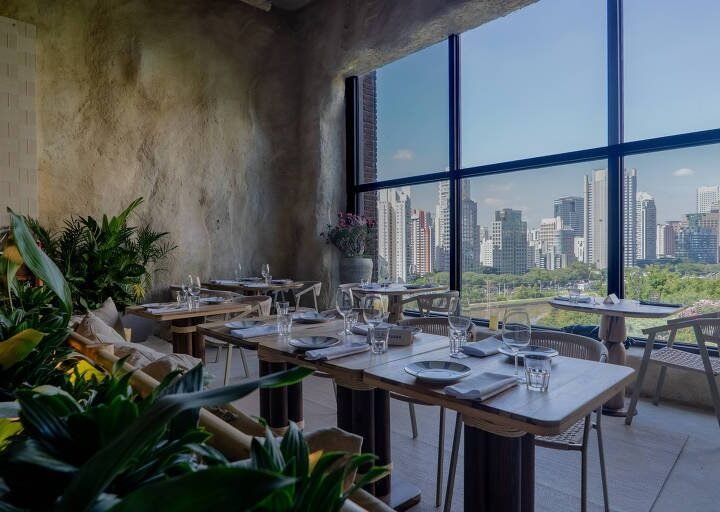
Vila Medí: three kitchens, one São Paulo dining room
An integrated restaurant space at Cidade Jardim lets a meal move between Italian, Greek and oyster-bar menus.

THE CURATED GLOBE.
Interview / Rio de Janeiro
At Oteque, the chef places growers, the working rhythm of his team and the needs of the guest at the centre of the table.
For Alberto Landgraf, a Brazilian kitchen is defined by the people behind it as much as by the ingredients on the plate. At Oteque in Rio de Janeiro, that conviction reaches beyond the menu to the restaurant’s suppliers, the pace of work and the way a guest is received.
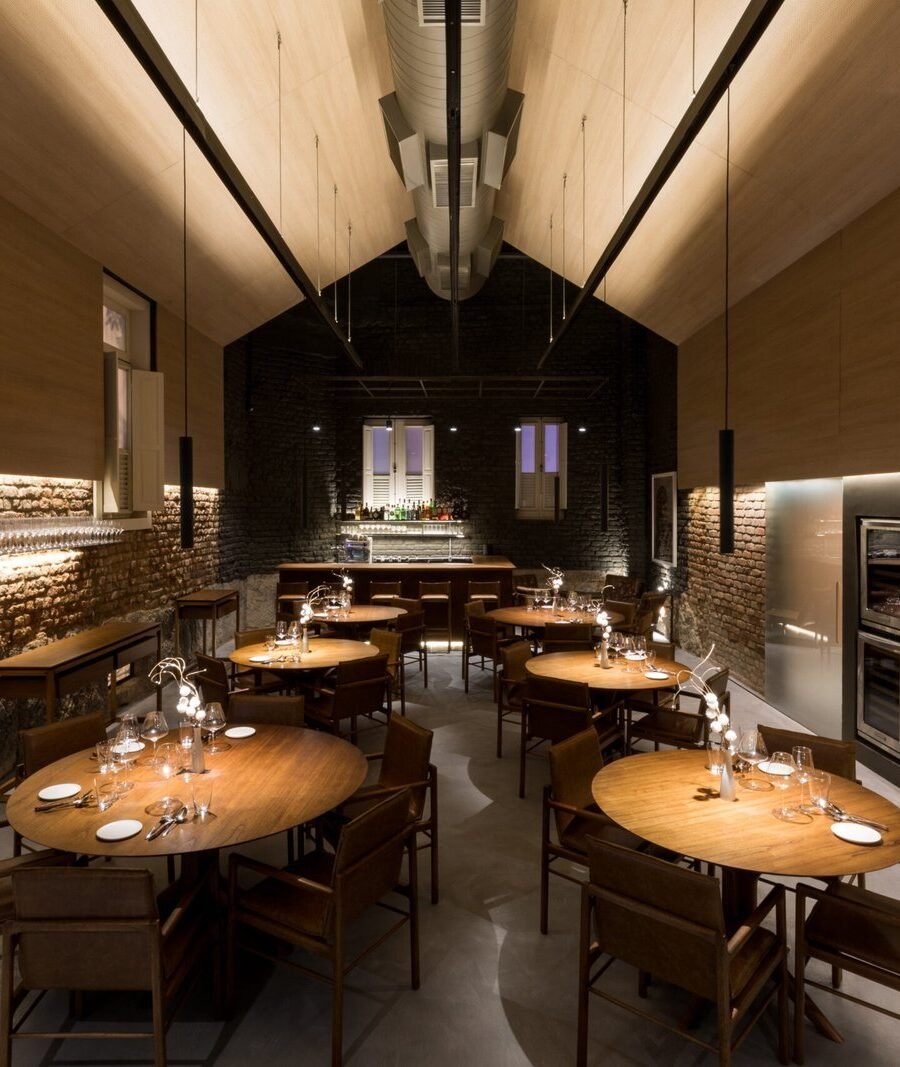
The setting is restrained: a discreet house, an open kitchen and relatively few tables. Its purpose is not to stage a lesson in the chef’s ideas. It is to make room for the people who have come to dinner.
“Oteque was born out of two major turning points in my life,” Landgraf told WAYFARER in April 2025. After closing his previous restaurant in 2015, he spent a sabbatical year in Japan. Precision, restraint and respect became central to his thinking. The pandemic prompted another reassessment, this time of what a restaurant should value. Awards were no longer the main point. Looking after others was.
“Everything there reflects me. From the team’s clothes to the flow of service, including the soundtrack. Our audience is young, so the music is light and casual too. We don’t want to teach anything, just create a space where each person can have their own evening.”
That approach requires decisions about scale. Landgraf calls one of them a “policy of scarcity”. Rarity is not simply a way to raise the perceived value of dinner. It also protects a working rhythm.
“When you offer something rare, you change the perception of value and, in our case, that also allows for a more sustainable, happier pace of work.”
Landgraf resists reducing Brazilian identity to a short list of recognisable products. Tucupi and Brazil nuts are part of the country, but so is a carrot grown by a family in Brejal, in the mountains of Rio de Janeiro state.
“Valuing the ingredient means valuing the person who grows it. Our suppliers are all on the restaurant’s website, from the duck producer to the technician who cleans the air conditioning. Showing those names is also a way of showing the country.”
The point is both practical and philosophical. The restaurant is a network of labour, not the achievement of one name above the door. Making that network visible broadens the account of what contemporary Brazilian cooking can be.
The wine programme, curated by sommelier Leonardo Silveira, follows a similarly exacting approach to selection. The Brazilian report described bottles that were difficult to find even through international auctions. Their rarity was not the criterion in itself. Quality was.
“Valuing people is just as important as valuing an ingredient,” Landgraf said. It is a simple statement with consequences for both sides of the kitchen.
A proposal, a business meeting and a dinner between friends may occupy the same table on different evenings. They do not require the same kind of service. “Our role is to listen and adapt,” he explained. “The experience is not about what we want to impose, but about what each person comes looking for.”
Precision, in this account, is not an end in itself. It is a way of noticing what the evening needs, and of delivering it with generosity.
From the WAYFARER Brazil archive. Originally published 2025-04-29; adapted and edited for the English edition on 6 October 2026. Read the original in Portuguese.
CONTINUE READING
Dining / Reportage
An integrated restaurant space at Cidade Jardim lets a meal move between Italian, Greek and oyster-bar menus.
Dining / Reportage
In São Paulo, Helena Rizzo and Willem Vandeven place technique at the service of ingredients, memory and a recognisable point of view.

Dining / Reportage
A burger-and-milkshake institution gave its dessert counter a more deliberate identity when it began making gelato in 2016.