Culture / Reportage
Lilian Camelli: the rooms we carry with us
Between Paraguay and Brazil, a painter turns family photographs, empty interiors and lace into a language of memory.

THE CURATED GLOBE.
Reportage / São Paulo
The museum's 2025 exhibition connected rivers, industrial haze and the constructed garden at Giverny.
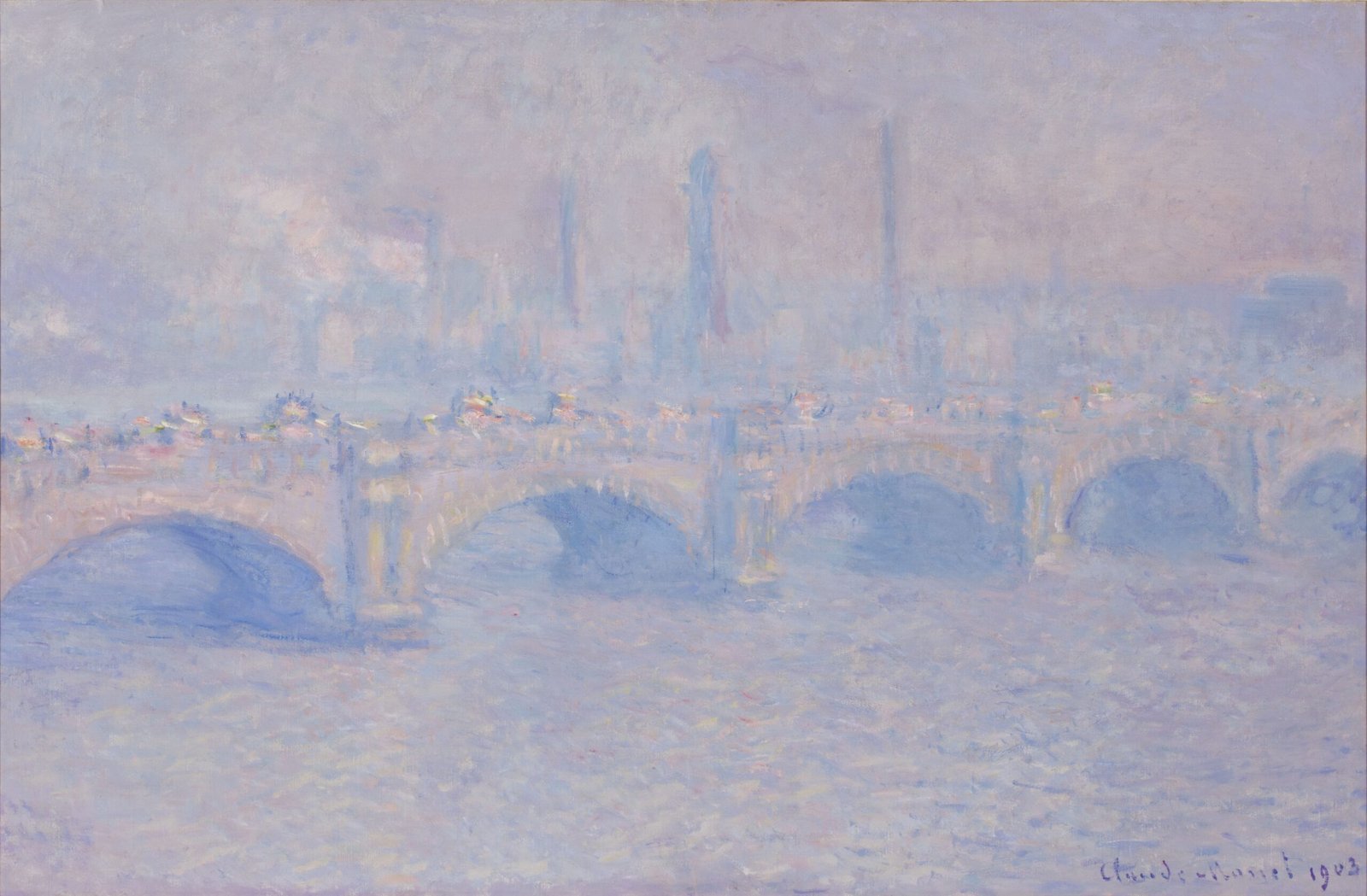
A landscape painting can record more than a view. The Ecology of Monet, presented at MASP from 16 May to 24 August 2025, considered the painter’s relationship with environments that were changing, cultivated or shaped by industry. WAYFARER Brazil’s preview described a show organised around that tension.
Curated by Adriano Pedrosa and Fernando Oliva, with assistance from Isabela Ferreira Loures, the exhibition brought together 32 works. Its thematic structure moved through different aspects of Monet’s practice rather than treating ecology as an added label to a familiar retrospective.
The Seine supplied one thread, both as a river landscape and as an environment altered by human activity. Boats made water a changing pictorial surface. In another section, London’s bridges, haze and smoke brought industrial atmosphere into the same discussion of light and perception.
Giverny complicated any simple distinction between natural and artificial. Monet’s garden was a place to observe plants and water, but it was also a space he had deliberately organised. The Japanese bridges and water lilies therefore carried the exhibition’s central question into a setting often approached only as a beautiful retreat.
The show belonged to MASP’s wider 2025 cycle on histories of ecology. Its lasting proposal was not to recast Monet as the author of a contemporary policy position. It was to look closely at the coexistence of admiration and intervention in his landscapes, and at what those paintings disclose about the environments they depict.
Adapted from the WAYFARER Brazil archive, first published 2025-05-09. English adaptation: 6 October 2026. This is an archival account, not a report of a new visit. Exhibitions, collections and menu details are described in their original context, not as current availability.
CONTINUE READING
Culture / Reportage
Between Paraguay and Brazil, a painter turns family photographs, empty interiors and lace into a language of memory.
Culture / Brief
The photographer from Pará moves from fashion pages to the Musée des Arts Décoratifs, with a visual language shaped in northern Brazil.
Culture / Reportage
A 2026 exhibition at Galeria Mario Cohen placed Amazônia and Vanishing Africa in a dialogue about portraiture and territory.