Style / Reportage
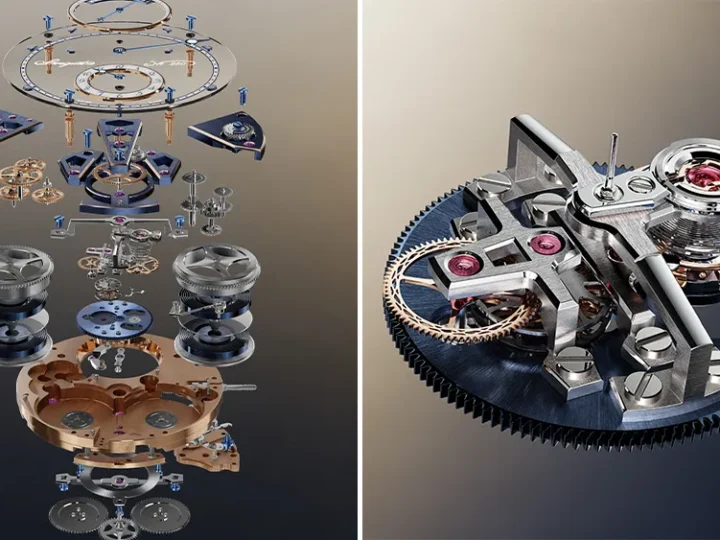
Breguet Expérimentale 1: precision as a design argument
A magnetic escapement and a 10 Hz tourbillon bring the manufacture’s research into the visible architecture of a watch.

THE CURATED EDITION.
Reportage /
The Roman house’s lasting argument lies in the relationship between a recognisable form and the hands that keep changing it.

Fendi’s centenary belonged to 2025. The more interesting question now is what an anniversary leaves behind once the runway presentation has become an archive. For this Roman house, the answer is not a single commemorative object. It is a working relationship between family history, a recognisable design language and the craft techniques that prevent that language from becoming fixed.
Adele and Edoardo Fendi founded the house in Rome in 1925, beginning with leather goods and a fur workshop. Their five daughters later brought Karl Lagerfeld into the business in 1965. The collaboration lasted 54 years, according to LVMH’s account of the house. Silvia Venturini Fendi joined him in artistic direction in 1992 and took responsibility for accessories in 1994.
Those dates describe continuity, but they also describe changes in authorship. A family workshop became a house capable of absorbing an external designer without losing its identity. The archive is therefore more useful as evidence of negotiation than as proof that every generation worked in the same way.
Silvia’s Baguette appeared in 1997; the Peekaboo followed in 2008. Their endurance presents two different propositions. The Baguette uses a compact, immediately identifiable shape as a surface for variation. The Peekaboo makes structure and the relationship between outer and inner surfaces part of its identity.
A recognisable bag can become repetitive if recognition is the only objective. It can also function like a recurring format in print or architecture: a stable set of proportions against which changes in material become easier to see. That is the more persuasive way to read the Baguette’s many iterations, beyond the language of icons and anniversaries.
Fendi’s 2020 announcement of hand in hand made that material argument unusually specific. The project invited workshops across Italy to reinterpret the Baguette using local techniques. Its descriptions include Peroni’s moulded leather in Florence, Su Marmuri’s weaving in Sardinia and Luigi Bevilacqua’s handwoven textiles in Venice.
The Florence example was formed from a single piece of leather without stitching or a lining. In Sardinia, the pibiones weaving technique gave the bag a raised textile surface. These are not interchangeable versions of the word “handmade”. Each technique brings different limits, rhythms and structural possibilities to the same design.
The original project also identified participating workshops inside the bags. That is a consequential detail: craft becomes easier to discuss seriously when the maker has a name and location. Without that specificity, the language of heritage can hide as much as it reveals.
The test of a fashion archive is not whether it can supply another familiar photograph. It is whether it can inform a new decision about form, construction or use. Fendi’s strongest historical examples offer precisely that possibility. Rome supplies the point of origin; the workshops supply evidence of how an identity travels without becoming generic.
Follow: @fendi.
CONTINUE READING
Style / Reportage
A magnetic escapement and a 10 Hz tourbillon bring the manufacture’s research into the visible architecture of a watch.

Style / Reportage
At the intersection of sport, craft and sponsorship, the case does more than carry the prize: it frames the moment before the presentation.

Style / Reportage
A new 1,083cc V-twin and titanium chassis give the Aston Martin and Brough Superior collaboration a different brief from its track-only predecessors.