Bentley Supersports: two seats and a return to rear-wheel drive
Two seats, rear-wheel drive, no hybrid and nearly half a tonne less than a Continental GT: Bentley revives the Supersports name for 500 numbered cars, with deliveries from early 2027.
WAYFARER Edition | Images: courtesy of Bentley Motors
MOTORING
Luxury is usually measured by what is added. The new Supersports is measured by what Bentley took away.
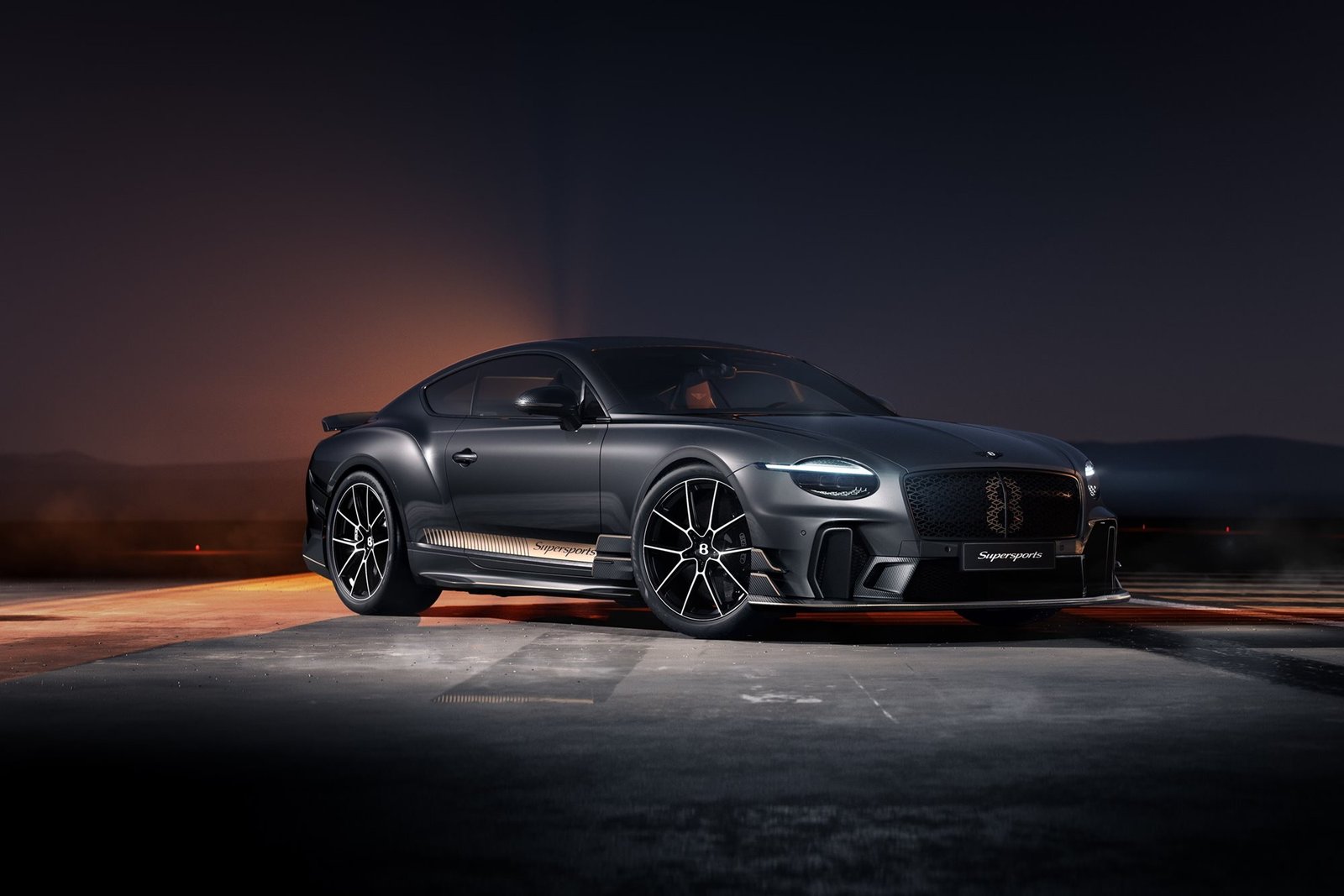
Two seats instead of four. Drive to the rear wheels only. No hybrid system, no rear cabin, no driver assistance systems, a carbon-fibre roof where the aluminium used to be. Limited to 500 numbered cars, it revives a name first worn in 1925 by the 3 Litre Super Sports, the first Bentley able to pass 100 mph. A century later the brief is the same, written in a different alphabet.
THE SUPERSPORTS: TWO SEATS, REAR-WHEEL DRIVE, 500 NUMBERED CARS. IMAGE: COURTESY OF BENTLEY MOTORS
Engine: a V8 without a battery
The last Supersports, in 2017, carried the W12. The new one uses a reworked 4.0-litre twin-turbo V8 with a stronger crankcase, uprated cylinder heads and larger turbochargers, and no electric assistance at all. It produces 666 PS and 800 Nm, sent through a redeveloped eight-speed dual-clutch gearbox and an electronic limited-slip differential to the rear axle alone. A full-length titanium Akrapovič exhaust is standard.
At a moment when the Continental range has moved to plug-in hybrid power, this is a deliberate step sideways: a pure combustion car built for the driver who wants one.
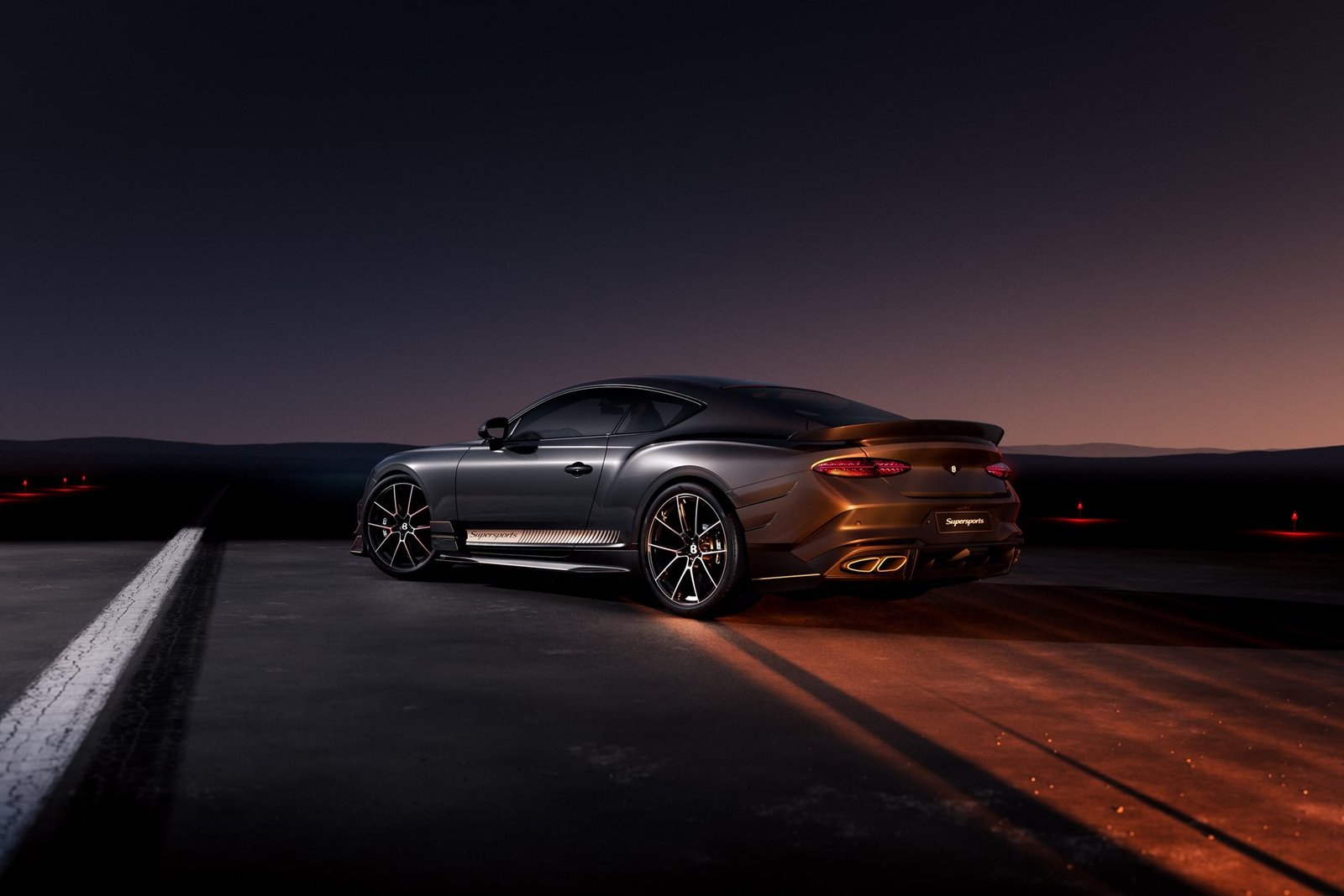
A REAR TRACK 16 MM WIDER THAN THE CONTINENTAL GT. IMAGE: COURTESY OF BENTLEY MOTORS
Weight: the art of subtraction
Bentley says the car is nearly half a tonne lighter than a Continental GT and under 2,000 kg. The savings come from everywhere: the carbon roof, which also lowers the centre of gravity, carbon exterior parts, the deleted rear cabin, reduced sound insulation, front-only audio. The weight distribution is 54:46 at rest and moves rearward with speed.
The new Supersports is more than just the most driver-focused Bentley yet.
Frank-Steffen Walliser, Chairman and CEO, Bentley Motors
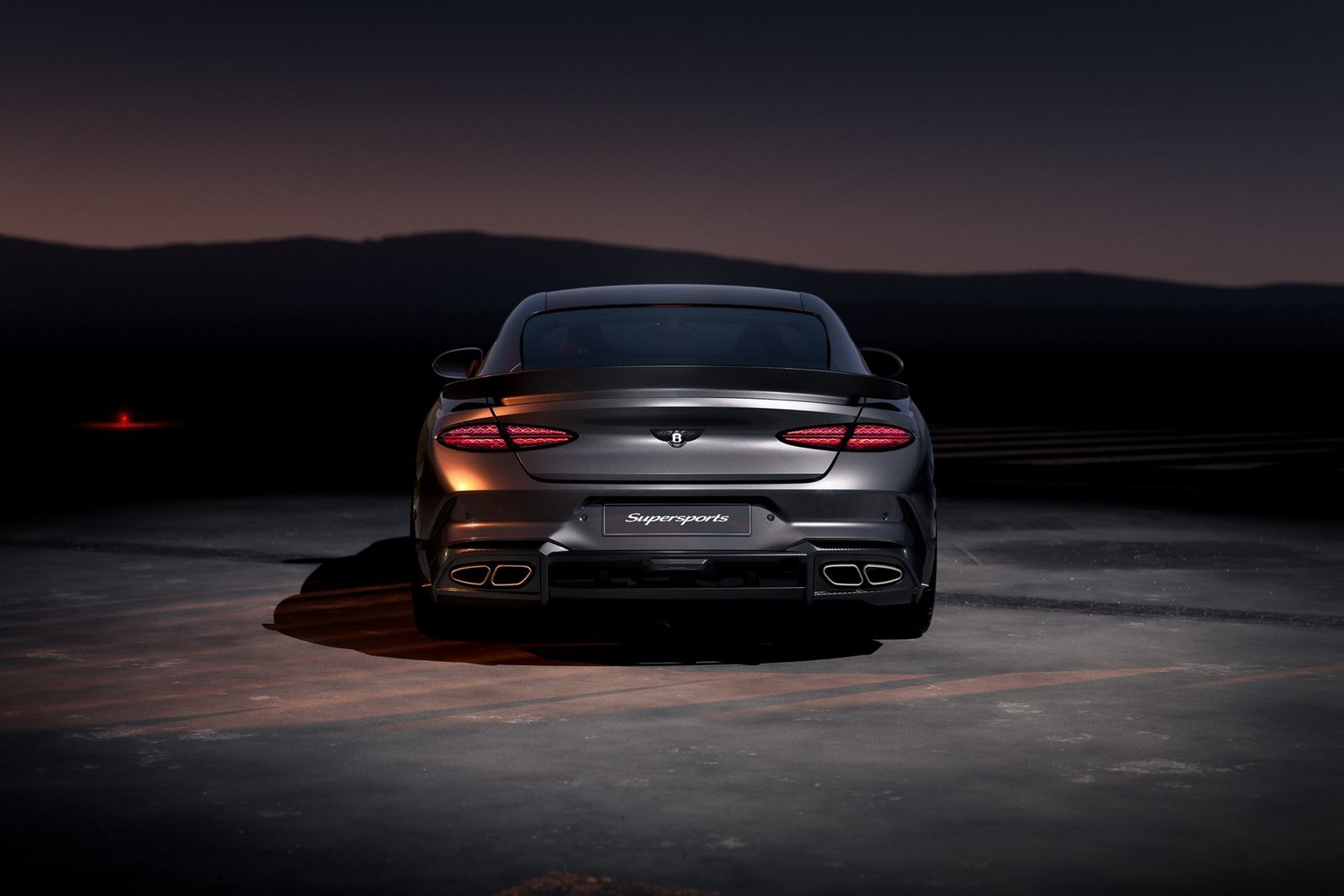
THE TAIL OF THE SUPERSPORTS. IMAGE: COURTESY OF BENTLEY MOTORS
Chassis: grip as a discipline
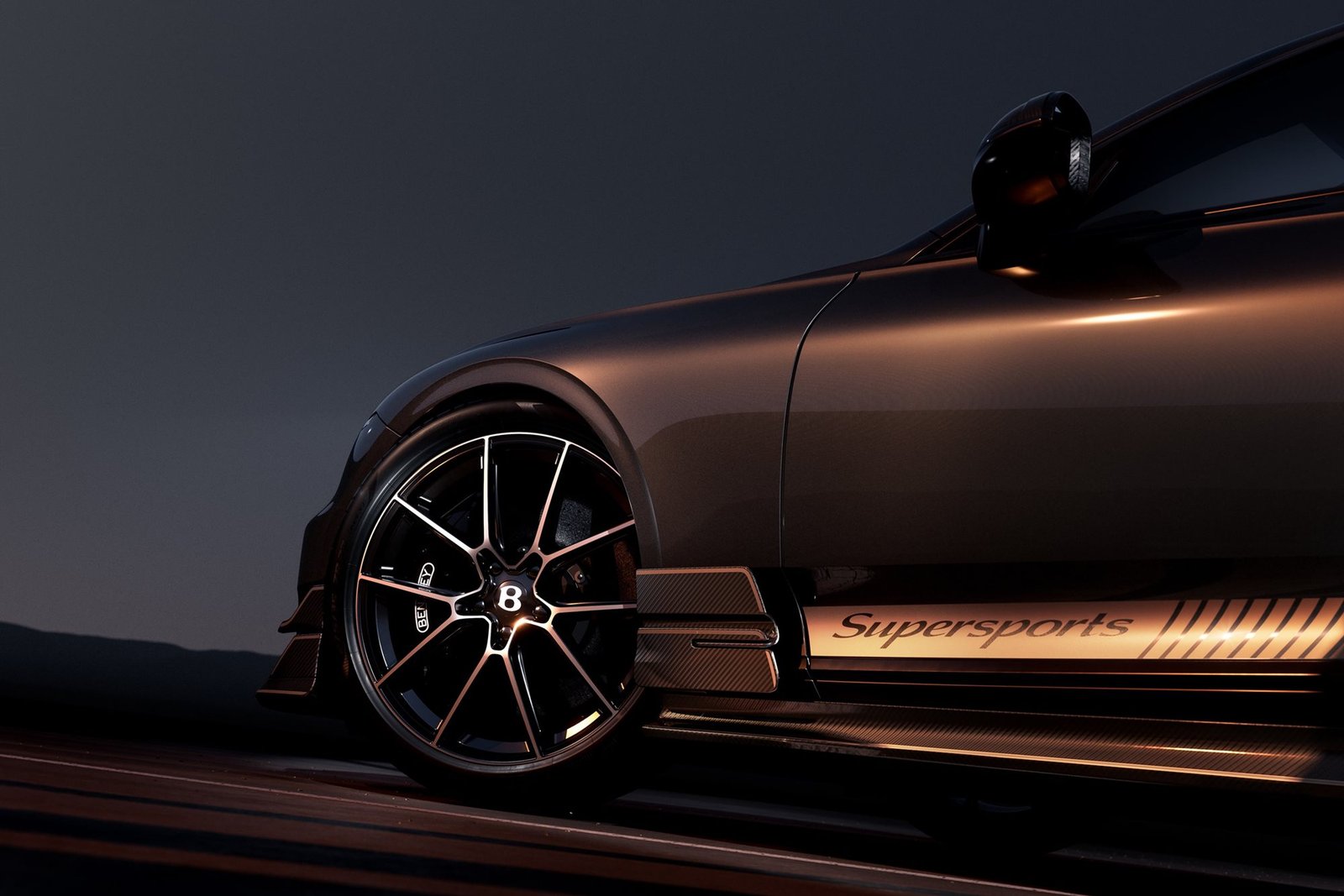
Carbon-silicon-carbide brakes are standard, with 440 mm discs and ten-piston callipers at the front and 410 mm discs at the rear. The 22-inch forged wheels were developed with Manthey Racing, and Pirelli Trofeo RS tyres are optional. Air springs, new twin-chamber dampers, rear-wheel steering and the 48-volt Bentley Dynamic Ride system remain. Bentley quotes more than 300 kg of additional downforce over a Continental GT Speed and, on the Trofeo tyres, cornering roughly 30 per cent quicker.
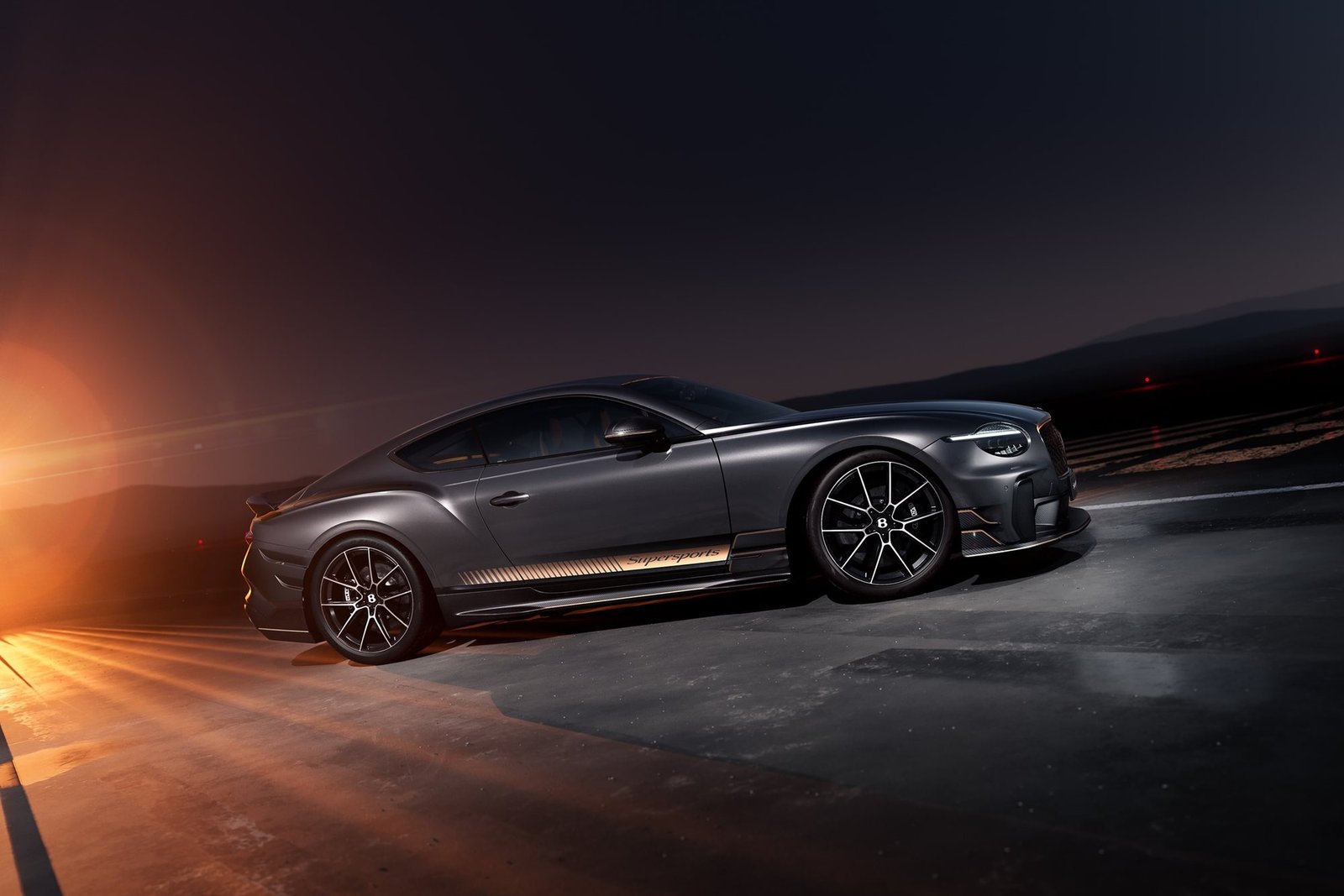
22-INCH FORGED WHEELS DEVELOPED WITH MANTHEY RACING. IMAGE: COURTESY OF BENTLEY MOTORS
Calendar: from Crewe, in 2027
Orders opened in March 2026. Production in Crewe is scheduled to begin in the fourth quarter of 2026, with first deliveries in early 2027. Each of the 500 cars is individually numbered.
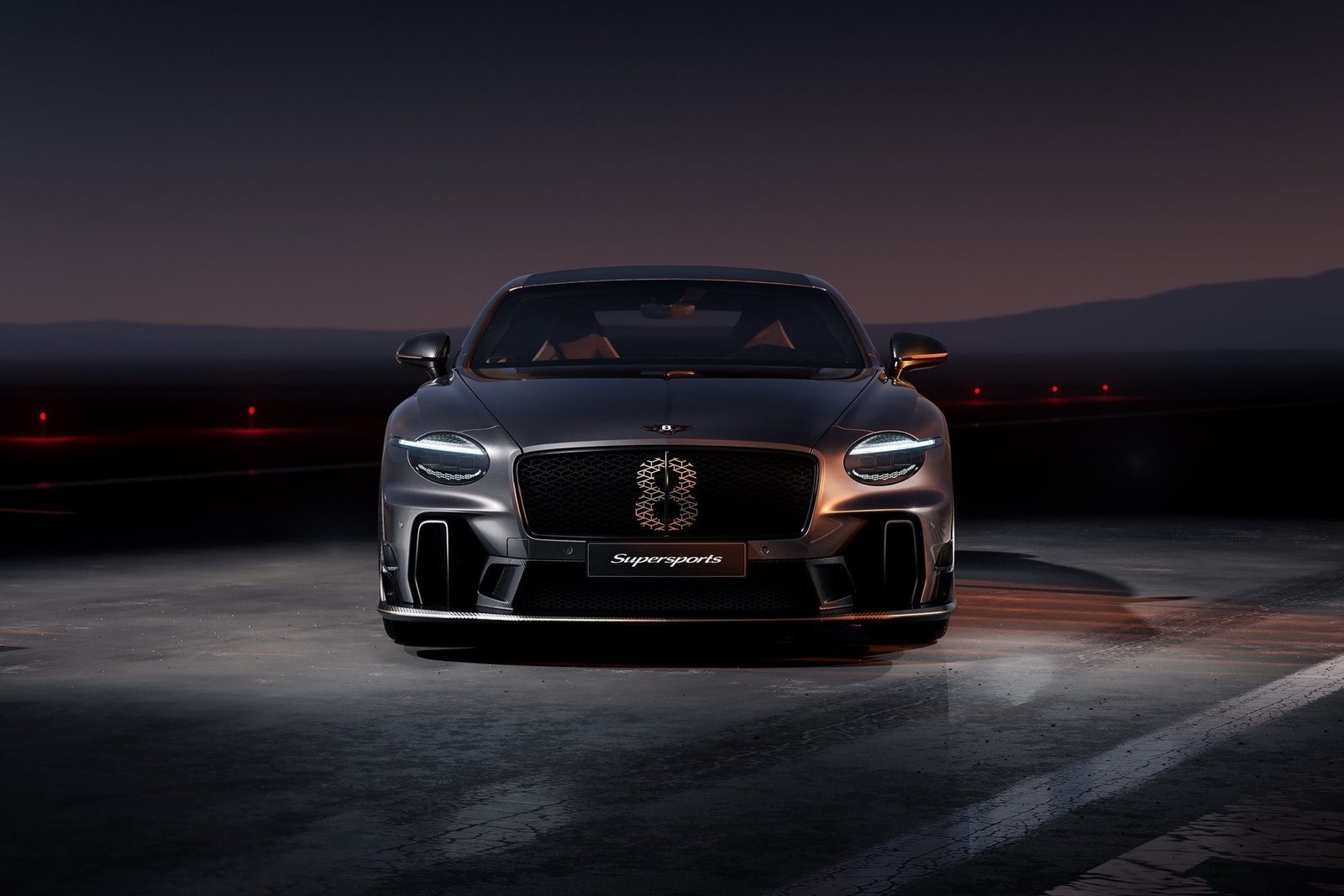
THE FACE OF THE SUPERSPORTS. IMAGE: COURTESY OF BENTLEY MOTORS
Luxury is usually measured by what is added. In the Supersports, Bentley has measured it by absence: of seats, of weight, of batteries, of anything that stands between the driver and the rear wheels. It is the most expensive kind of restraint, and the most persuasive.
The manual gearbox has gone from rule to rarity. In late 2026, BMW M, Porsche, Nissan and Lotus still build cars that let the driver choose the gear, while the Toyota GR Supra and BMW Z4 have already taken their last bow.
A Mercedes-Benz built in two examples still sits alone at USD 143 million. Below it, 2026 has rearranged the table: a Shelby Cobra Daytona Coupe, a white Ferrari 250 GTO, a McLaren F1 GTR and Ferrari's first electric car have all entered the ranks of the most valuable cars ever sold.
What began in March as a careful hint from Michael Leiters became, in October, a concept on a pier in Queens: the mid-engined Mission S previews a permanent Porsche model line above the 911, the first since the 918 Spyder.