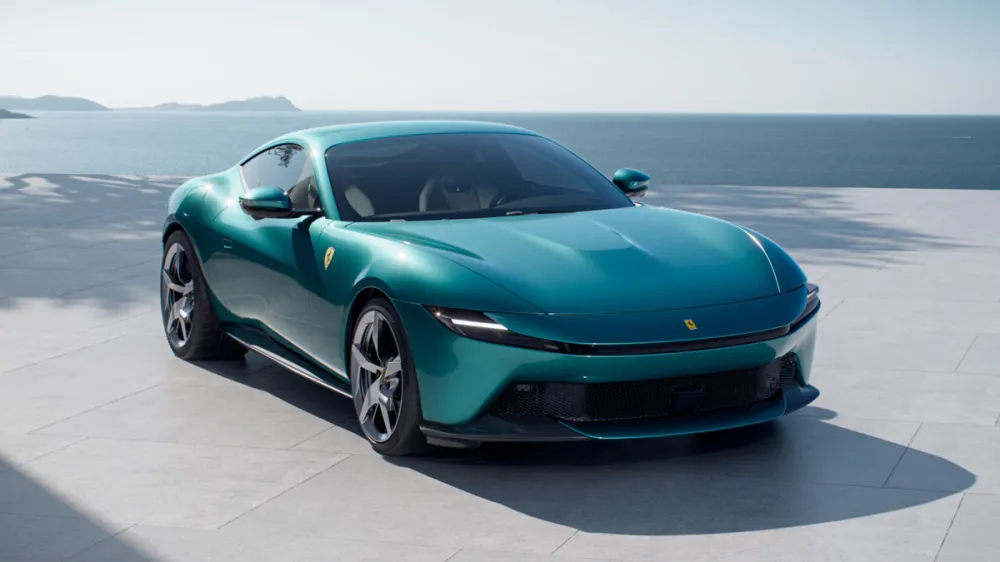
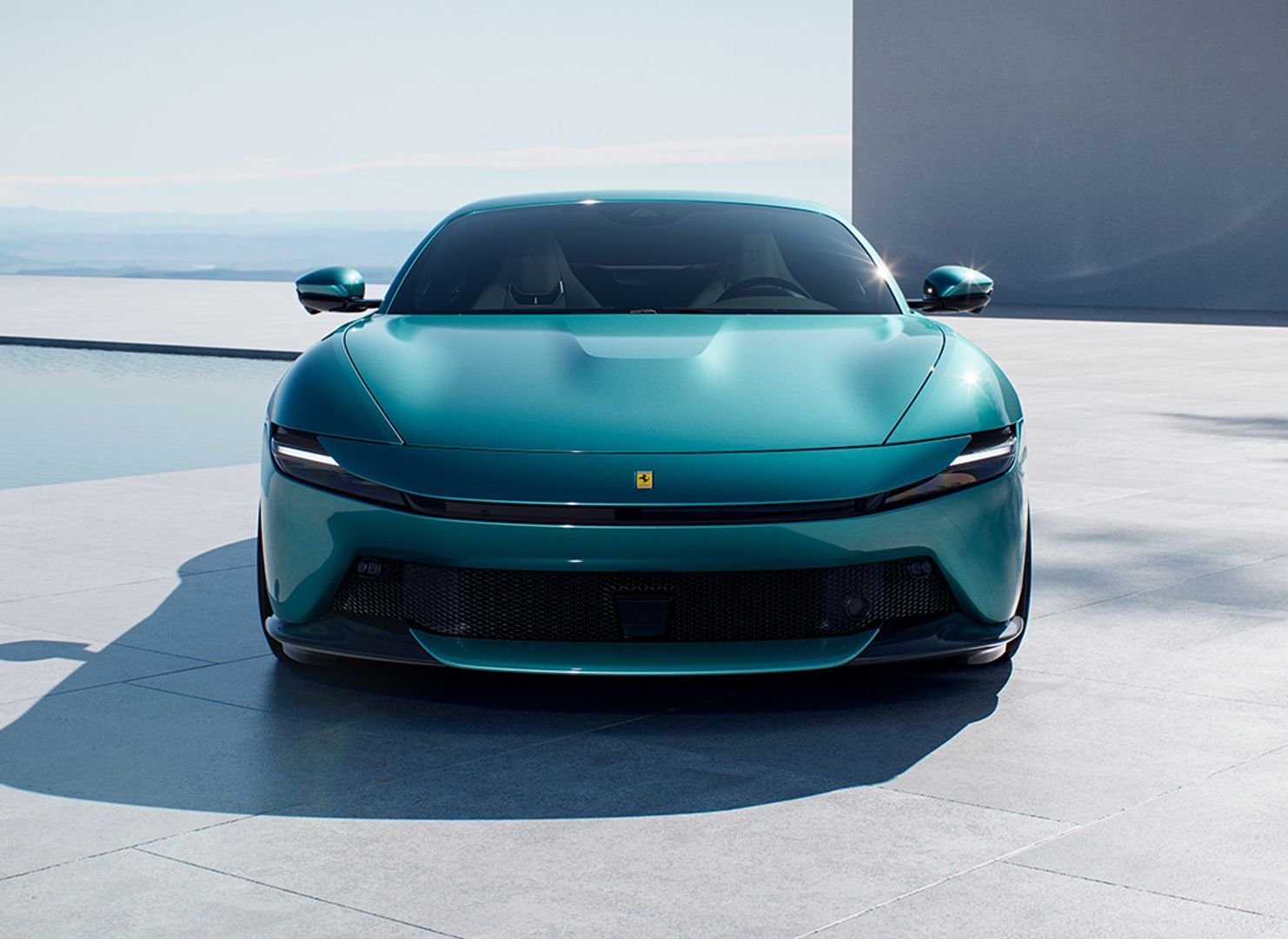
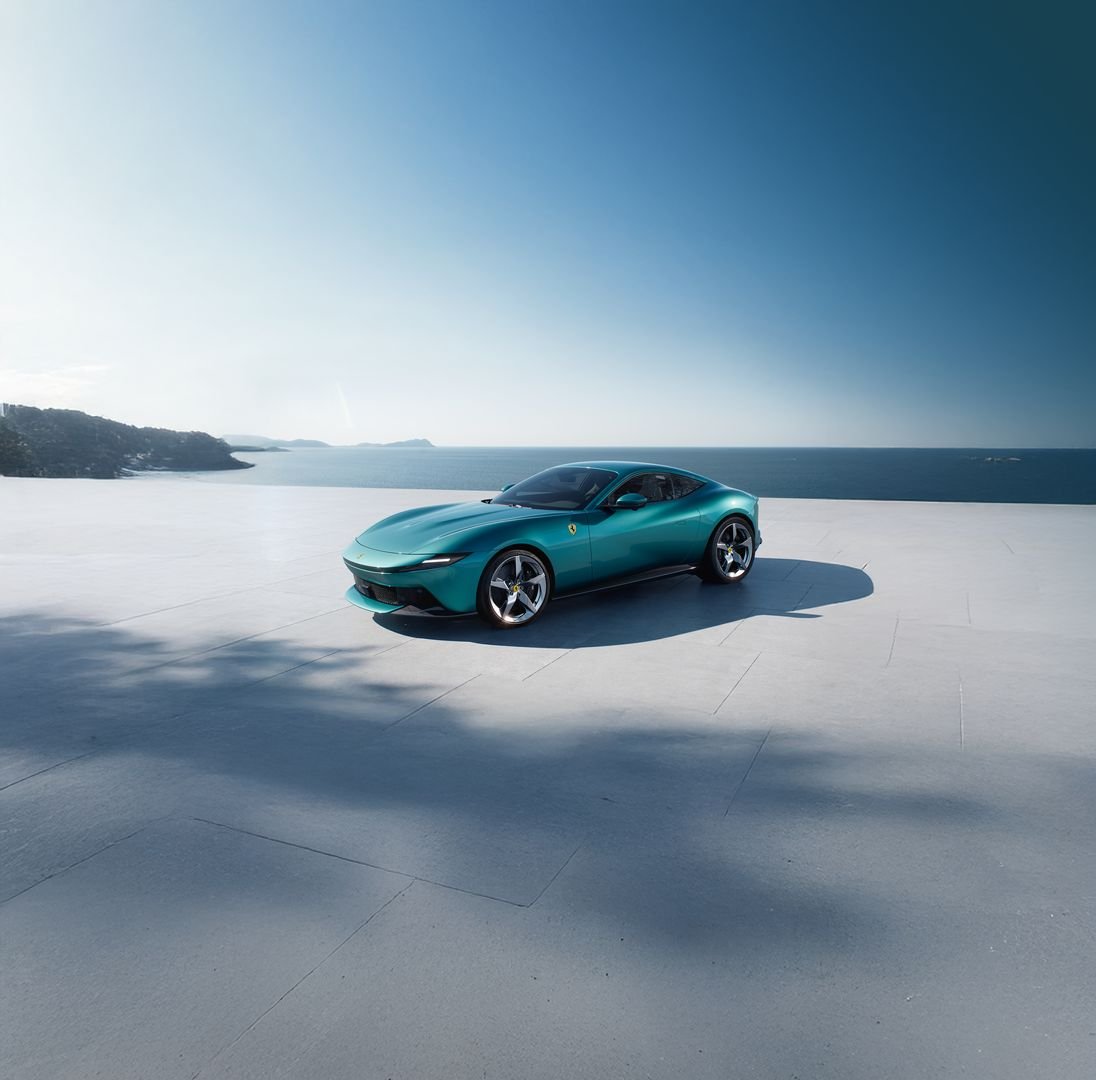
FERRARI AMALFI. Launch image from the archive. / WAYFARER Edition | Images: courtesy of Ferrari
MOTORING
The most radical thing about the new Ferrari is a button you can feel.
The Amalfi, revealed in July 2025, replaces the Roma as the house’s front-engined coupé. It keeps the long bonnet, the 2+ cabin and the idea of a Ferrari that can be used every day. What it changes is the relationship between the driver and the car: a sharper face, more power, an active wing, and the return of physical controls to a steering wheel that had become a sheet of glass.
FERRARI AMALFI IN VERDE COSTIERA. IMAGE: COURTESY OF FERRARI
Design: a face drawn with one line
Ferrari’s Centro Stile, under Flavio Manzoni, reworked the front around a single dark band that joins the headlamps, with the intake set low beneath it. The Roma’s perforated grille is gone. The surfaces are tauter, the rear lamps horizontal, and the proportions still those of a grand touring coupé: 4,660 mm long, 1,974 mm wide, 1,301 mm high.
The name is a choice of atmosphere rather than a statement of purpose. The Amalfi Coast suggests a road taken slowly by choice, and quickly when it opens up.
THE AMALFI SEEN FROM ABOVE. IMAGE: COURTESY OF FERRARI
Interior: the return of touch
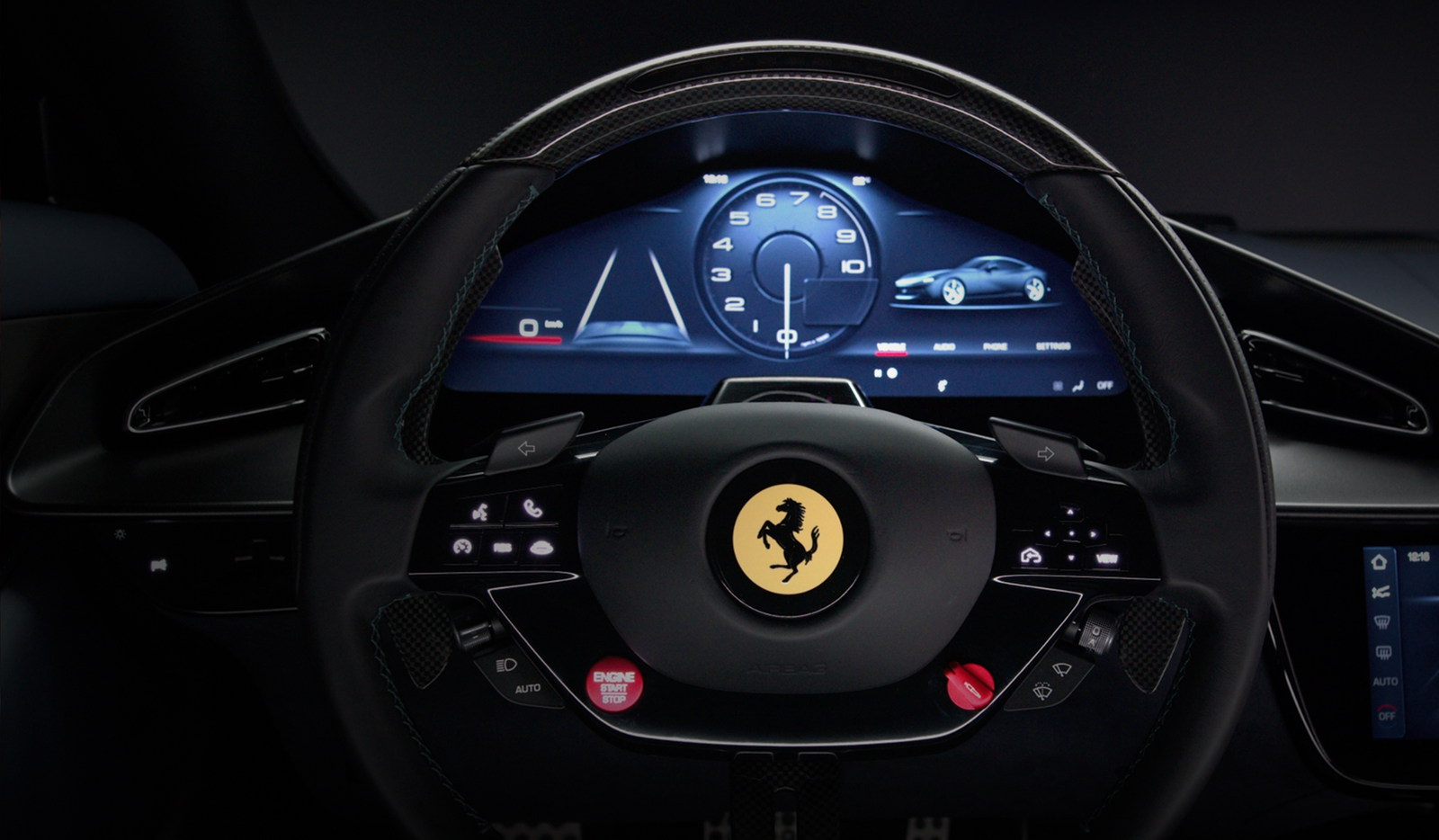
The steering wheel is where the argument is made. Physical buttons replace the haptic pads of recent models, with an aluminium start button on the left spoke and the driver-assistance and display controls on the right. The central tunnel is milled from a solid block of anodised aluminium and carries the gear selector, the key slot and the charging pad.
The screens remain, in a clearer hierarchy: a 15.6-inch instrument display, a 10.25-inch central touchscreen and an optional 8.8-inch display for the passenger. What the driver needs at speed is under the thumb. What can wait is on the glass.
THE STEERING WHEEL, WITH PHYSICAL CONTROLS RESTORED. IMAGE: COURTESY OF FERRARI
A Ferrari is driven with the eyes on the road. The Amalfi puts the controls back where the fingers can find them.
Engine: 640 cv, delivered with manners
The 3.9-litre twin-turbocharged V8 produces 640 cv at 7,500 rpm and 760 Nm between 3,000 and 5,750 rpm, through an eight-speed dual-clutch gearbox. Ferrari quotes 0 to 100 km/h in 3.3 seconds, 0 to 200 km/h in 9.0 seconds and a top speed above 320 km/h. With lightweight options the dry weight is 1,470 kg.
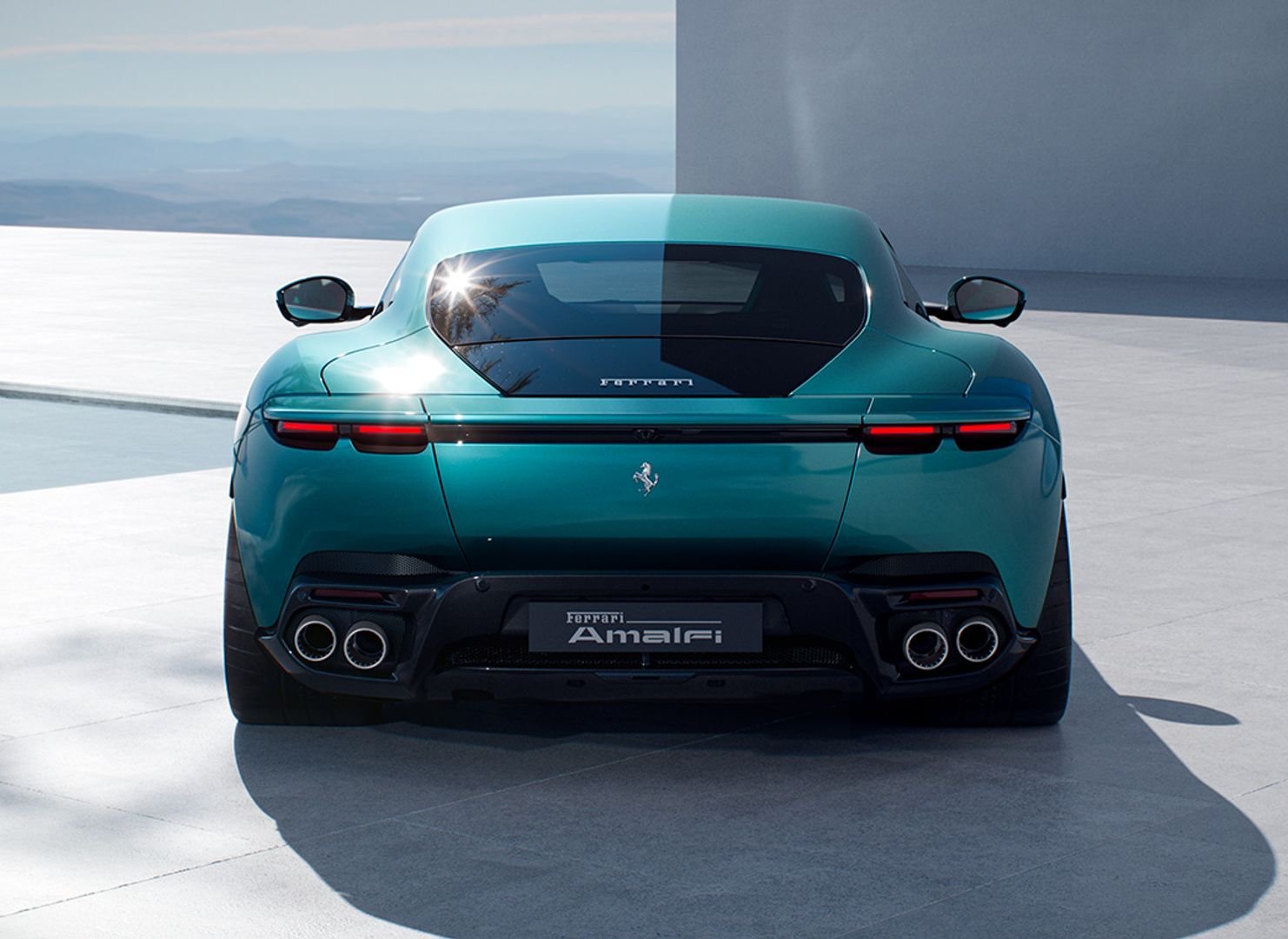
THE AMALFI FROM THE REAR. IMAGE: COURTESY OF FERRARI
Aerodynamics: a wing that knows when to speak
An active rear wing with three positions sits flush in the bodywork until it is needed. In its high-downforce setting it adds 110 kg at 250 km/h. Brake-by-wire, adapted from the 296 GTB and 12Cilindri, works with an updated ABS Evo system to keep the car composed under heavy braking.
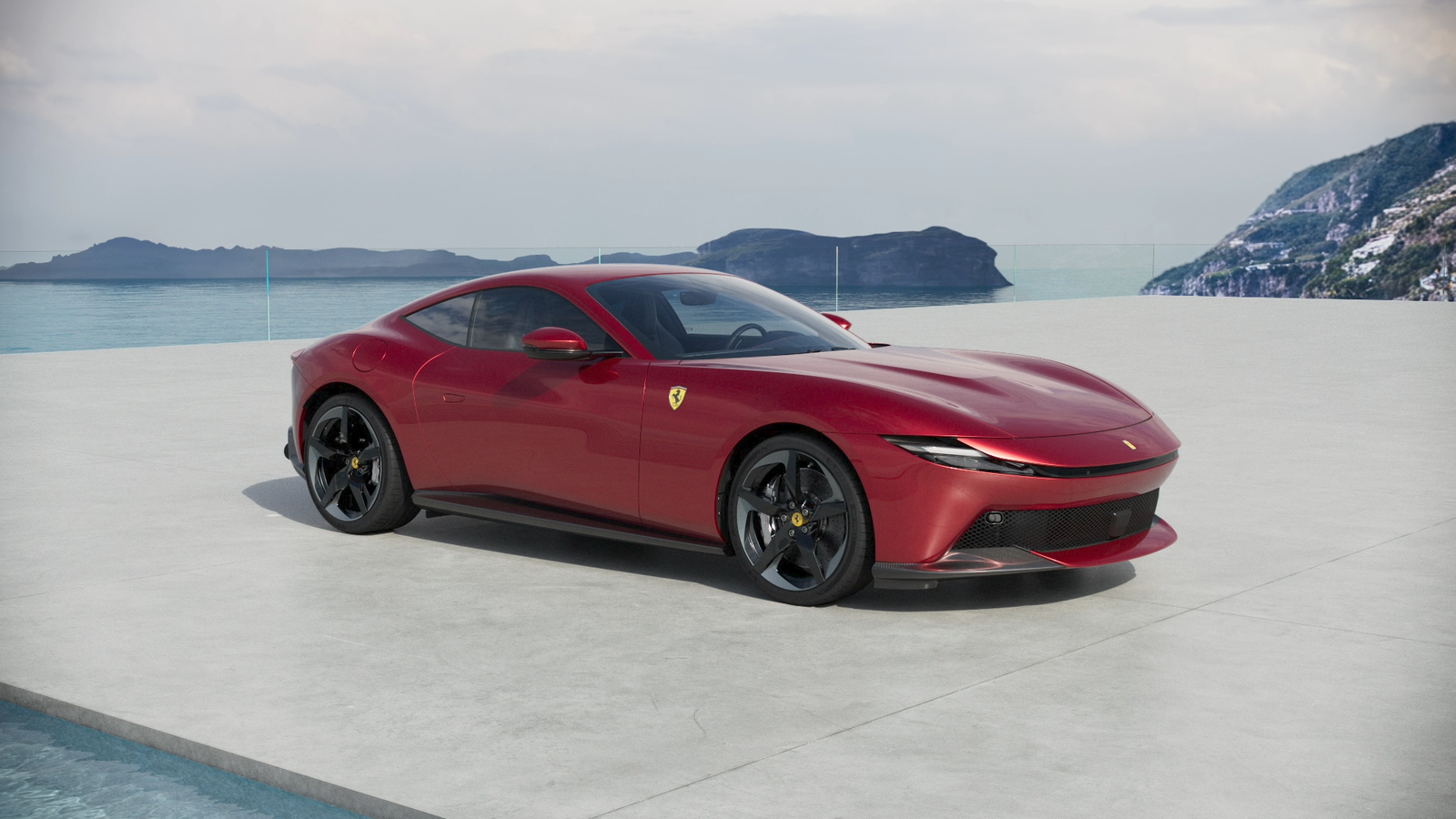
THE AMALFI IN RED. IMAGE: COURTESY OF FERRARI
The range: a Spider follows
The coupé was followed in March 2026 by the Amalfi Spider, which carries the same front-engined formula into open air.
Ferrari could have answered the Roma’s critics with more power alone. It answered with a button. The Amalfi is quicker than the car it replaces, but its real gift is a cabin in which the driver no longer has to look down to find what the hand already knows.
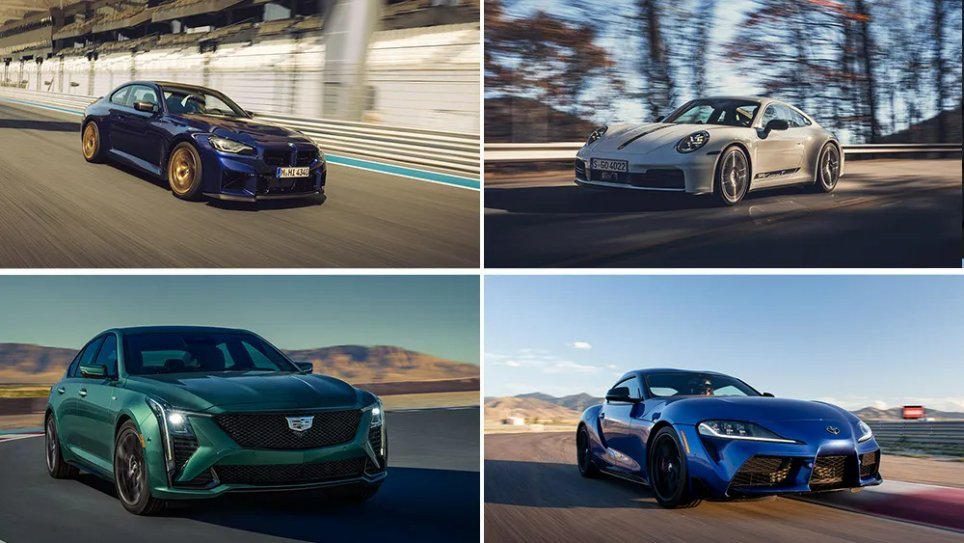
The manual gearbox has gone from rule to rarity. In late 2026, BMW M, Porsche, Nissan and Lotus still build cars that let the driver choose the gear, while the Toyota GR Supra and BMW Z4 have already taken their last bow.
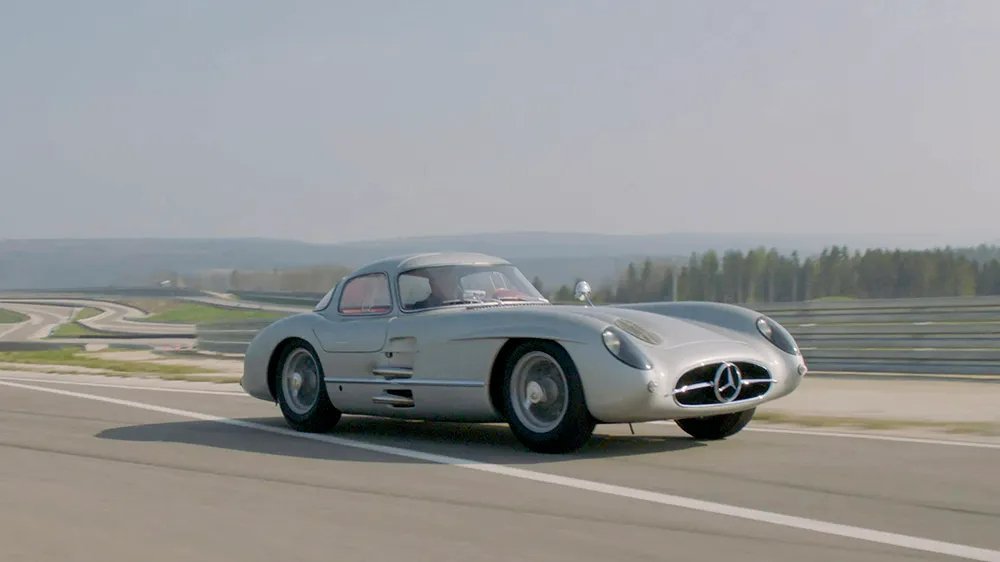
A Mercedes-Benz built in two examples still sits alone at USD 143 million. Below it, 2026 has rearranged the table: a Shelby Cobra Daytona Coupe, a white Ferrari 250 GTO, a McLaren F1 GTR and Ferrari's first electric car have all entered the ranks of the most valuable cars ever sold.
What began in March as a careful hint from Michael Leiters became, in October, a concept on a pier in Queens: the mid-engined Mission S previews a permanent Porsche model line above the 911, the first since the 918 Spyder.