Giorgio Armani at home: retreats between city, sea and mountain
From Via Borgonuovo in Milan to the lava-stone dammusi of Pantelleria, the Engadine, Saint-Tropez and Antigua, the houses Giorgio Armani gathered over a lifetime, and where they stand a year after his death.
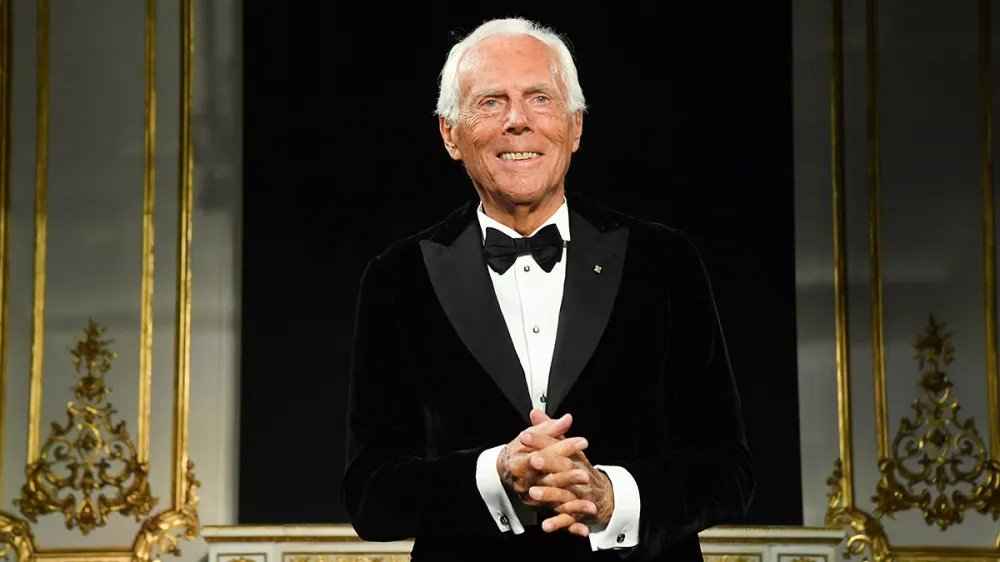
Giorgio Armani collected places the way other men collect paintings. Not for display, but for the particular silence each one offered. The designer who taught a generation to dress by subtraction lived by the same rule, and his houses, spread between the discipline of Milan, the lava stone of a Mediterranean island and the snow of the Engadine, read today like a private map of his temperament.
Armani died in Milan on 4 September 2025, at 91. The houses remain, and they explain him better than most of what was written that week. Each was a different tempo: a place to think, a place to swim, a place to wait for winter. None of them was built to impress.
Milan: the house as a working campus
Milan was the centre of gravity. On Via Borgonuovo, in Brera, Armani took a seventeenth-century palazzo in the early 1980s and, building by building, turned the street into something closer to a campus: home, studios and offices within a few steps of one another. The interiors, developed with the architect Peter Marino, are almost meditative. White rooms against dark floors, tactile surfaces, light handled with the care of a lighting director. In one of the busiest fashion capitals in the world, he built a room in which nothing raised its voice.
Pantelleria: an island that asked to be left alone
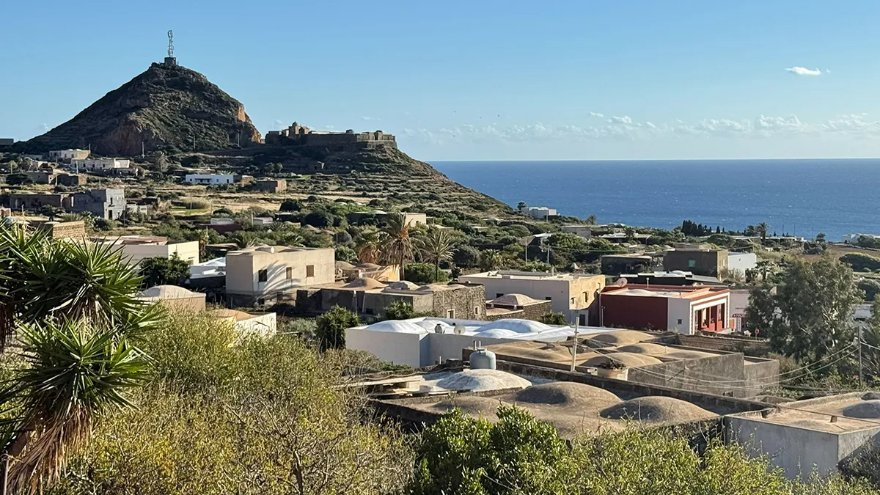
LAVA STONE, WHITE DOMES AND A SEA THAT SETS THE PACE. IMAGE: PRESS
If Milan was the intellect, Pantelleria was the pause. Armani arrived on the volcanic island between Sicily and the African coast in 1981 and found a landscape that was raw and nearly untouched. Rather than reshape it, he adapted to it. He bought old dammusi at Cala Gadir, the lava-stone houses with their white domed roofs, and over four decades extended the property into a cluster of dwellings that follow the lie of the land: terraced gardens, palms, vines and the open sea. The island’s light, wind and salt are widely credited as the inspiration for Acqua di Giò, the fragrance that carried his name to a far wider public.
Tuscany, Lombardy and the Riviera: three kinds of ease
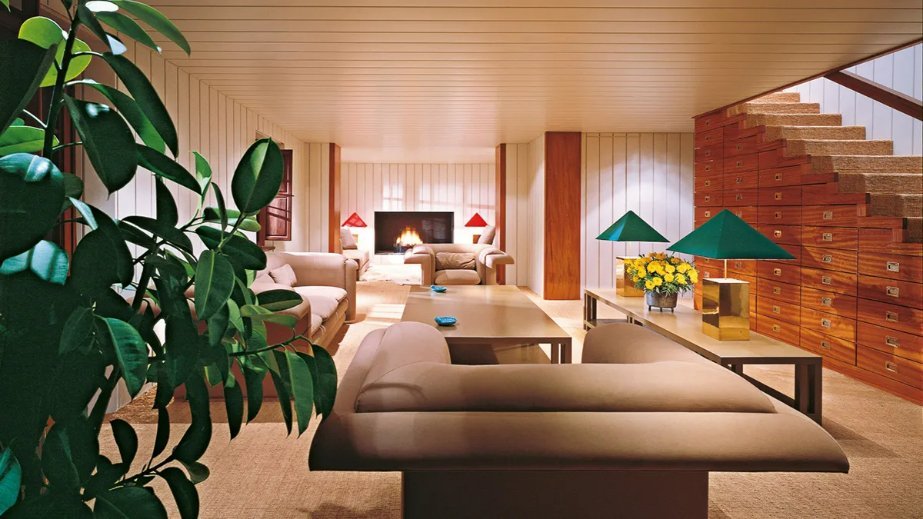
COMFORT MEASURED IN PROPORTION, NOT ORNAMENT. IMAGE: PRESS
Forte dei Marmi, on the Tuscan coast, was his first holiday house. The exterior kept its rustic character; inside, open rooms, natural materials and a soft palette made the case he would later make professionally, that comfort comes from proportion rather than decoration. It is easy to see in it an early draft of what became Armani Casa.
Near Broni, in the Oltrepò Pavese, a 1950s villa bought almost in ruins became the most private of his retreats. Warmer in tone than the monochrome rigour the public associated with him, it was a house of fireplaces, wood panelling, gardens and animals, a place for memory, not far from Piacenza, where he was born.
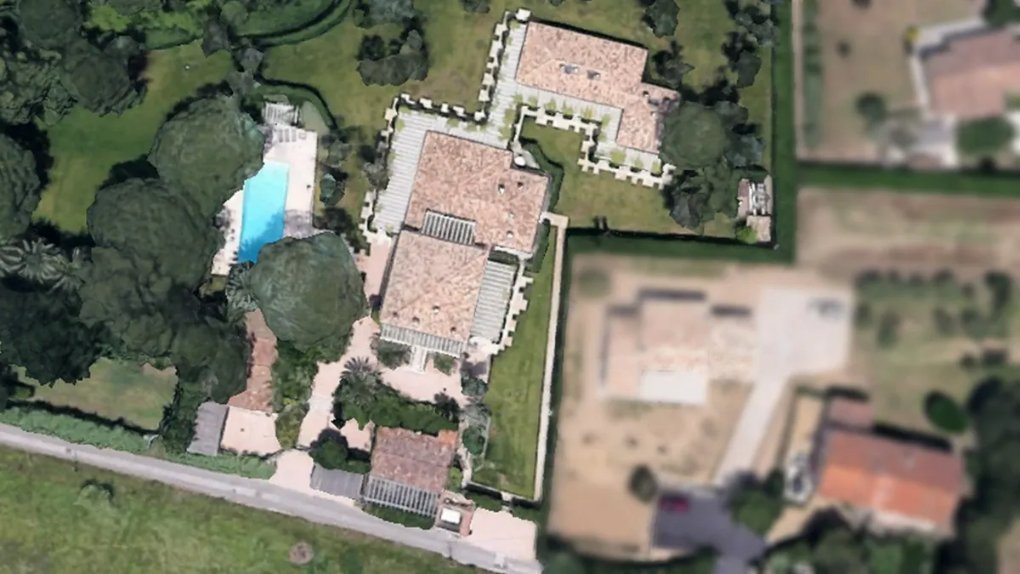
ON THE MOST WATCHED COAST IN FRANCE, A HOUSE THAT CHOSE NOT TO BE SEEN. IMAGE: PRESS
In Saint-Tropez, bought in 1996, he chose discretion over visibility. The house sits in a park of cypress, jasmine and eucalyptus and avoids any gesture of spectacle. Inside, natural materials, antiques and pieces from his own furniture line add up to an elegance that is almost invisible, which on that stretch of coast is its own kind of statement.
The Engadine and the Caribbean: winter and its opposite
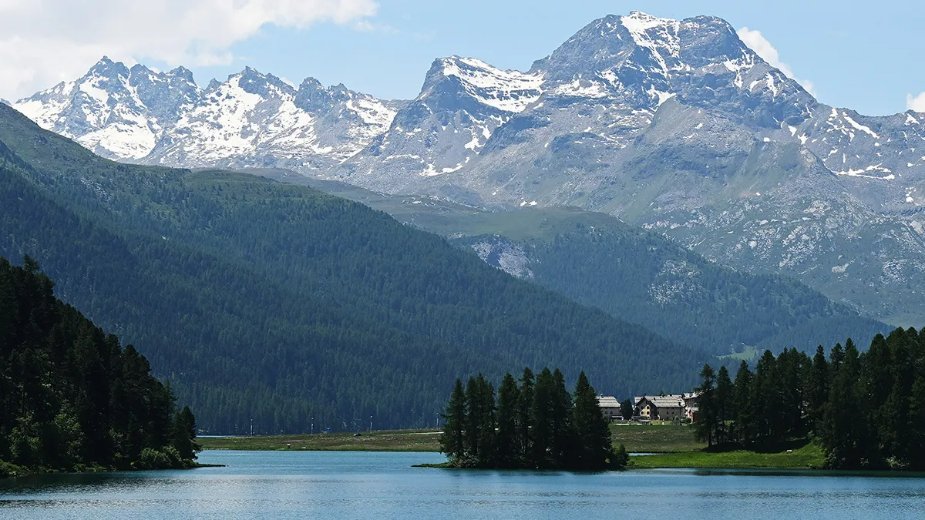
AN ALPINE BARN THAT LEARNED A JAPANESE CALM. IMAGE: PRESS
In the Swiss Engadine, near St Moritz, Armani found winter. A restored seventeenth-century house was reinterpreted with a surprisingly Japanese sensibility: fluid rooms, dark wood, objects gathered on his travels and a direct line to the landscape outside. The old barn, turned into the main living room behind a wall of glass facing the mountains, sums up his habit of letting tradition and modernity share a room without argument.
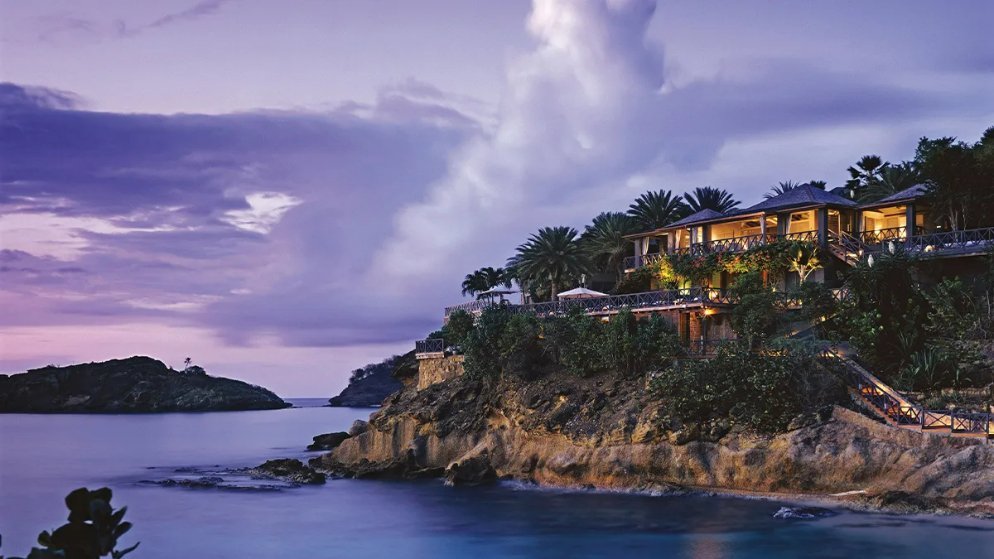
WIND, LIGHT AND THE SOUND OF THE SEA AS BUILDING MATERIALS. IMAGE: PRESS
Antigua was the winter escape from winter. His villas above the Caribbean dissolved the line between inside and out, so that wind, light and the sound of the water became part of the architecture. The interiors stayed in greys and beiges, neutrality used not as caution but as a way of making something last.
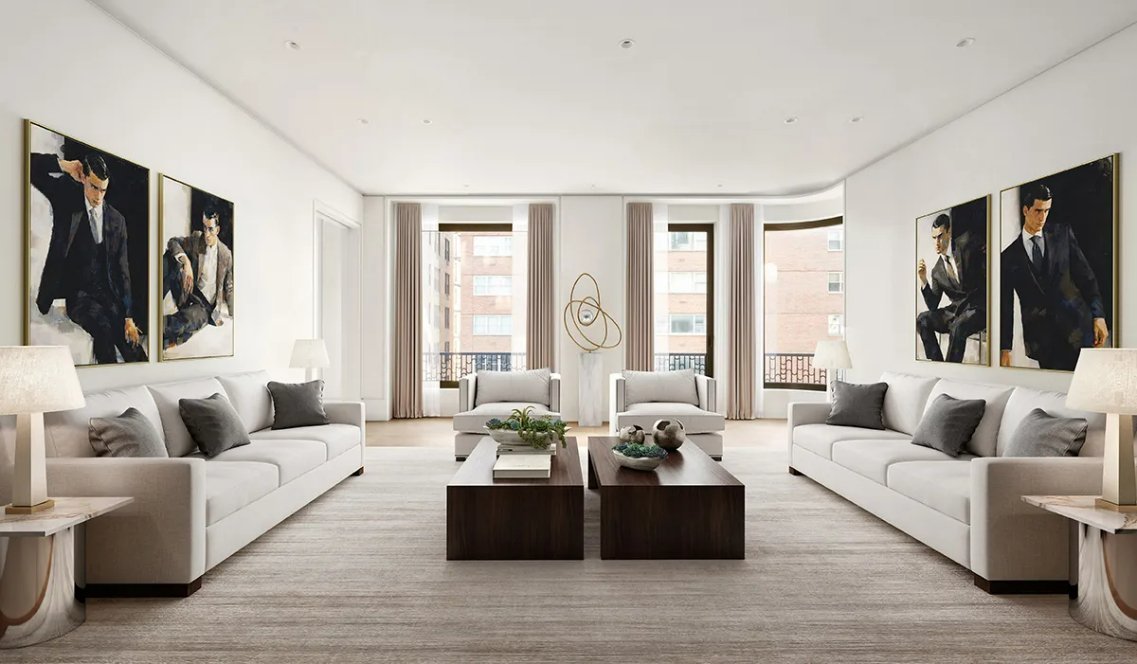
MANHATTAN, KEPT AT A CIVIL DISTANCE. IMAGE: PRESS
Paris and New York completed the map. On the Left Bank, a classic Parisian apartment of carved fireplaces and panelled walls spoke to the city’s intellectual tradition. In Manhattan, a penthouse bought in 2019 looked out over Central Park. Even there, in two of the loudest cities on earth, the rule held: clarity first, everything else after.
After Armani: houses that stay in the family
Armani had no children. His wills, opened in Milan days after his death, placed the fashion house with the foundation that bears his name and distributed the homes among the people closest to him: his sister Rosanna, his niece Silvana and nephew Andrea Camerana, and Leo Dell’Orco, his right hand for decades. Pantelleria, Broni and Antigua sit within a family property company now held by Rosanna, Silvana and Andrea; Paris passed to Silvana; the Engadine house to Andrea Camerana, with Dell’Orco holding the right to live in it. No sale of any of the houses has been announced. They remain what they always were: private.
Armani never sought monumentality. He sought permanence, and he found it less in buildings than in a way of standing inside them. Each of these houses is the same sentence rewritten for a different light: edit the excess until only the essential remains, and then leave it alone.
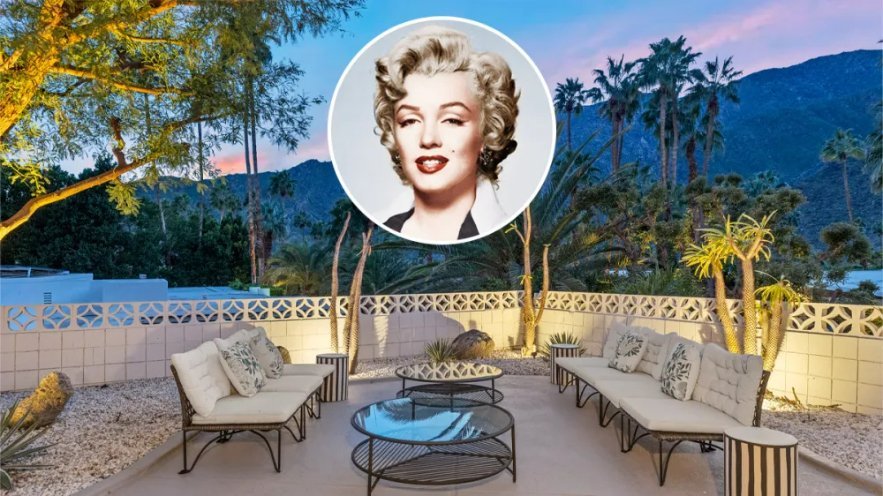
Listed at $3.3 million in February, the Charles Du Bois house in Vista Las Palmas long linked to Marilyn Monroe sold in October for about $2.8 million, to a local designer who intends to restore it.
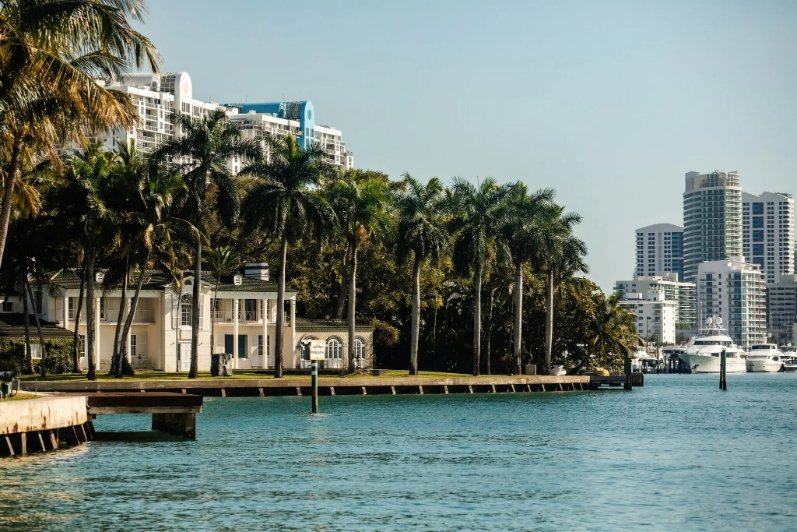
On a narrow arc of islands in Biscayne Bay, the scarcest asset in Miami is not the house but the land beneath it. A record $170 million sale on Indian Creek shows how far the top of the market has drifted from the rest.
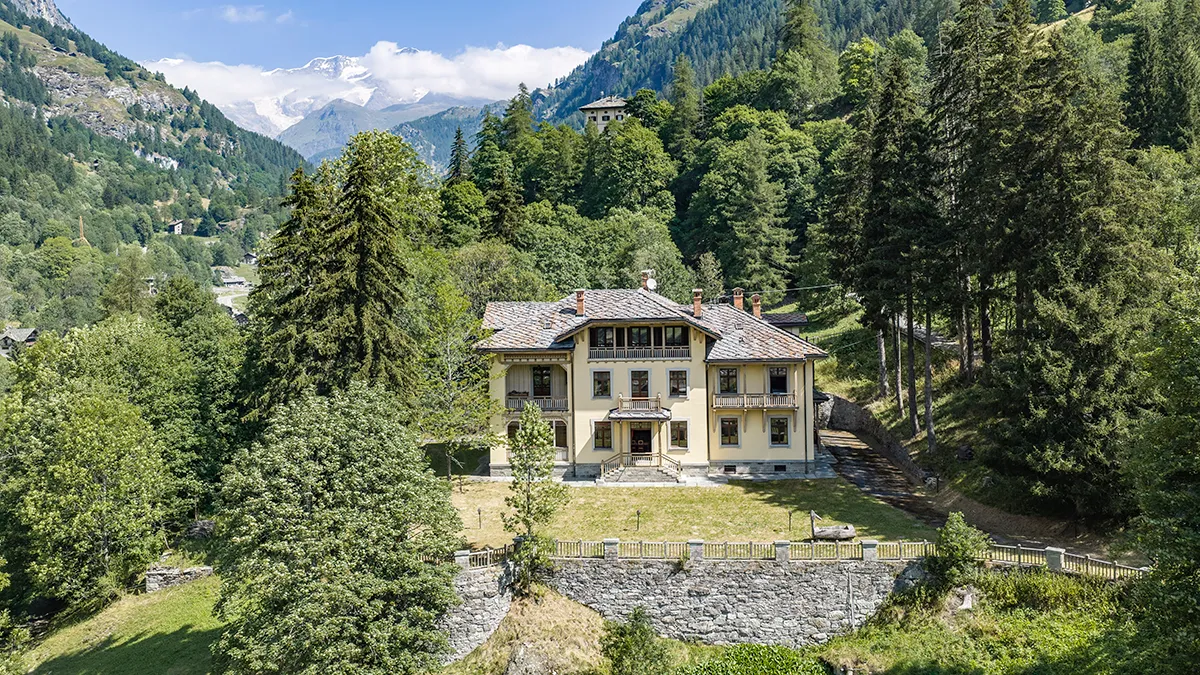
Villa Laubenò, in Gressoney-Saint-Jean in the Aosta Valley, stood in for the Gucci family's Swiss retreat in Ridley Scott's film. Eleven bedrooms, views of Monte Rosa and an asking price of €2.9 million.