Immersion Iceland: a festival village where nature has the final word
On Iceland's east coast, near Höfn, Immersion turned a Nordic film village into a temporary community of a thousand people for five days. Its founders, Greg Habib and Kim Jackson, explain how to grow without losing the sense of belonging.
On the east coast of Iceland, where the landscape seems to change its mood before the eye can settle, a Nordic village built at full scale for film productions was prepared for another fiction. For five days and four nights, from 1 to 5 October 2026, it stopped being a set and became a temporary community. Near Höfn, Immersion staged its most ambitious edition yet.
This was never simply a matter of taking dance floors to a remote place. Immersion grew out of smaller gatherings built around travel, music and companionship, and its journeys have crossed territories as different as the Gobi Desert, Raja Ampat, the Nile and the Amazon. In Iceland, the project expanded to around a thousand participants while trying to hold on to the principle of its first editions: the experience only makes sense when the place changes the person who arrives.
The east coast of Iceland, near Höfn. Image: Immersion
A temporary village, not a conventional festival
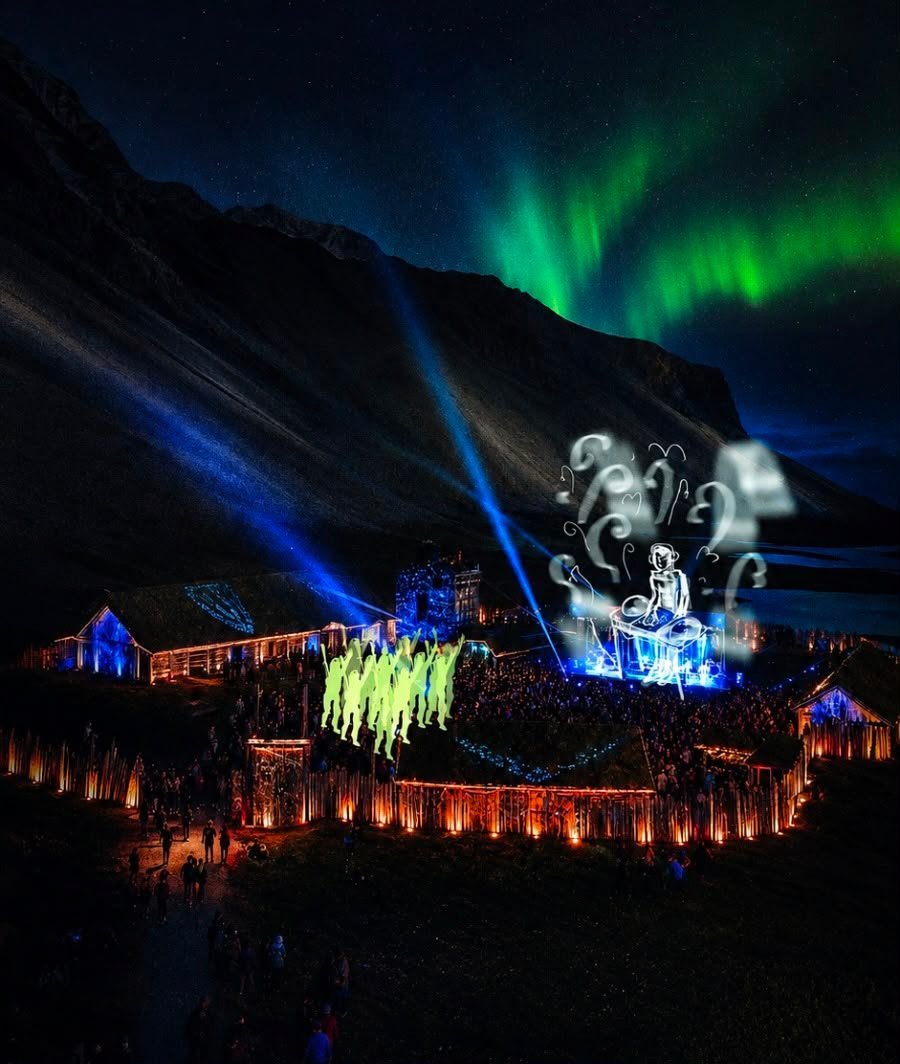
Immersion took over the entire Viking Village. The architecture, the open ground and the unstable weather were treated not as backdrop but as part of the programme. Instead of a rigid succession of acts, the festival proposed a continuous flow between music, rest, food, encounters and silence, across six musical environments ranging from minimal and house to more organic, atmospheric and contemplative sessions.
Each day was conceived as an arc, beginning in introspection and building towards collective celebration. With a thousand people, that arc ceases to be singular: parallel narratives emerge, allowing each participant to set their own rhythm without losing the sense of belonging to the same event.
“That sense of belonging is one of the most important things, and it is something we can never lose.”
Greg Habib, cofounder of Immersion, in conversation with WAYFARER
The challenge is obvious. The scale that gives Immersion its first full festival format can also dilute the intimacy on which its reputation was built. Habib bets on an atmosphere light, collaborative and safe enough for people to lower their guard. Kim Jackson, his partner in the project, brings more than a decade of event production and a focus on structure, communication and turning relationships into something sustainable.
Iceland as co-author
The founders’ bond with the country predates this edition: visits, long stays and earlier celebrations that taught them both the unpredictability of the wind and the weight of personal relationships in Icelandic culture. That familiarity shaped the curation. According to Jackson, 41 artists on the line-up had never played an earlier Immersion, and figures from the Icelandic scene took part in the conversations and decisions behind the project.
The aim was not to make every performance artificially Icelandic. The invitation was subtler: to understand where one is, to live the territory and to respond to it with sensitivity. Sometimes that produces a special collaboration or format; sometimes it only changes the way an artist occupies the space.
The village, between ocean and mountain. Image: Immersion
The journey, too, begins before the gates. The road from Reykjavík to Höfn takes around six hours and crosses some of the most dramatic landscapes in the country; the alternative is a domestic flight from the capital to Hornafjörður and a short drive. In Immersion’s world, the transfer is not an interval. It is the prologue.
Between music, recovery and presence
Away from the dance floors, the village was designed for slowing down. A Recovery & Sanctuary area brought together saunas, steam, hot water, plunges in the cold ocean and restorative treatments. A central area served local and international food and became the place to meet; a market gathered Icelandic artisans, clothing and objects tied to the journey. Optional excursions included snowmobiling on glaciers, boat trips through glacial waters and jeep routes across volcanic terrain.
Living inside the village. Image: Immersion
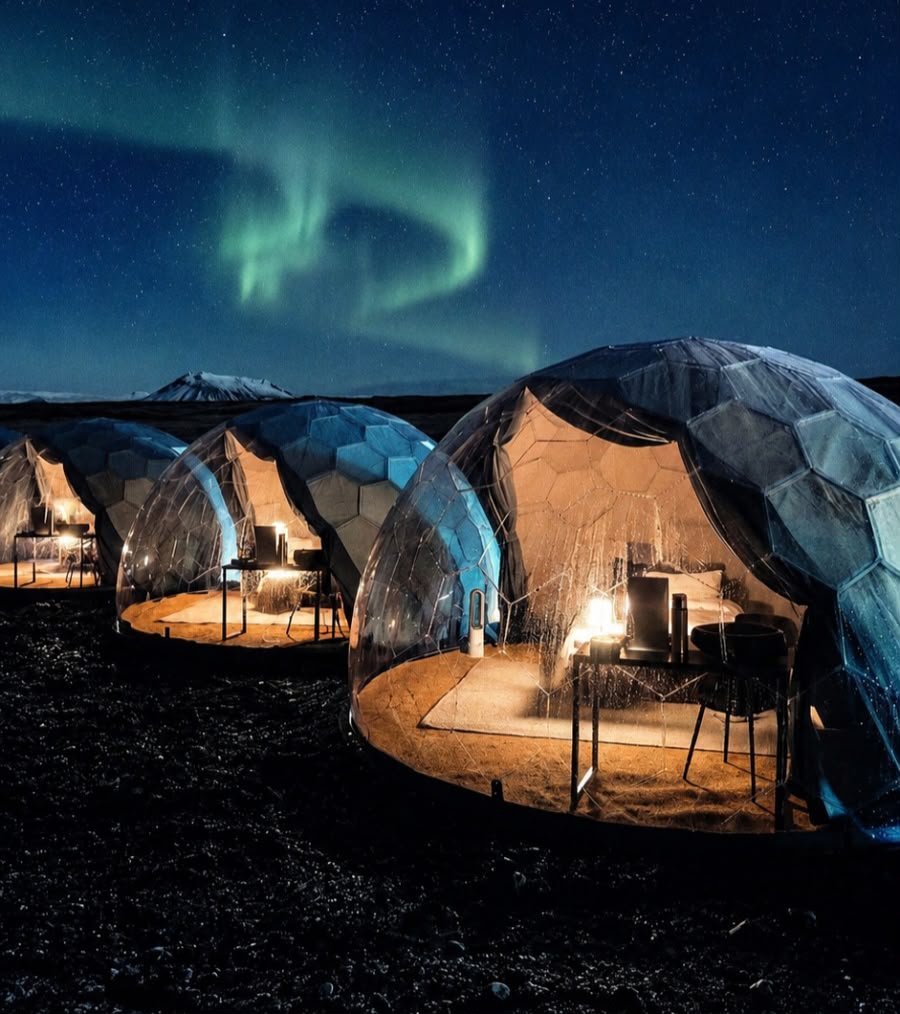
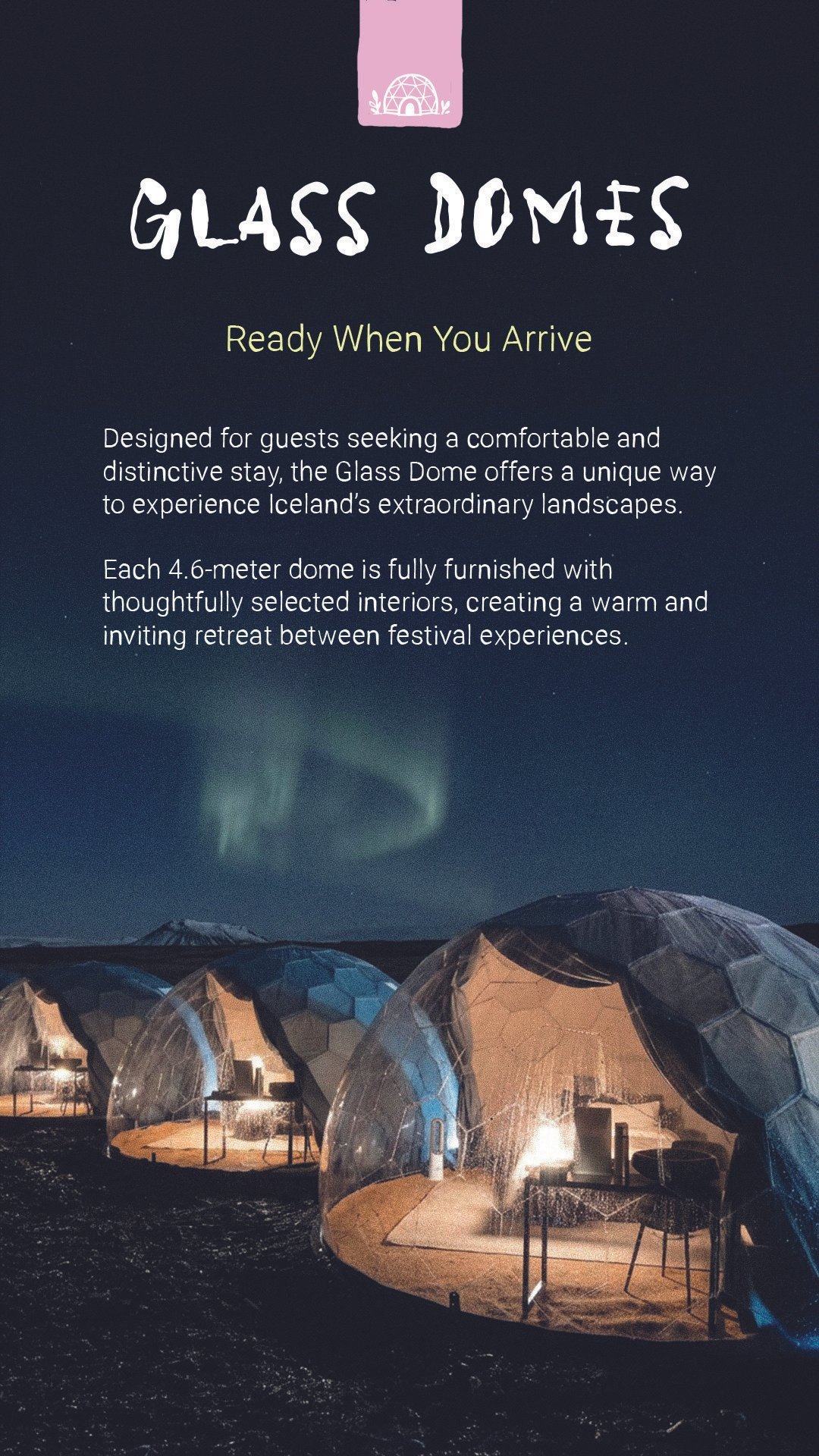
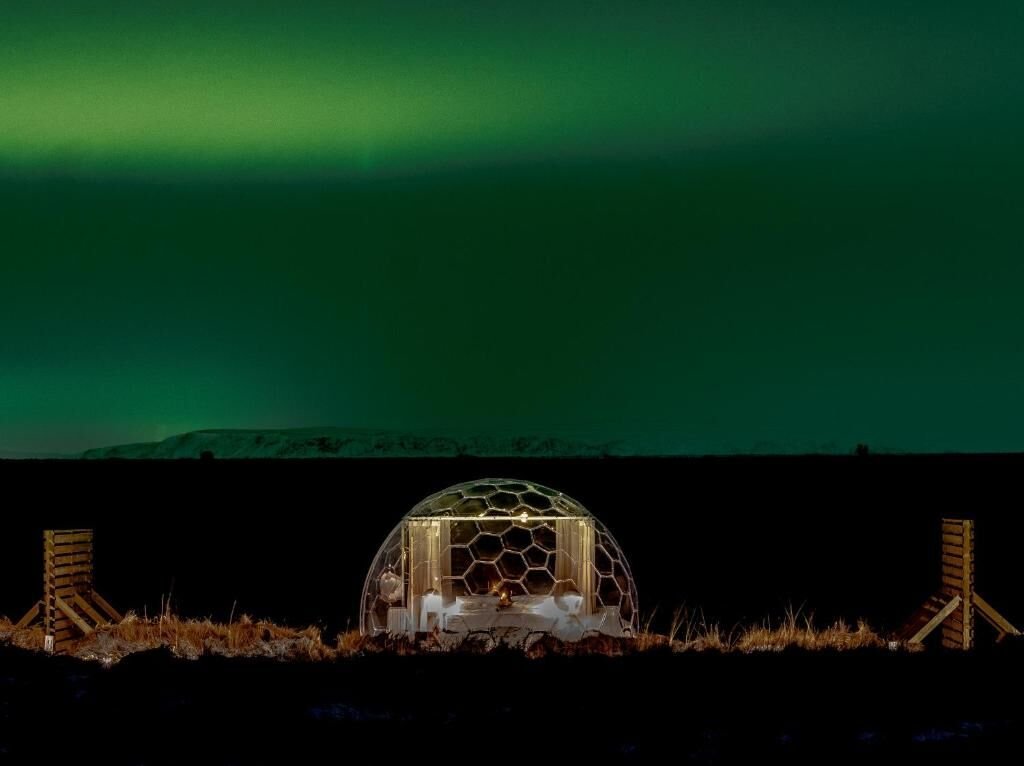
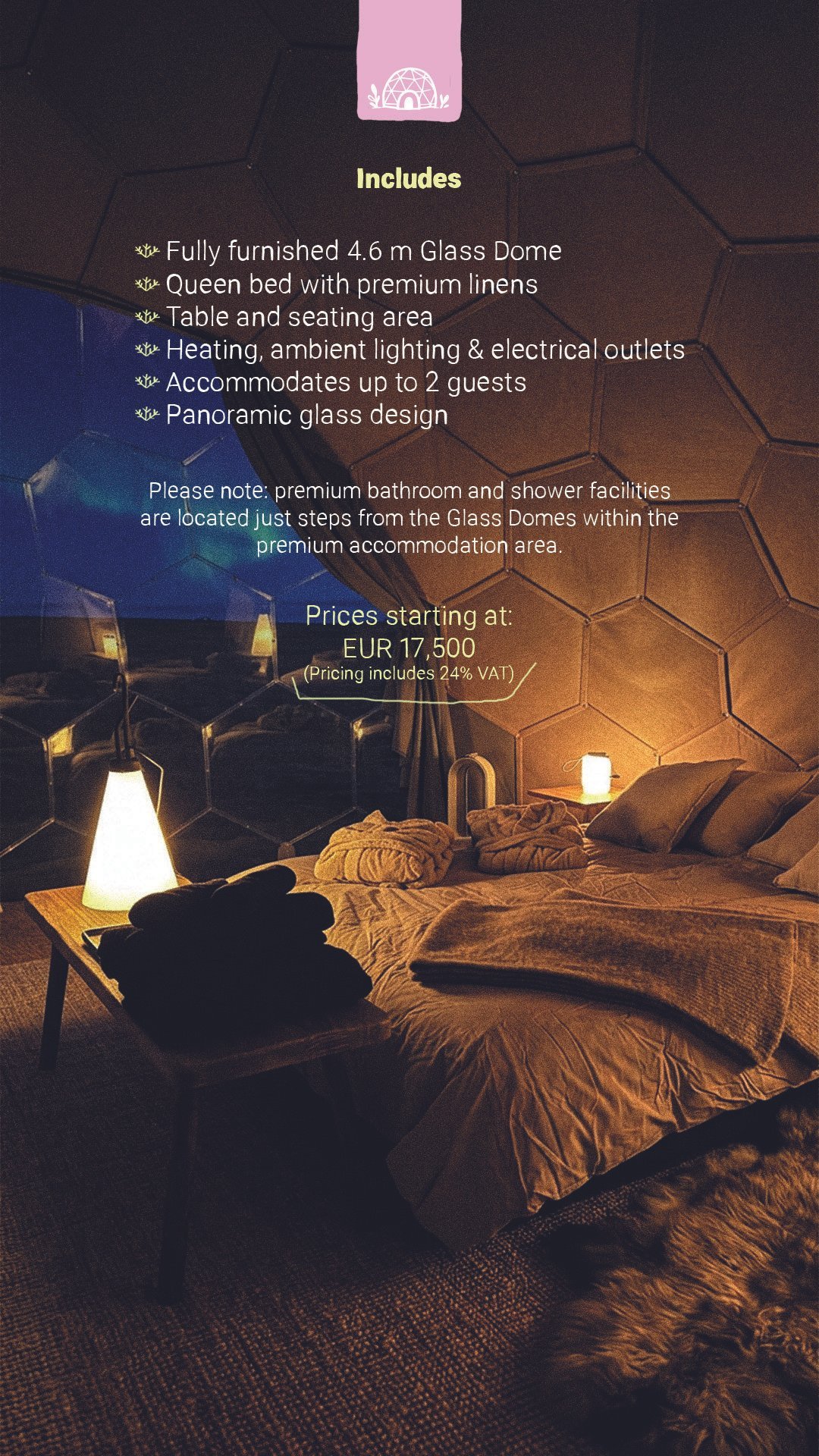
Accommodation followed the same idea of autonomy. Guests could stay within the perimeter in motorhomes, campers, trailers, cabins or glass domes, the last offering more privacy and, if the sky allowed, a chance of the aurora. Hotels and rentals nearby provided a more conventional alternative.
A glass dome, and the chance of an aurora. Image: Immersion
Access, impact and care
Tickets were released in tiers from 950 to 1,800 euros, and the organisers acknowledge that, in a notoriously expensive destination, the total cost remains a barrier. To widen participation, 10 per cent of capacity was set aside for Ticket Aid, a subsidised ticket programme, and another 10 per cent for volunteers working during the event. “More than using diversity as part of the festival’s aesthetic or communication, our goal is to create real mechanisms for participation,” says Jackson.
On the environmental front, Immersion follows protocols for waste, circulation, responsible use of resources and respect for the territory, with talks bringing together specialists, artists, participants and local representatives. Jackson is candid that this edition was also a learning ground, so that the festival can set more concrete environmental targets in the years ahead.
Cabins, campers and domes within the perimeter. Image: Immersion
Care carries particular weight in a programme that combines low temperatures, saunas, the ocean and physical practices. The organisers arranged a medical team, welfare areas and specific protocols for each activity, led or supervised by qualified professionals, with the understanding that activities would be changed or cancelled whenever the risk could not be managed.
Between the promise of freedom and the need for structure, Immersion looks for a balance that feels particularly true to Iceland, where beauty is never separate from vulnerability: the wind turns, the light withdraws, the ocean sets its limits. A village can be planned; the territory cannot be reduced to a backdrop. As Kim Jackson puts it, in Iceland, nature always has the final word.
Details and further reading: Immersion Festival Iceland, Viking Village, near Höfn, Iceland. 1 to 5 October 2026, around 1,000 participants. immersionfestival.com
From a rooftop above Hudson Yards to a Lower East Side dive bar, a Studio 54 revival on the river and SZA's open-invitation launch for Vans, the nights of NYFW carried as much weight as the runways.