Dining / Reportage
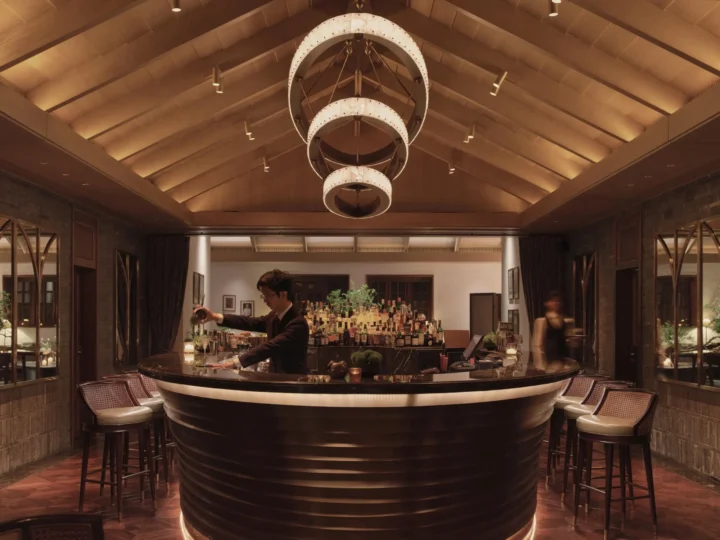
Hotel bars: four rooms that give an evening a subject
From Bemelmans in New York to Library by the Sea in Grand Cayman, a considered hotel bar offers more than a setting for a drink.

THE CURATED EDITION.
Reportage / Treiso
Luiza Rodas’s Treiso visit follows the view, the kitchen and a cellar cut into the hillside. Barbaresco’s landscape is not a backdrop here, but part of the restaurant’s structure.
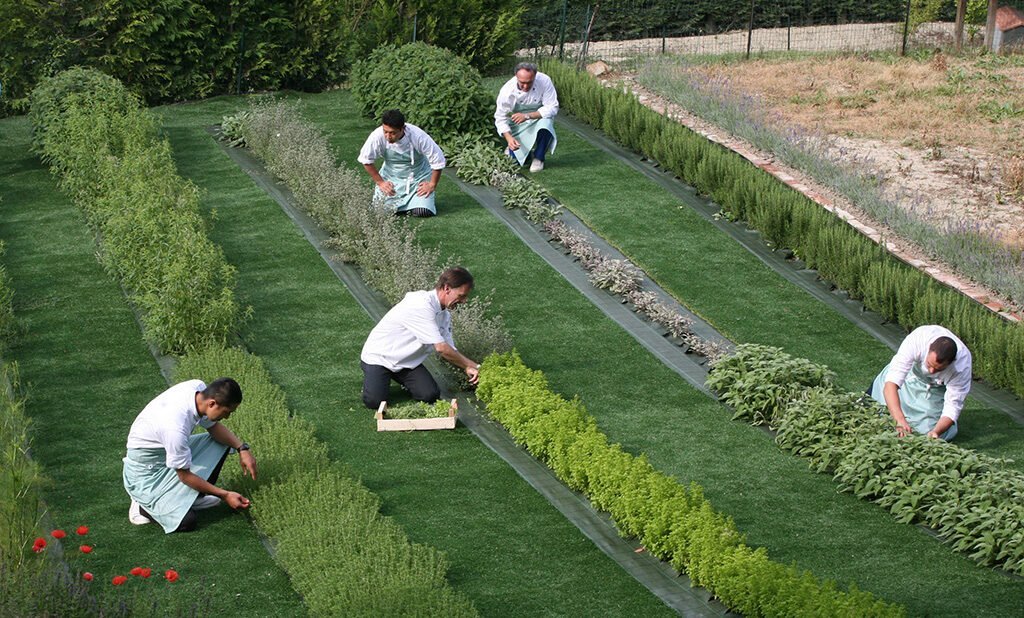
At La Ciau del Tornavento, the landscape appears twice: beyond the dining-room windows and below the floor, in a cellar formed within the hillside. The table sits between those two ways of reading Piedmont.
Luiza Rodas’s June 2025 visit moved through both. Her account placed the meal in Treiso, within the Barbaresco area, and followed the wine beyond the list to the place in which the bottles were kept.
The restaurant occupies a former nursery school, a building dating from 1931. High ceilings and wooden floors give the dining room a clear architectural frame, while the view extends over vineyards towards the Alps.
Maurilio Garola and Nadia Benech’s move to Treiso brought the project into the Langhe. The present team listing identifies Garola and Marco Lombardo as chefs and Benech with hospitality and the dining room. The setting and the people who shape service belong to the same story.
A window can offer more than scenery. Here, it puts the wine country within sight of the meal, making the names encountered in the cellar less abstract. The place is not represented only by what arrives in a glass.
Rodas’s meal included tajarin with white truffle and an egg cooked in a cocotte with Castelmagno fonduta. Those recollections belong to her visit, not to a newly conducted tasting or a guarantee of the menu now being served.
The kitchen’s own account places Piedmontese preparations alongside influences from beyond the region and a particular interest in seafood. It also names offal and truffle within its vocabulary. Regional identity does not require every ingredient to come from an identical landscape.
That is a more useful reading than reducing the restaurant to a truffle-season address. Its cooking has a home territory, but the menu can move beyond it. Confirm a particular seasonal ingredient directly rather than assume that its presence in one report makes it permanent.
Cut into the hill’s tuff, the cellar gives considerable space to Barolo and Barbaresco. The restaurant says these wines account for roughly half its collection, alongside other Piedmontese and Tuscan reds, Italian whites and French châteaux.
The collection extends across thirteen countries. There are also separate ageing spaces for artisanal Piedmontese cheeses and selected Italian cured meats. Storage below the restaurant is therefore not solely an exercise in assembling wine names.
Rodas encountered Gaja, Conterno and Giacosa during her visit. The interest of that descent was the relationship between a regional meal and a wider collection, not simply the total number of bottles. Ask about particular vintages and cellar access when arranging a visit; neither should be inferred from a general description.
A smaller recollection gave the report another register. Rodas’s Maltipoo, Fluffy, received water and a gift containing a biscuit and a toy. It was a detail of that occasion, not an assurance about the restaurant’s present pet policy.
The view, the cooking and that attention to a particular guest make the account more than a list of dishes. Treiso supplies a position from which to understand the meal, while the cellar gives that understanding a deeper, less immediately visible dimension.
Reporting: Luiza Rodas. Visit: June 2025.
La Ciau del Tornavento · Piazza Baracco 7, Treiso, Piedmont.
CONTINUE READING
Dining / Reportage
From Bemelmans in New York to Library by the Sea in Grand Cayman, a considered hotel bar offers more than a setting for a drink.

Dining / Reportage
The tribute to Le Grollet pairs a limited cognac with a cooling cabinet, shifting attention from the age of a blend to the sequence of its service.
Dining / Interview
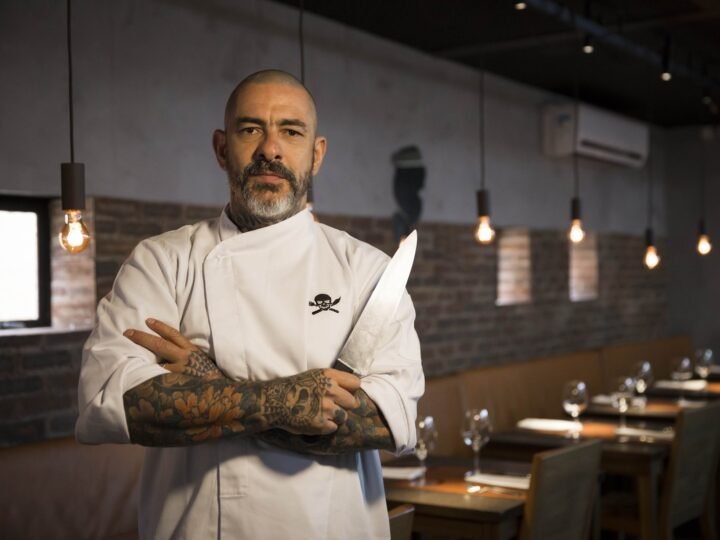
The chef behind Sal, judge of MasterChef Brasil and frontman of a hardcore band.