Dining / Reportage
Hotel bars: four rooms that give an evening a subject
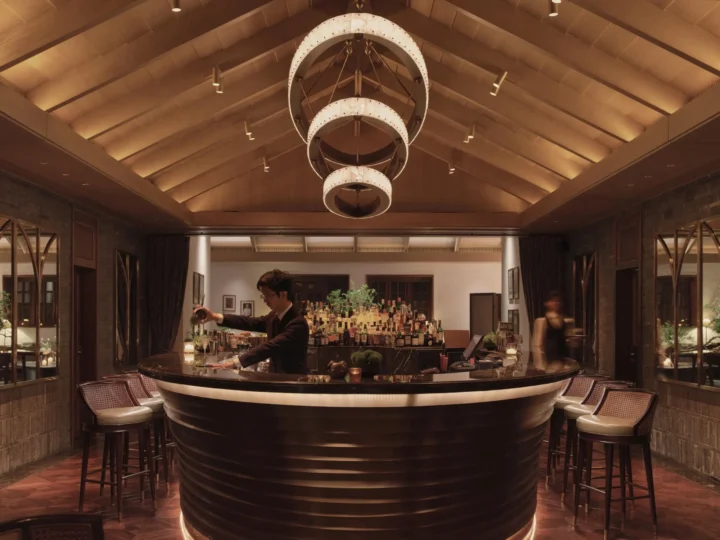
From Bemelmans in New York to Library by the Sea in Grand Cayman, a considered hotel bar offers more than a setting for a drink.

THE CURATED EDITION.
Reportage /
The tribute to Le Grollet pairs a limited cognac with a cooling cabinet, shifting attention from the age of a blend to the sequence of its service.
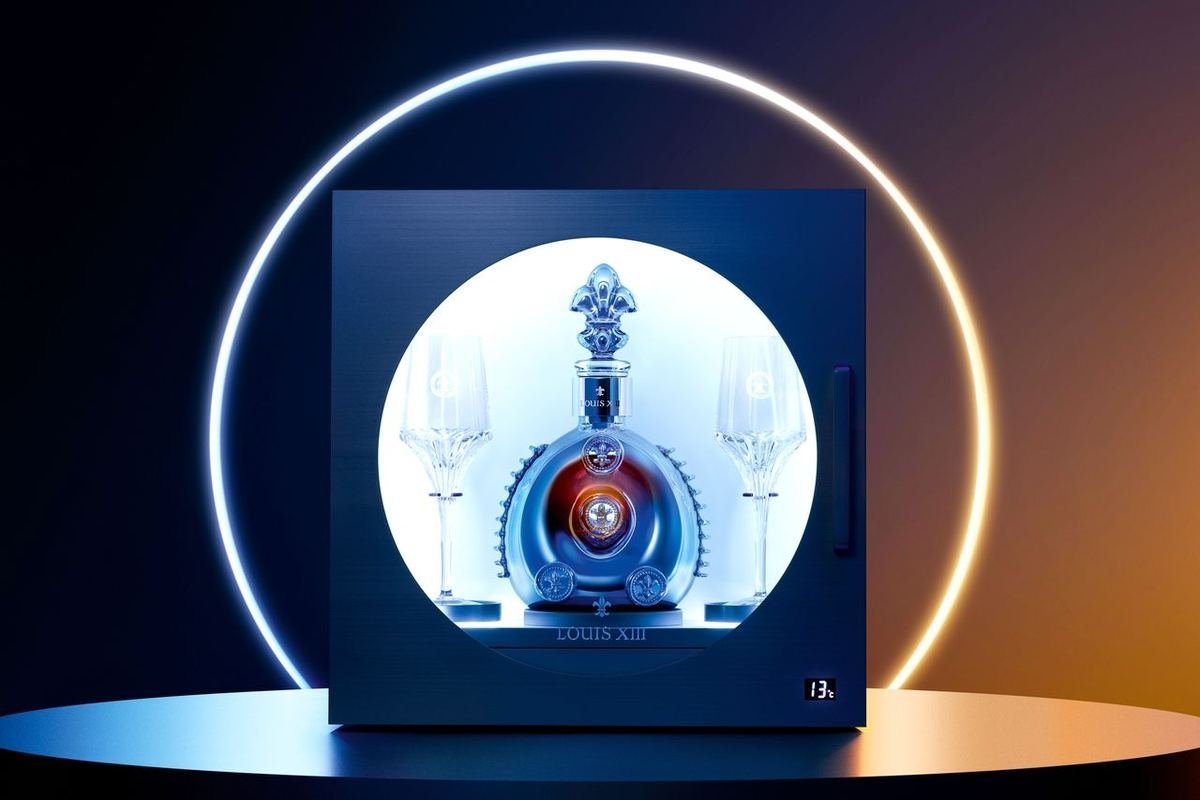
Louis XIII’s latest Black Pearl is not simply a different liquid in a different decanter. It introduces a sequence. The tribute to the birthplace of Louis XIII begins below room temperature and asks the drinker to follow the cognac as it warms. The equipment is therefore part of the proposition, not just part of the packaging.
The house’s product account identifies a release of 398 decanters, presented in midnight-blue crystal. Cellar Master Baptiste Loiseau selected an eau-de-vie from the historical demijohn collection and blended it in a single tierçon associated with Le Grollet. These are the production details that can be established without borrowing a tasting account.
Le Grollet is the historical cellar around which the release is organised. The edition’s name makes that place part of the cognac’s identity. The question is how a cellar can remain relevant once its contents have travelled elsewhere. A decanter carries liquid; it does not carry the cellar’s entire environment.
The official French presentation describes a bespoke Cooling Cellar capable of taking the liquid down to 13°C. The proposed ritual then moves from cool towards ambient temperature. This does not prove that a colder serving is universally better. It establishes a starting point for a controlled progression.
The distinction is important. A conventional serving recommendation names a condition. This one names a change in condition. Its subject is not only the glass at the beginning, but the time spent following the glass afterwards.
A cooling device makes preparation visible. Someone has to determine when the decanter reaches its starting temperature and when the pour takes place. The vessel, the room and the duration of the tasting all become relevant to how consistently the ritual can be repeated.
That gives the edition a design question as well as a spirits question. Is the cabinet legible as a tool, or does it dominate the object it is meant to serve? The midnight-blue decanter refers to the cellar through colour; the cooling system refers to it through procedure. Those two forms of reference need not have equal weight.
A precise evaluation would require a comparative tasting under stated conditions. This article does not claim one. Floral, waxy or spicy notes in promotional descriptions remain the house’s account, not observations made by this publication. Nor should a visual chart assign invented numerical proportions to aromas.
Louis XIII traces its creation to Paul Emile Rémy Martin in 1874 in its historical account. That history supplies context for the continuity of cellar work, but it is not the age of the contents of an individual bottle. The edition is better understood through the stated selection and service method than through an assumed number of years.
The release count establishes scarcity, not a verdict on taste or a prediction about future value. The more substantial editorial point is the attempt to make a long-developed spirit unfold across a short, repeatable period at the table.
Black Pearl gives temperature a role normally assigned to the blend alone. Whether the apparatus deserves its place depends on what it makes perceptible. The cabinet prepares the starting point. The glass has to justify the rest.
Reporting: Gabriel Silveirado
Cover: Louis XIII Black Pearl and its serving cabinet. Image courtesy of Louis XIII.
Instagram: Louis XIII.
CONTINUE READING
Dining / Reportage
From Bemelmans in New York to Library by the Sea in Grand Cayman, a considered hotel bar offers more than a setting for a drink.
Dining / Interview
The chef behind Sal, judge of MasterChef Brasil and frontman of a hardcore band.
Dining / Interview
Twenty years after founding Beefbar, the restaurateur takes his inspiration from fashion houses rather than from other restaurants.