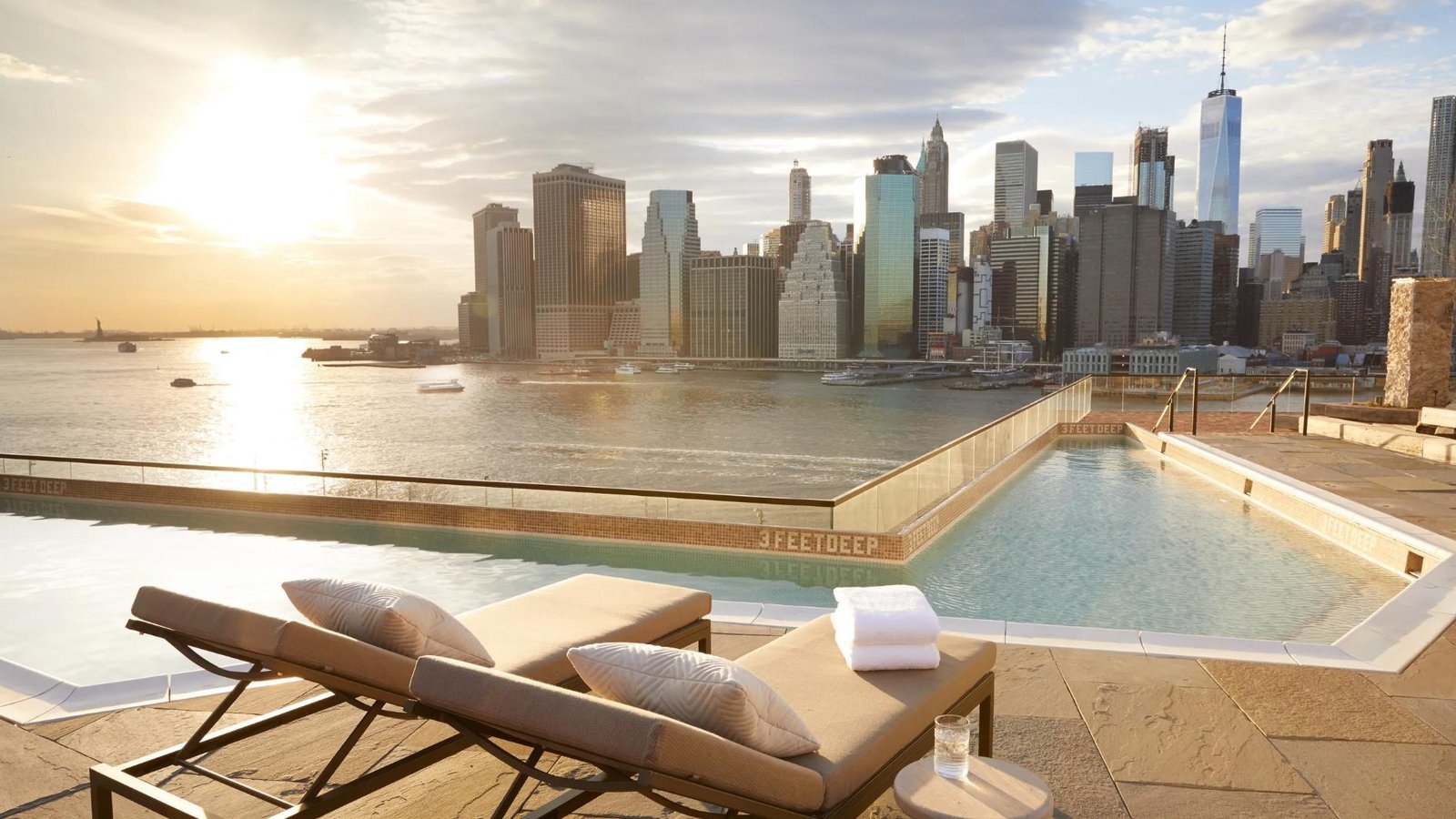
Manhattan is the view, but Brooklyn is the material subject. At 1 Hotel Brooklyn Bridge, the East River places the skyline across the water, while the interiors turn towards the borough’s industrial past and the people working with its recovered materials.
The address on Furman Street gives the hotel a close relationship with Brooklyn Bridge Park. Large windows keep the river in the composition; the rooftop pool and Harriet’s add a social setting above it. The view establishes the position. It does not explain the whole building.
Wood with a previous address
Reclaimed timber from the former Domino Sugar Factory appears in furniture, alongside repurposed shipping pallets and glass from a Brooklyn studio. The provenance makes the rougher surfaces more than a visual preference. A part of the borough’s manufacturing history acquires another use.
The hotel’s design account also connects the materials with the Navy Yard and the waterfront’s packing and shipping trades. These references work at the scale of a table or a bench, keeping the industrial story within reach rather than confining it to a framed photograph.
Artists change what a material can do
Rachel Mica Weiss’s installation Unbounded uses tied obsidian rocks near the lobby staircase. Her Breaching connects hand-dyed yarn with reclaimed pine, recalling the bridge’s lines and the ships that once worked along the East River.
Jarrod Beck’s All OVEREACHOTHER gives damaged roofing another life through draped rubber. Danielle Trofe’s lampshades and planters use mycelium with agricultural waste. The projects differ in method, but each asks the visitor to look beyond the finished surface.
Furniture by Uhuru and tables by John Randall’s Bien Hecho add another level of local authorship. The hotel’s published account identifies timber recovered after Hurricane Sandy among the materials used. Craft is tied to a specific maker and source, rather than presented as an anonymous decorative effect.
Environmental systems beyond the image
A planted lobby wall is immediately visible. Rainwater collection is less so. The hotel describes a roof system feeding an underground tank, with the collected water supplied for park irrigation. Low-flow fixtures and building controls form other parts of its operational approach.
The operator describes these systems as part of its environmental programme. Their performance cannot be established from the appearance of the interiors alone.
The waterfront as a daily setting
The current dining programme includes Barbuto, while Bamford provides the spa component. Menus and rooftop arrangements can change; they should be considered alongside the date and conditions of a visit rather than treated as permanent features of a photograph.
The window and the material tell different stories
The earlier room account described organic-cotton bedding and large windows facing New York’s skyline. Those elements operate at different distances. A textile is felt and used; the city is read across the river. The room connects them without requiring the distant view to explain every material choice.
The rooftop changes that balance again, opening the interior’s waterfront subject into air and a broader field of vision. It is not a separate argument from the rooms below. The same river is encountered through another arrangement of body, building and horizon.
The hotel is most persuasive where the distant skyline and the close-up material history remain in balance. New York can be seen from the roof. Brooklyn can be read in the room.
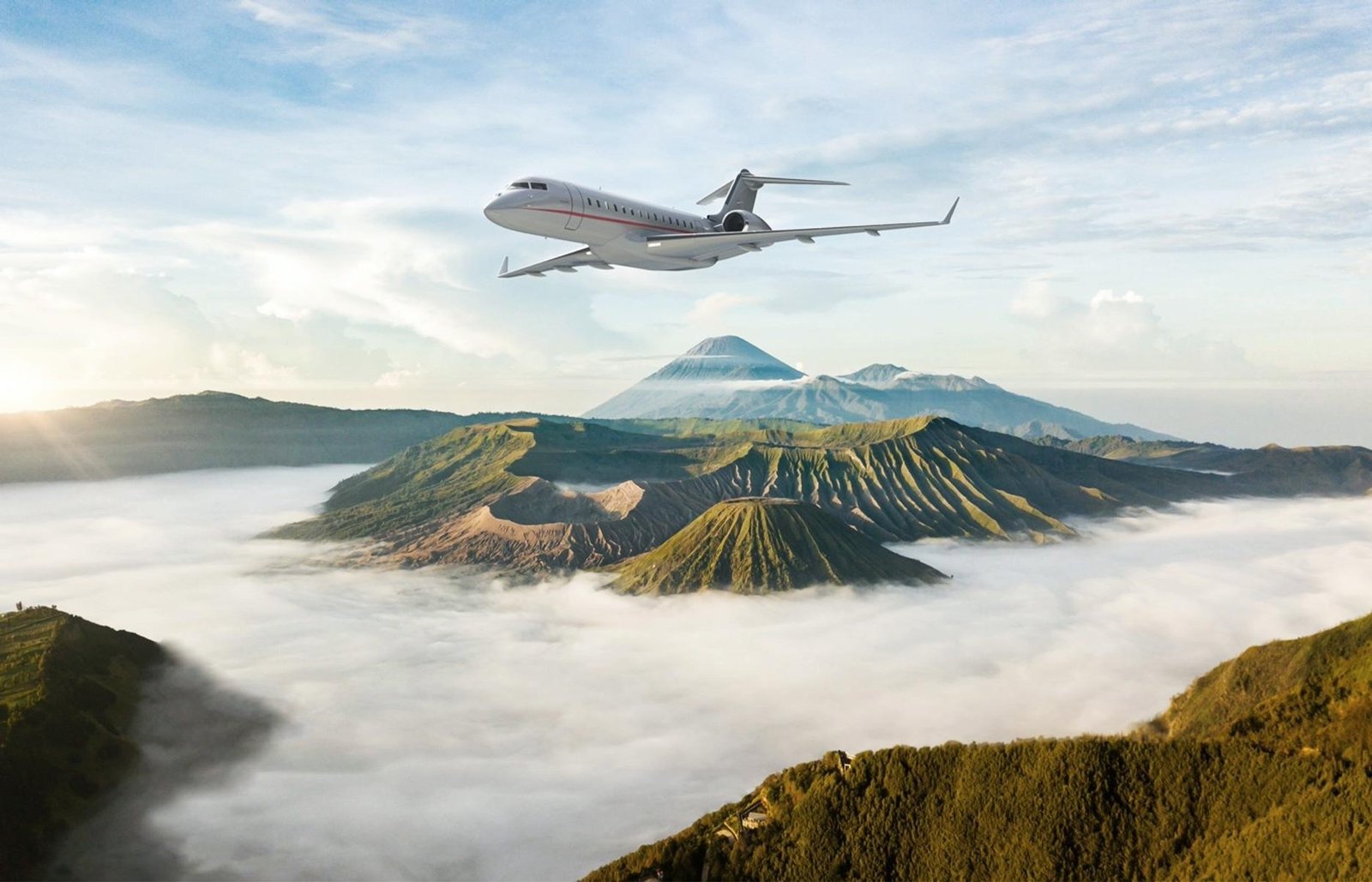
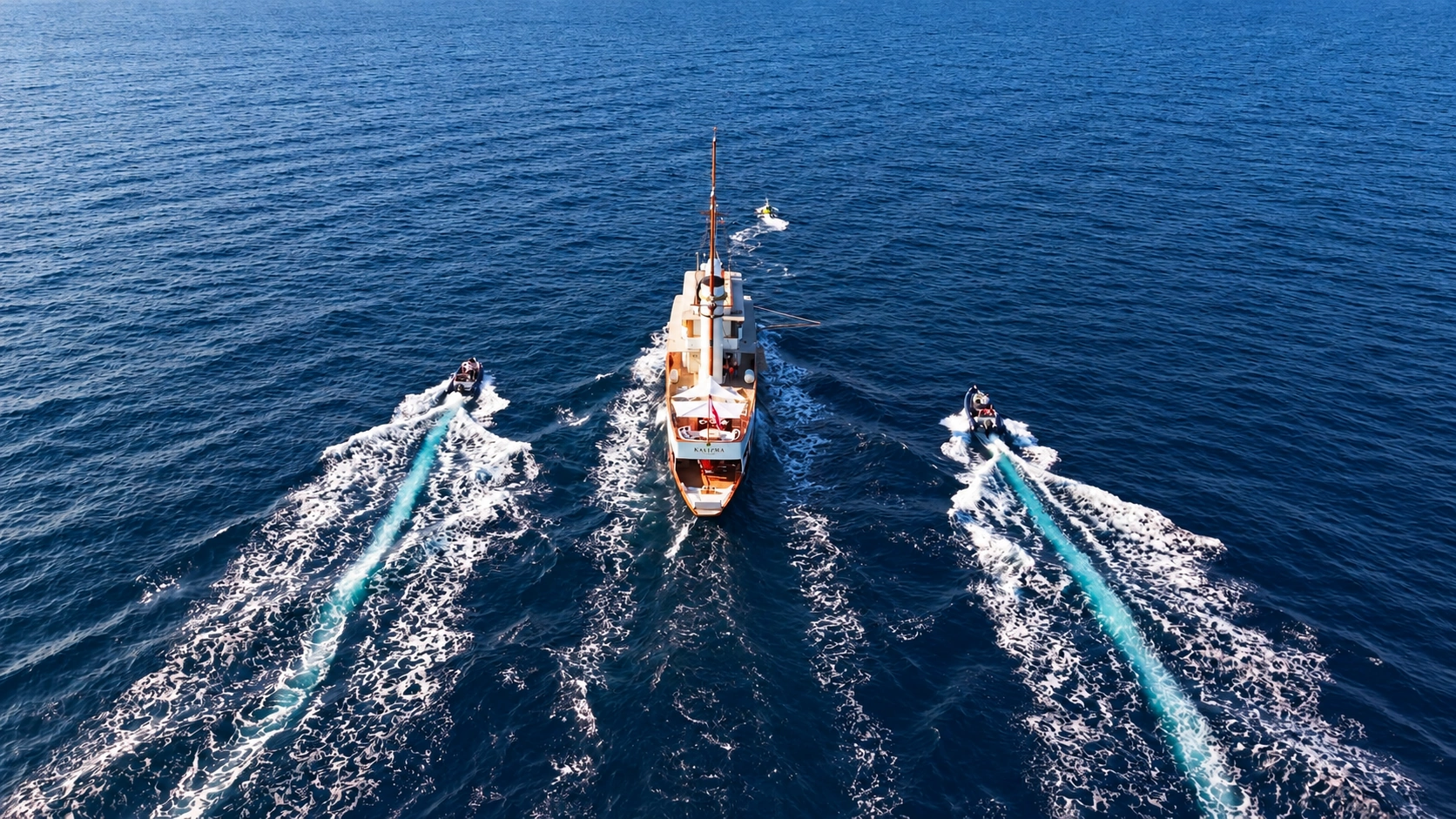
Four Seasons, Aman, Maybourne, Belmond and Mandarin Oriental now sell the journey as part of the stay, from helicopter transfers into London to 23-day circumnavigations at $238,000 a head. Who flies, why, and what is really being bought.
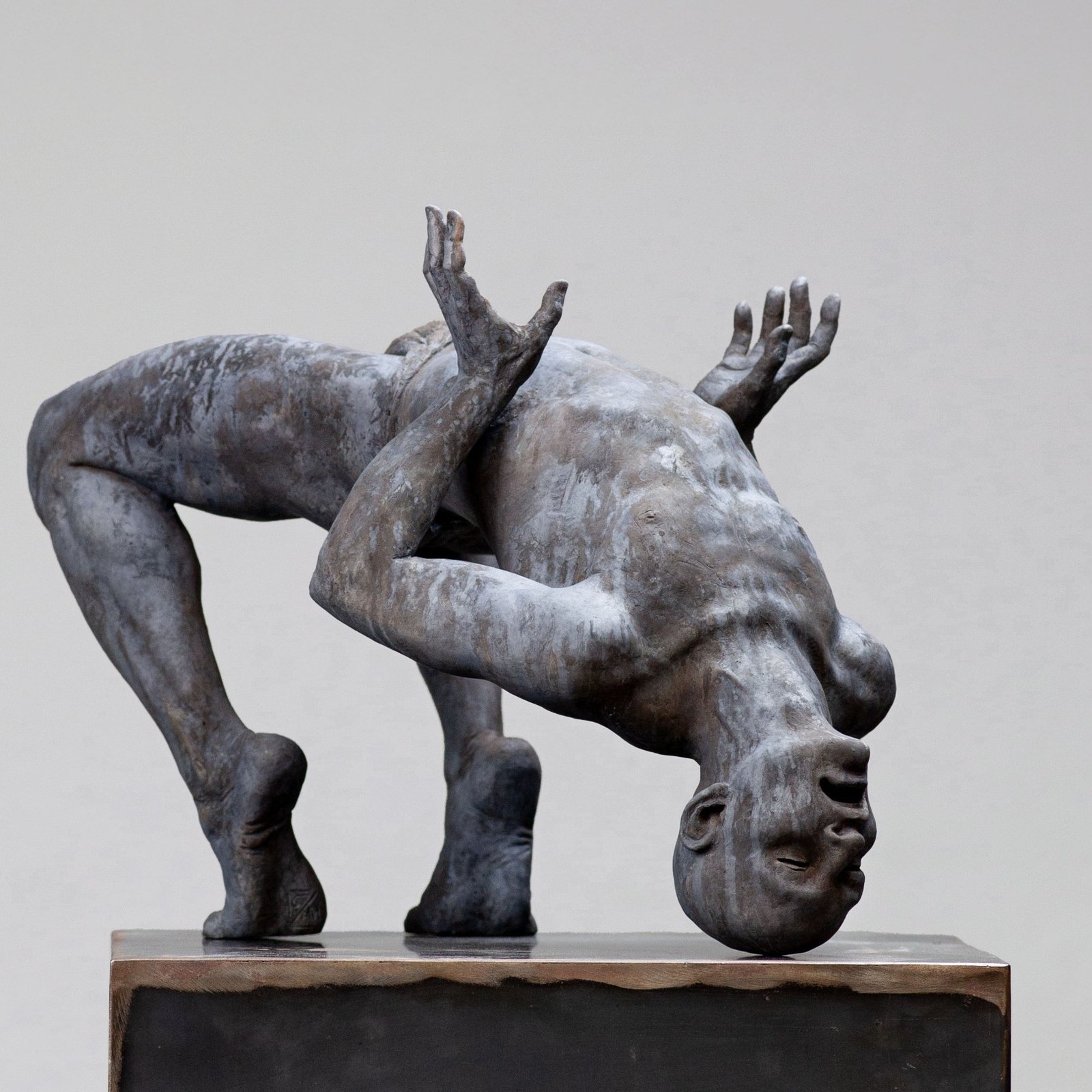
Airlifted by helicopter to the summits, monumental bronzes by Coderch & Malavia turn Courchevel's slopes into an open-air gallery, with Arman back in 1850.
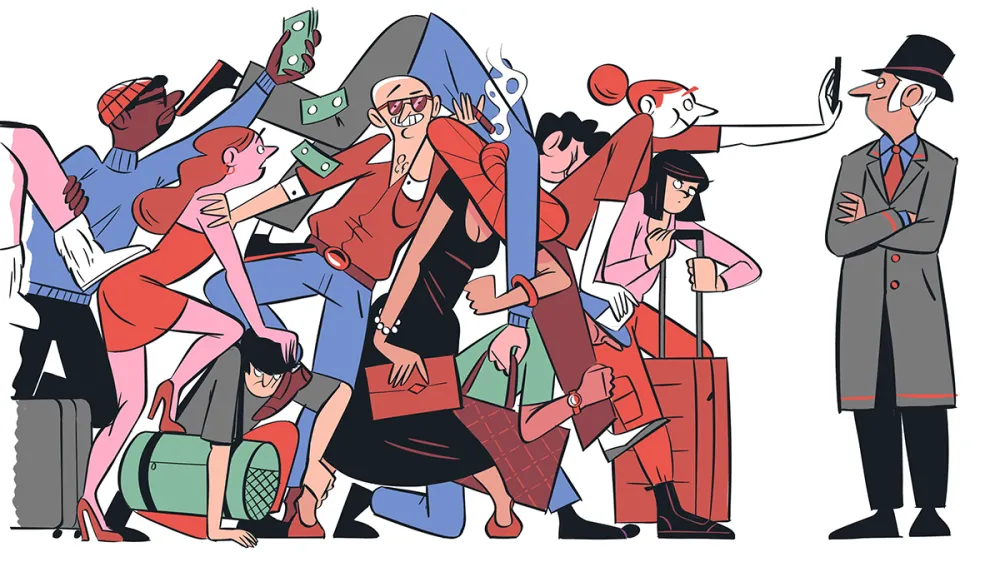
At a handful of the world's most sought-after hotels and villas, money buys an application, not a room. Advisers now build dossiers to prove their clients belong.
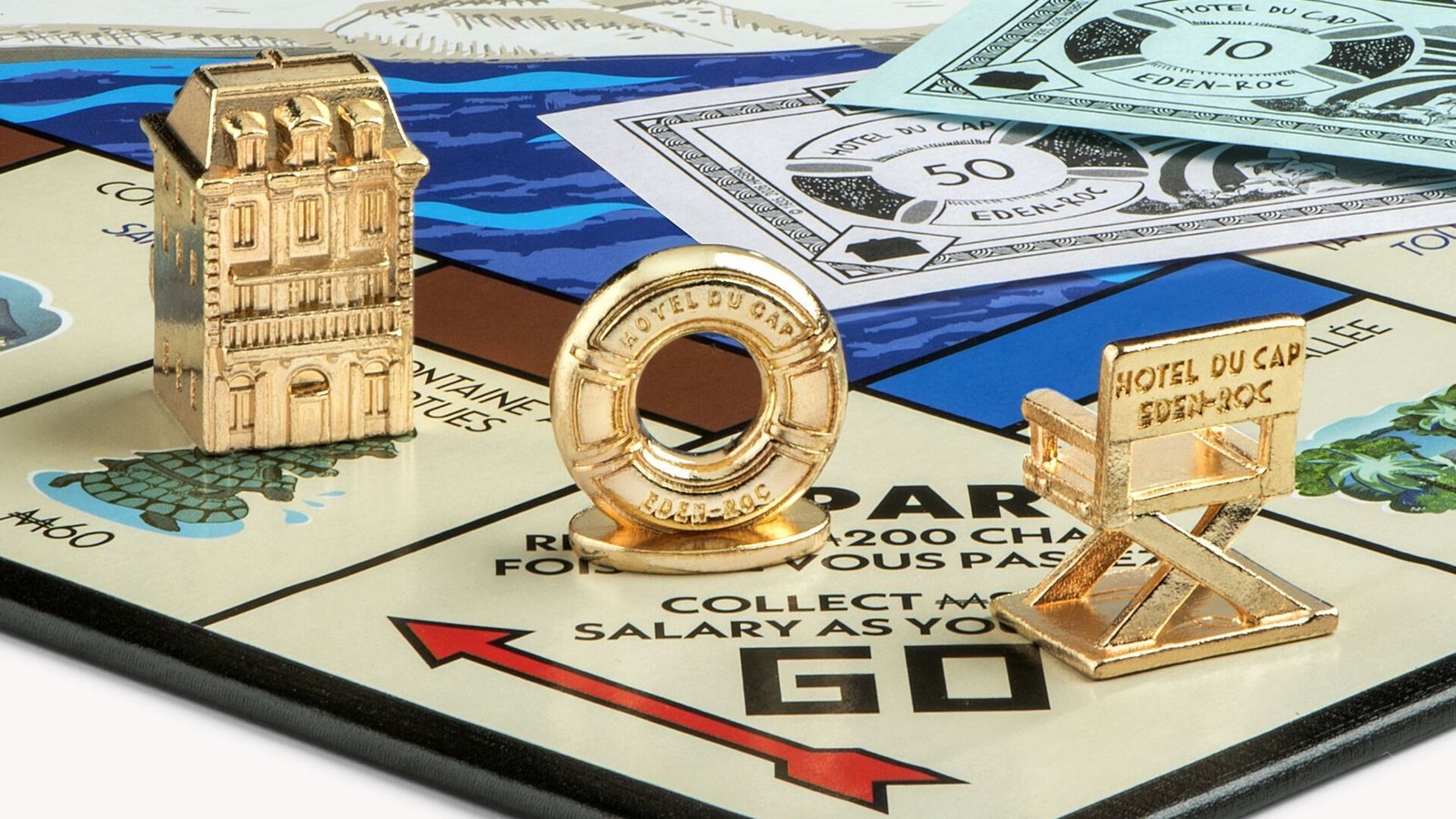
Limited to 500 sets, the Hôtel du Cap-Eden-Roc edition of Monopoly swaps streets for chapters of the Antibes hotel's history, with gilded tokens, illustrations by Haydée Otero and cards that win a game of pétanque with the general manager.
THE CURATED GLOBE / FROM THE EDITORS
Good stories. Better company.
A considered selection of people, places and ideas from WAYFARER Edition, delivered to your inbox.
Welcome aboard. Your first letter is on its way.
We could not complete your subscription. Please check your email and try again.