The new Tesla Roadster: the sports car that learned to fly
Nine years after its first promise, Tesla unveiled the Roadster at SpaceX's test site in Texas: a car that climbs walls, flips over trucks in mid-air and reaches 60 mph in 0.81 seconds. Production is planned for 2028.
Image: Tesla / WAYFARER Edition | Images: Tesla; Tesla Motors via Wikimedia Commons
MOTORING
Nine years of delay call for a memorable entrance. Tesla chose the least likely one of all: it made the car fly.
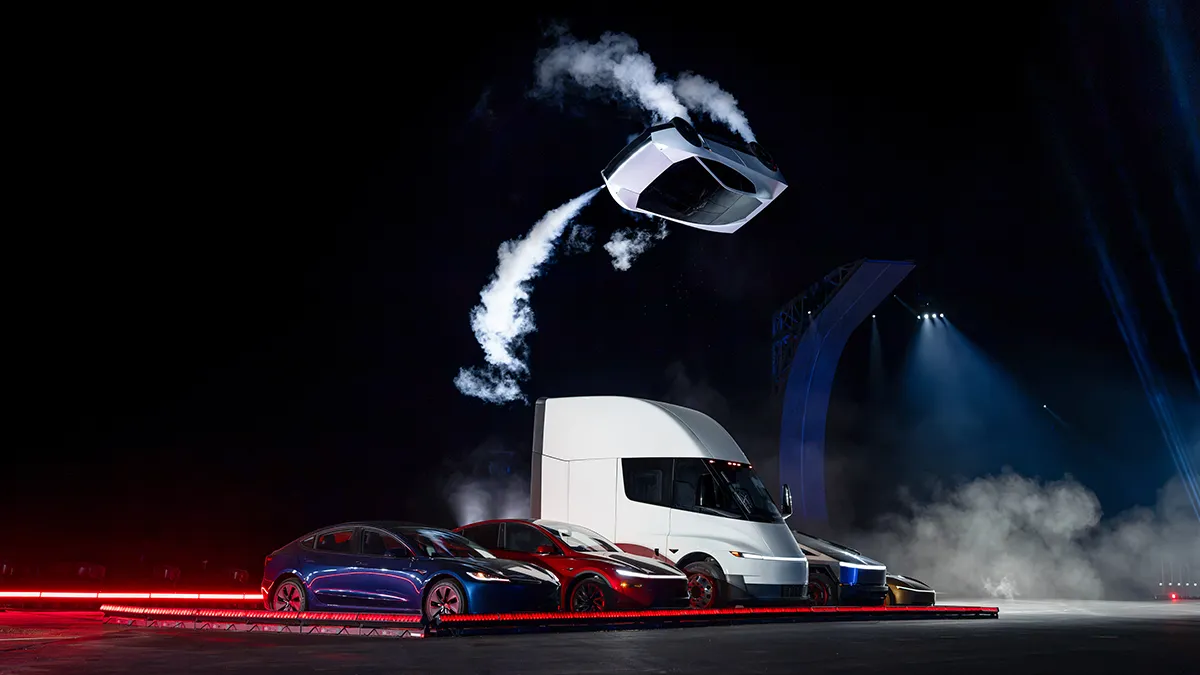
The second-generation Roadster was finally unveiled on the evening of Thursday 15 October at SpaceX’s rocket test site in McGregor, Texas. The event had been set for 1 October and was pushed back two weeks when forecasters warned of high winds, a fitting last postponement for a car that has lived on promises since 2017. Before the car, the audience watched a static fire of a Raptor engine. Then the electric sports car did what no production car has attempted in public: it climbed a wall, leapt over other vehicles while spinning in the air, and landed with the help of thrusters.
The show: wall, leap and landing
In the first demonstration, the Roadster drove up a curved ramp until it was almost upside down, some 21 metres above the ground, held to the surface only by the suction of its fan system. It then let go and used its thrusters to brake the fall. In the second, it jumped over a line of parked Teslas, among them a Semi truck and a Cybercab, completing a sideways roll in mid-air, the “kickflip”, before landing on the other side.
For safety, the stunts were run autonomously, with no one at the wheel. The live audience, Elon Musk explained, had a purpose of its own.
“We need an audience to prove that it’s not AI.”
Elon Musk
It is a revealing line. In an age when any spectacle can be generated on a screen, the most persuasive thing a car company can offer is a crowd that saw it happen.
The technology: fans and rockets
Two systems explain the spectacle. The first is a set of fans in the rear diffuser that pulls air from beneath the car and presses it to the ground, an idea with a famous ancestor in Formula 1, the Brabham BT46B “fan car” of 1978, withdrawn after a single win. Tesla says the system allows cornering beyond 2 G, well past what the tyres could manage alone.
The second is a propulsion package developed with SpaceX: ten nozzles around the body, fed by compressed gas stored in composite tanks behind the cabin, producing more than 80 kN of thrust. They make possible the leap, the landing and a 0 to 60 mph time of 0.81 seconds. Musk made no secret of the project’s nature: the car, he said, can “basically fly like a rocket” and is “not necessarily a safety-optimised car.”
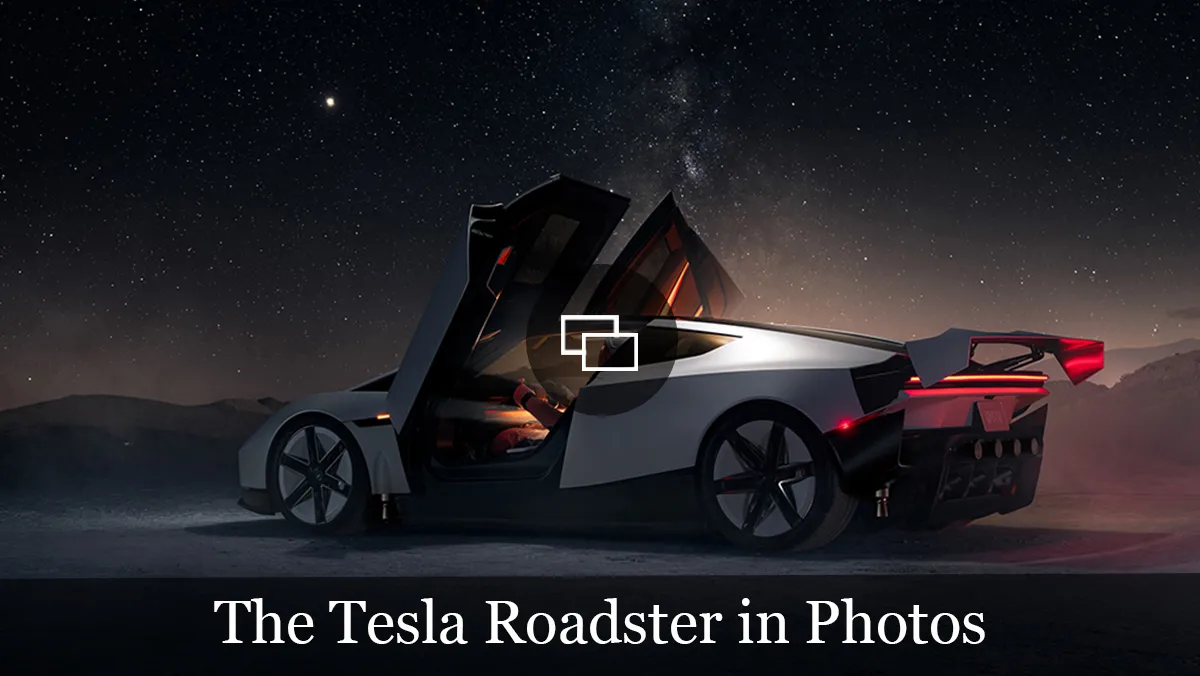
ANGULAR LINES, UPWARD-OPENING DOORS AND AN ACTIVE REAR WING. IMAGE: COURTESY OF TESLA
The design: from spy plane to Cybertruck
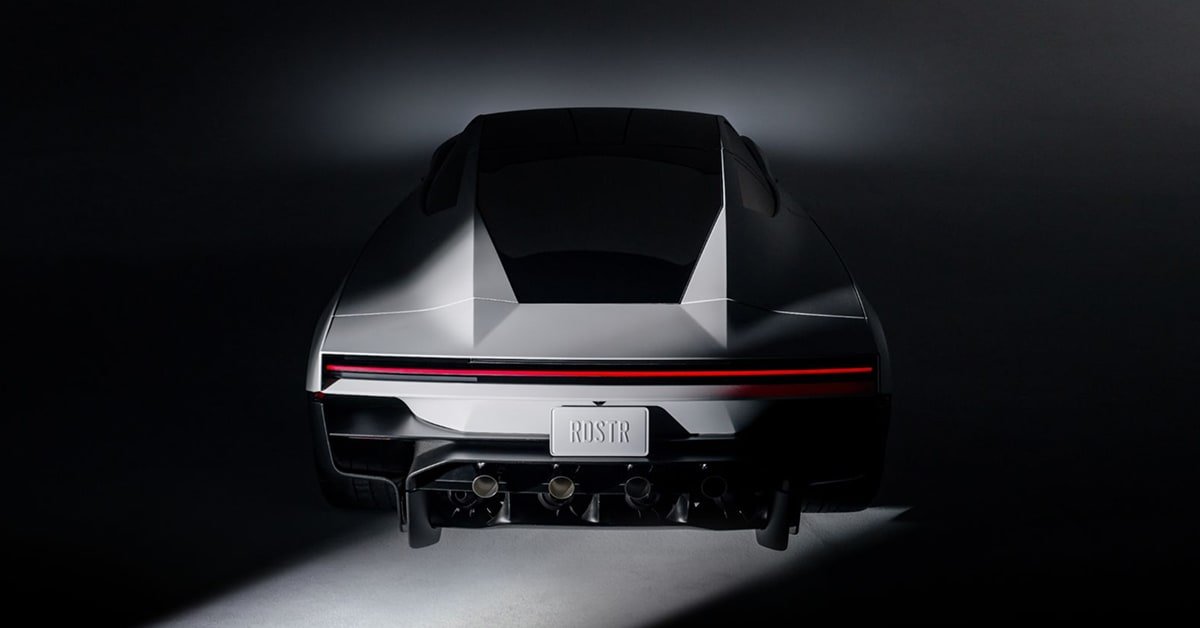
Even before the stunts, it was clear this is not the car shown in 2017. The low two-seat silhouette remains, but the soft curves have given way to straight lines and sharp creases, closer to the Cybertruck. Design chief Franz von Holzhausen cited the SR-71 Blackbird as an inspiration, and the reference is legible: a shape drawn for speed rather than for charm. There are upward-opening doors, light bars spanning front and rear, an active rear wing and gold-ringed nozzles in plain view.
Inside are white seats moulded into the chassis to save weight, a yoke in place of a wheel, and steering, brakes and throttle all by wire. Tesla says that, in the long run, this will be the only car it builds to be driven manually. In a company that has spent a decade teaching cars to drive themselves, that is perhaps the most romantic sentence of the evening.
A LOW TWO-SEATER THAT KEEPS THE ORIGINAL IDEA AND REDRAWS EVERYTHING ELSE. IMAGE: COURTESY OF TESLA
Where it began
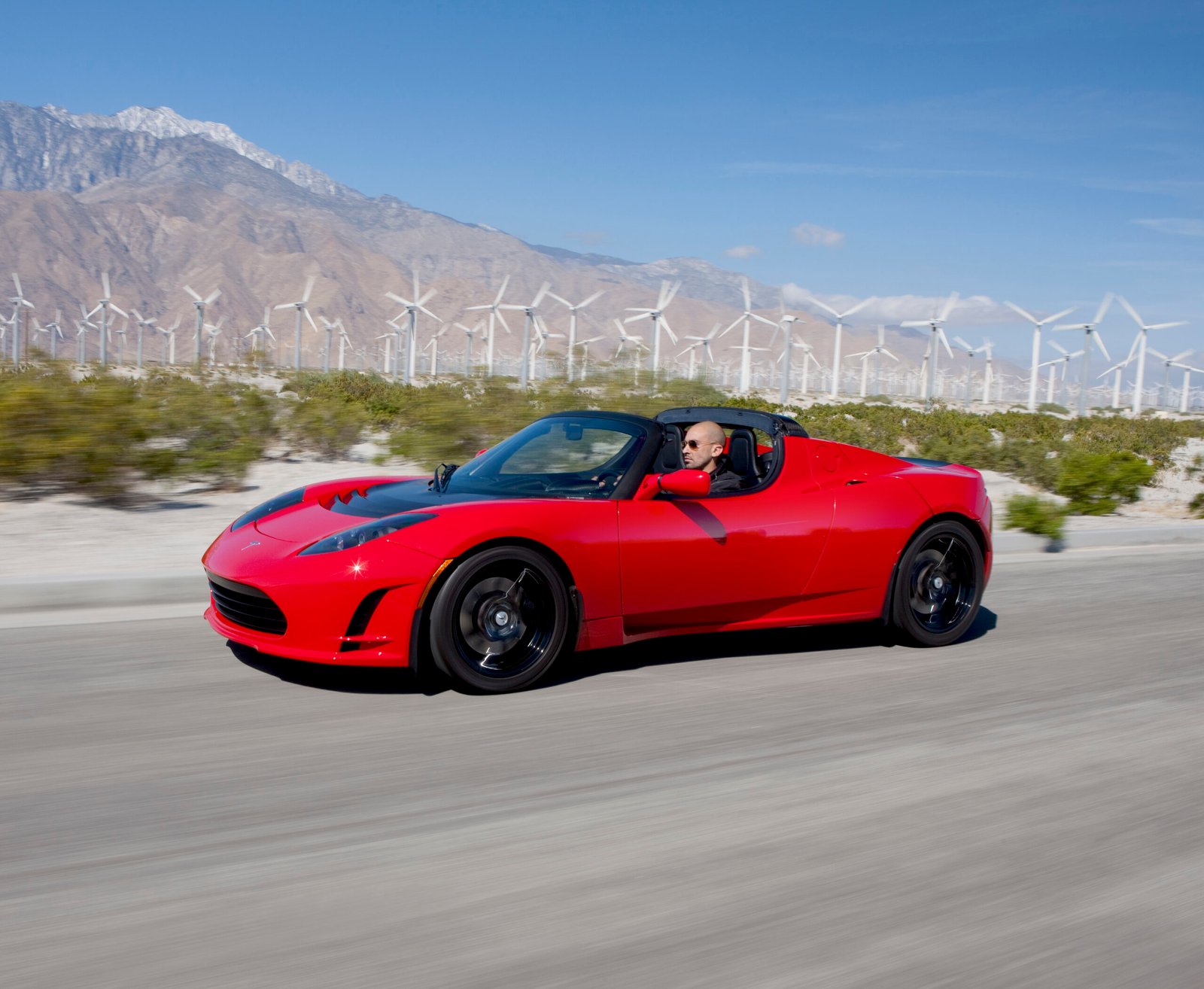
The name carries history. The first Roadster, revealed as a prototype in 2006 and delivered to its first owner in February 2008, was Tesla’s opening statement: a light two-seater with a carbon-fibre body and lithium-ion cells, the first production electric car able to travel more than 200 miles on a charge. Around 2,500 were sold in more than 30 countries before production ended in 2012. One of them left the planet in 2018, strapped to the first Falcon Heavy.
THE ORIGINAL ROADSTER, THE CAR THAT STARTED THE COMPANY. IMAGE: TESLA MOTORS, VIA WIKIMEDIA COMMONS
The second generation was announced in November 2017 with deposits of $50,000 for the standard car and $250,000 for a limited Founder’s Series. The years that followed brought one slipped date after another, and a quieter transformation: according to reports ahead of the reveal, the programme abandoned an approach based on Model S Plaid components and became an all-new carbon-fibre hypercar.
What we still don’t know
Production is planned for 2028 at Giga Texas. Price, battery capacity and range were not disclosed, and Musk admitted the car may not be legal everywhere. In 2017, Tesla promised 0 to 60 mph in 1.9 seconds, a top speed above 250 mph and close to 620 miles of range, from $200,000. The acceleration figures have been beaten comfortably. The rest, it seems, is another conversation.
“The Roadster is the reason I came to Tesla,” said Lars Moravy, vice president of vehicle engineering. Nine years on, the wait has produced a car that accelerates faster than any other and, for a few seconds, leaves the ground. What remains to be seen is how long it will take to reach the road.
Model
Tesla Roadster (second generation)
Status
Revealed 15 October 2026; production planned for 2028 at Giga Texas
Powertrain
Electric, with a SpaceX-developed cold-gas thruster package (ten nozzles, more than 80 kN)
0 to 60 mph
0.81 seconds (Tesla figure)
Grip
Fan-assisted downforce, more than 2 G of cornering (Tesla figure)
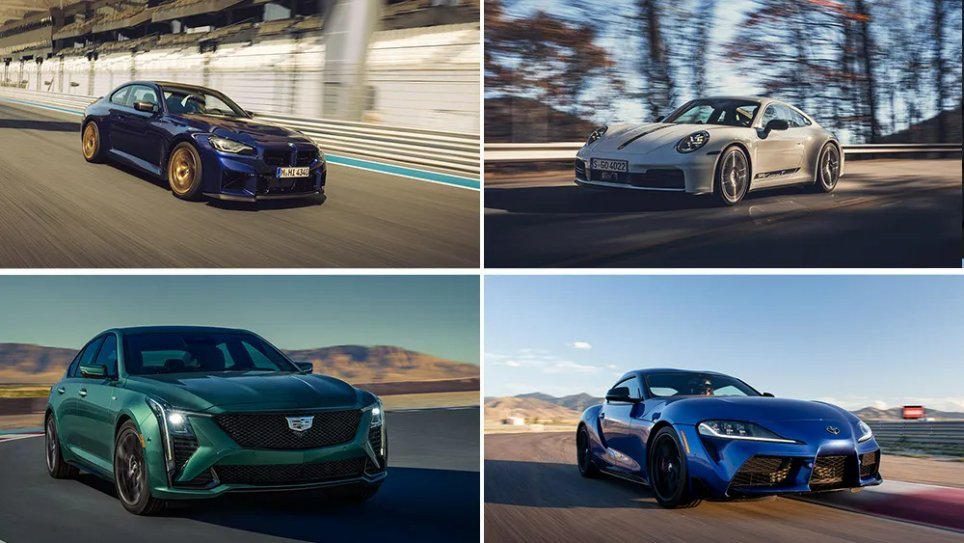
The manual gearbox has gone from rule to rarity. In late 2026, BMW M, Porsche, Nissan and Lotus still build cars that let the driver choose the gear, while the Toyota GR Supra and BMW Z4 have already taken their last bow.
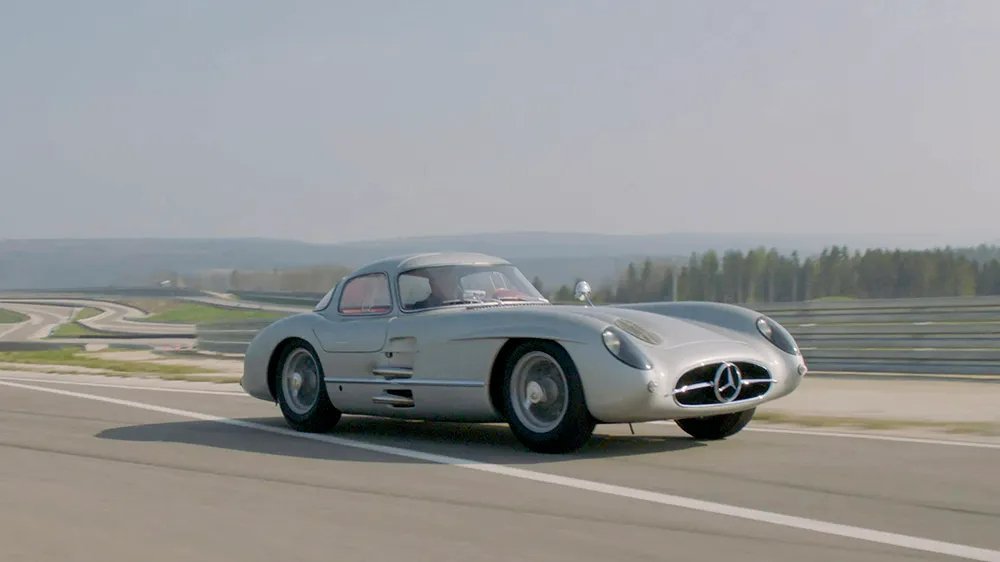
A Mercedes-Benz built in two examples still sits alone at USD 143 million. Below it, 2026 has rearranged the table: a Shelby Cobra Daytona Coupe, a white Ferrari 250 GTO, a McLaren F1 GTR and Ferrari's first electric car have all entered the ranks of the most valuable cars ever sold.
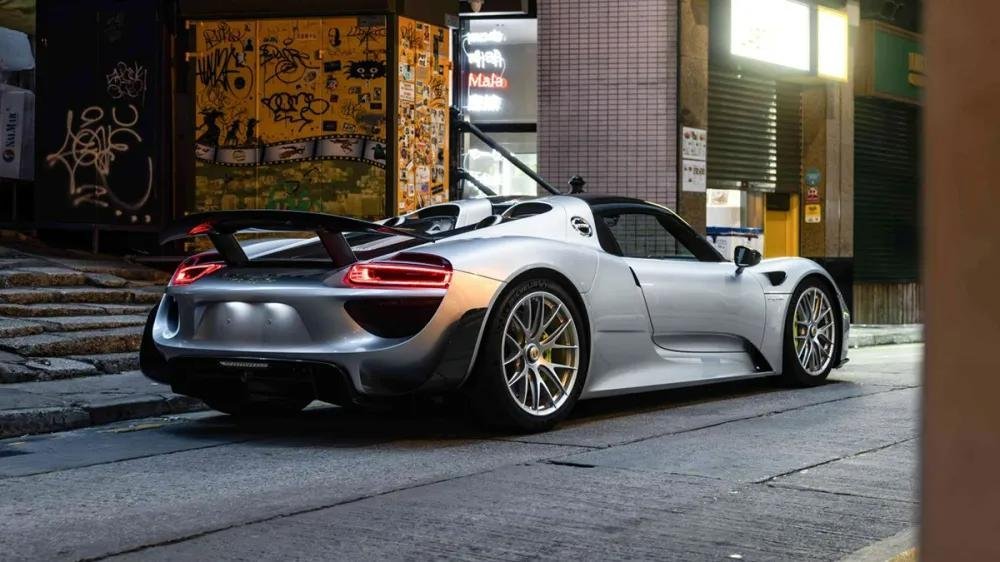
What began in March as a careful hint from Michael Leiters became, in October, a concept on a pier in Queens: the mid-engined Mission S previews a permanent Porsche model line above the 911, the first since the 918 Spyder.