Culture / Reportage
Peter Simon: the collector’s eye moves from cloth to canvas
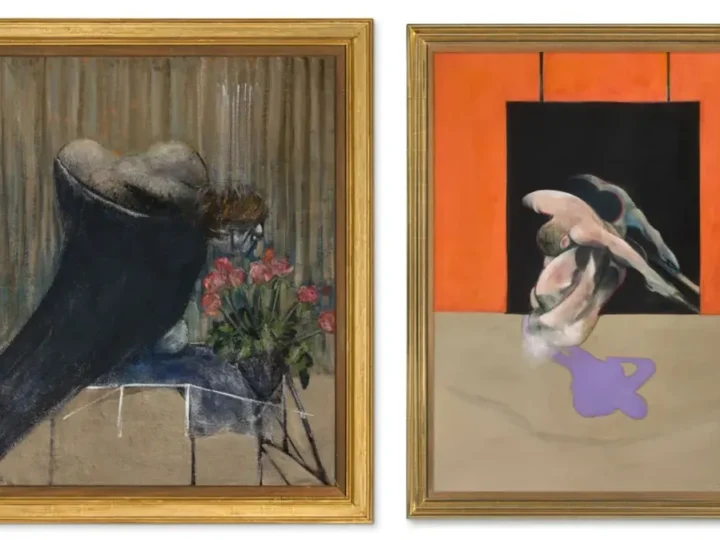
The Monsoon founder’s collection reaches Christie’s during Frieze Week, offering a study in colour, composition and the formation of taste.

THE CURATED EDITION.
Reportage /
Renovation has dispersed the institution, not suspended its programme. Three exhibitions provide an autumn route through the city.
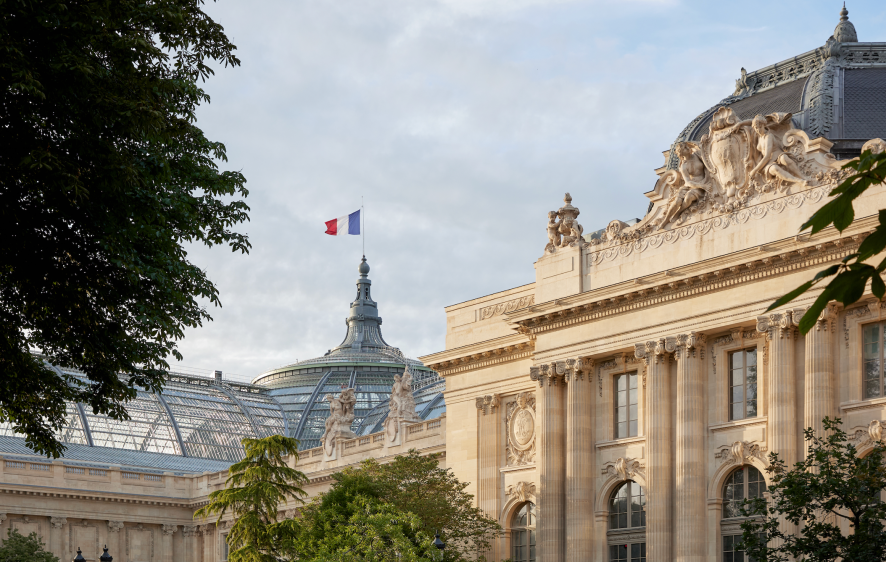
Paris’s cultural map is changing while one of its defining buildings is out of service. The Centre Pompidou’s Beaubourg building closed on 22 September 2025 for a transformation intended to lead to reopening in 2030. Its collection and programming, however, have not disappeared behind the construction barriers. They now require visitors to follow the institution across several addresses.
The Constellation programme sends exhibitions and activities to partner venues in France and abroad. The renovation combines technical work by AIA Life Designers with a cultural component by Moreau Kusunoki in collaboration with Frida Escobedo Studio. Conservation, accessibility and the organisation of public space are part of the brief.
For a visitor, the important distinction is between a closed building and an inactive institution. An old itinerary based on Beaubourg’s permanent galleries no longer works. A new one can instead connect questions that the collection raises in different settings: the inheritance of painting, the formation of contemporary practice and the physical intimacy of works on paper.
Cezanne et nous, running from 23 September 2026 to 17 January 2027, examines the painter through the artists who subsequently interpreted him. The Grand Palais lists nearly 180 works, with figures including Matisse, Picasso, Mondrian, Joan Mitchell, Bridget Riley and Peter Doig.
This is a useful starting point because influence is rarely a straight line. Different artists can take incompatible lessons from the same painting: a structure to preserve, an instability to intensify, a convention to resist. Rather than treating Cezanne as a monument at the beginning of modern art, the exhibition’s stated premise makes him a continuing problem for later painters.
The 2026 Marcel Duchamp Prize exhibition is at the Musée d’Art Moderne de Paris from 2 October 2026 to 7 February 2027, in partnership with the Pompidou. Its four nominated practices are Joël Andrianomearisoa, Brognon Rollin, Laura Henno and Josèfa Ntjam. Admission to the presentation within the collections is free.
The format invites comparison without requiring an immediate favourite. How does each practice use space? What does it ask of the audience? How much context is needed before a work becomes legible? These questions provide a more productive visit than treating the display as a prediction of the prize result.
Opening on 20 October 2026, Louise Bourgeois, Extrême tension brings together graphic holdings from the Bibliothèque nationale de France and the Centre Pompidou. It runs at the BnF’s Richelieu site until 21 February 2027. Drawings and prints offer a different scale of encounter from the monumental sculpture often associated with Bourgeois.
Build the route around separate visits rather than attempting to compress all three into a single afternoon. They share an institutional connection, not one entrance or admission system. Massy’s new Centre Pompidou Francilien is currently scheduled for spring 2027; it is not a substitute already open for a Beaubourg visit.
Follow: @centrepompidou. Check each venue’s current access conditions before travelling.
CONTINUE READING
Culture / Reportage
The Monsoon founder’s collection reaches Christie’s during Frieze Week, offering a study in colour, composition and the formation of taste.
Culture / Reportage
The film’s early-kitchen premise opens a wider conversation about food, apprenticeship and the difference between biography and fiction.
Culture / Reportage
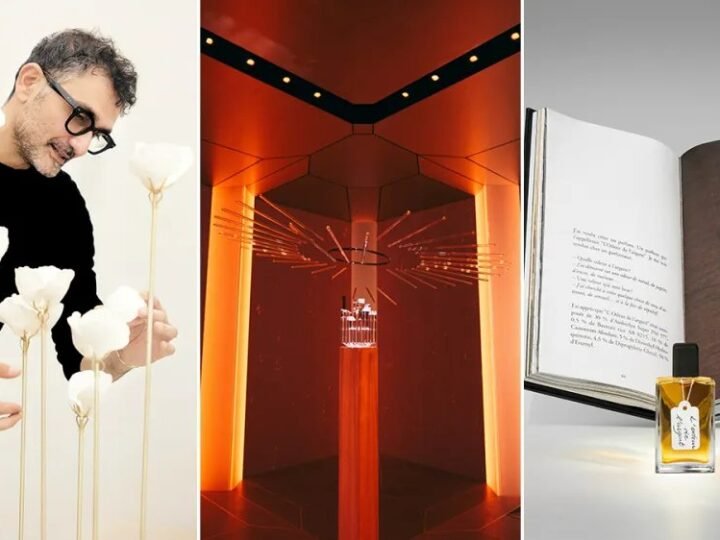
Looking back at the 2025 Palais de Tokyo exhibition, scent emerges as a material for collaboration rather than simply a product to be displayed.