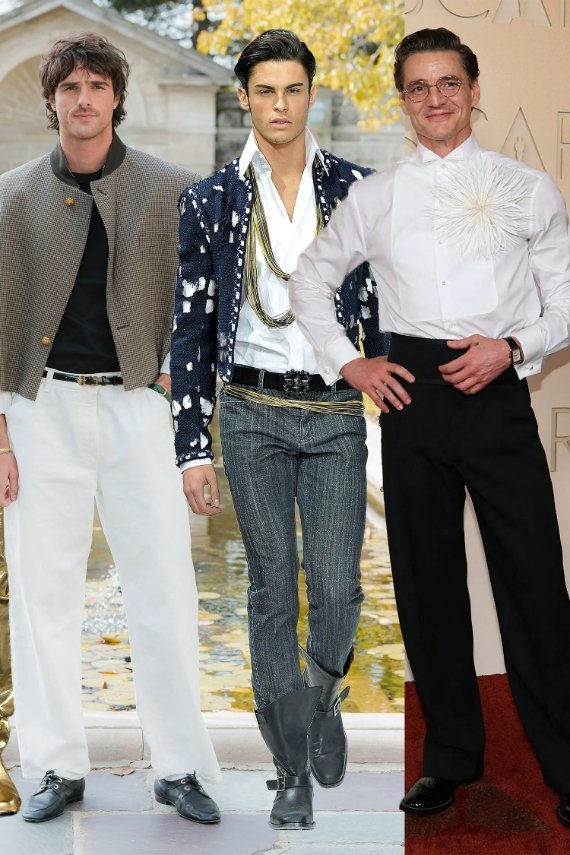
Chanel has never launched a men's line, and says it has no plans to. From Gabrielle Chanel and Karl Lagerfeld to Harry Styles, Pedro Pascal and Jacob Elordi, the house has built a menswear of suggestion instead.
The Chanel man has never officially existed. That absence may be what sustains one of the most sophisticated narratives in contemporary fashion.
In a market where almost everything is swiftly translated into product, Chanel has spent decades cultivating an ambiguous and remarkably potent territory, in which menswear exists as suggestion, apparition and desire, but rarely as something one can simply buy. The position is deliberate. In May 2025, chief executive Leena Nair repeated that the house does not plan to launch a men’s line, while welcoming the men around the world who wear Chanel anyway.
Desire that stays out of reach
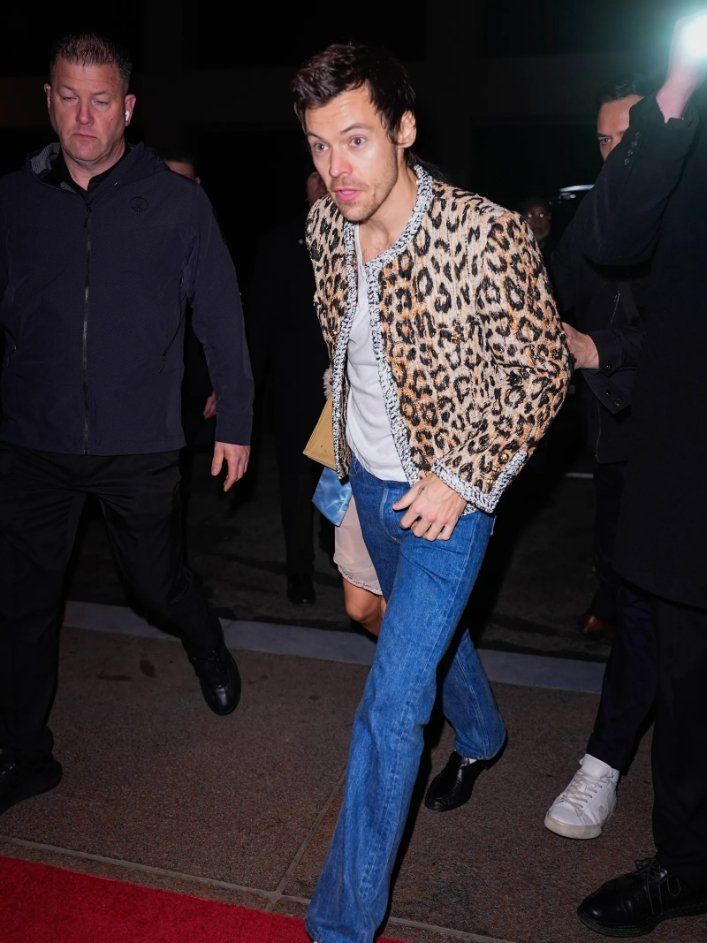
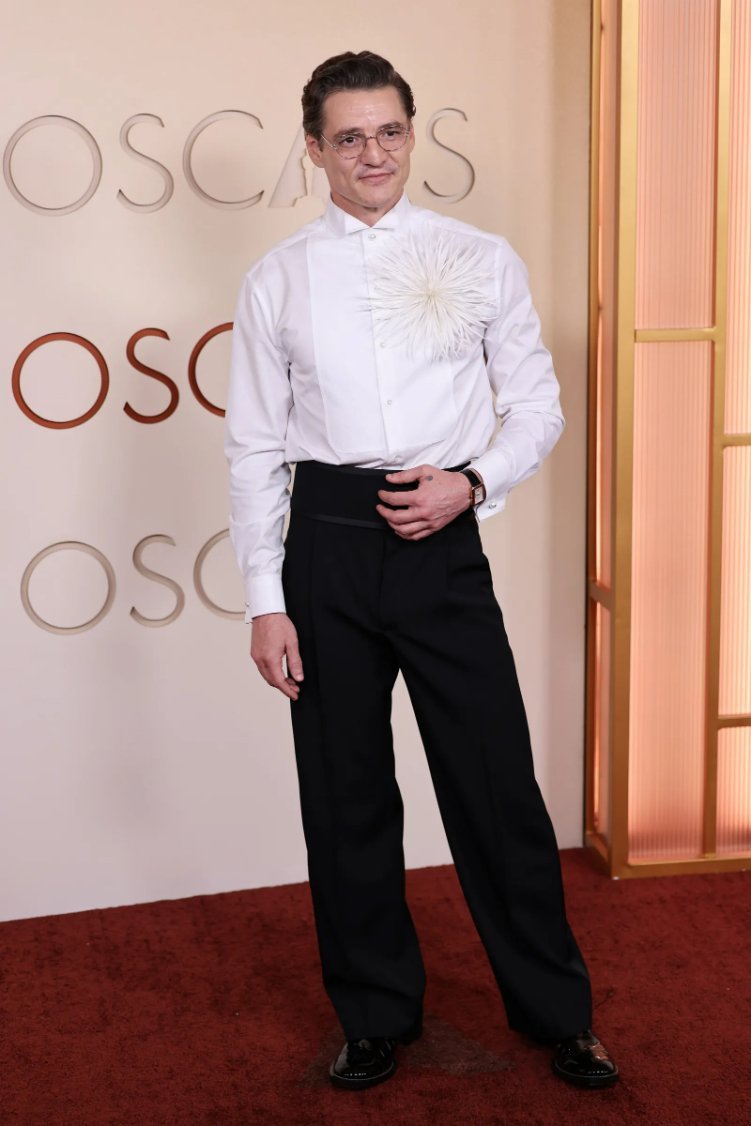
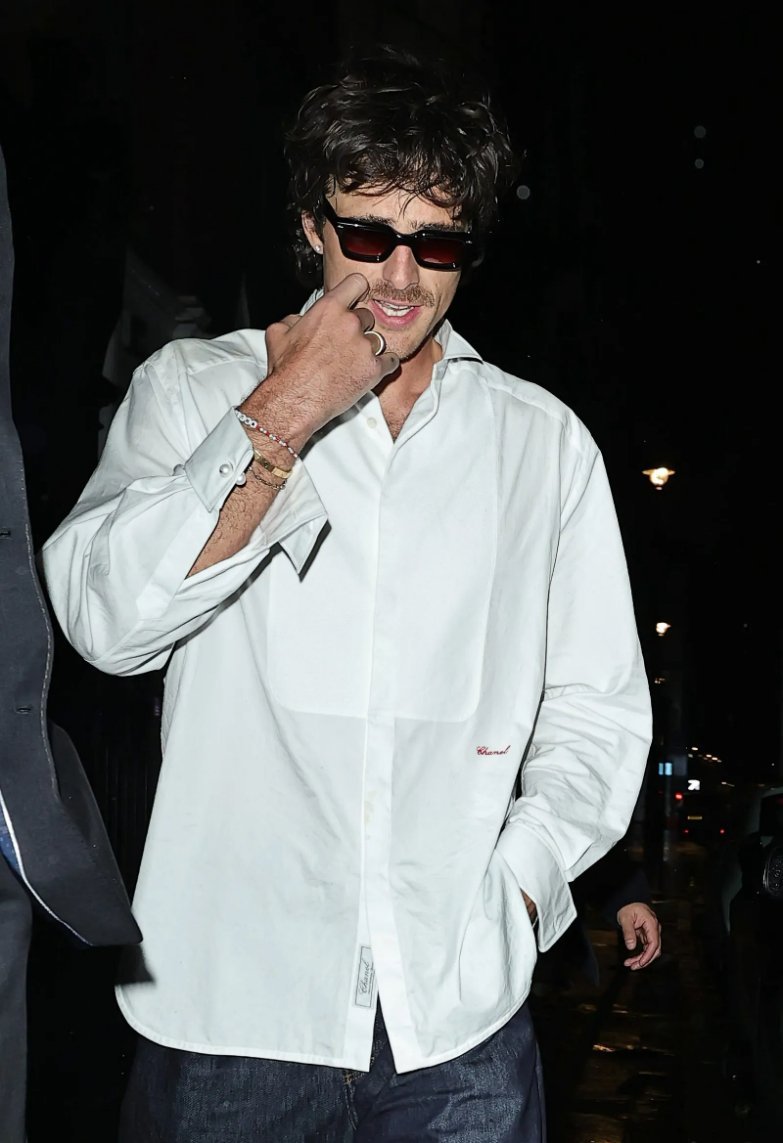
The idea gains its force through the public figures who orbit the house. Harry Styles, Pedro Pascal, who wore Chanel to the 98th Academy Awards in March 2026, and Jacob Elordi are the latest in a line of men who wear the house outside commercial convention. The pieces are often made to measure, adapted from women’s collections, or simply never reach the shops. In these appearances the clothes do more than dress a man. They activate a collective longing for something that cannot quite be had.
A WARDROBE THAT NEVER REACHES THE SHOP FLOOR. IMAGE: PRESS
There is an almost emotional logic at work. Love and desire do not operate in the same way, and fashion, at its most sophisticated, understands the difference. What is never fully delivered, what remains a promise, tends to hold a longer fascination. Chanel works precisely in that layer, where a product stops being merely an object and becomes narrative, expectation and symbol.
THE RED CARPET AS SHOWROOM FOR CLOTHES NOT FOR SALE. IMAGE: PRESS
A founder who borrowed from men
The strategy has deep roots in the founder herself. Gabrielle Chanel was among the first to understand that desire can be fed by displacement. By bringing elements of the male wardrobe into women’s clothing, she did more than revolutionise the 1920s; she set up a creative tension that runs through the century. Jersey, until then associated with men’s underwear, looser cuts and trousers for women were gestures that broke established codes and redefined elegance.
TWEED, BORROWED BACK. IMAGE: PRESS
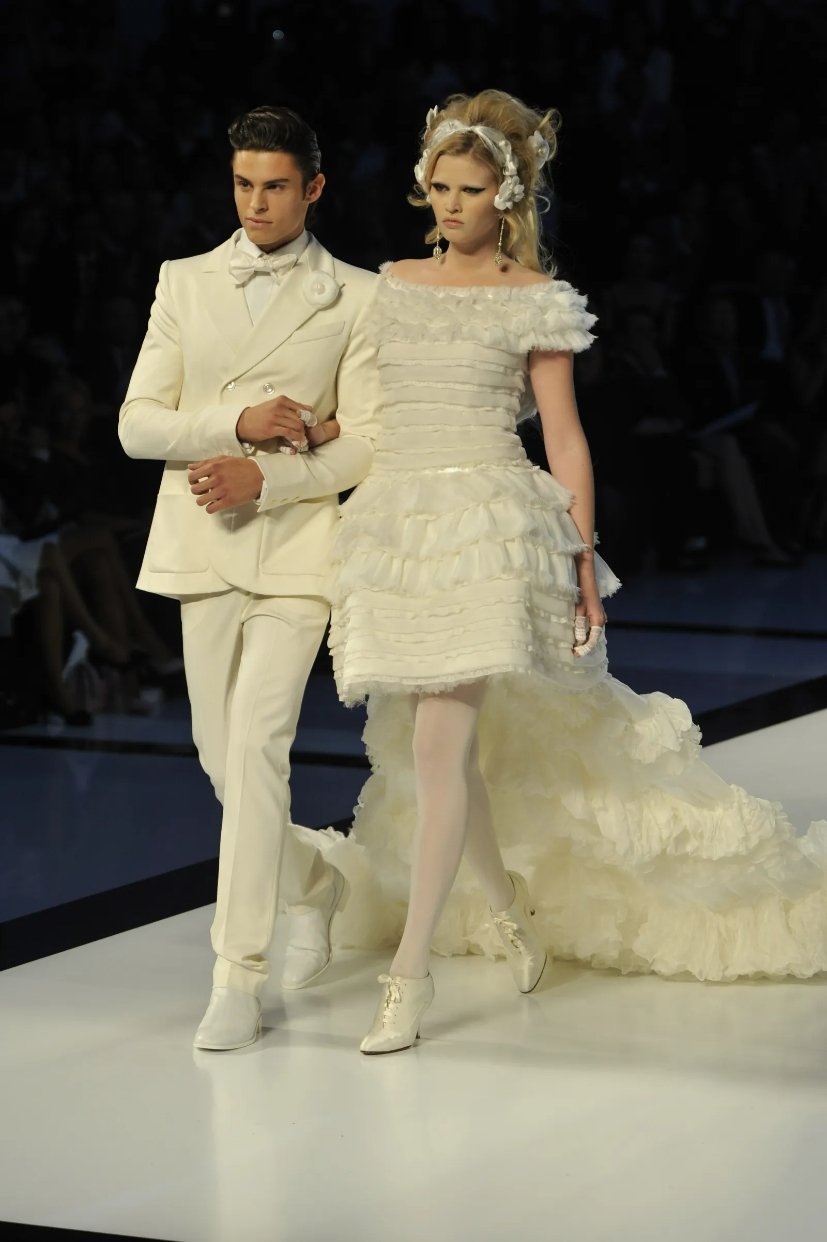
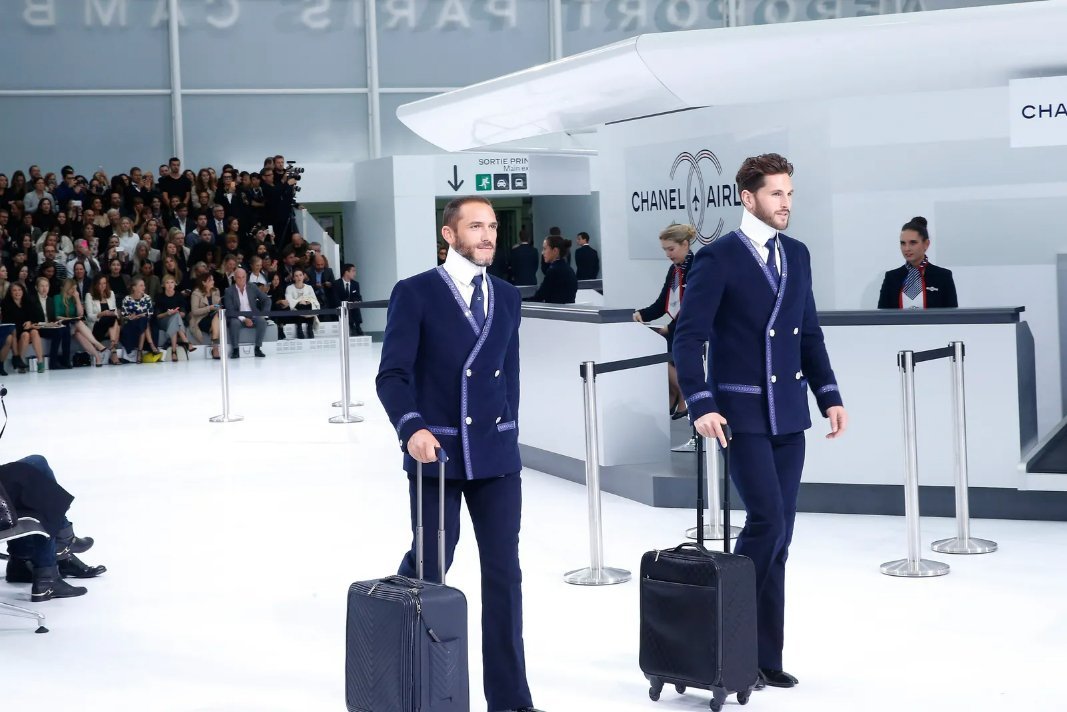
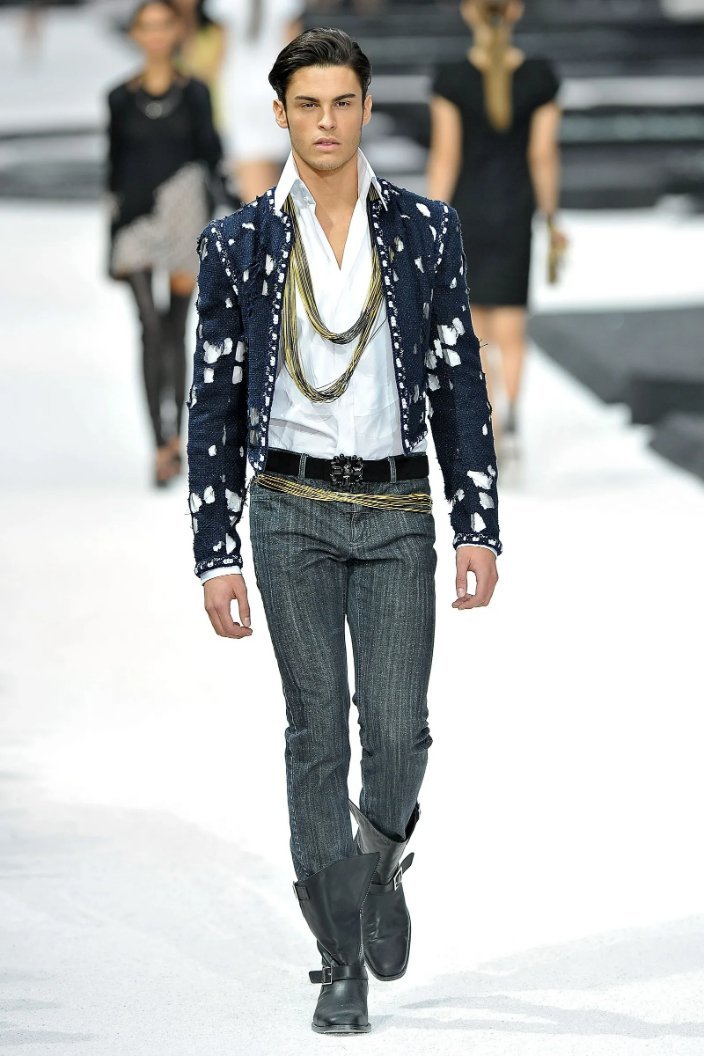
Karl Lagerfeld reinterpreted that inheritance with intelligence, keeping the masculine as a field of experiment throughout his long tenure. Rather than launch a formal line, he treated menswear as a creative exercise, almost a private game within the house. Models and figures close to him, Baptiste Giabiconi and Brad Kroenig among them, carried the look on runways where men’s pieces sat alongside women’s ready-to-wear without ever becoming a collection of their own. Lagerfeld seemed less interested in answering market demand than in exploring his own desires inside Chanel. The result was a constant but diffuse male presence that only deepened the myth.
A PRIVATE GAME PLAYED ON A PUBLIC RUNWAY. IMAGE: PRESS
A gesture rather than a line
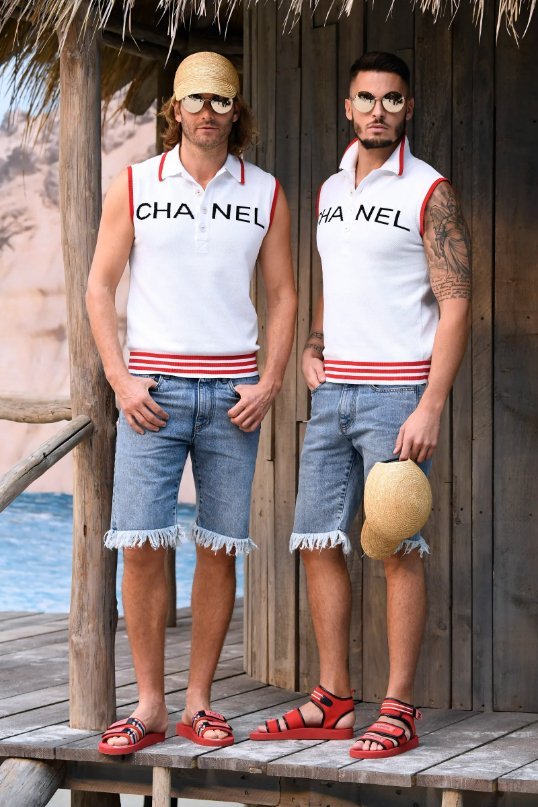
Others widened the picture over the years. Pharrell Williams wove the house into his everyday wardrobe long before he became a central figure in fashion, and in 2019 designed a capsule for Chanel with distinctly masculine notes. Prince, Usher, Justin Timberlake, Timothée Chalamet, A$AP Rocky and Kendrick Lamar each added something of their own, confirming that the masculine at Chanel is not a line but a continuing gesture.
EACH IN HIS OWN WAY, EACH WITHOUT A CATALOGUE. IMAGE: PRESS
The boots tell the story best. For Autumn-Winter 2020, her first ready-to-wear season after Lagerfeld’s death, Virginie Viard began with an old photograph of her predecessor beside Anna Piaggi, Lagerfeld in pirate boots. That image became the starting point of a collection in which riding boots anchored the looks from the very first exit. A personal detail from the 1970s had waited decades to become a house code, and time, allied to scarcity, turned an object into a symbol.
A PERSONAL HABIT THAT BECAME A HOUSE CODE. IMAGE: PRESS
Today, under Matthieu Blazy, Chanel still announces no formal menswear structure. The dialogue continues all the same: occasional appearances, made-to-measure pieces and unisex readings keep the masculine an open territory without hard borders. Where fashion increasingly answers to immediate availability, the house bets on the slow construction of desire, on what is hinted at rather than handed over.
WHAT IS HINTED AT, NEVER HANDED OVER. IMAGE: PRESS
Perhaps that is where the strength of the Chanel man lies. He does not need to exist as a product to matter. His controlled absence sustains a fascination few houses ever reach, a privilege measured not by possession but by the capacity to imagine and to want. He has never officially existed. He has never been more present.
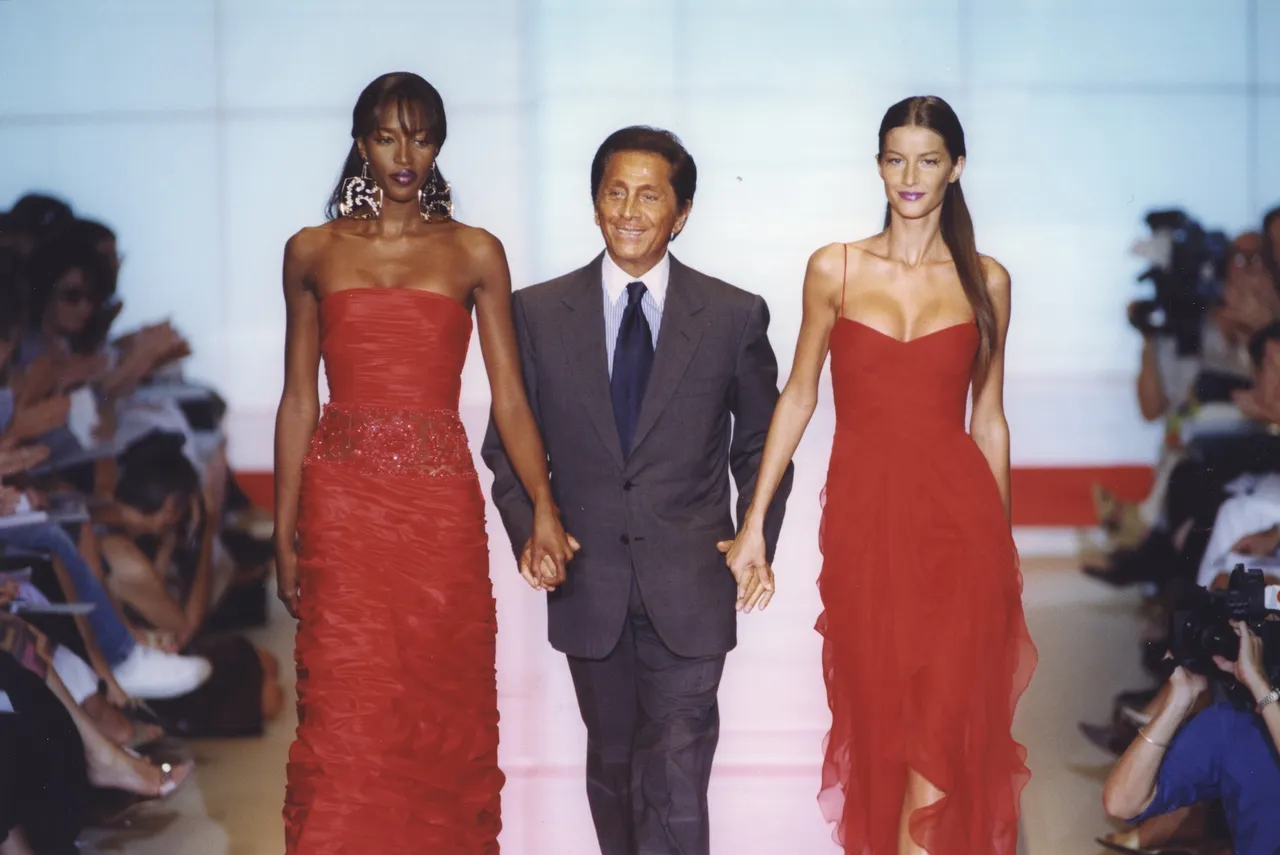
Valentino Garavani died at home in Rome in January 2026, at 93. From his Paris apprenticeship and the red that bears his name to the Florence show that made him and the foundation he built with Giancarlo Giammetti.
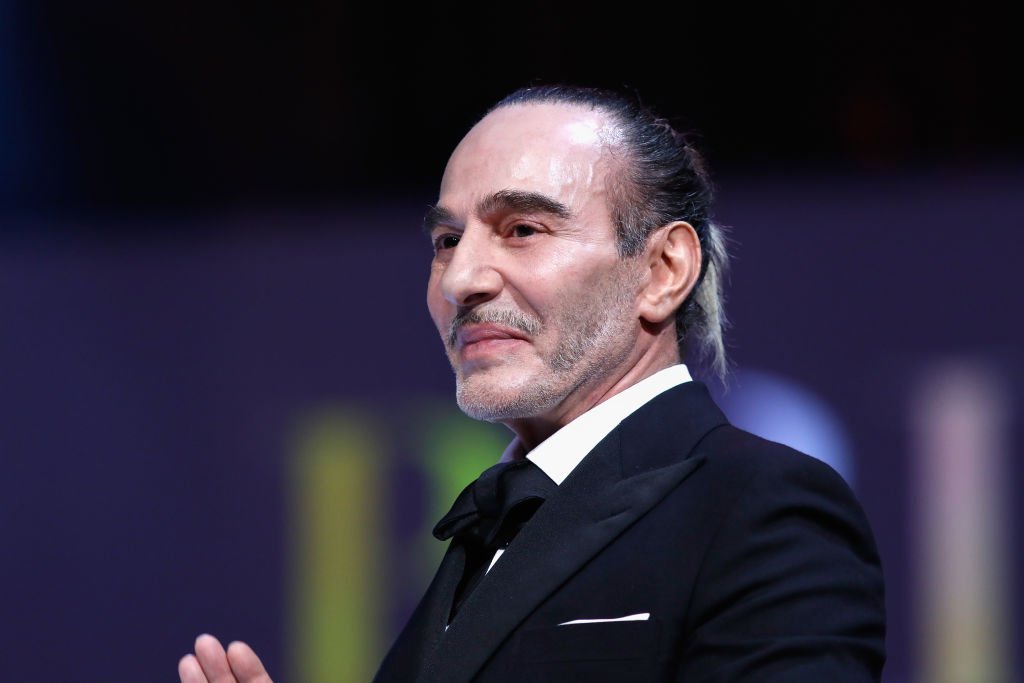
The Metropolitan Museum of Art and John Galliano have jointly cancelled Horizons, the Costume Institute retrospective due to open with the 2027 Met Gala, after a backlash over the designer's past antisemitic remarks.
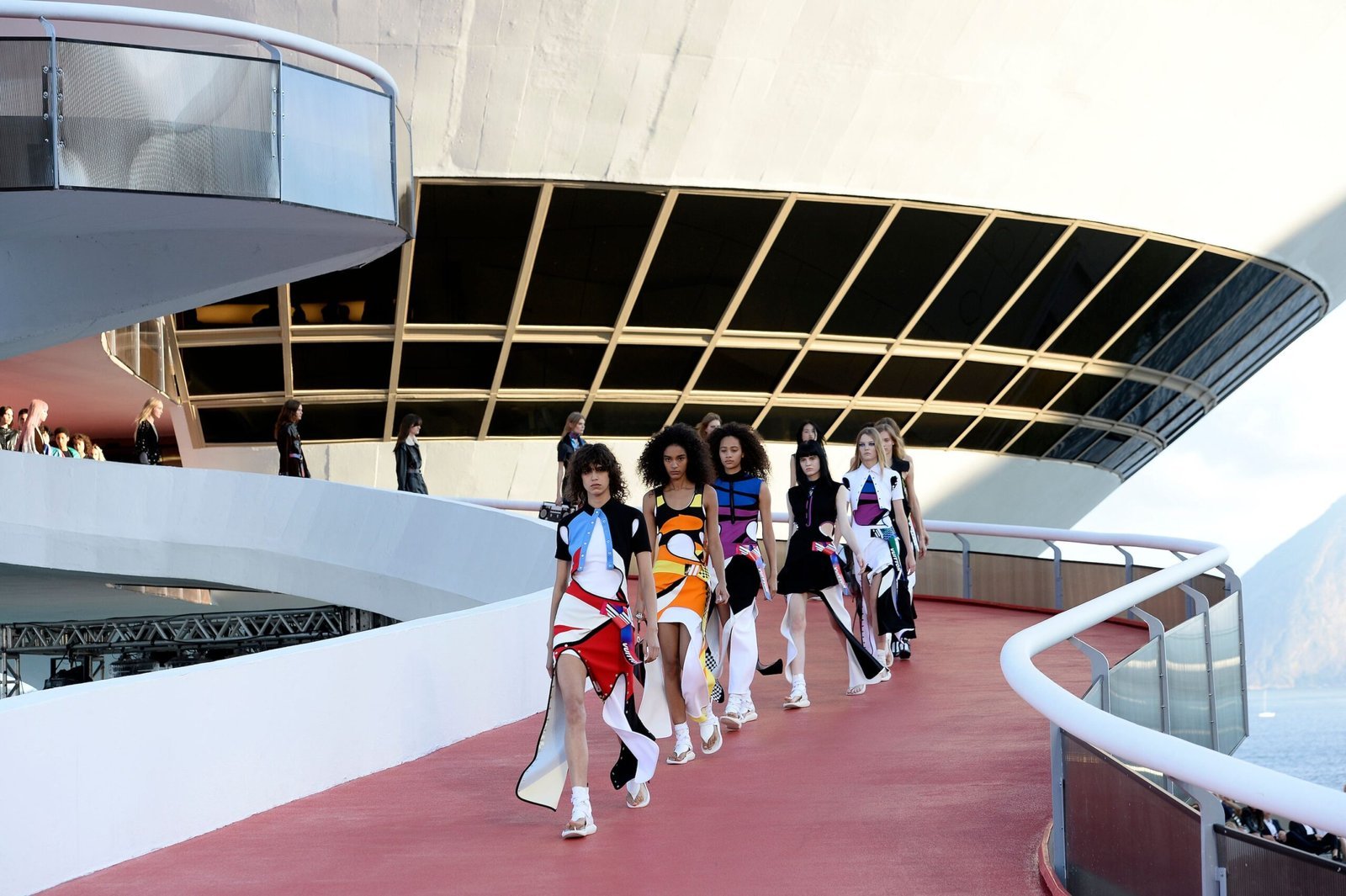
From Chanel's holiday wardrobes on the Atlantic coast to Cruise 2026 at Lake Como, Florence, Avignon, Rome and Caserta, and Cruise 2027 in Biarritz, Los Angeles, New York and Shanghai: the history of fashion's most itinerant season.