Maurice Lacroix, Frederique Constant, TAG Heuer and Tissot are returning to solar quartz, with a decade between battery changes and photovoltaic cells hidden beneath translucent dials or the crystal itself.
The most discreet technology in watchmaking is the one you cannot see. For decades, solar power sat at the edge of the trade, tied to entry-level pieces and perforated dials that gave the game away. That is changing. Houses with serious mechanical reputations are revisiting solar quartz, now with longer autonomy, better finishing and a discretion that until recently seemed out of reach.
A decade without attention
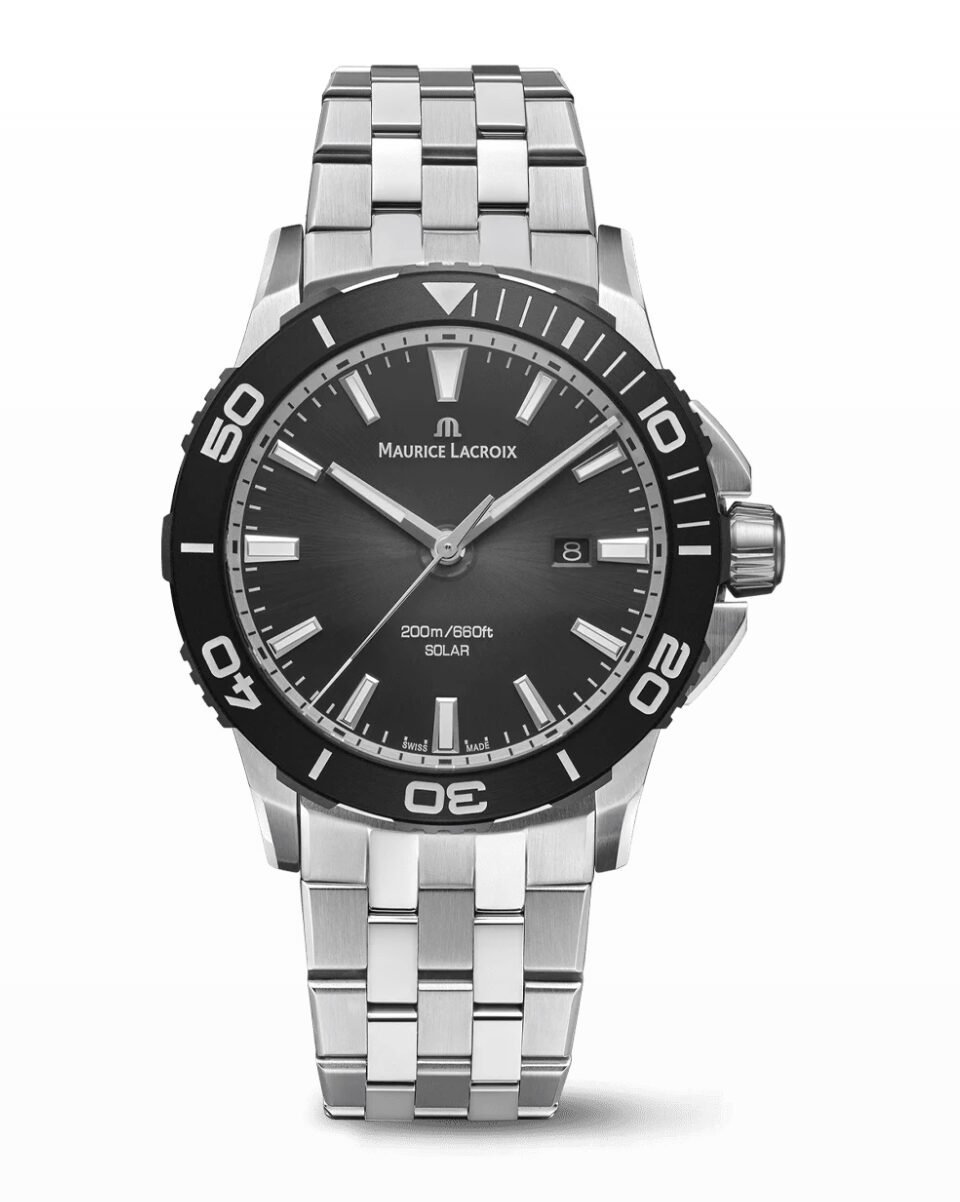
Maurice Lacroix, known for its mechanical repertoire, has given the Pontos S its first solar models. The chronograph runs on a Swiss Ronda 2040.D solar quartz movement in a 42mm case, holds up to five months of reserve after a full charge and is rated for more than ten years before a battery change. The light it gathers also charges the Super-LumiNova on its two-tone dial.
THE PONTOS LEARNS TO LIVE ON LIGHT. IMAGE: PRESS
Samuel Guelat, international marketing director at Maurice Lacroix, notes that many brands still treat quartz as a first step before a mechanical watch. His argument is that solar is now efficient enough to be presented as a dependable object in its own right, and that a watch asking for nothing for ten years has an obvious appeal, particularly to younger buyers attentive to its environmental logic. Not a new technology, he concedes, but clearly a returning one.
The dial that hides the sun
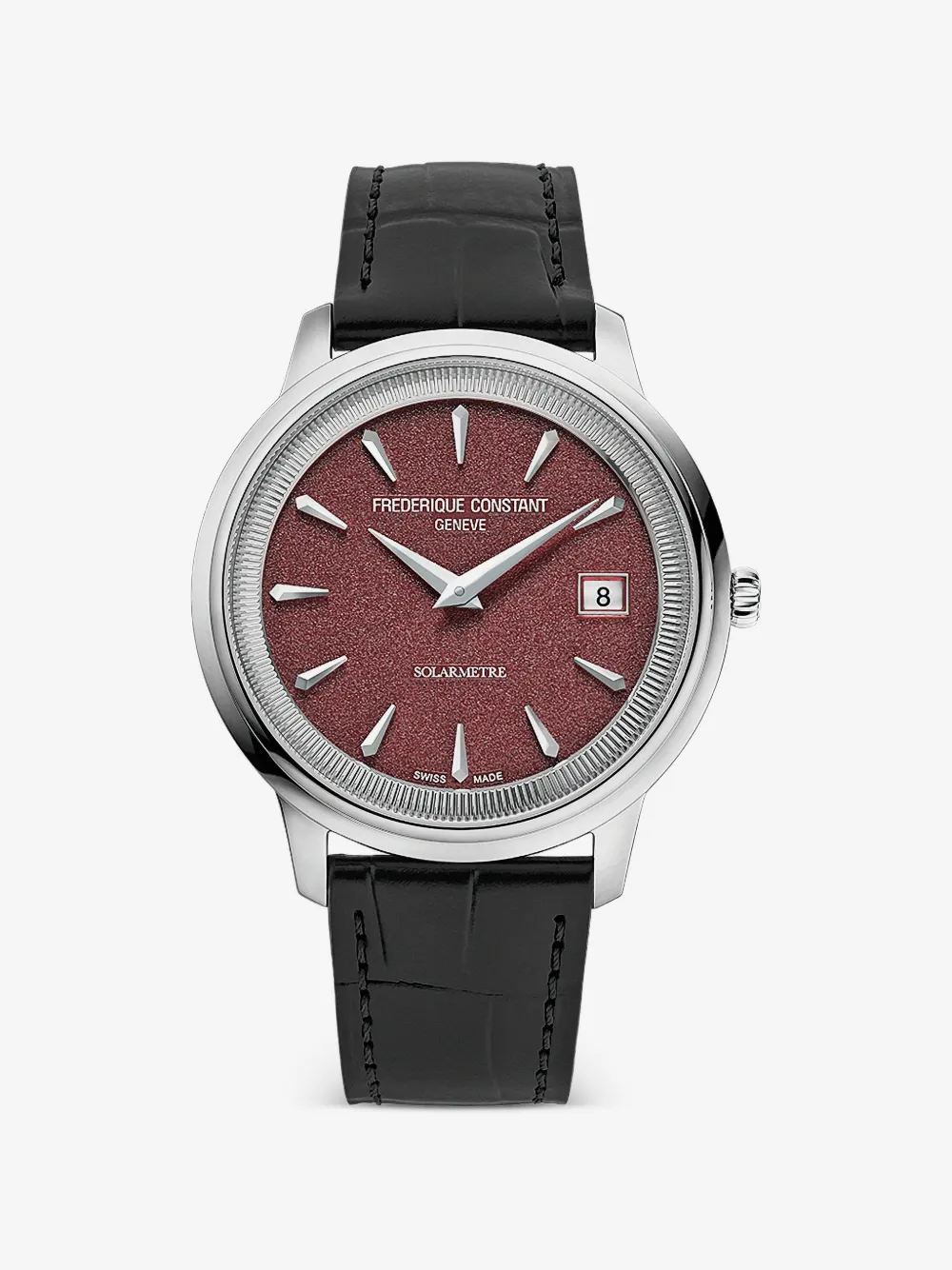
Frederique Constant has taken a similar path with the Classics Moneta Solarmetre, its first solar reference. The 39mm watch runs on the FC-120, developed with La Joux-Perret, the La Chaux-de-Fonds movement maker in which LVMH’s watch division took a minority stake from Citizen in late 2025. Like the Pontos, the Moneta addresses the two objections that long kept buyers away from solar: case thickness and the opacity of the dial.
A TRANSLUCENT SURFACE, A SILENT CELL BENEATH. IMAGE: PRESS
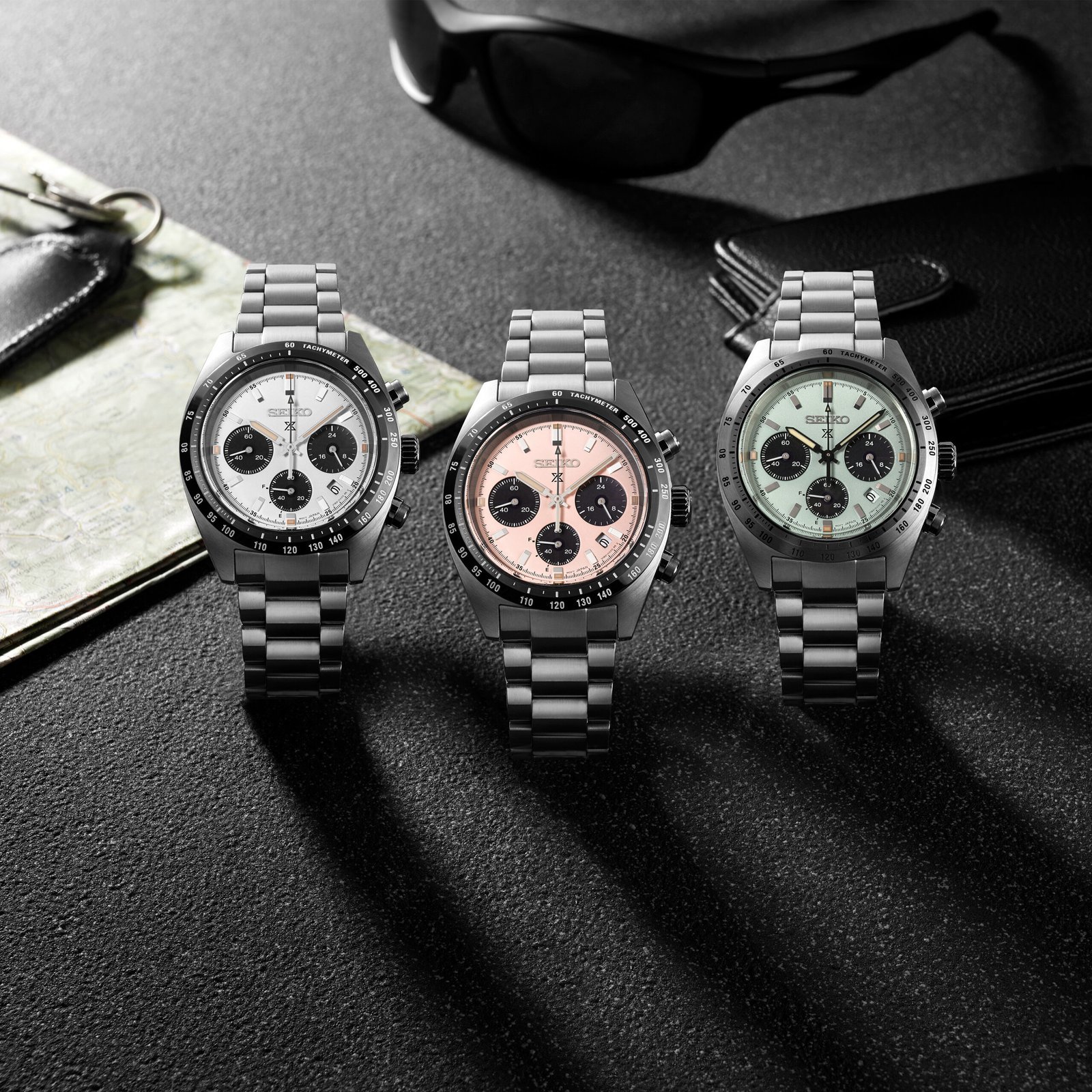
Solar watches are slimmer than they were a decade ago, yet they still lean towards the robust. Seiko, which added a limited Crystal Green edition to its Astron GPS Solar line this year, sees invisibility as a development front in itself, according to its marketing director Faye Lovenbury. Smoked dials, as on the Pontos, or engraved and textured translucent surfaces, as on the Moneta, have become common: they look solid, yet let the light through.
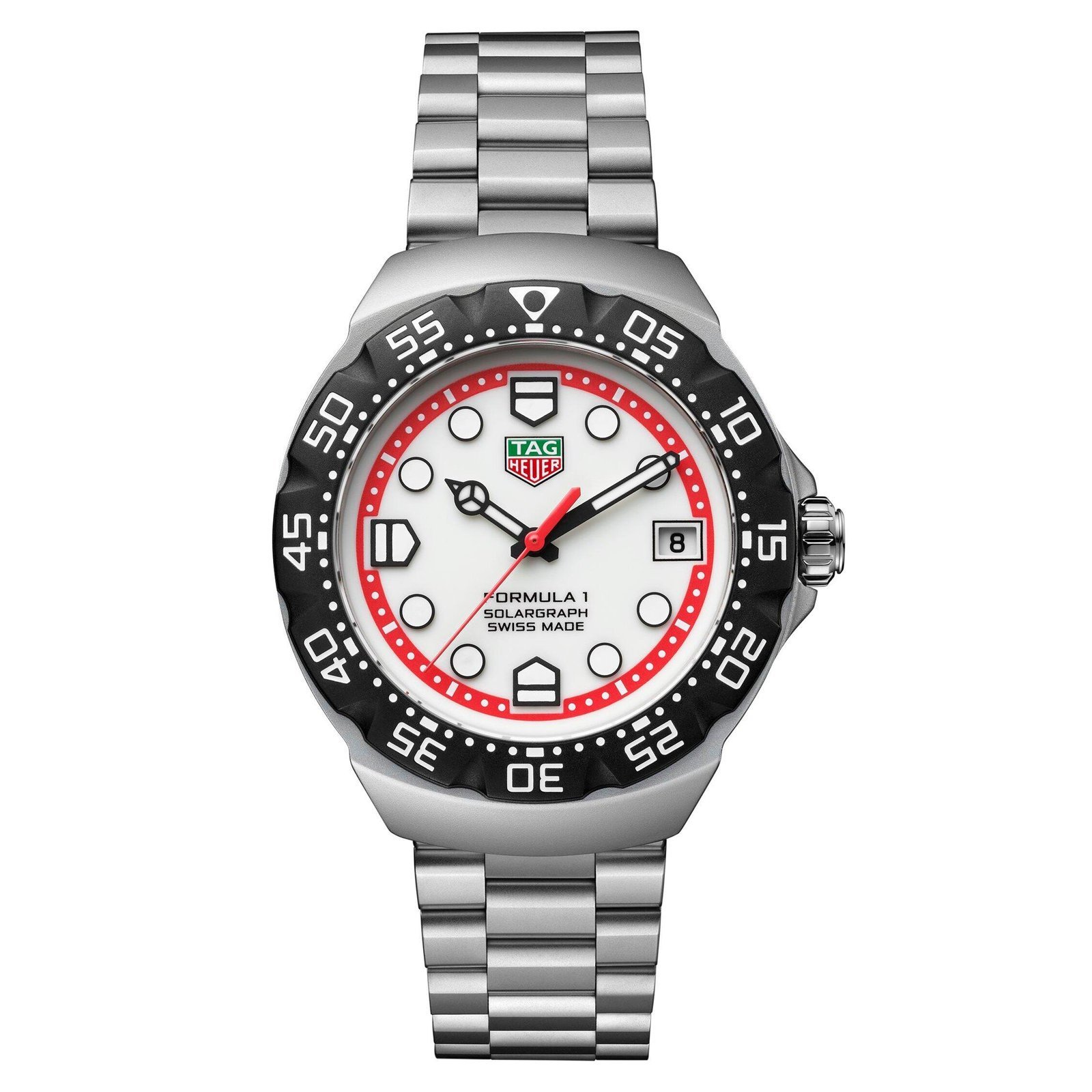
Where solar watches once wore their technology openly, it now dissolves into design. TAG Heuer has widened its Solargraph range, including a 38mm Formula 1 in pastel shades, with no visual hint of where the energy comes from.
PASTEL AS CAMOUFLAGE. IMAGE: PRESS
Beyond the dial
Guelat argues that the industry has overcome the old rule that a solar dial had to be perforated or pale, and that the newest pieces are indistinguishable from conventional quartz. He imagines future forms of light capture that bypass the dial entirely, and hopes to see fewer purely quartz watches and more solar ones.
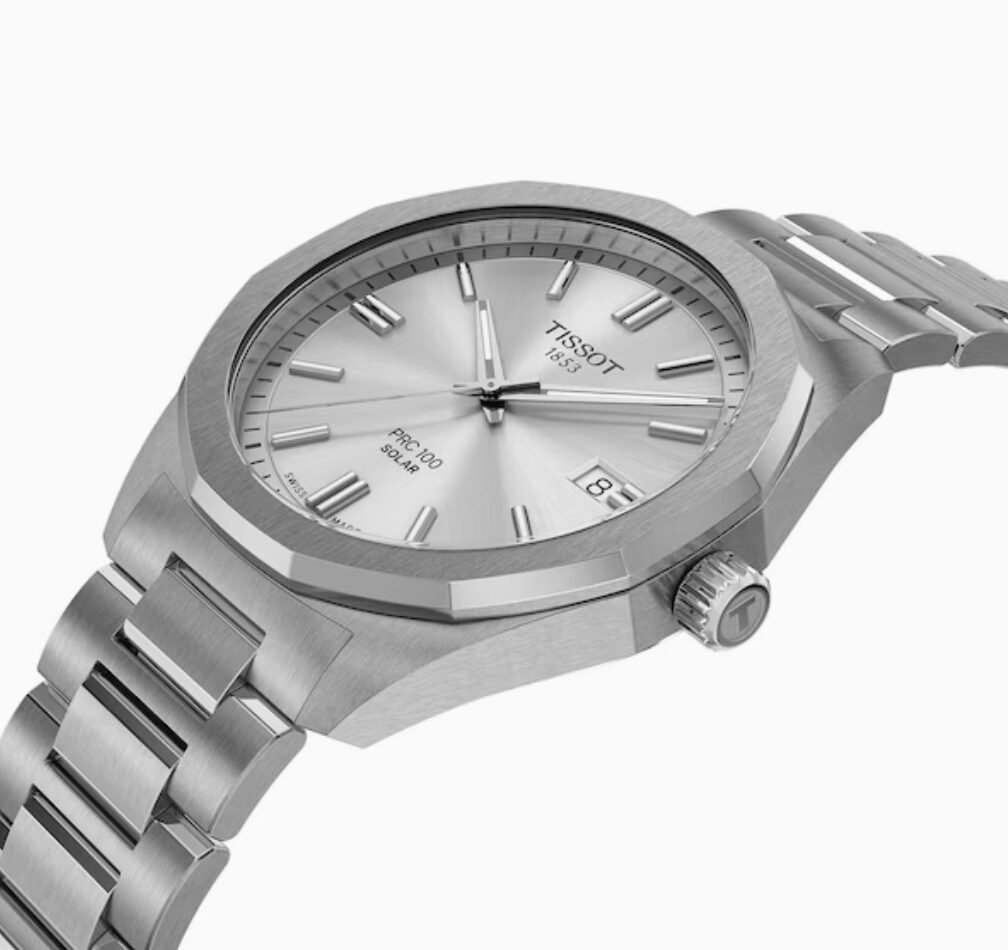
Tissot is already there. Its PRC 100 Solar uses Lightmaster Solar technology, which places the photovoltaic cells beneath the sapphire crystal rather than under the dial, leaving the dial free to be anything. Even artificial light is enough, the principle Citizen pioneered with Eco-Drive, a system now marking fifty years.
LIGHT TAKEN THROUGH THE CRYSTAL. IMAGE: PRESS
Sylvain Dolla, chief executive of Tissot, sees the real advance in freedom of finish: once the cells leave the dial, the design possibilities widen considerably, and the brand is working on several developments in that direction. The next challenge, Lovenbury suggests, is power. Light must be harvested efficiently enough to drive more ambitious complications, without the design paying the price.
For years the solar watch announced itself through its dial. Now it asks only for a little daylight and a decade of patience. The best technology, it turns out, is the kind that never needs to be mentioned.
Edited by Melanie Grant for Phaidon, The Jewelry Book gathers 300 entries across two hundred years, from the great maisons to studio jewellers, and asks a better question than what a jewel is worth: what it changed.
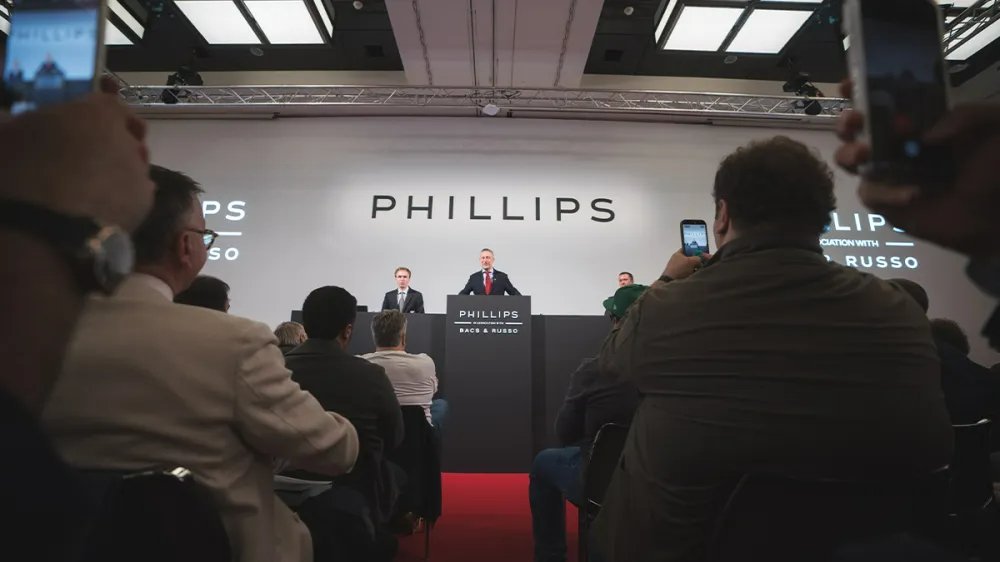
In November 2025 Phillips closed its first decade in Geneva with a white-glove sale of CHF 66.8 million, led by a 1943 steel Patek Philippe ref. 1518 at CHF 14.2 million. Six months later, the same room went higher still.
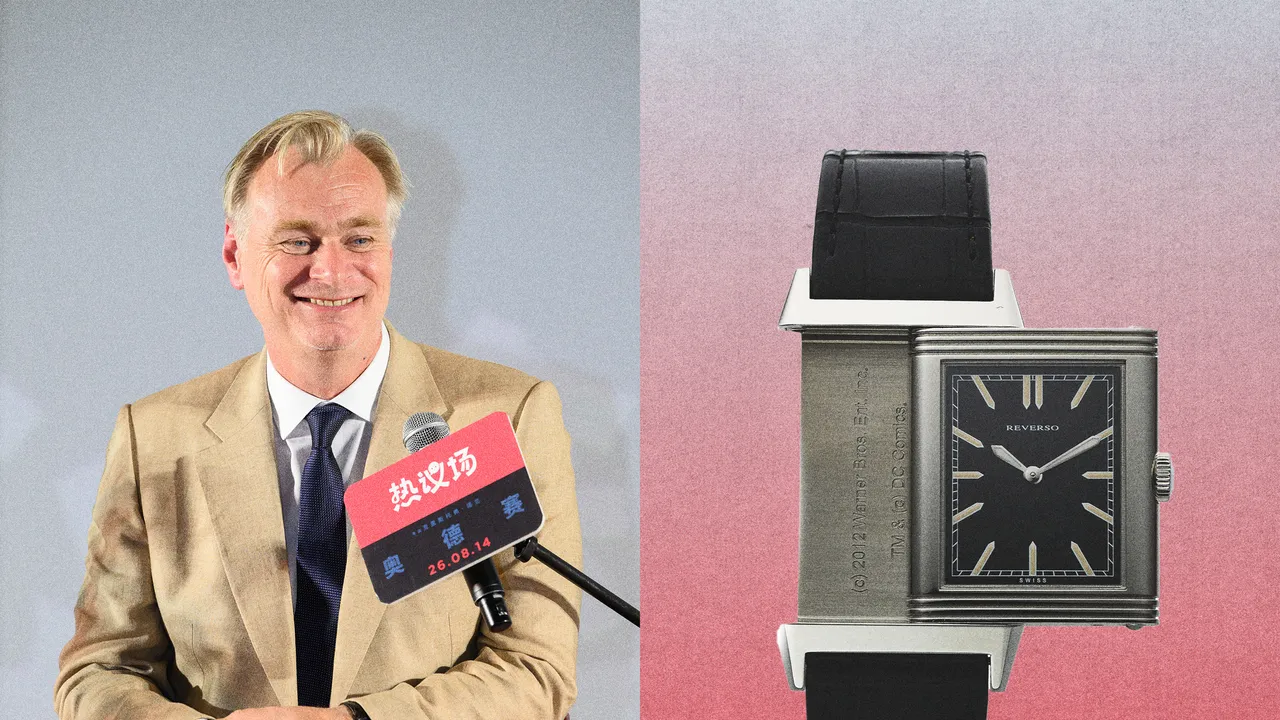
On the promotional round for The Odyssey, Christopher Nolan wore a Jaeger-LeCoultre Reverso made in ten pieces for The Dark Knight Rises, the bat symbol hidden on its reverse.