Starlight Festival: electronic music on five stages before the Pyramids of Giza
On 9 and 10 October, EXIT and P+US brought Charlotte de Witte, Adriatique and Pete Tong before the Great Pyramid, with an audience from 114 countries. The second edition already has dates: November 2027.
Some 4,600 years ago, the Great Pyramid of Khufu was raised to house a pharaoh’s eternity. In October 2026 it became the backdrop to one of the most ambitious experiments yet at the crossroads of electronic music and cultural travel: the Starlight Festival, the first multi-day, multi-stage event held at the Great Pyramids of Giza, in northern Egypt.
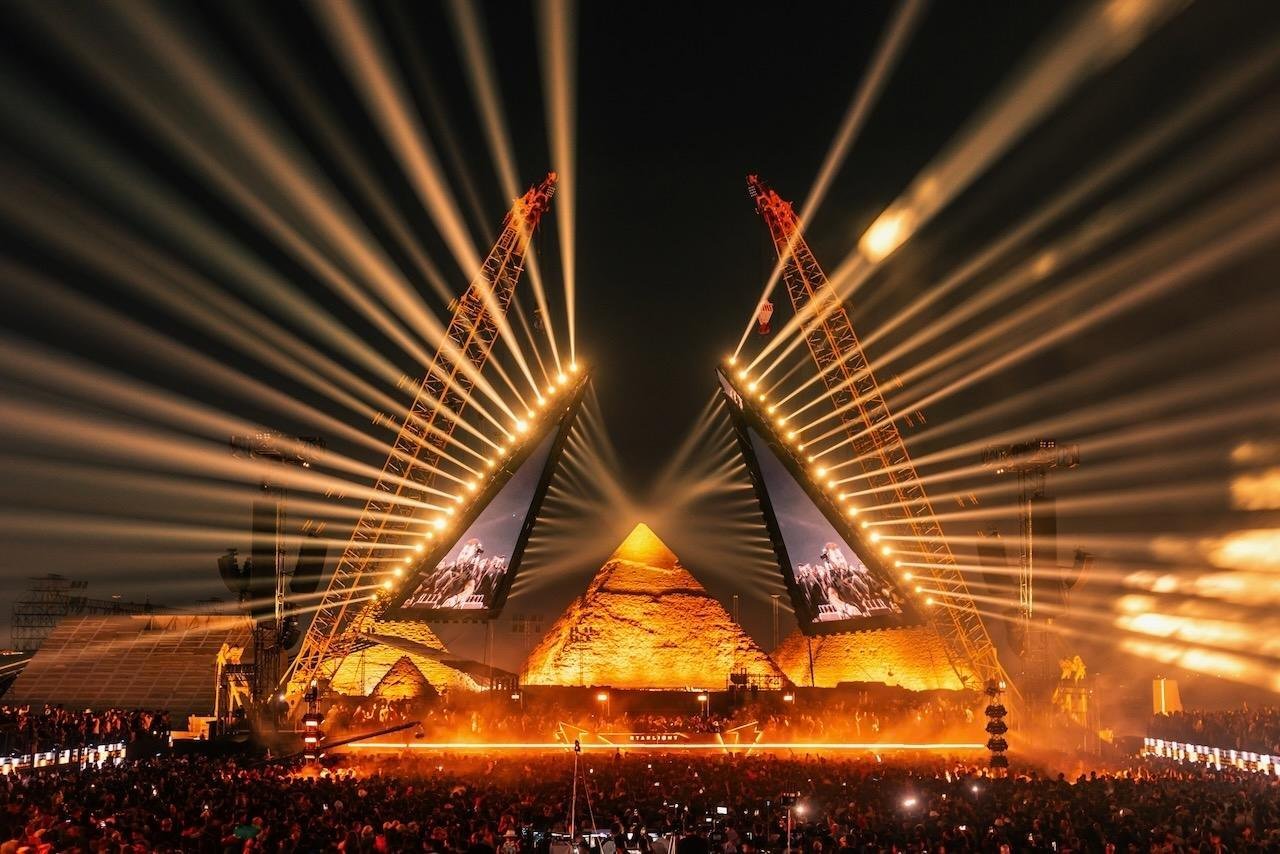
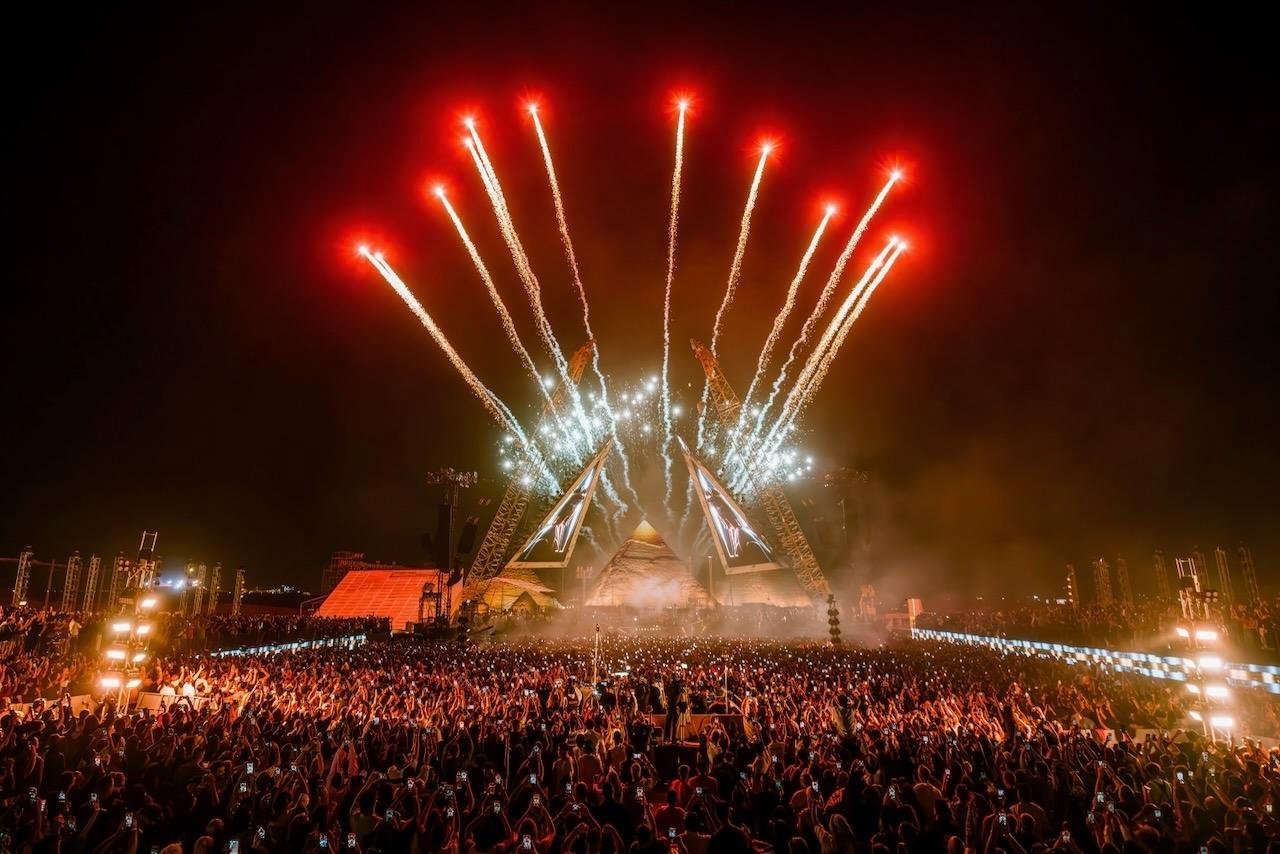
For two nights, a Saharan wind crossed the main deck as CO2 cannons drew plumes in the air, and artists including Pete Tong and the Swiss duo Adriatique took turns under the silent gaze of Khufu, the last survivor of the Seven Wonders of the Ancient World. The crowd, drawn from 114 countries according to the organisers, watched a light show called “The Rise to Starlight”: yellow beams rising from the pyramidion, 146.5 metres up, just before the closing set.
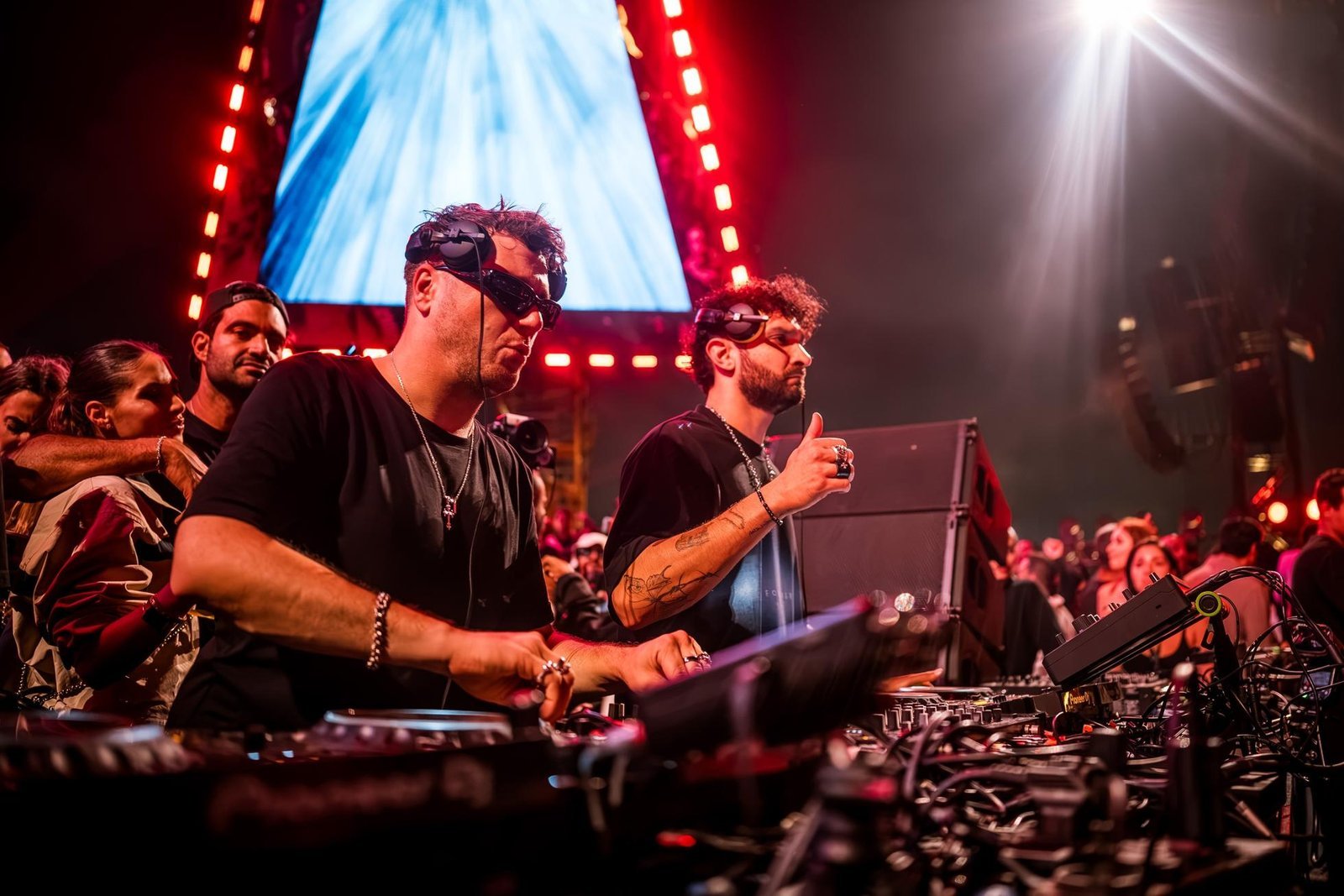
THE SWISS DUO ADRIATIQUE TOOK THE PRIME SLOT ON THE OPENING NIGHT
A tour that ends in the desert
The sold-out event was born of a partnership between Serbia’s EXIT Festival and P+US, the electronic music platform of Venture Lifestyle, together with local partners. It was the largest electronic music event held at the last Ancient Wonder since Jean-Michel Jarre’s millennium concert in 1999.
“The central message of ‘Rise to Starlight’ is unity and peace,” says Dusan Kovacevic, founder and CEO of EXIT. “In a world marked by war, greed and environmental destruction, it is easy to feel powerless. The invitation to ‘light the inner light’ is a reminder that any meaningful transformation begins on a personal level. We wanted to remind people that we still have a choice in how we react and treat one another.”
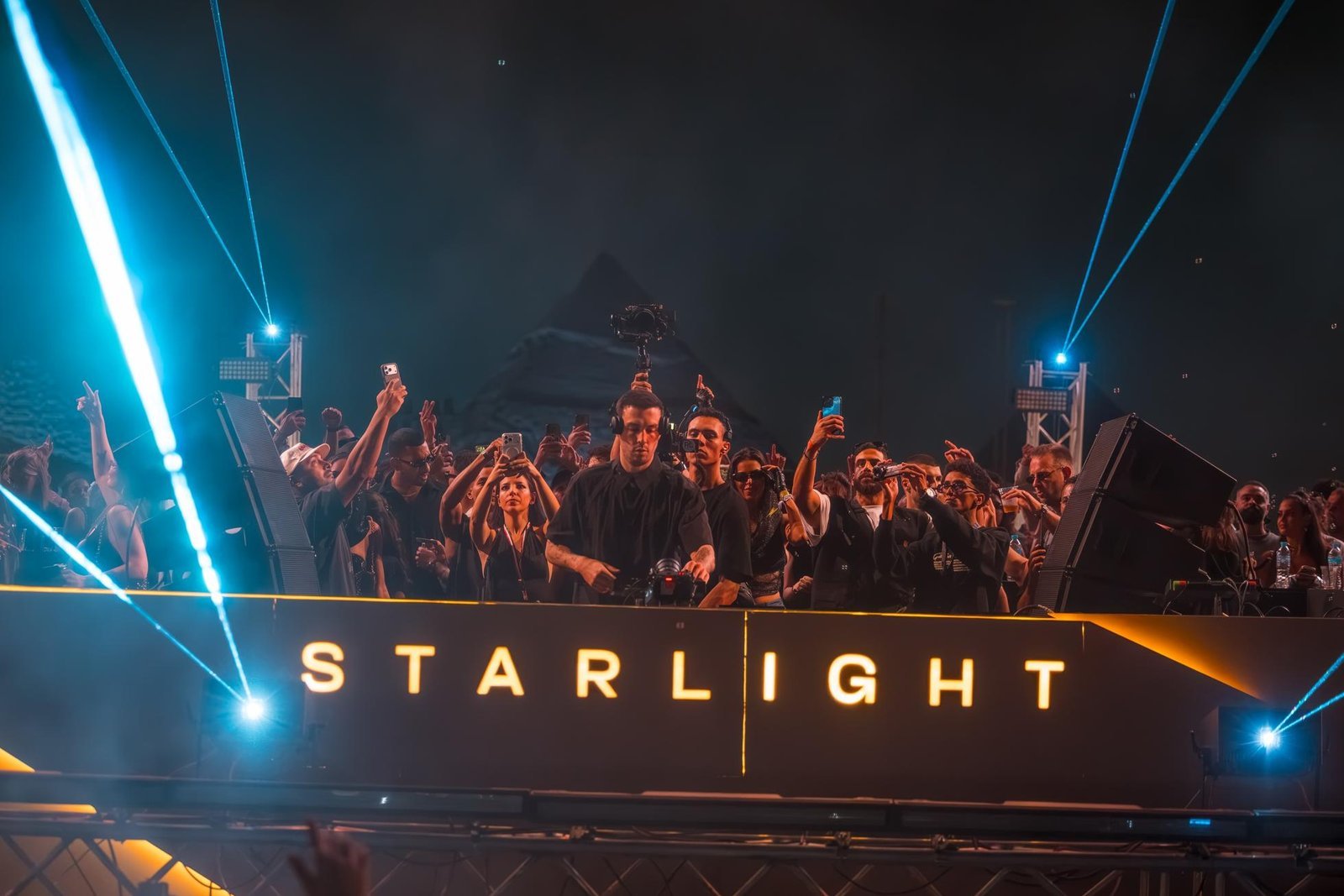
PETE TONG ON THE MAIN STAGE ON THE FESTIVAL’S FIRST NIGHT
Starlight carries added weight as the close of EXIT’s international tour, launched after the Serbian festival was forced to leave its home country for supporting student protests there.
The line-up brought together more than 60 international and regional artists across five stages. Charlotte de Witte headlined with her Egyptian debut, alongside Michael Bibi, Adriatique, Indira Paganotto, Enrico Sangiuliano, Pete Tong and WhoMadeWho. Visual production was by Sila Sveta, the studio behind some of the most celebrated ceremonies and shows on the global circuit, whose lighting created the optical illusion of pyramids floating above the main stage.
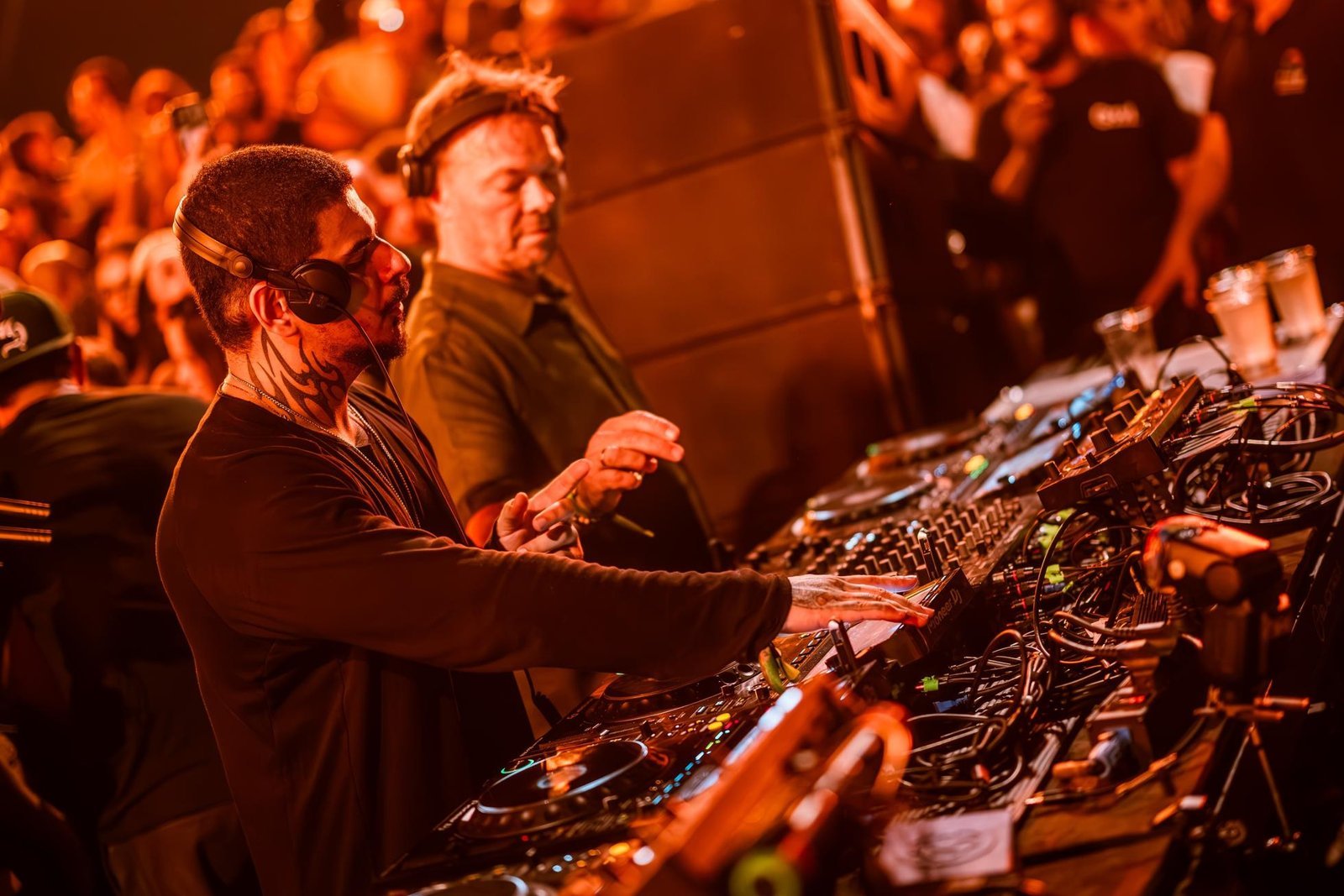
CLOONEE PLAYED ONE OF THE SETS THAT EXPLORED LIGHT, MUSIC AND THE ANCIENT MONUMENT
Music as a destination
As destination music, Starlight occupies particular territory. One can go to Tulum for Zamna and pair beaches with Maya ruins; to Tomorrowland Winter to ski in Alpe d’Huez; or to EDC Thailand in Phuket. None of these settings, however, carries the symbolic weight of the Great Pyramids, something only fully understood in person.
Set aside a whole day for the Grand Egyptian Museum, a few kilometres from the plateau and officially opened in November 2025. The architecture alone is a contemporary feat, and the collection impresses even those who rarely enjoy museums. The origins, construction and purpose of the pyramids remain wrapped in theories, from technical explanations offered by specialist guides to alternative readings that circulate widely online.
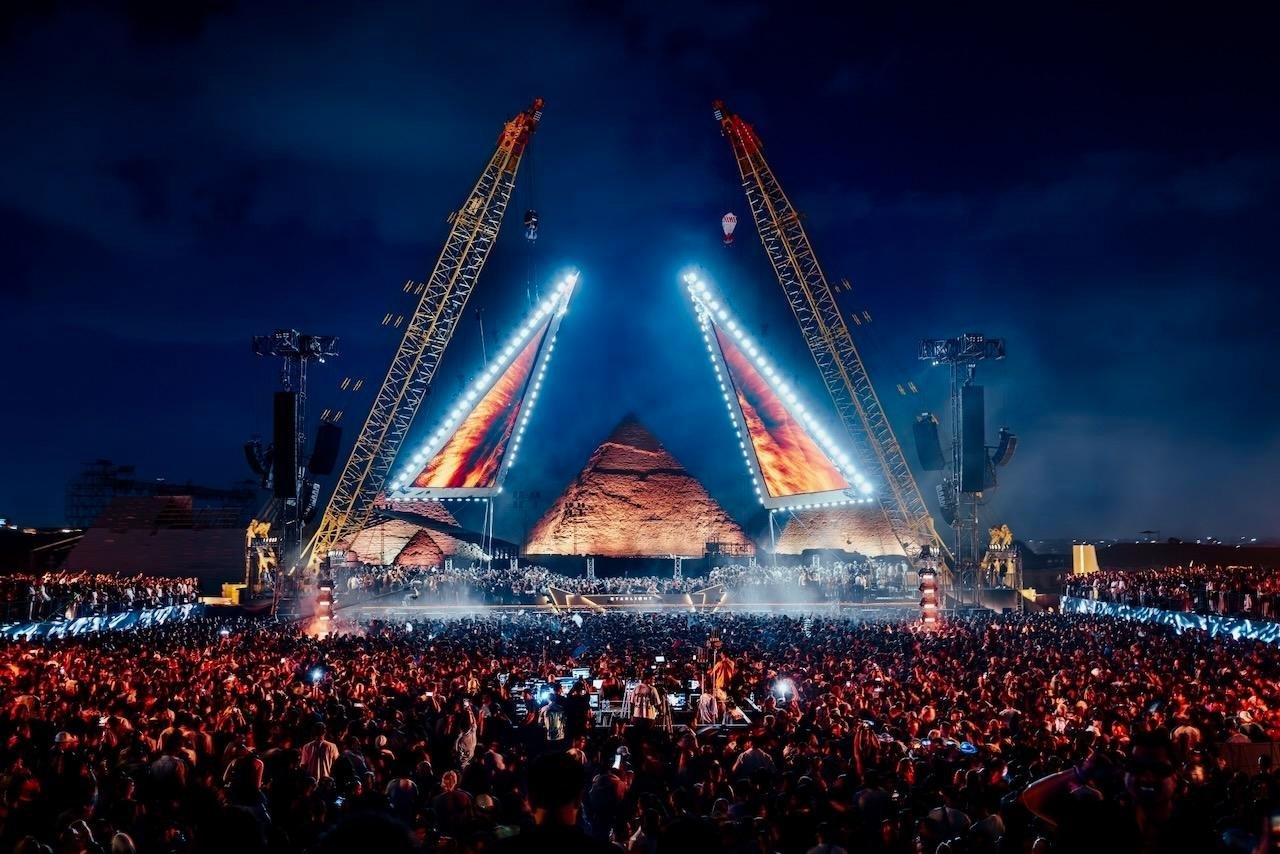
THE MAIN STAGE FRAMED KHUFU BETWEEN TWO TRIANGULAR VIDEO SCREENS
Between what is measured and what is imagined
What is known for certain is that Khufu rose to about 146.5 metres and remained the tallest man-made structure for almost 3,800 years, until it was overtaken by Europe’s Gothic cathedrals. Its base is almost perfectly level and aligned to true north to within a few minutes of arc. Some 2.3 million stone blocks were used, and there are nearly as many theories about how they were laid.
Mathematics feeds the mystery. Divide the perimeter of the base by twice the height and the result comes close to 3.14, a neighbour of π. Multiply the height by a billion and you approach the average distance between the Earth and the Sun. The pyramid’s latitude, around 29.979° N, recalls the first digits of the speed of light. Egyptologists treat most of these relationships as numerical coincidences or by-products of building method; the public does not always agree. It is precisely this haze between what is measured and what is imagined that makes a visit so magnetic, especially when the monument becomes the stage for a festival with a declared message of unity.
CHARLOTTE DE WITTE PLAYED ONE OF THE FEW TECHNO SETS ON THE LINE-UP, CLOSING THE FESTIVAL
“Starlight shows that Egypt has the potential to be much more than a destination visited for its history and monuments,” says Rabih Mokbel, founder and CEO of Venture Lifestyle and P+US. “It can also be a place where international music, culture and contemporary entertainment meet in a way that is hard to replicate anywhere else in the world.”
He adds: “For anyone thinking about a future edition, I recommend coming with an open mind. The experience goes beyond attending a festival. It is a chance to discover Egypt through another lens, where millennia of history meet the energy of a global music event.”
Following the success of this first edition, Starlight has already opened pre-registration for the second, set for 5 and 6 November 2027.
Four thousand six hundred years ago, Khufu was built to keep a pharaoh’s eternity. For two nights in October it kept something else: the moment thousands of people from 114 countries looked up at its illuminated summit. The pyramid has watched empires pass. A festival, for it, is just another night; for those who were there, it is unlikely to be.
Next edition
Starlight Festival 2027: 5 and 6 November 2027
Where: a designated site before the Great Pyramids of Giza, Egypt
Tickets: pre-registration open on the festival’s official website; the 2026 edition was 21+
The Las Vegas Grand Prix 2026 after dark, night by night: who plays LIV, OMNIA, Zouk, Marquee and Hakkasan, the first official afterparty at the Sphere, and how to move through a city with its main boulevard closed.
The third European address of Tha Dogg House seats about fifty, sits away from the tourist circuit and opens as Barcelona tightens its watch on cannabis clubs.
On Iceland's east coast, near Höfn, Immersion turned a Nordic film village into a temporary community of a thousand people for five days. Its founders, Greg Habib and Kim Jackson, explain how to grow without losing the sense of belonging.
From a rooftop above Hudson Yards to a Lower East Side dive bar, a Studio 54 revival on the river and SZA's open-invitation launch for Vans, the nights of NYFW carried as much weight as the runways.
New York
THE CURATED GLOBE / FROM THE EDITORS
Good stories. Better company.
A considered selection of people, places and ideas from WAYFARER Edition, delivered to your inbox.
Welcome aboard. Your first letter is on its way.
We could not complete your subscription. Please check your email and try again.