Two years after leaving Belfast, the Villa Vie Odyssey is more than 85 per cent sold and has a sister ship, Legacy, due in early 2029. Inside the idea of a home that never stays in one port.
A cruise used to be something you took. On the Villa Vie Odyssey, it is somewhere you live. For decades the sea voyage was a holiday measured in days or weeks; a small but persistent group of people now proposes something else entirely, to turn a ship into a permanent address and spend years circling the world from it.
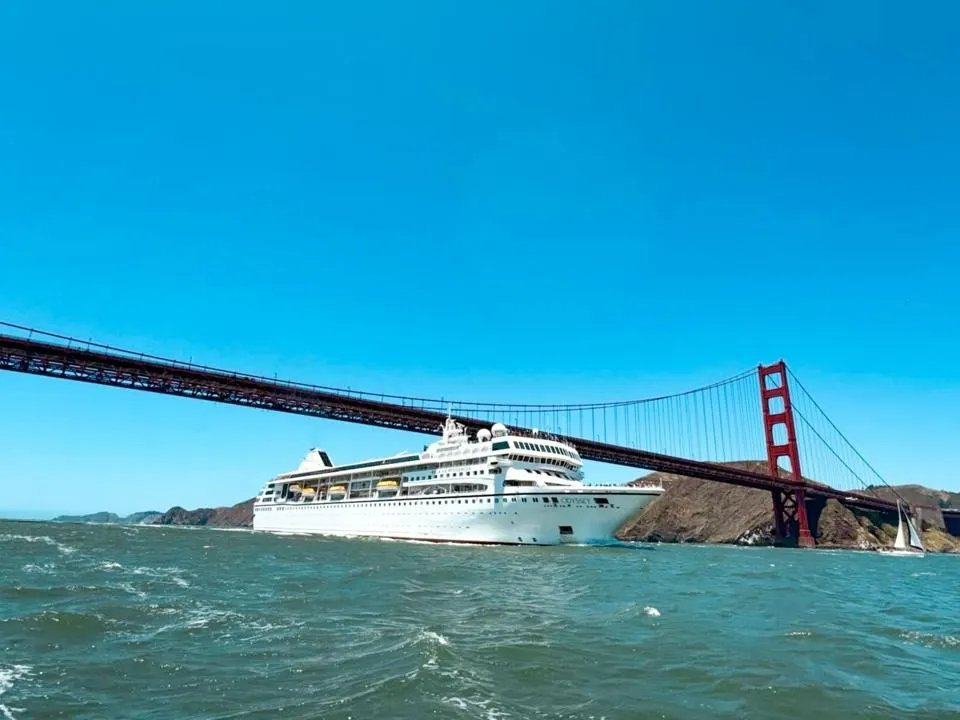
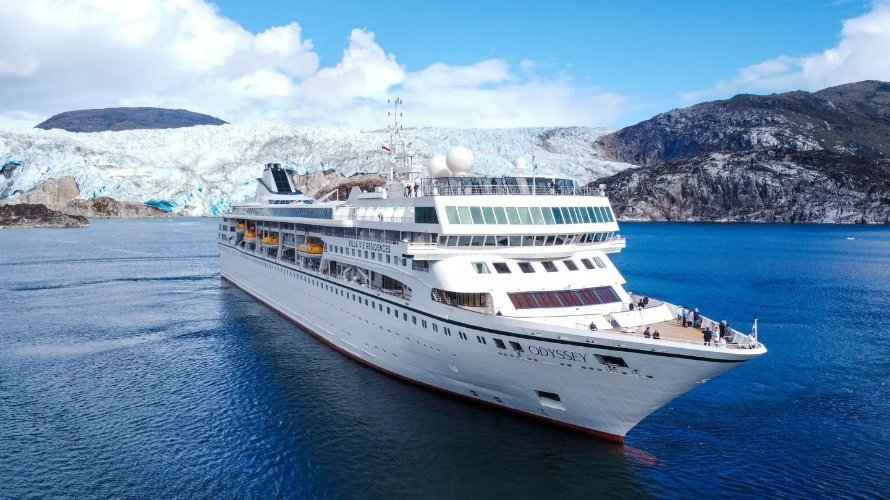
The Odyssey is a residential ship, conceived by its owners to circumnavigate the globe repeatedly over many years, calling at well over a hundred countries. It sailed from Belfast at the end of September 2024 and has now completed two years of continuous voyaging. More than 85 per cent of its residences are sold.
A neighbourhood that moves
THE HORIZON AS A PERMANENT VIEW. IMAGE: PRESS
Behind the project is Mikael Petterson, founder of Villa Vie Residences and a veteran of the cruise industry. His reading of the market is simple. Passengers were already staying aboard longer and longer, often well beyond a hundred days, so why not build the whole proposition around the long stay?
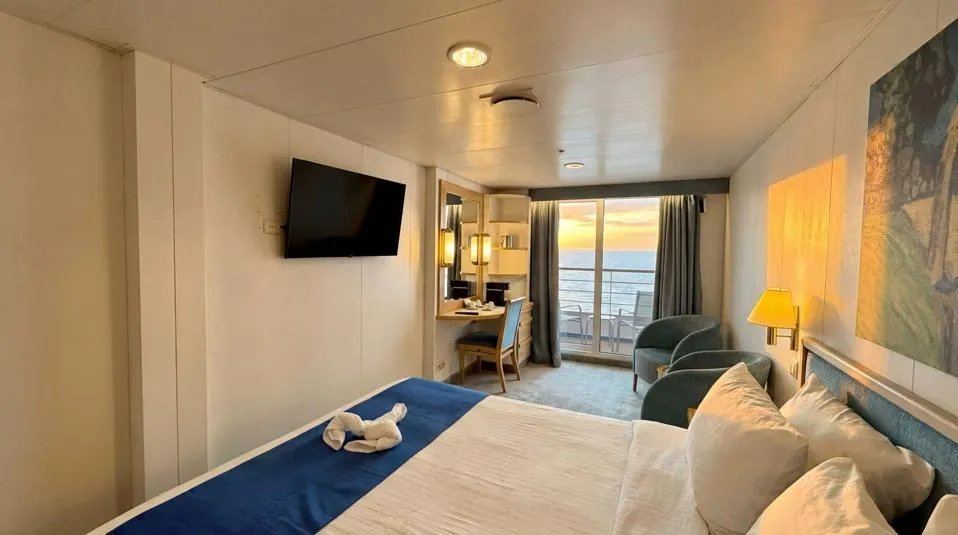
The Odyssey functions as a small international community in constant motion. Starlink connectivity makes remote work, family calls and streaming possible at sea, which is no small thing for people who have decided to live on the water. The residences are private cabins of roughly 18 to 28 square metres, from inside cabins to rooms with windows or portholes, balcony units and a handful of suites. They are compact, but designed for long stays, with private bathrooms, a proper bed, a desk and storage.
A FEW SQUARE METRES, THE WHOLE WORLD OUTSIDE. IMAGE: PRESS
What a floating home costs
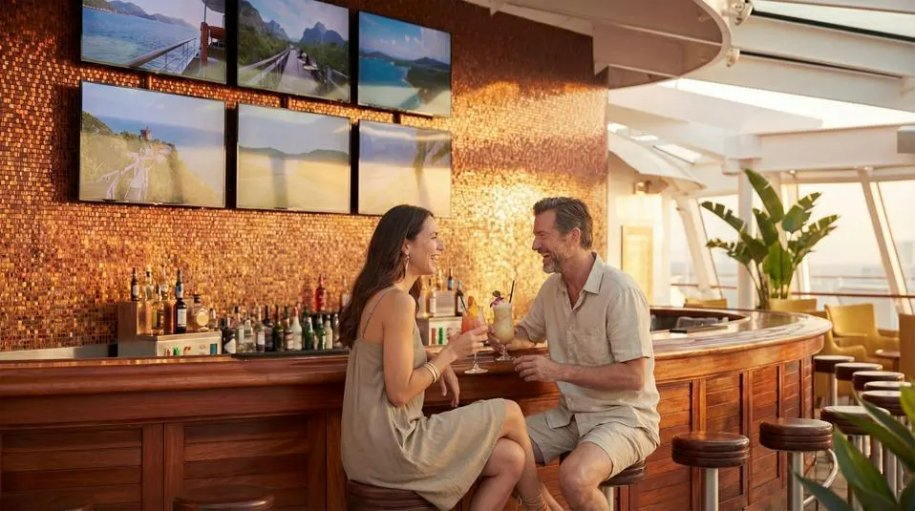
The arithmetic is part of the appeal. Cabins have been sold from around 100,000 dollars to roughly 350,000, and some residents sold their houses to make the move. Beyond the purchase, owners pay a monthly fee that covers fuel, crew, port charges, meals in the ship’s restaurants, housekeeping and Starlink, with wine or beer at dinner. Spa treatments and drinks at the bar are extra. Set against the price of a house in most Western cities, the sum begins to look less like extravagance and more like a calculation.
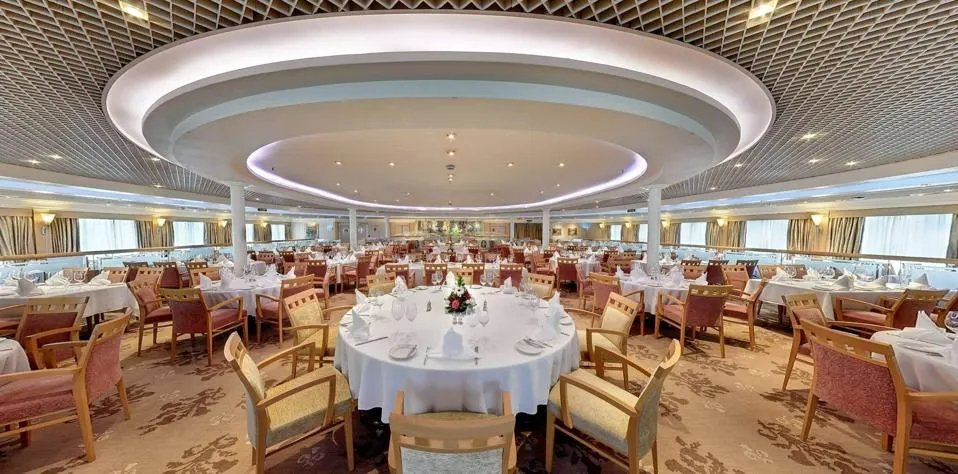
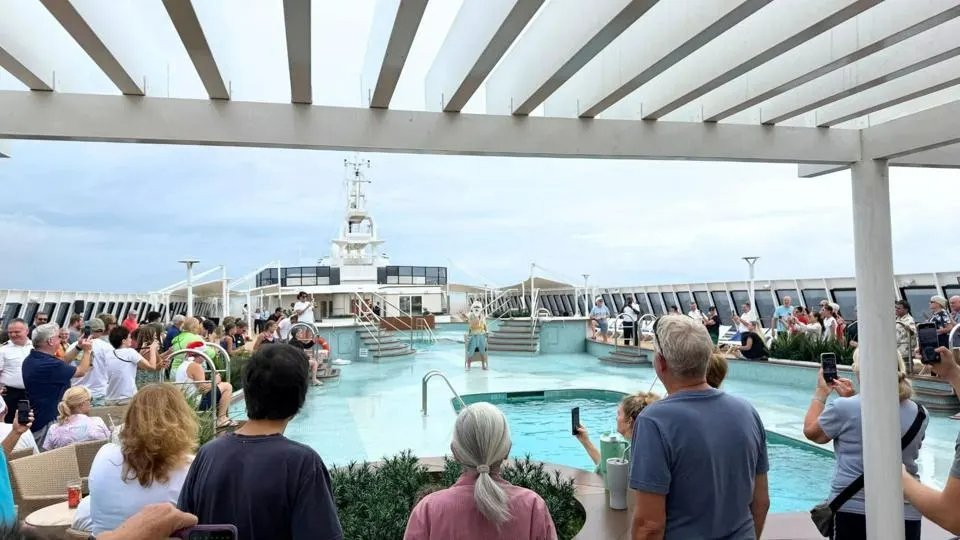
There are no kitchens in the cabins; safety and food control make private cooking impractical at sea. Residents eat instead in the Palms Café and the Thistle Restaurant, whose menus shift as the ship moves between regions. They spend much of the day in the lounges, by the pool, in a gym with weights and yoga space, or on deck playing pickleball.
NO KITCHEN AT HOME, A DIFFERENT MENU IN EVERY SEA. IMAGE: PRESS
The community is more varied than the brochure suggests. The average age sits in the late fifties, though residents range from their thirties to past ninety. Many are semi-retired entrepreneurs who have turned the years after a career into a long global journey. Others are remote workers who keep office hours from a business centre with private offices, a conference room and shared desks. A few families with teenagers follow home-schooling programmes along the itinerary.
The rhythm of the voyage
NEIGHBOURS, NOT PASSENGERS. IMAGE: PRESS
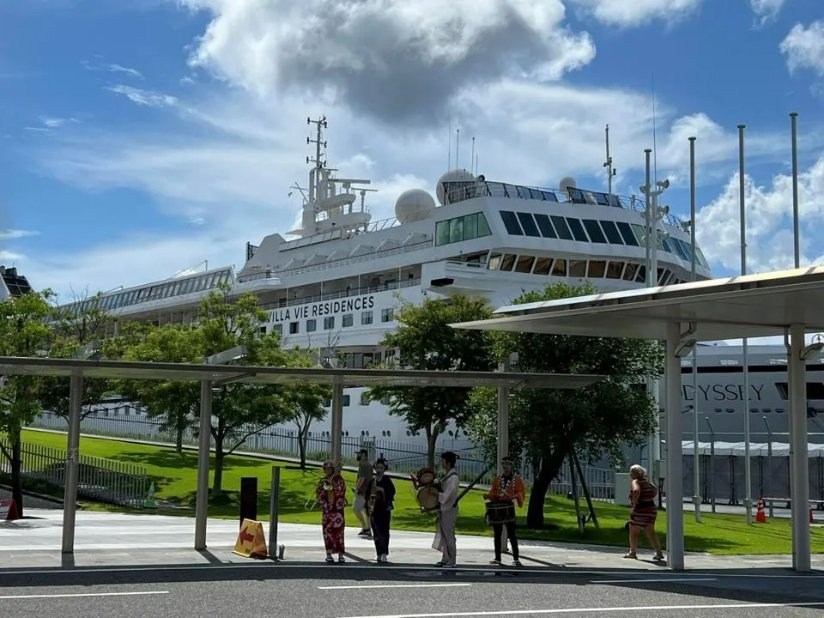
What residents value most is the pace. Where a conventional cruise lingers a few hours in each port, the Odyssey typically stays several days, long enough to know a city rather than merely photograph it. Time, here, is the real amenity.
The ship has a past of its own. Built in 1993, she sailed as Crown Dynasty and Norwegian Dynasty, and most recently as Fred. Olsen’s Braemar, before Villa Vie acquired her in 2024. The transition was not smooth: rudder and gearbox problems found in dry dock delayed the departure by four months, and the first residents waited in Belfast, in hotels and rented flats. That enforced pause, by most accounts, is where the community first formed.
SEVERAL DAYS IN PORT, NEVER JUST AN AFTERNOON. IMAGE: PRESS
A sister ship
In July 2026 the company announced a second residential vessel, Legacy, due in early 2029. It is conceived as a more generous sister to the Odyssey, with residences around half as large again, more dining venues, larger public spaces and expanded wellness facilities, at prices and fees about 30 per cent higher. Petterson presents it as the next step built on what two years at sea have taught the company. The residential ship, it seems, is becoming a category rather than a curiosity.
HOME IS WHEREVER THE SHIP DROPS ANCHOR. IMAGE: PRESS
Petterson likes to say that what surprises visitors most is the atmosphere aboard. Over time, residents stop thinking of themselves as passengers and start recognising one another as neighbours, members of an itinerant community bound by the same wish: to see the world without having to choose a single place to call home. The cruise, once something you took, has become somewhere you return to every evening, wherever that happens to be.
Details: residences aboard the Villa Vie Odyssey are offered for purchase, lease or individual segments through Villa Vie Residences, villavieresidences.com.
After more than a decade of negotiation, the EU's revised air passenger rights regulation was published in October 2026. It guarantees a free personal item and fares shown with hand baggage included, but not a free cabin trolley, and it applies from October 2027.
Singapore Airlines still owns the two longest scheduled routes on earth, at more than 15,300 km each. A 24-hour Airbus test flight in July showed how far the ranking is about to stretch.
Backed by Guy Oseary and run by Brian Corbett, the invitation-only app lets members host, join or propose shared private flights. Its real proposition is not price, but who sits across the aisle.