Travel / Reportage
Zannier Île de Bendor: an island with a social memory
Paul Ricard’s Provençal island returns with three accommodation identities and a hospitality project built around conviviality.

THE CURATED EDITION.
Reportage / Milan
Opposite Milano Centrale, Marco Piva’s renovation connects a 1932 landmark with contemporary Italian makers. Furniture, lighting and art give the station-facing hotel its present language.
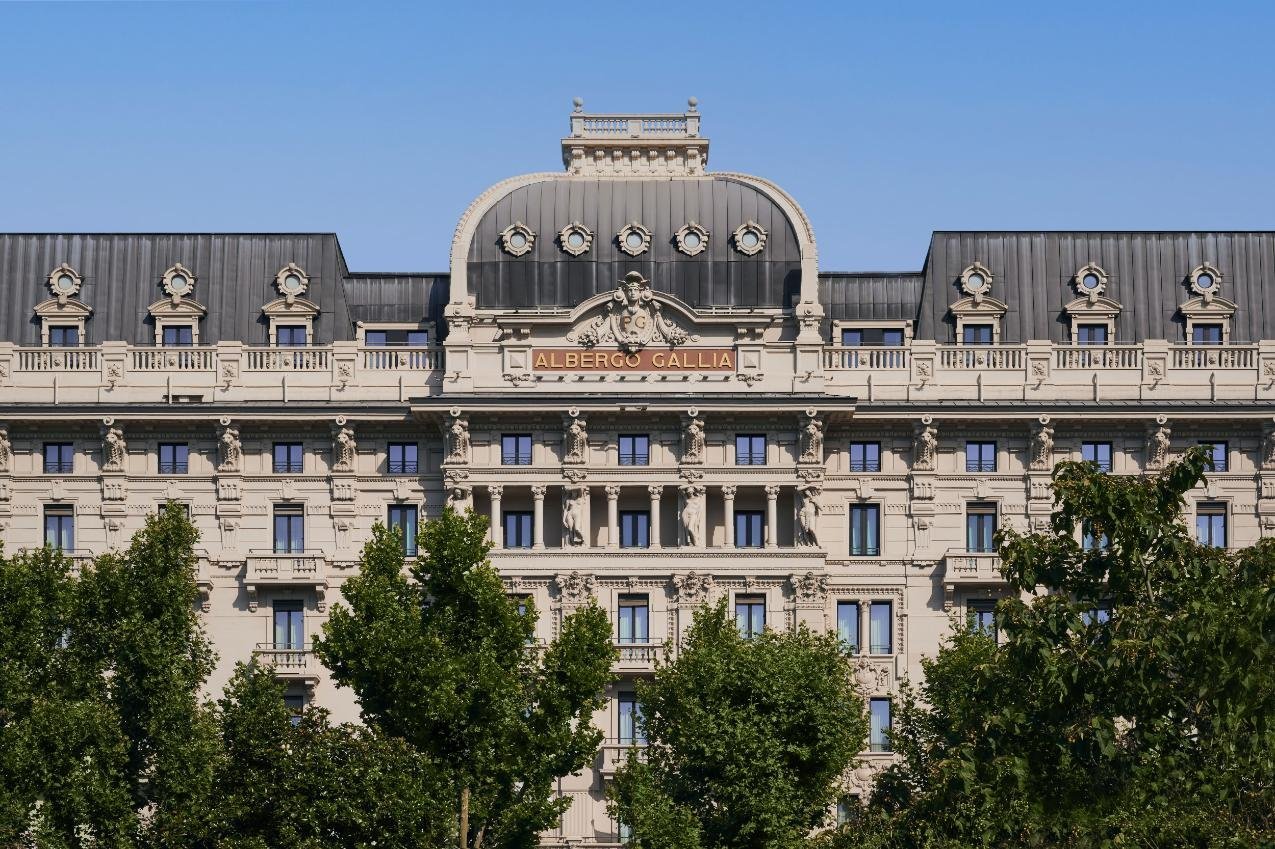
Milan’s design culture can be encountered at the moment of arrival. Opposite Milano Centrale, Excelsior Hotel Gallia places a historic frontage beside a later steel-and-glass volume, making the city’s relationship with manufacture visible within a hotel.
Opened in 1932, the property belongs to the period when rail travel helped define an international urban address. Its position on Piazza Duca d’Aosta still makes the station more than a convenient neighbour. It explains the building’s scale and its orientation towards the arriving traveller.
Marco Piva’s project, completed in 2015, covered architecture, interiors, lighting and landscape. Treating these elements as one brief allowed the renovated hotel to work across several scales, from the public elevation to a lamp beside a chair.
The historic building and the contemporary addition are not made indistinguishable. Glass and steel establish a newer architectural register alongside the older frontage. Their relationship gives the property a visible chronology without requiring the contemporary spaces to imitate a period room.
Piva’s account emphasises the interplay of natural and artificial light throughout the interiors. Illumination is therefore part of their organisation, not simply something applied after the furniture has been chosen.
The current hotel catalogue lists 235 guest rooms, including fifty-three suites. Its named furniture and design contributors include B&B Italia, Cassina, Fendi Casa and Flos. Cassina separately identifies the Gallia among its custom-interior hospitality projects with Studio Marco Piva.
That connection gives the interior a relationship with Milan’s wider production culture. A catalogue of brands alone would say little about how a room works. The more useful question is how custom pieces, lighting and proportions operate within the same space.
Signature Suites draw on Italian creators including Gio Ponti and Castiglioni. Atelier Suites use the idea of an art gallery, with light and colour becoming more pronounced elements of the setting. The categories offer different design premises rather than one room repeated at increasing size.
The renovation also included a collection of more than five hundred works, encompassing painting, sculpture and photography. Studio Marco Piva curated their placement across common areas and accommodation, according to the project’s published account.
The scale of that programme gives art a role beyond a solitary statement in the lobby. It also means that a guest’s route through the hotel can encounter different media and arrangements, rather than one decorative theme.
Terrazza Gallia takes the hotel’s social life towards the roof. The current dining programme names chef Vincenzo Lebano in collaboration with the Cerea family, connecting Italian-Mediterranean cooking with the property’s wider design setting.
That identifies the kitchen’s present authorship without inventing a meal assessment or transferring an award from the Cerea family’s other restaurant to the Gallia. The dining room deserves its own judgement.
The hotel’s strongest architectural idea remains the meeting of periods and disciplines. The façade records an earlier way of arriving in Milan. Furniture, art and light show a city still making things.
Excelsior Hotel Gallia · Piazza Duca d’Aosta 9, Milan, Italy.
CONTINUE READING
Travel / Reportage
Paul Ricard’s Provençal island returns with three accommodation identities and a hospitality project built around conviviality.
Travel / Reportage
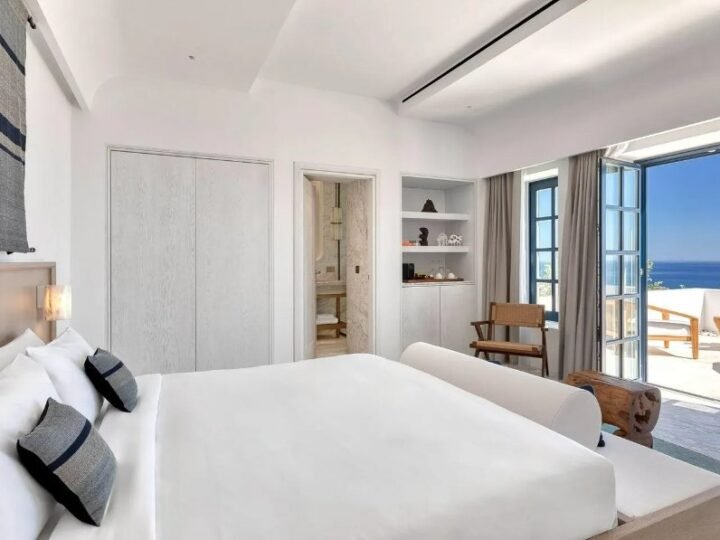
Rockwell Group brings stone, curved ceilings and an Aegean palette to a resort away from Santorini’s habitual caldera viewpoint.
Travel / Reportage
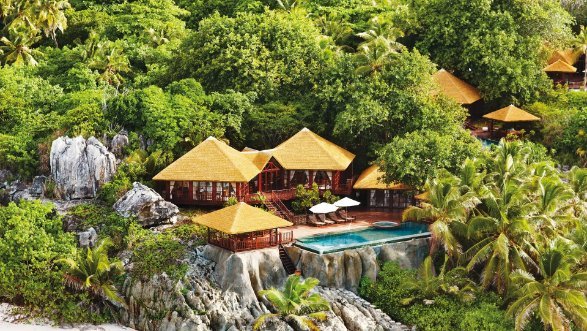
A Seychelles conservation story deserves attention beyond the hospitality project, which remains under reconstruction.