Travel / Reportage
Sandblu: reading Santorini from Kamari
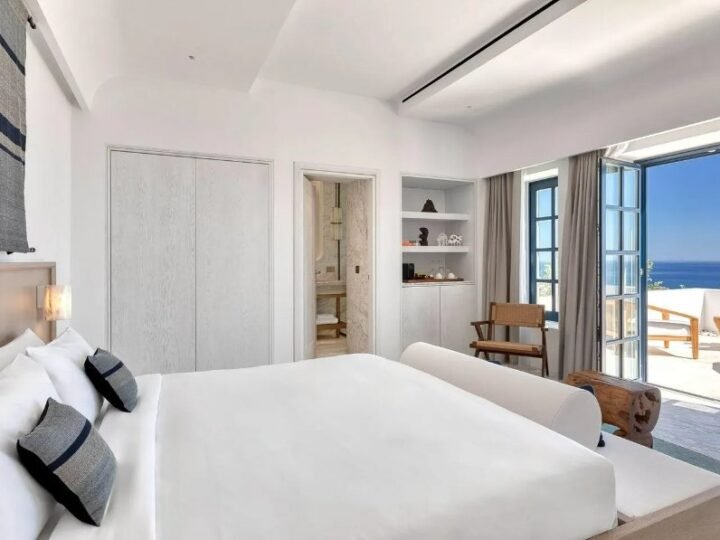
Rockwell Group brings stone, curved ceilings and an Aegean palette to a resort away from Santorini’s habitual caldera viewpoint.

THE CURATED EDITION.
Reportage /
Paul Ricard’s Provençal island returns with three accommodation identities and a hospitality project built around conviviality.
WAYFARER · TRAVEL
An island does not have to promise isolation to justify the crossing. Île de Bendor has a more interesting inheritance: the idea that a small piece of land could become a meeting place for art, leisure and Provençal life. Zannier's new chapter is worth reading against that social memory. The project is not simply a hotel surrounded by water. It is an attempt to give a whole island another working identity.
Paul Ricard acquired Bendor in 1950. Facing Bandol, the seven-hectare island became an expression of the pastis entrepreneur's interest in artists, sailing and conviviality. Zannier's historical account describes an artisan village and the creative life that developed around it. That origin gives the present project a subject more substantial than the familiar appeal of a private island.
A small territory can hold a surprisingly complex social structure. Harbour, café, workshop and terrace are not interchangeable amenities: each invites a different duration and a different relationship between visitor and place. The challenge of restoration is to retain that variety without turning the whole island into a uniform hotel interior.
The five-year transformation was undertaken with the Ricard family, with Arnaud Zannier working alongside Marc de Jouffroy. The hotel opened on 1 May 2026. The date marks a change of operation, but the continuity of the island's story is the more valuable measure.
The 93-key property groups its accommodation into Delos, Soukana and Madrague. Delos invokes a 1960s atmosphere; Soukana is organised around a seaside setting; Madrague consists of Provençal houses near the harbour with private gardens. Rather than treating every room as a variation on the same suite, these identities make the choice of accommodation part of the visit's character.
There is a practical editorial distinction here. A house with a garden suggests a different use of the day from a room organised around a social pool or a direct relationship to the shore. The right comparison is therefore not only size or finish, but the sort of daily life each setting allows. A room category should describe a way of staying, not merely a rung in a hierarchy.
Bendor sits a short boat journey from Bandol. That relationship prevents the island from becoming an abstract Mediterranean enclave. The mainland provides a port, vineyards and a wider Provençal geography; the crossing establishes a manageable separation without requiring the surrounding region to disappear.
Zannier lists three restaurants, four bars, a café and a crêperie on the island. The variety supports the project's social premise, although a hospitality programme is not the same thing as proof of community. The more persuasive test is whether the spaces retain individual identities and encourage movement between them.
The memory of Bendor is not a licence to manufacture nostalgia. It is a useful constraint: the renewed island should offer somewhere to meet, look and linger, rather than simply somewhere to withdraw. The sea creates the boundary. What happens inside it should remain open to conversation.
Details and further reading: Zannier Île de Bendor · Island history · Accommodation.
Instagram: @zannieriledebendor.
GABRIEL SILVEIRADO, FOR WAYFARER.
CONTINUE READING
Travel / Reportage
Rockwell Group brings stone, curved ceilings and an Aegean palette to a resort away from Santorini’s habitual caldera viewpoint.
Travel / Reportage
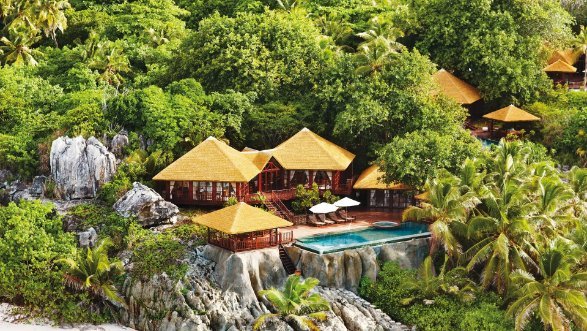
A Seychelles conservation story deserves attention beyond the hospitality project, which remains under reconstruction.
Travel / Reportage
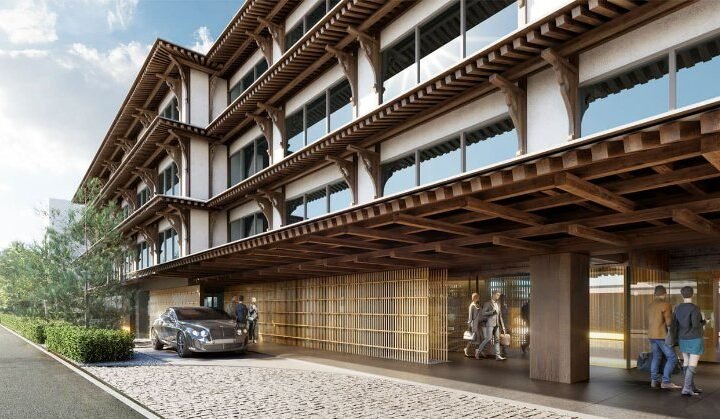
Kengo Kuma and Brewin Design Office reinterpret the machiya through courtyards, craft and the cultural life of Miyagawa-cho.