Travel / Reportage
Zannier Île de Bendor: an island with a social memory
Paul Ricard’s Provençal island returns with three accommodation identities and a hospitality project built around conviviality.

THE CURATED EDITION.
Reportage /
Rockwell Group brings stone, curved ceilings and an Aegean palette to a resort away from Santorini’s habitual caldera viewpoint.
WAYFARER · TRAVEL
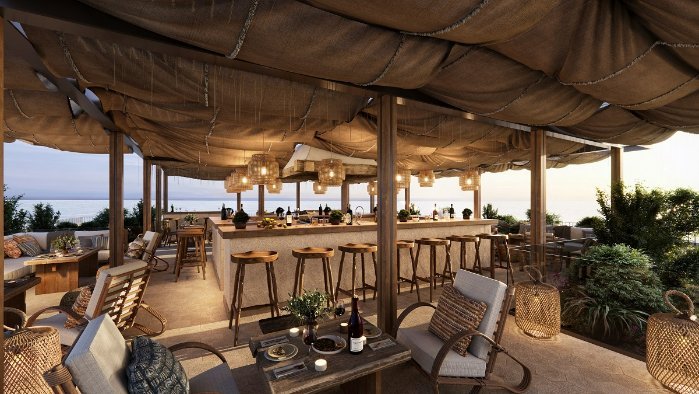
Santorini is larger than its most repeated photograph. Sandblu begins with that simple correction. Set in Kamari, on the island's southeastern side, the resort offers a reading of the landscape that does not depend on reproducing the familiar caldera terrace. Ancient Thira Hill and the coast supply another orientation. The architectural question becomes how to inhabit that setting, not how to compete with an image already circulating around the world.
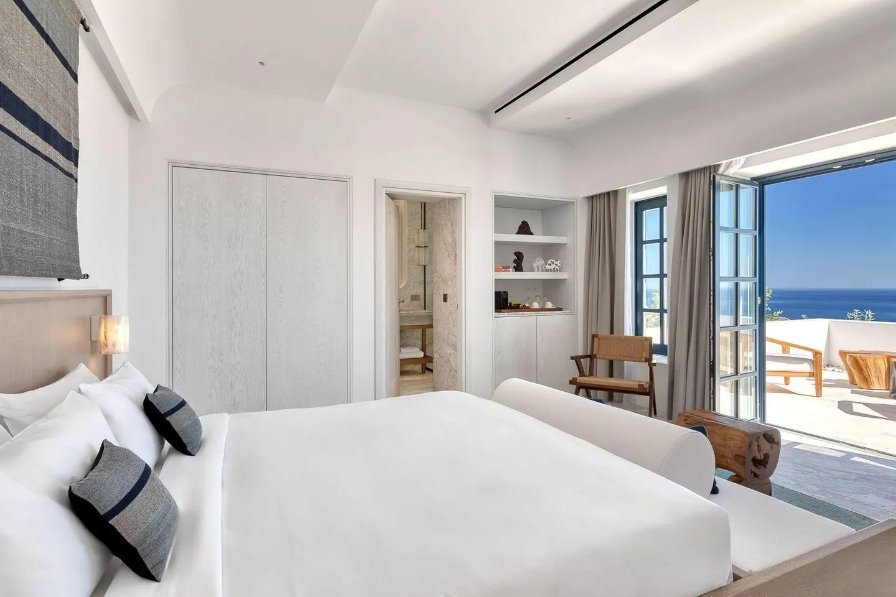
Rockwell Group describes a composition of cascading geometric forms, with interiors drawing on local stone, whitewashed wood and marble. Blue and sage-green accents connect the palette to sea and vegetation. Curved ceilings recall traditional Santorini interiors, while travertine, plaster, woven lighting and linen give the rooms a varied material register.
The useful contrast is between the clarity of the overall forms and the texture encountered at close range. A white facade can establish a coherent mass from a distance; inside, an entirely smooth environment would make that same clarity feel anonymous. Stone and fabric supply resistance. They bring the scale back to the hand, the chair and the room.
The project illustrates why a restrained palette need not mean a thin interior. Variation can come from the way materials absorb light, the proportions of an opening or the depth of a threshold. It does not require every object to introduce another colour or reference. The island's visual identity is acknowledged without being copied literally into each corner.
Sandblu's current presentation includes rooms, suites and villas, two outdoor pools, a children's club and Aurora Spa. Its dining addresses include Nectar, Plateía, Ároma and Stári. The range suggests a property designed for different daily patterns, rather than a single prescribed idea of retreat.
That is a meaningful distinction for Santorini. A couple spending much of the day outside the hotel, a family dividing time between the pool and the coast, and a visitor interested in wine do not need identical programmes. Architecture and service become more useful when they accommodate those differences without forcing them into separate versions of the destination.
The resort offers wine-tasting experiences alongside its dining programme. This is a more promising route into Santorini than another list of scenic stops. A considered tasting can connect a wine to farming, land and the decisions made by its producer. The value lies in explanation, not in presenting a prestigious bottle as a conclusion in itself.
Likewise, the distinction between Kamari and the caldera should remain explicit. Sea views on one side of an island are not interchangeable with the geography of the other. A traveller choosing a room should understand its actual orientation, outdoor space and pool access rather than rely on a general promise of a Santorini view.
Sandblu's editorial interest is not that it replaces the island's familiar image. It provides a second one. An address becomes more useful when it expands the map rather than asking the map to revolve around it.
Details and further reading: Sandblu · Resort facilities · Rockwell Group project.
Instagram: @sandbluresort.
GABRIEL SILVEIRADO, FOR WAYFARER.
CONTINUE READING
Travel / Reportage
Paul Ricard’s Provençal island returns with three accommodation identities and a hospitality project built around conviviality.
Travel / Reportage
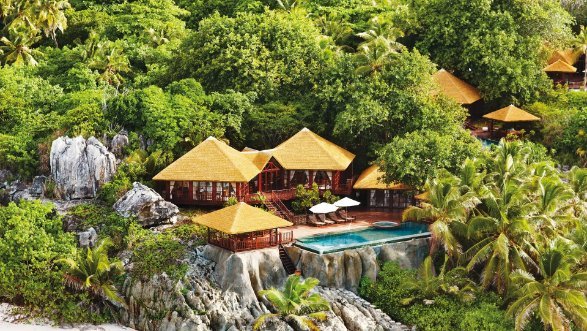
A Seychelles conservation story deserves attention beyond the hospitality project, which remains under reconstruction.
Travel / Reportage
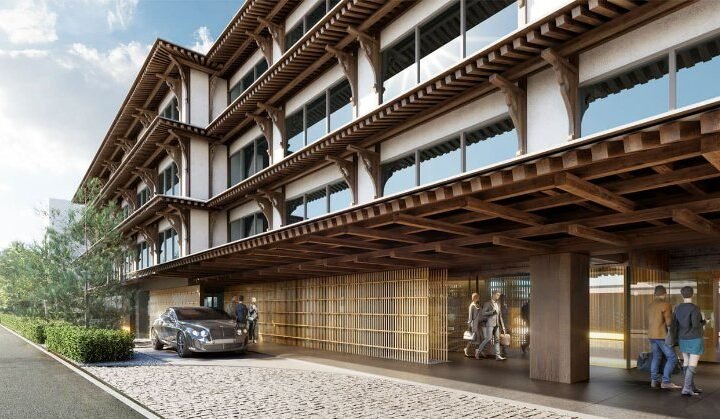
Kengo Kuma and Brewin Design Office reinterpret the machiya through courtyards, craft and the cultural life of Miyagawa-cho.