
Design / Reportage
Bombardier Global 8000: the journey inside the range figure
Beyond maximum speed, the aircraft raises questions about cabin planning, real-world routing and how long-distance travel is organised.

THE CURATED EDITION.
Reportage / Miami Beach
At Sunset Harbour, Yodezeen’s interiors connect a’Riva to a more private social world. The distinction is architectural, but it is also written into access and photography rules.
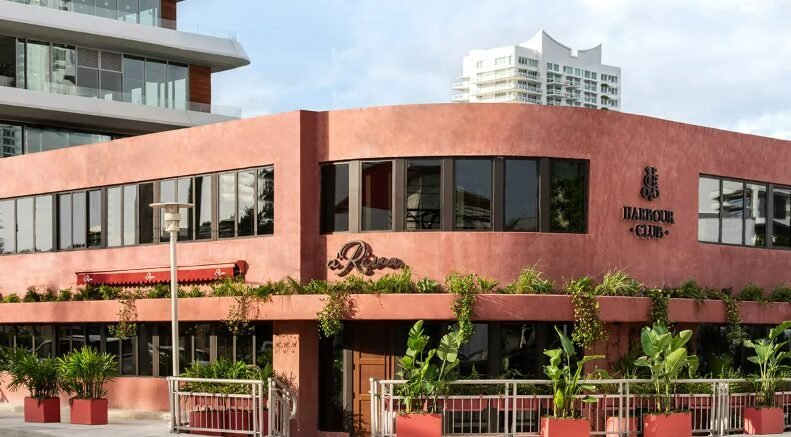
A private club is defined as much by its boundaries as by its rooms. Harbour Club Miami makes that distinction particularly clear: its street-facing restaurant and its members’ spaces belong to the same address, but not to the same system of access.
The club occupies 1766 Bay Road in Miami Beach’s Sunset Harbour. Founder James Julius developed it with interiors by Yodezeen, drawing on the domestic register of British social clubs rather than the scale of a resort.
The club’s current material explicitly welcomes members and non-members at a’Riva. Its Italian and Mediterranean identity gives the public-facing part of the address a clear dining function.
That does not make a meal at a’Riva an entitlement to use every other room. The restaurant, the club membership and attendance at a private event are separate arrangements.
The terrace and street-facing façade also give the project a neighbourhood scale. A building can remain attached to the pavement even while more restricted spaces occupy its interior.
The two-storey scheme uses palm forms at several scales. Orlean wall coverings appear in the bathrooms and Palm Room; brass lights shaped like palm leaves relate to velvet seating in the upper-level spaces.
The repetition supplies continuity without requiring every room to be identical. A leaf drawn on a wall and a leaf shaped into a light fitting perform different tasks: one gives a surface pattern, the other occupies space and illuminates it.
The staircase is another point of emphasis. A Hajime Sorayama Sexy Robot sculpture and floral wall treatment make the passage between levels part of the interior’s visual structure. A Damien Hirst disc near the windows brings a further layer of art into the street-facing view.
Visibility from outside is not the same as public access to an artwork inside. The distinction belongs to the building’s social structure, not merely to its décor.
The club’s published rules prohibit photography and filming in all areas, including sharing images taken inside on social media. The bathrooms should not be described as an exception. A room can be visually elaborate without being available as a photographic backdrop.
The current rules also identify the Palm Room as an adults’ space for those aged 21 and above. Members remain responsible for their guests. Those are practical constraints, not details to be hidden behind the idea of an informal second home.
For a visitor, the correct sequence is to establish which part of the address they may enter, then check the relevant rules. A restaurant invitation, an event invitation and a member’s guest privilege cannot be treated as interchangeable.
Soft seating and patterned walls suggest a domestic interior. Membership rules, guest responsibility and restrictions on recording establish something more organised than a private living room.
The tension is the project’s useful subject. Design can make a social space feel familiar, but familiarity does not erase its boundaries.
Past membership prices and founding-member counts are not reliable present-day terms. Current access and restaurant information should be checked directly with the club, without assuming that an earlier description still governs the address.
The strongest reading of Harbour Club is therefore not simply that it is private. It is how the public table, the internal stair and the rules between them define different ways to inhabit the same building.
CONTINUE READING
Design / Reportage
Beyond maximum speed, the aircraft raises questions about cabin planning, real-world routing and how long-distance travel is organised.

Design / Reportage
The Volkswagen-Porsche collaboration offers a different route through sports-car history, defined by engine placement and radical proportions.
Design / Reportage
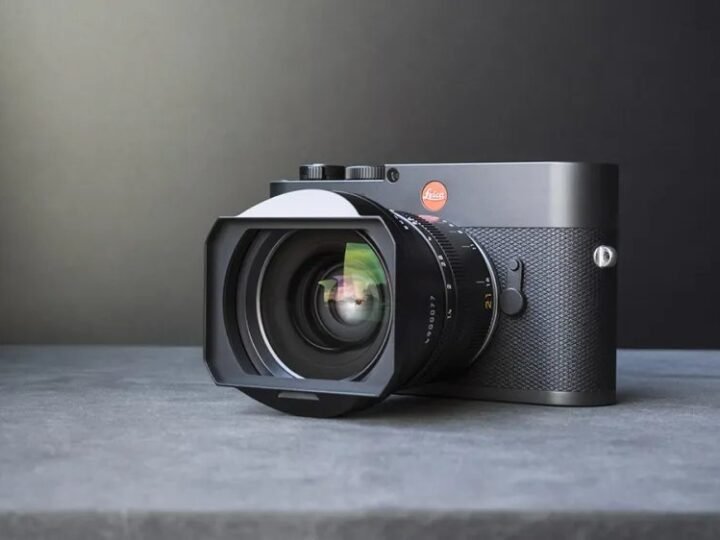
The first M with an integrated electronic viewfinder shifts the focusing experience without removing the photographer’s role.