Travel / Reportage
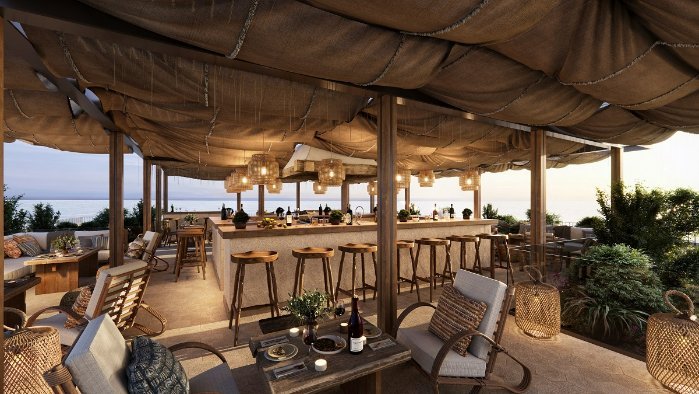
Zannier Île de Bendor: an island with a social memory
Paul Ricard’s Provençal island returns with three accommodation identities and a hospitality project built around conviviality.

THE CURATED EDITION.
Reportage / Bali
ACPV’s terraces, volcanic stone and Balinese craft give the Uluwatu resort a language beyond the ocean view. The strongest details are close at hand.
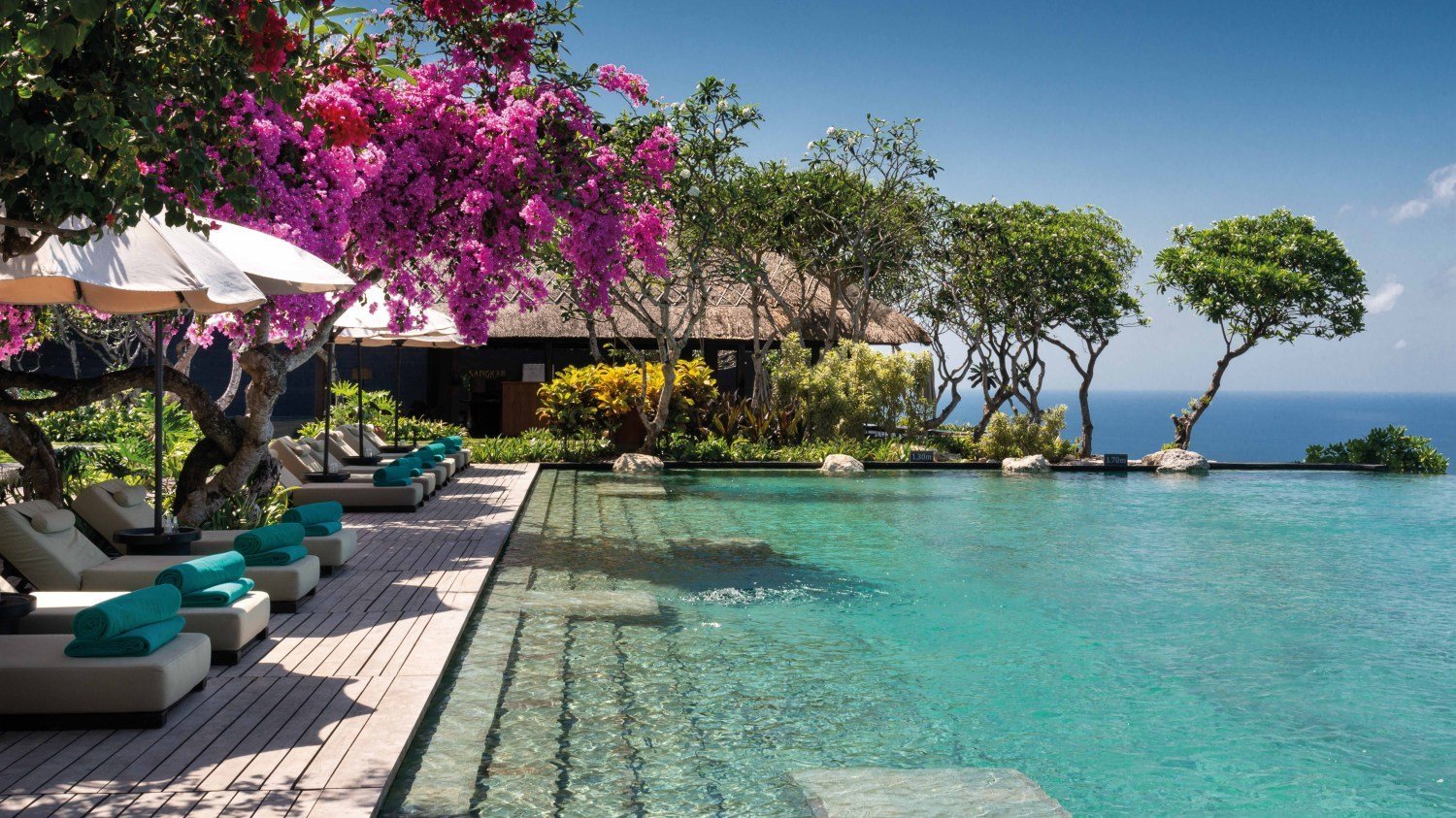
A large view need not produce an anonymous interior. At Bvlgari Resort Bali, the ocean establishes the scale, but timber, stone and woven textiles give the rooms a more specific relationship with the island.
The resort occupies a cliffside position at Uluwatu on the Bukit peninsula. ACPV Architects Antonio Citterio Patricia Viel developed a project that brings contemporary Italian design into contact with Balinese building principles and local craftsmanship. The meeting is most legible in materials and construction, rather than in a general label of tropical design.
The arrangement follows the sloping ground through terraces that refer to the island’s rice fields. Alang-alang thatched roofs, indigenous woods and hand-cut volcanic lava stone build a sequence between garden, pavilion and sea. The roofline becomes part of the view from one level to another.
At eye level, walls of pale bukit stone change their appearance when wet. The contrast with darker rock and timber gives the architecture a material range that cannot be explained by the horizon alone.
The cliff also separates the resort’s upper spaces from the shore. An inclined elevator provides the connection to the beach. That passage is part of the property’s spatial organisation, not evidence that the whole coastline is a uniformly accessible swimming area.
Furniture and decorative objects were developed through collaboration between the architects and local artisans, with work made in Bali. Original Indonesian antiques sit alongside pieces produced for the resort. The interiors combine inherited objects with a contemporary programme rather than attempt a reconstruction of a traditional home.
Private pools use green sukabumi stone. Gardens and outdoor living areas extend the accommodation beyond the bedroom, so the villa is understood as a group of connected spaces. Larger mansions add another accommodation scale, without making every villa equivalent in layout or outlook.
Woven textiles and black-and-white local photography provide closer points of attention. Against dark timber, they carry a different register from the open water outside. The room’s identity remains visible even with the view out of sight.
The resort’s current directory lists Sangkar, Il Ristorante – Niko Romito, the Bvlgari Bar and Pizza Bar – Pier Daniele Seu. These names distinguish different dining concepts; they do not substantiate a judgement about a meal.
The useful design argument is durable. Terraces respond to the ground, roofs shape the passage between levels, and crafted objects bring the scale back to the hand. The cliff supplies a view. The interior supplies an address.
Bvlgari Resort Bali · Uluwatu, Bali, Indonesia.
CONTINUE READING
Travel / Reportage
Paul Ricard’s Provençal island returns with three accommodation identities and a hospitality project built around conviviality.
Travel / Reportage
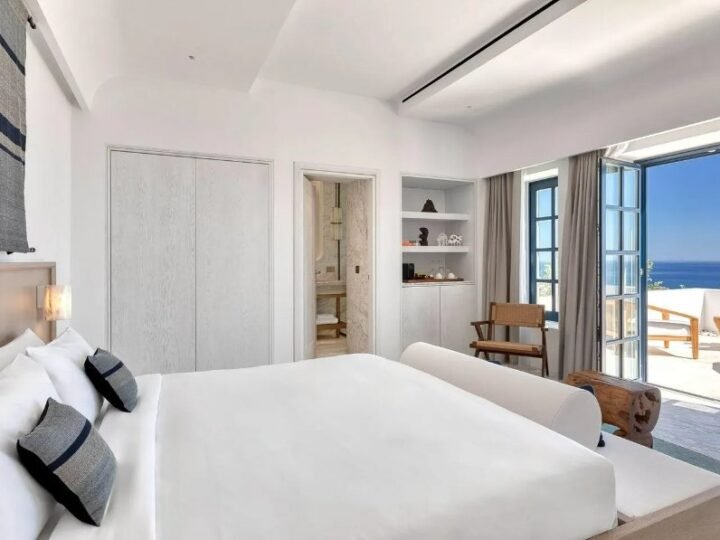
Rockwell Group brings stone, curved ceilings and an Aegean palette to a resort away from Santorini’s habitual caldera viewpoint.
Travel / Reportage
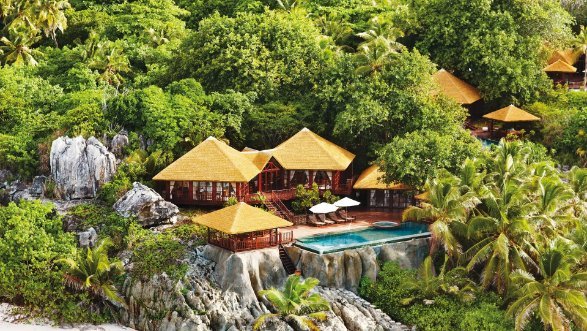
A Seychelles conservation story deserves attention beyond the hospitality project, which remains under reconstruction.