
Design / Reportage
Bombardier Global 8000: the journey inside the range figure
Beyond maximum speed, the aircraft raises questions about cabin planning, real-world routing and how long-distance travel is organised.

THE CURATED EDITION.
Reportage / Tuscany
Courtyards, vaulted rooms and an olive landscape make the private property an architectural subject. Claims about its earliest history, artworks and value require a different standard of evidence.
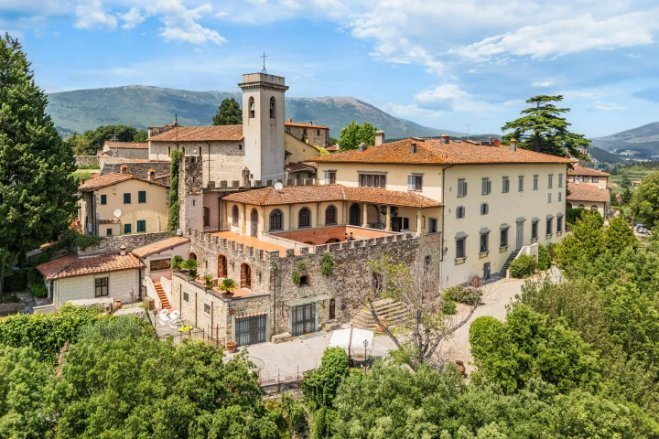
A historic house should not have to carry an unverified legend to be interesting. Villa Ginori’s architectural subject lies in its rooms, courtyard and landscape, not in a promise that every claim in a sales narrative has already been established.
The property described in 2025 was a private Tuscan residence associated with Building Heritage’s real-estate presentation. It should not be confused with a public museum, a hotel or every other property bearing the Ginori name.
The 2025 property description set out roughly 2,200 square metres across three residential units, with a central courtyard. Those elements suggest a complex whose identity comes from the relationship between buildings, rather than from one uninterrupted interior.
A courtyard gives different rooms a common outside space. It can provide orientation within a large property and place circulation, light and enclosure in relation to one another.
That is an architectural reading, not a certified survey of the estate. Published floor area and the division into units require current plans and legal documentation if they are to inform a transaction.
Vaulted ceilings, painted surfaces and carved stone fireplaces were among the features described. Each belongs to a different kind of workmanship: structure, surface and the shaping of an object within a room.
The details should be read separately before being gathered into a general claim of age. A room may contain work from several periods. The presence of an older fireplace does not prove that every surrounding wall has remained unchanged.
Nor does a photograph establish the condition of a fresco, the extent of restoration or the authorship of an artwork. Those questions need records and specialist examination.
The house was presented within gardens and olive-growing land in the Florentine surroundings. The landscape gives the residence another scale, extending the subject beyond the decorated rooms.
An olive grove is not merely an aesthetic accessory. Cultivated land carries maintenance, access and seasonal work. For a private historic estate, the relationship between house and grounds is therefore practical as well as visual.
The exterior view can establish that relationship without pretending that the landscape has stood outside history or requires no continuing care.
An exact medieval foundation date, a papal decree and a painting attribution cannot be established from the property narrative alone. They are not treated here as verified historical conclusions.
A reported attribution to Bronzino also cannot be converted into a certified artwork value. Authorship, ownership, condition and market valuation are separate questions. A numerical claim attached to one of them does not settle the others.
The past advertised asking price is not evidence of present availability, a sale or a current valuation. Access to a private property likewise cannot be inferred from its appearance in an editorial feature.
Villa Ginori remains a subject for looking at how a large house is organised: residential parts around a courtyard, rooms shaped by particular materials, and an estate extending into cultivated land.
The restraint is useful. It lets the visible architectural questions stand without making unsupported historical or financial claims do the work.
A house acquires depth through evidence, not through the number of legends attached to its name.
CONTINUE READING
Design / Reportage
Beyond maximum speed, the aircraft raises questions about cabin planning, real-world routing and how long-distance travel is organised.

Design / Reportage
The Volkswagen-Porsche collaboration offers a different route through sports-car history, defined by engine placement and radical proportions.

Design / Reportage
The first M with an integrated electronic viewfinder shifts the focusing experience without removing the photographer’s role.