Travel / Reportage
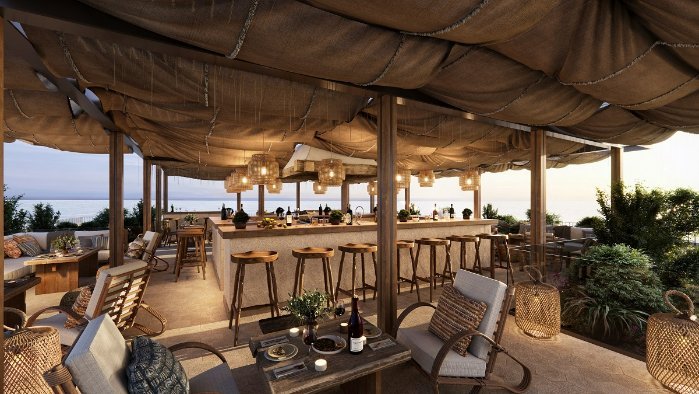
Zannier Île de Bendor: an island with a social memory
Paul Ricard’s Provençal island returns with three accommodation identities and a hospitality project built around conviviality.

THE CURATED EDITION.
Reportage /
Kengo Kuma and Brewin Design Office reinterpret the machiya through courtyards, craft and the cultural life of Miyagawa-cho.
WAYFARER · TRAVEL
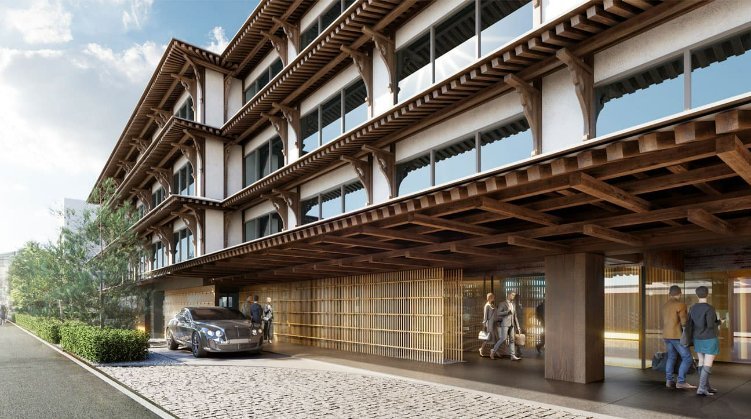
A hotel in Kyoto has to decide whether the city is its subject or merely its setting. Capella Kyoto makes that distinction unusually visible. Rather than treating Japanese tradition as a collection of decorative signs, its architectural premise begins with a building type, the machiya, and a neighbourhood, Miyagawa-cho. The relevant question is not how convincingly the property looks Japanese. It is how carefully it positions a contemporary hotel within a place that already has its own rhythms.
Kengo Kuma & Associates and Brewin Design Office designed the property around a reinterpretation of the traditional townhouse. The hotel rises four storeys and contains 89 rooms, including 29 suites. A courtyard and water feature organise the plan. Guest rooms begin at 50 square metres, while six Onsen Suites introduce private bathing into the accommodation offer. These are useful measurements, but the courtyard is the more revealing detail: it makes an inward space part of the building's everyday structure.
An enclosed centre changes the relationship between movement and rest. Instead of asking the guest to encounter everything in a single monumental lobby, the plan establishes transitions. A threshold, an interior view, a return to the street. The machiya reference becomes convincing when it shapes those sequences, not simply when it appears in the vocabulary of a brochure.
Capella stands beside Kenninji and near the Miyagawa-cho Kaburenjo, a theatre associated with the performance traditions of geiko and maiko. That proximity gives the address cultural specificity. It also demands a more considerate kind of visit. A working neighbourhood is not an open-air set; its residents, performers and craftspeople have lives that do not begin when a traveller arrives.
The hotel's Capella Curates programme describes encounters involving artisan studios, art institutions and religious scholars. The editorial interest lies in the quality of those exchanges, rather than the language of privileged access. A studio visit has value when a maker can explain a material, a technique or a problem. Without that context, even a beautifully arranged encounter risks becoming another photograph detached from its subject.
The project brings Japanese artworks and artefacts into the interiors. This should invite a closer reading of the room, not turn the accommodation into a checklist of cultural references. Surface, proportion and the relation between one object and another can carry more meaning than a large number of recognisable motifs. A hotel that introduces craft well gives the visitor a vocabulary that remains useful outside its walls.
The same principle applies to the duration of a stay. Kyoto rewards a day organised around a few sustained encounters rather than a rapid accumulation of temples and shops. Capella's strongest proposition is therefore not the possibility of seeing more. It is the possibility of returning to Miyagawa-cho with greater attention: recognising a workshop, understanding a performance tradition, noticing how a contemporary building acknowledges its neighbours.
The hotel is the starting point. The neighbourhood remains the reason to be there.
Details and further reading: Capella Kyoto · Cultural programme.
Instagram: @capellahotels.
GABRIEL SILVEIRADO, FOR WAYFARER.
CONTINUE READING
Travel / Reportage
Paul Ricard’s Provençal island returns with three accommodation identities and a hospitality project built around conviviality.
Travel / Reportage
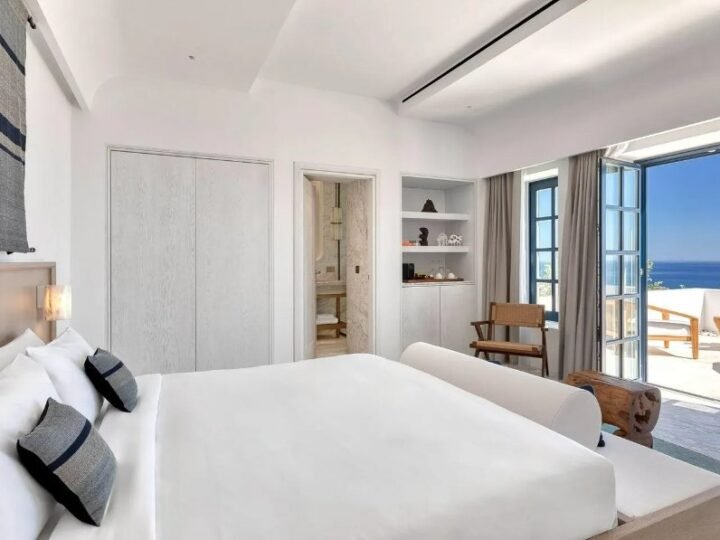
Rockwell Group brings stone, curved ceilings and an Aegean palette to a resort away from Santorini’s habitual caldera viewpoint.
Travel / Reportage
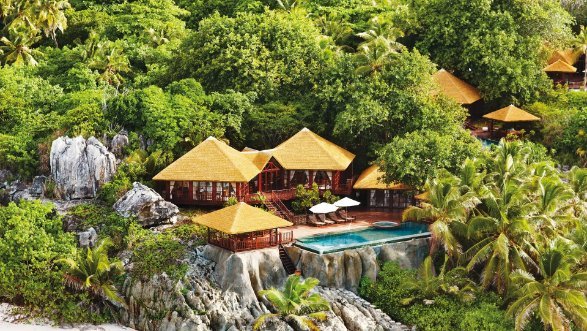
A Seychelles conservation story deserves attention beyond the hospitality project, which remains under reconstruction.