How artificial intelligence is shaping a new global elite
For the first time, a technology is not merely enriching an elite but designing one. Artificial intelligence is deciding who rises, how they live and what they want.
Every elite is cast in a mould larger than itself. Land made the nobility. Steel and oil made the barons. Finance made the fund managers. Our era has found a new mould, and this one thinks.
Artificial intelligence is not only producing fortunes at unprecedented speed. It is selecting, by its own criteria, who belongs at the top: what training, what age, what temperament, what geography. The result is a global elite unlike any before it, and it is already redefining what the world’s money considers desirable.
WHERE THE NUMBERS NEVER SLEEP. IMAGE: PRESS
The mould: whom the machine chooses
Start with the numbers, because they set the scale. This year’s annual census of the world’s billionaires counts at least 86 people whose fortunes derive substantially from artificial intelligence, worth around $2.9 trillion between them. Forty-five crossed the billion-dollar line in the past year alone. Nvidia, the near-monopoly supplier of the chips that train the large models, has passed $5 trillion in market value. OpenAI has been valued at more than $850 billion. In May, Anthropic raised $65 billion in a single round at a $965 billion valuation, placing its seven co-founders among the 500 richest people on earth on the same day, the most ever added from one company at once. Each holds less than one per cent of the company. It was enough.
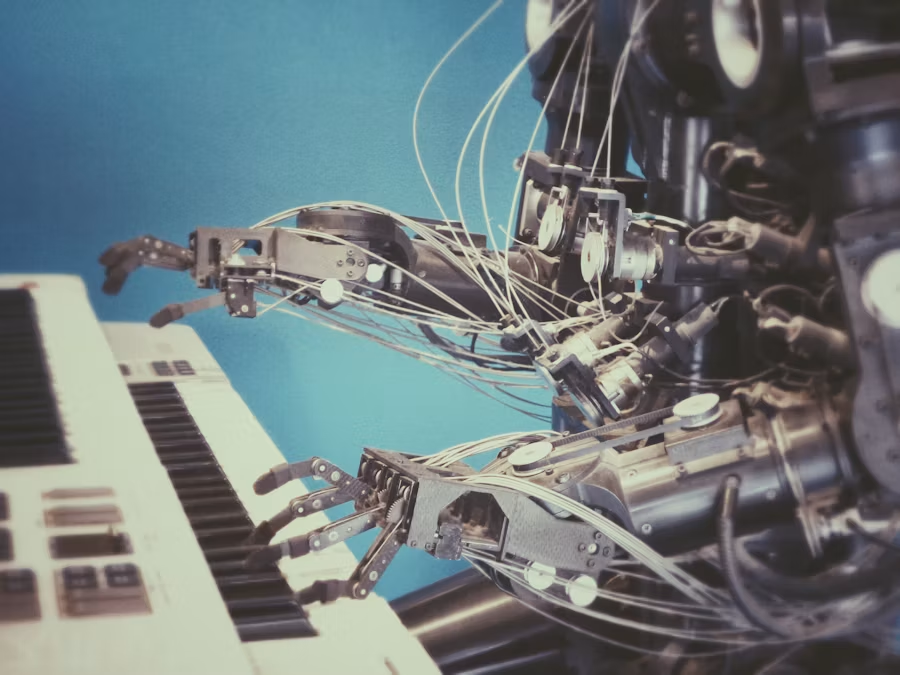
THE NEW FOUNDRIES HUM RATHER THAN ROAR. IMAGE: PRESS
The more revealing figure is not size but profile. This elite was not selected by surname, inheritance or commercial instinct. It was selected for technical competence in a discipline that, a decade ago, was an obscure corner of academia. The four co-founders of Cursor became billionaires in their mid-twenties. Among the richest in the field is not a magazine-cover face but Chen Tianshi, founder of the Chinese chipmaker Cambricon. The machine chose scientists, and made them princes.
A power without a single passport
AN ARISTOCRACY TRAINED IN THE LABORATORY. IMAGE: PRESS
The map of this elite was drawn by the technology rather than by tradition. The epicentre is San Francisco, whose companies attract close to two thirds of global AI investment, according to Crunchbase. The second pole is Chinese, led by Chen Tianshi and Liang Wenfeng of DeepSeek. Europe has figures of its own, among them Arthur Mensch of France’s Mistral, and beyond the three great blocs some of the richest names come from Israel and India.
It is a structurally cosmopolitan elite: trained in the same half-dozen universities and laboratories, fluent in the same technical language, competing for the same chips. Earlier aristocracies were national and became global with time. This one was born global.
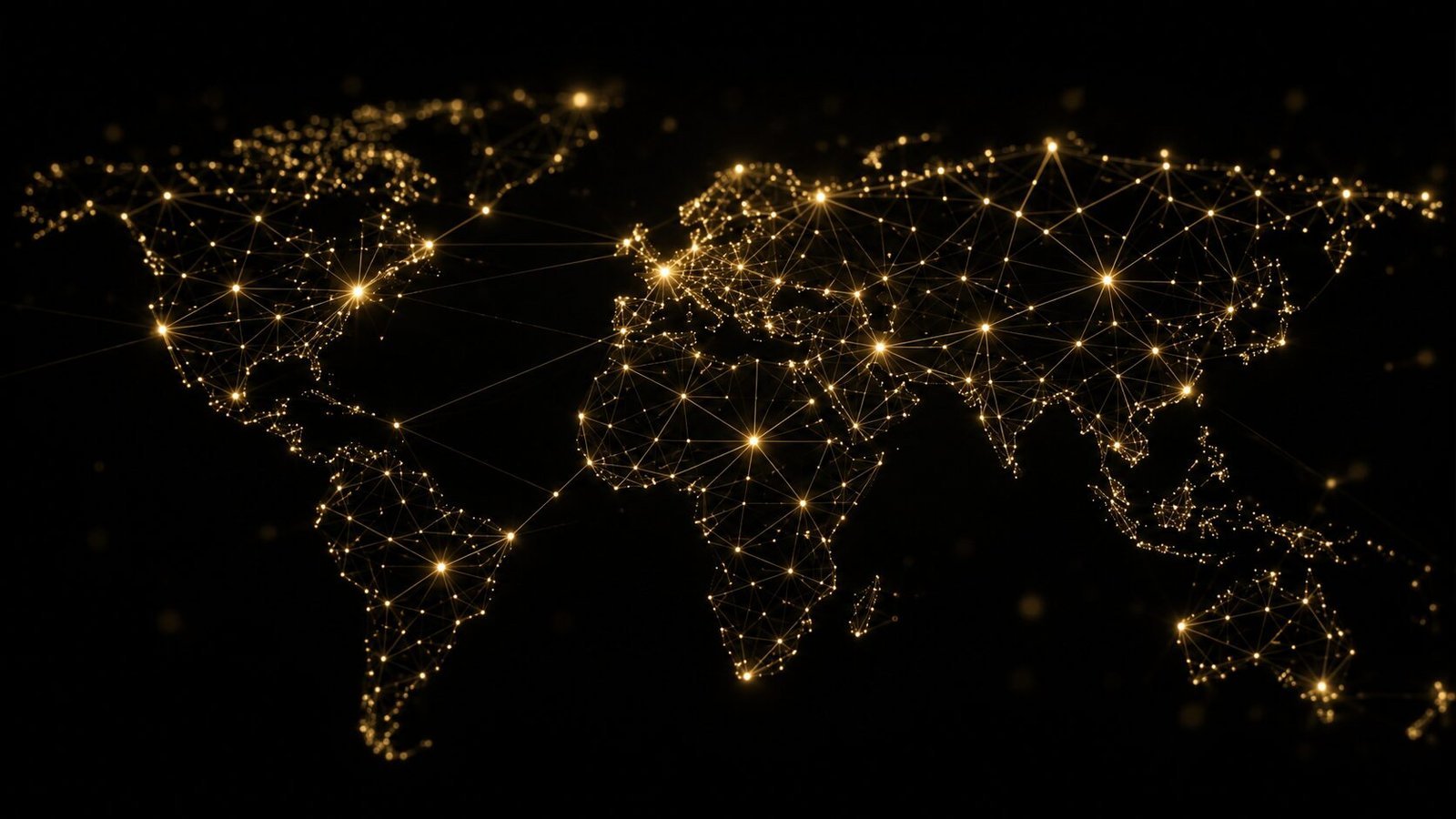
ONE MAP, THREE CAPITALS. IMAGE: PRESS
Landlords, architects and the invisible
Within it, the technology has imposed a three-tier hierarchy. At the base sits infrastructure: chips, data centres, energy. These are the landlords of the intelligence economy. Every model, every chatbot, every autonomous car pays rent to Jensen Huang’s silicon, anchored in delivered hardware and $215.9 billion in annual revenue. Above them are the architects of the models: OpenAI, Anthropic, xAI. Here lives the most spectacular and most speculative value, sustained by future capacity rather than present profit.
And there is a third, almost secret layer: the data suppliers who teach the machines. The richest newcomer to this year’s billionaire rankings did not found a famous chatbot. Edwin Chen of Surge AI, a data-labelling company, arrived with an estimated $18 billion. Whoever supplies the rare raw material grows rich before whoever signs the finished piece.
SILICON BELOW, IDEAS ABOVE, DATA IN BETWEEN. IMAGE: PRESS
The paradox of paper
One trait separates this elite from all its predecessors: most of its wealth is not yet money. It is illiquid equity in private companies. Paper, immensely valuable, and locked.
That shapes behaviour. Wealth turns into spending through liquidity events: a vesting date, a secondary sale, a listing. When the moment arrives, the spending is quick and decisive, almost anxious, because the fortune, though structural, feels provisional. And the inevitable question hangs over it: how much survives a correction? Private valuations have run ahead of revenue at several of these companies. If OpenAI and Anthropic go public, the market will say whether this is a new Standard Oil or a new euphoria. Probably, as ever, both.
A FORTUNE THAT EXISTS MOSTLY ON PAPER. IMAGE: PRESS
Discretion as an operating system
Artificial intelligence did not only shape the size and form of this elite. It shaped its taste. The new money does not spend like old money, nor like the newly rich of earlier cycles. The wardrobe barely changes. The balance sheet does.
In prime property the portrait is sharp. The Agency’s Red Paper 2026 describes a tech-native millennial buyer reshaping the top of the market, with health and longevity increasingly built into the house itself, and privacy prized above display. The previous generation bought to be seen. This one buys to disappear.
The figures follow. In the Hamptons, the median sale price reached a record $2.34 million at the end of 2025, up 34 per cent in a year, according to Douglas Elliman and Miller Samuel, with sales above $20 million up 59 per cent. Brokers sum up the source of the capital in two words: AI money. The richest elite of recent history does not want more things. It wants time, health, silence and places where nobody recognises it.
The other side of the K
It would be dishonest to paint this portrait without its shadow. The technology that mints billionaires in quarters pulls income away from labour. Economists describe a K-shaped economy, in which Moody’s Analytics estimates that the top tenth of American households account for roughly half of consumer spending.
And there are the parables. Klarna, which declared in 2024 that its AI assistant was doing the work of 700 customer-service agents, later began bringing people back after quality suffered. The Gilded Age teaches that concentrations of this scale end, sooner or later, in political correction. The difference is that the steel barons took decades to accumulate what this generation has amassed in a single product cycle.
Land made nobles who displayed their coats of arms. Steel made barons who built mansions. Artificial intelligence is making something else: an elite formed in laboratories, averse to audiences, rich in paper and poor in time, which reached the top already knowing what old money took three generations to learn. Every age gets the aristocracy its technology designs. Ours was designed by a machine that thinks, and it emerged understanding what power took centuries to admit: some kinds of force never need to raise their voice.
Mike White's fourth season unfolds during the Cannes Film Festival, between a castle in Saint-Tropez and the Croisette. The subject this time is fame, and the series is due on screen in 2027.
Derek Ridgers' Hello, I Love You gathers kisses caught by flash on London nights in the early 1980s. Seen today, the pictures record something more fragile than romance: a night that did not need to be documented to exist.
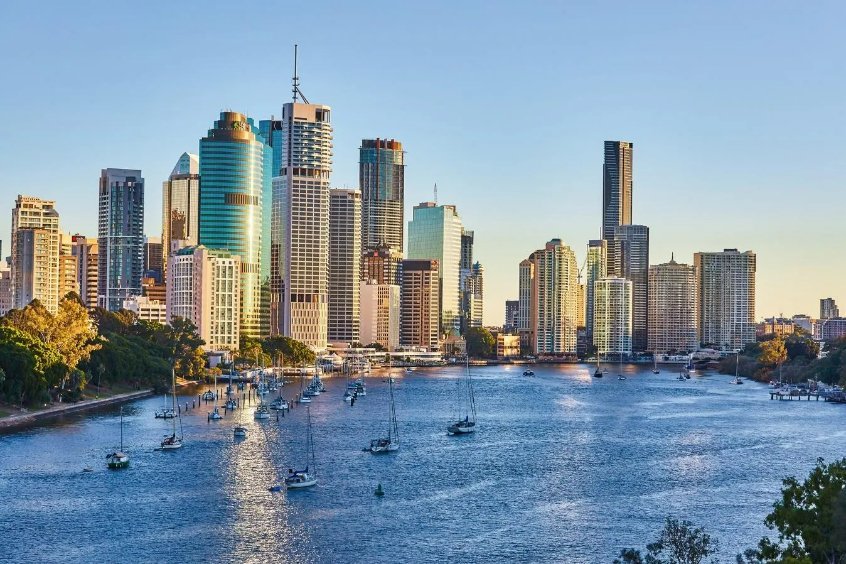
Brisbane leads a 50-city index of the best places to raise children, ahead of London and Auckland. The ranking reads less like a league table than a verdict on how cities choose to spend space, time and money.