Derek Ridgers' Hello, I Love You gathers kisses caught by flash on London nights in the early 1980s. Seen today, the pictures record something more fragile than romance: a night that did not need to be documented to exist.
The public kiss has become an endangered species. Two strangers on a dance floor, a couple pressed against the wall of a bar, a pair lost in each other on a city bench: for decades these were the ordinary choreography of a Saturday night. For Generation Z they look increasingly like period scenes, belonging to another way of living the night, desire and chance.
Kisses caught by flash
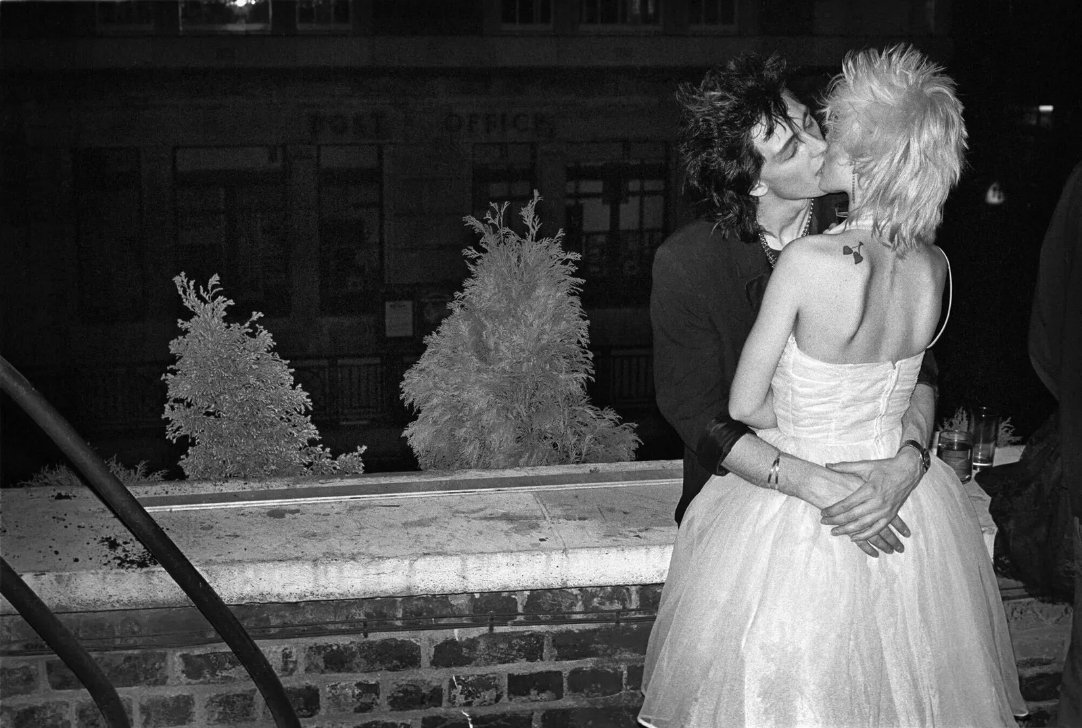
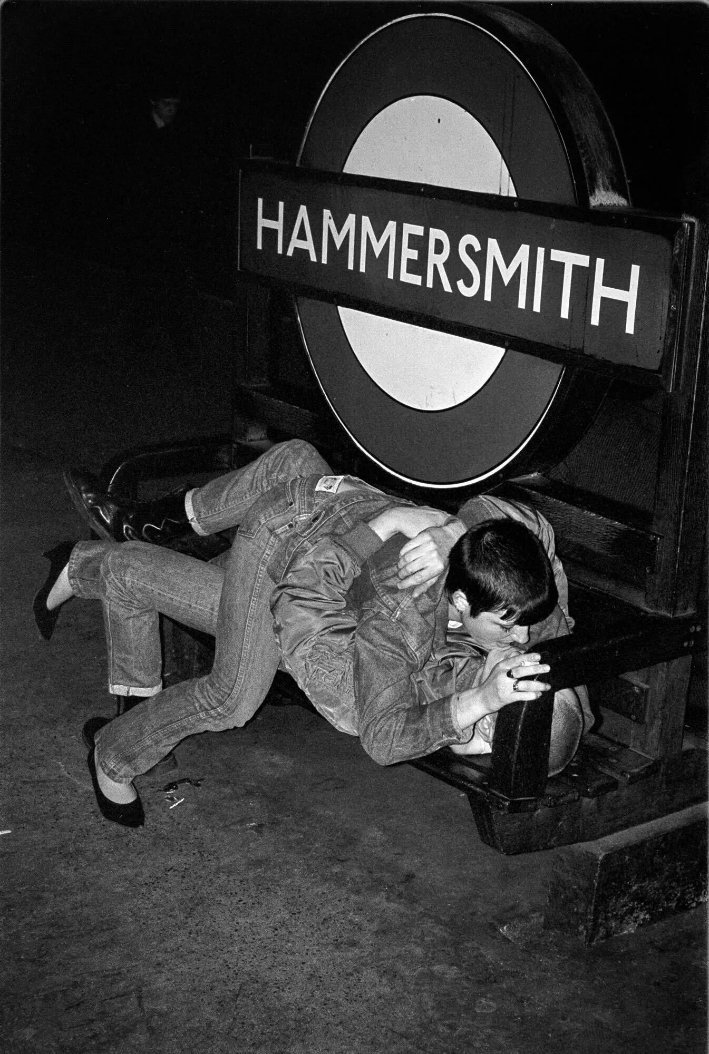
That sense of loss runs through Hello, I Love You, a book by the British photographer Derek Ridgers published by Idea Books. Most of its pictures were taken in the early 1980s, in London clubs such as Hell in Covent Garden, Le Beat Route and the Camden Palace, on the street in Hammersmith and Chelsea, and in suburban venues beyond. The couples are caught mid-kiss, oblivious, celebrating the instant with no sign of calculation.
A NIGHT WITHOUT AN AUDIENCE. IMAGE: DEREK RIDGERS, HELLO, I LOVE YOU
Ridgers worked with a modest flash rigged on a wire coat hanger, and he rarely knew his subjects before or saw them again. Kissing couples, he has said, make up a tiny fraction of everything he shot in those years. Yet gathered together they describe an era in which going out meant meeting people without a script: kissing someone you might never see again, sometimes more than one person in a night, not as performance but from curiosity and impulse. The kiss was a rite of passage, not a post.
Intimacy, rehearsed at home
THE KISS AS A RITE OF PASSAGE. IMAGE: DEREK RIDGERS, HELLO, I LOVE YOU
Today the sequence runs the other way. Dating apps let compatibility be assessed before anyone meets. Intimacy begins in the controlled setting of home, mediated by screens, messages and expectations agreed in advance. Public space, once the stage for improvisation, has become watched territory, and spontaneity gives way to the protection of one’s image.
The smartphone is the decisive presence. The chance of being filmed, photographed or exposed online turns any impulsive gesture into a calculated risk. What was once an anecdote told badly the next morning can now circulate among strangers within minutes. The night has lost some of its freedom because it now demands aesthetic awareness and narrative control.
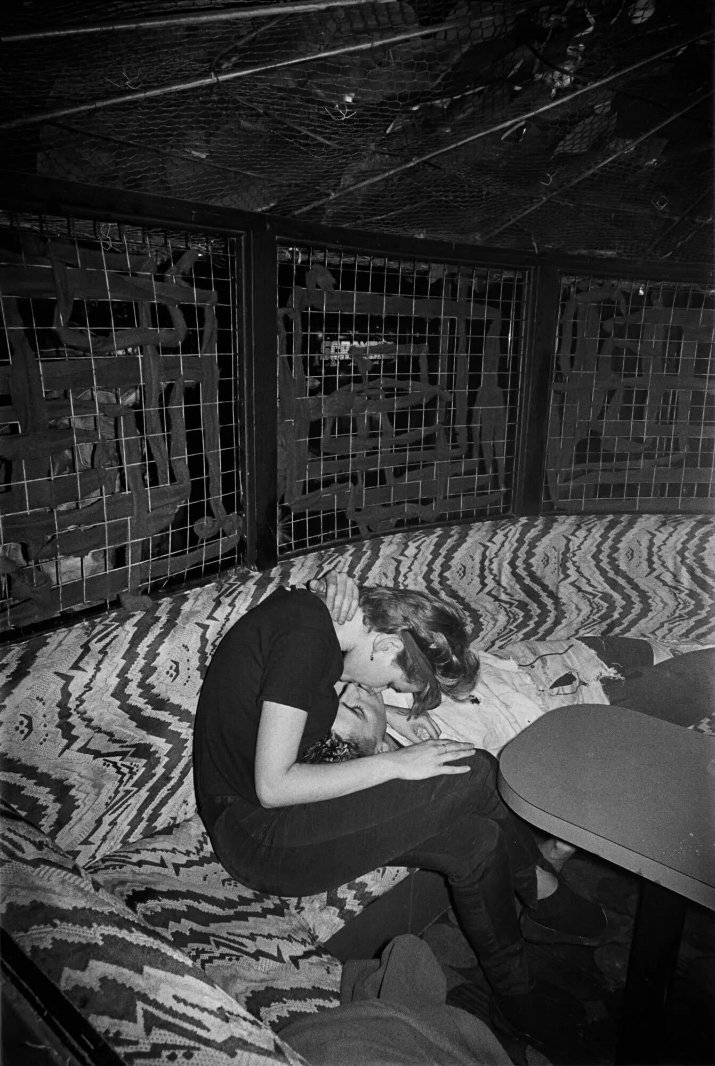
BEFORE EVERY GESTURE BECAME CONTENT. IMAGE: DEREK RIDGERS, HELLO, I LOVE YOU
When everything can be recorded
This permanent surveillance changes the culture of the public kiss. It is not simply a question of modesty or shifting morals, but of a broader change in how desire is lived. The kiss has stopped being an ephemeral event and become potential content. And when everything can be recorded, a great deal simply stops happening.
It would be too easy to say that this generation has less fun or feels less. Pleasure and connection have reorganised themselves, with other codes, other spaces, other languages. What may be lost is the brief abandon of being out of control, handed over to the chance of the night.
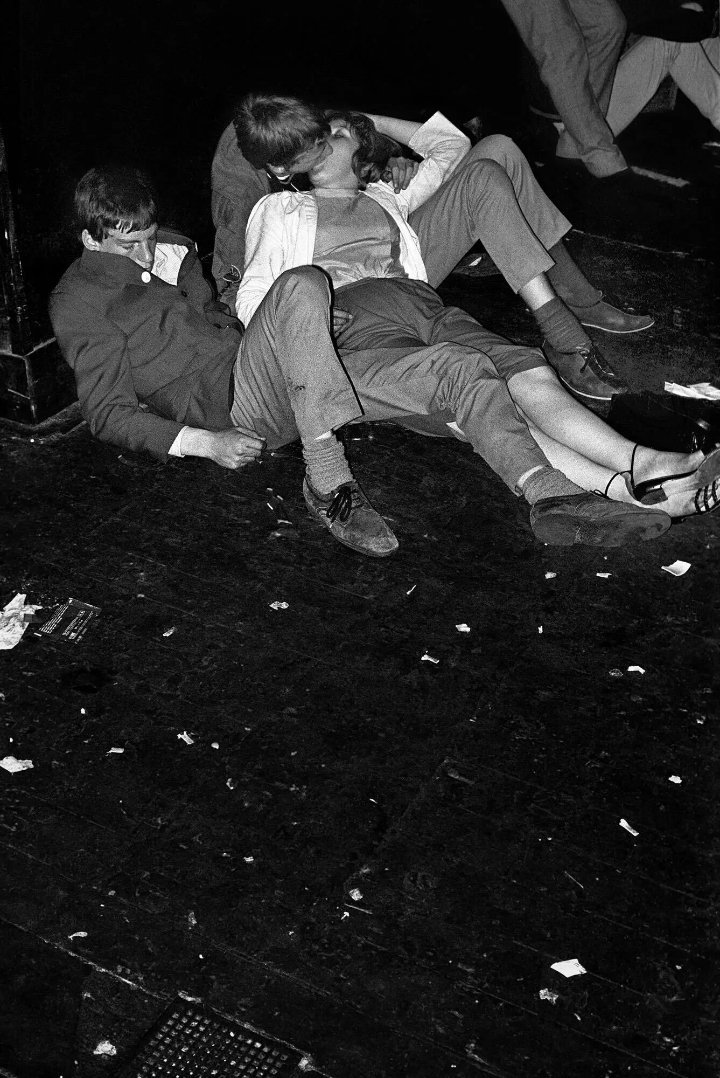
WHEN THE NIGHT DID NOT NEED TO BE DOCUMENTED TO EXIST. IMAGE: DEREK RIDGERS, HELLO, I LOVE YOU
Turning the pages of Ridgers’ book, it is not only the kisses that hold the eye but the atmosphere around them: a nightlife less choreographed and less self-aware, where mistakes were part of the experience and embarrassment carried no lasting cost.
Perhaps kissing in public has not quite gone out of fashion. Perhaps it has simply become out of place in a world that demands constant curation of the self. Looking at those photographs, it is hard not to feel that something essential has been left behind: not the kiss itself, but the freedom to have it without witnesses, without archives, without fear.
Mike White's fourth season unfolds during the Cannes Film Festival, between a castle in Saint-Tropez and the Croisette. The subject this time is fame, and the series is due on screen in 2027.
Brisbane leads a 50-city index of the best places to raise children, ahead of London and Auckland. The ranking reads less like a league table than a verdict on how cities choose to spend space, time and money.
Nicolas Puech says six million Hermès shares vanished from his accounts while LVMH was building its stake. In Paris, a civil suit and a criminal inquiry are still trying to find out where they went.