Brabus Shadow 38: two engines, two readings of the same hull
Brabus's marine programme applies an automotive sensibility to the water without treating a boat as a car with a different surface beneath it. The Shadow 38 platform makes that distinction clear. At approximately thirty-eight feet, it combines the practical language of an Axopar-derived hull with the more deliberate materials, colours and equipment associated with Brabus.
Brabus’s marine programme applies an automotive sensibility to the water without treating a boat as a car with a different surface beneath it. The Shadow 38 platform makes that distinction clear. At approximately thirty-eight feet, it combines the practical language of an Axopar-derived hull with the more deliberate materials, colours and equipment associated with Brabus.
The Shadow 1000 XC Cross Cabin and Shadow 850 approach that foundation with different propulsion packages. The former uses two Mercury Racing 500R V8 outboards; the latter uses a pair of 425 hp V10s. Manufacturer figures put their respective top speeds around sixty and fifty-five knots, figures that depend on loading, configuration and conditions rather than functioning as a promise for every trip.
The cabin as part of the platform
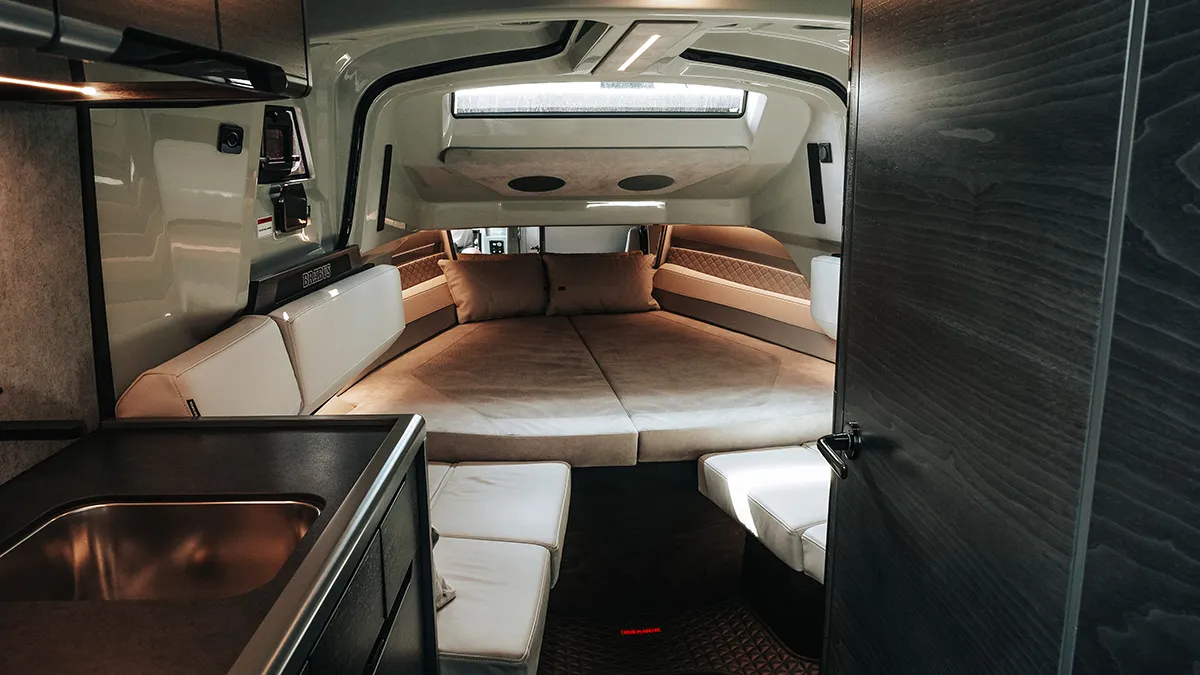
Cross Cabin describes more than an aesthetic treatment. It provides an enclosed space that allows the boat to serve a wider range of weather and uses than a purely open arrangement. The design connects that protected interior to the surrounding deck, keeping circulation and visibility central to the experience.
Dark exterior finishes and carbon-fibre detailing establish a recognisable Brabus identity. Inside, paler upholstery can provide a contrast to the bodywork. The relationship is deliberate: the boat should look coherent from the quay, but its seating and working spaces still need to function over a day on the water.
A configurable aft deck
The rear section is one of the most useful parts of the concept. Different layouts allow the deck to support socialising, equipment or other activities. Rather than prescribing one version of a day boat, the platform can be specified around how the owner intends to use it.
At the helm, twin Simrad displays bring navigation and boat information into a consolidated working area. The point is not simply to accumulate screens, but to keep the operator’s attention focused while managing a capable powerboat. Engine output remains only one part of the overall proposition.
Performance with a recognisable design language
Brabus is not making its first marine appearance here. The Shadow range is an established programme, and these boats should be read as developments within it. Their interest lies in the pairing of a functional hull platform with a more individual finish and a choice of performance packages.
The two versions also make the buying question more specific. It is less about choosing the most emphatic number on a specification sheet than deciding which combination of speed, cabin arrangement and deck use fits the water in which the boat will actually operate.
Read the propulsion beside the plan
The pair of 500R V8s and the pair of 425 hp V10s identify different packages, not simply two badges on an otherwise abstract performance claim. Their relevance should be considered alongside the cabin and aft-deck arrangement. A boat organised around protected seating and one carrying equipment on the rear deck may ask different things of the same platform.
The comparison is consequently architectural as well as mechanical. The enclosed cabin supplies one relationship with weather, while the rear configuration decides which activities receive space outdoors. Neither top speed nor upholstery settles that choice. The Shadow programme is most legible when the operator’s area, passenger spaces and propulsion are read together, without turning manufacturer estimates into results of an unperformed sea trial.
Two years after leaving Belfast, the Villa Vie Odyssey is more than 85 per cent sold and has a sister ship, Legacy, due in early 2029. Inside the idea of a home that never stays in one port.
After more than a decade of negotiation, the EU's revised air passenger rights regulation was published in October 2026. It guarantees a free personal item and fares shown with hand baggage included, but not a free cabin trolley, and it applies from October 2027.
Singapore Airlines still owns the two longest scheduled routes on earth, at more than 15,300 km each. A 24-hour Airbus test flight in July showed how far the ranking is about to stretch.