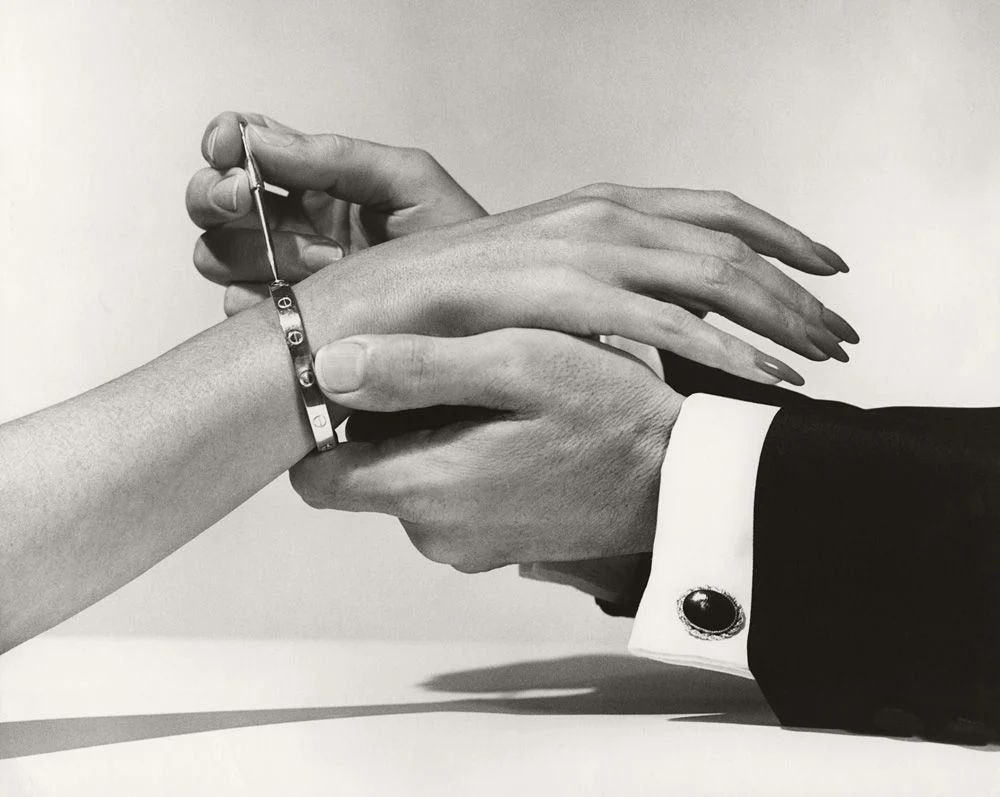
Cartier’s LOVE bracelet made fastening part of the meaning of a jewel. When Aldo Cipullo designed it in New York in 1969, the visible screw was not an engineering detail to conceal. It became the object’s defining sign.
Cipullo had worked at Tiffany & Co. and David Webb before joining Cartier. His approach gave a familiar declaration of affection an unfamiliar form: an oval bracelet, close to the wrist, whose mechanism asked the wearer to make a deliberate gesture when putting it on or taking it off.
An industrial vocabulary
The original design’s polished surfaces and screw motifs differed from jewellery whose effect depended on elaborate setting and ornament. The small screwdriver that accompanied the bracelet connected the finished object with the language of a workshop.
Cartier’s own history offered a precedent. Visible screws were already part of the Santos watch, associated with Alberto Santos-Dumont. Cipullo brought that vocabulary into a bracelet conceived for different wearers rather than a narrowly gendered occasion.
Stories about the precise hour of its conception and a relationship’s end contribute to the mythology. They should not obscure the idea that is visible in the object itself: removal requires an action, giving the fastening a symbolic weight as well as a function.
A gesture that entered public life
The bracelet’s early association with well-known couples helped carry it into photographs, films and social life. The important change was not simply that famous people wore it. The tool and the act of fastening gave the gift a recognisable ritual.
That ritual should not be mistaken for a practical rule that only a partner can remove the bracelet. The wearer and the tool can perform the operation. Likewise, stories of hospitals keeping special screwdrivers are part of its popular lore, not universal medical guidance.
From one bracelet to a collection
LOVE developed into different metals, sizes and stone-set versions, alongside rings, earrings and other forms. The range expanded while the screw motif kept the connection between them visible.
LOVE Unlimited belongs to a newer chapter, publicly presented by Cartier in 2025 rather than the 2024 date previously given. Its more flexible construction develops the collection without making the original 1969 mechanism irrelevant.
Cipullo’s work extended beyond LOVE. The nail bracelet now known as Juste un Clou offers another example of an ordinary piece of hardware being transformed through proportion and material. His authorship deserves to remain within the story, instead of allowing the house’s name to erase the designer behind a familiar object.
Permanence through a small decision
The bracelet’s commercial success does not establish a guaranteed future resale value, and unverified claims about its share of Cartier’s revenue are unnecessary to understand it. Its influence can be read in the design.
A visible screw gave a simple shape a durable identity. More than half a century later, the object still asks for the same deliberate act. Cipullo made a technical decision carry an emotional one.
Edited by Melanie Grant for Phaidon, The Jewelry Book gathers 300 entries across two hundred years, from the great maisons to studio jewellers, and asks a better question than what a jewel is worth: what it changed.
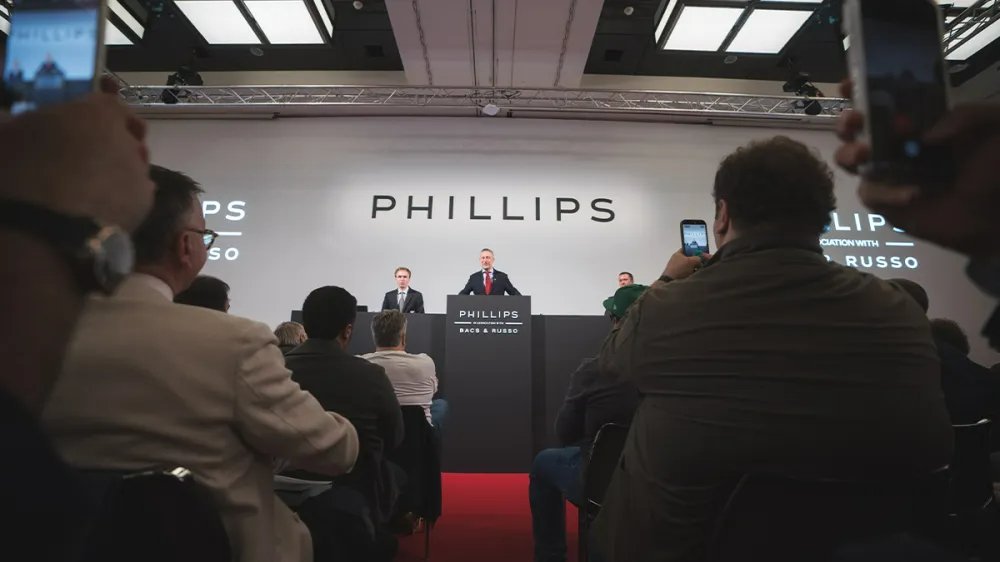
In November 2025 Phillips closed its first decade in Geneva with a white-glove sale of CHF 66.8 million, led by a 1943 steel Patek Philippe ref. 1518 at CHF 14.2 million. Six months later, the same room went higher still.
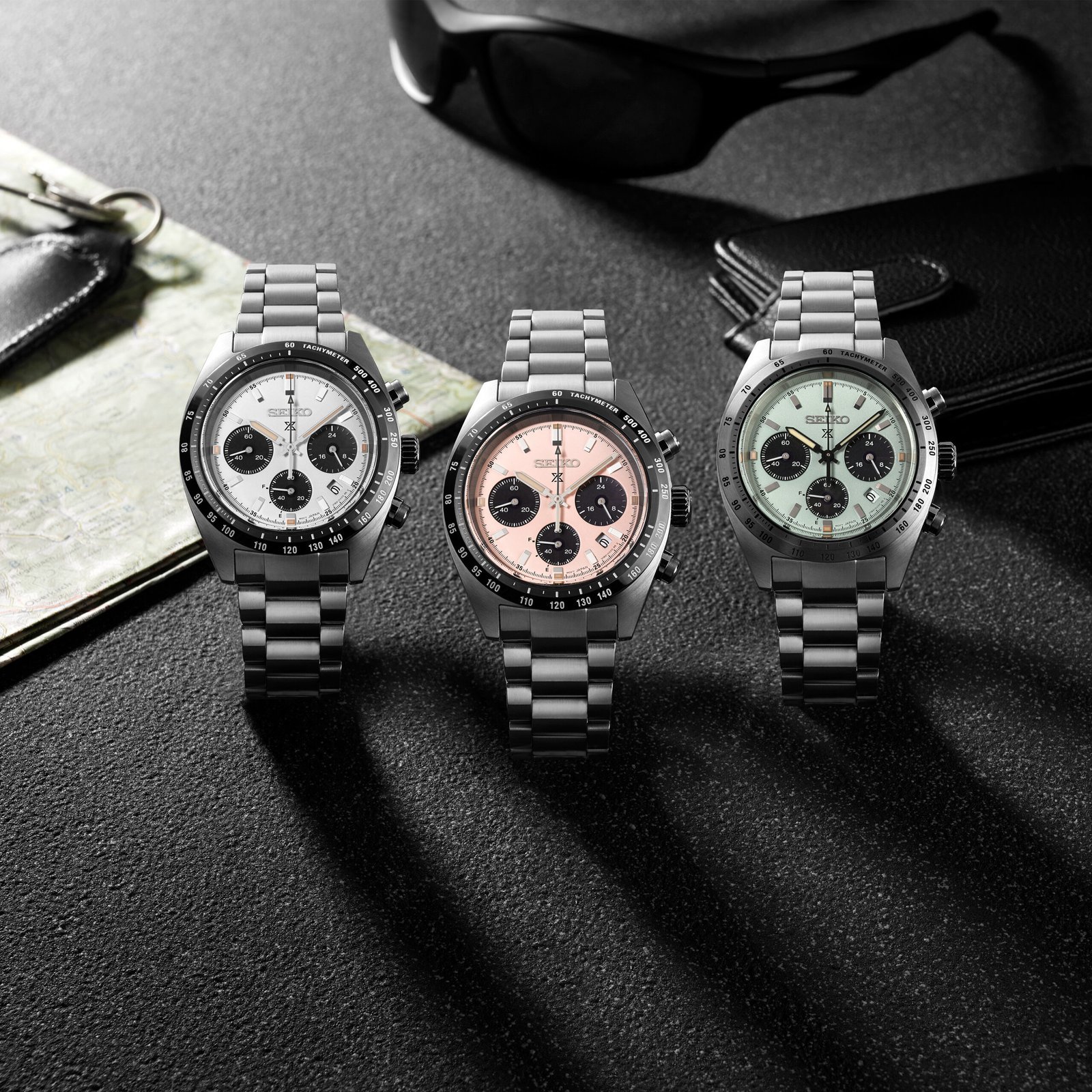
Maurice Lacroix, Frederique Constant, TAG Heuer and Tissot are returning to solar quartz, with a decade between battery changes and photovoltaic cells hidden beneath translucent dials or the crystal itself.