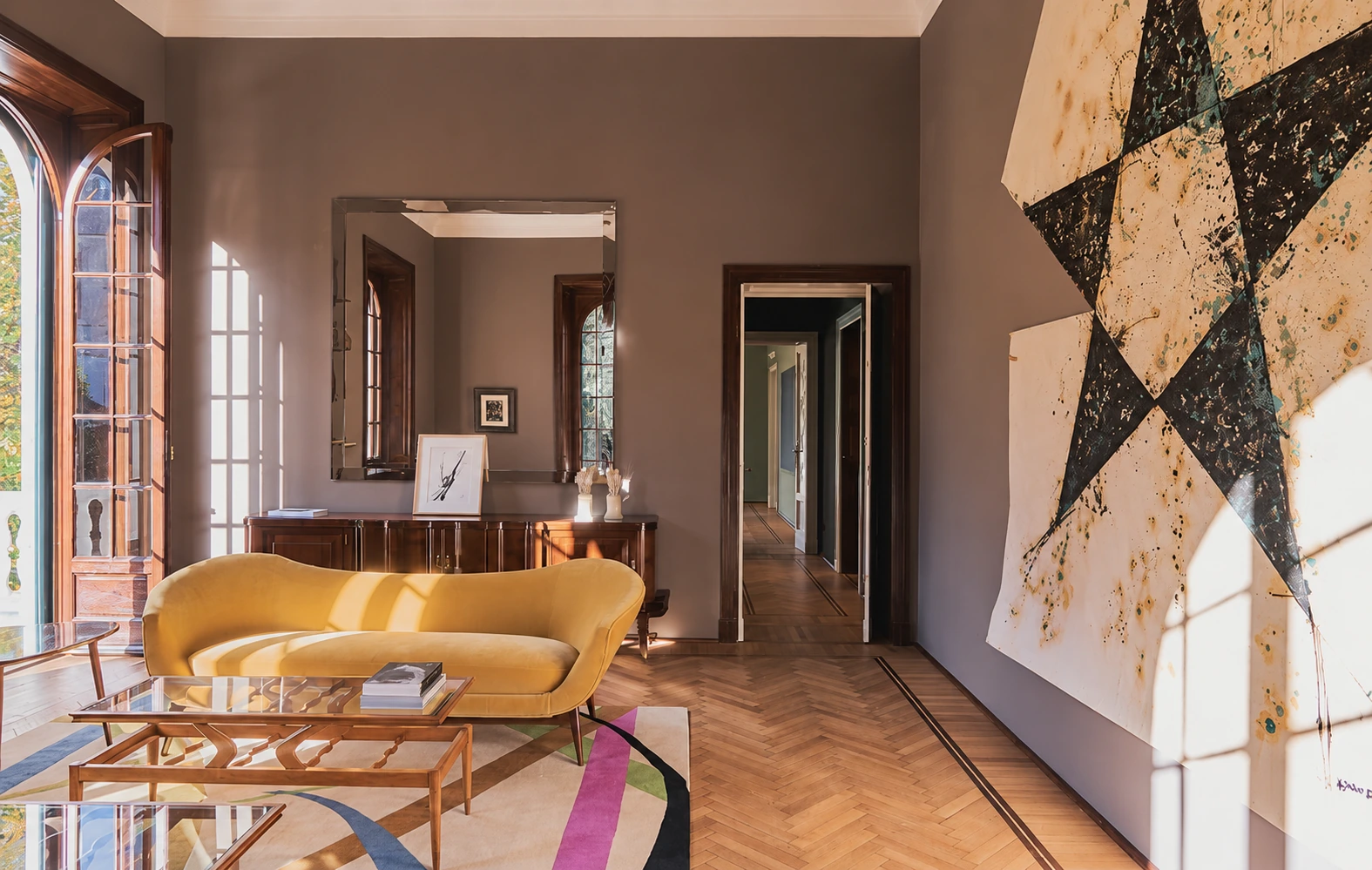
An interior at Casabianca Como. Archive image. / WAYFARER Edition | Image: editorial archive
TRAVEL
Seeing an artwork once and returning to it later can produce entirely different encounters. A hotel connected to a collection offers that possibility: the visit need not end when the public galleries close, and art can become part of an evening, a room or the route to breakfast.
These six addresses approach that relationship differently. Some place a collection within the accommodation. Others organise privileged visits to a neighbouring institution. The distinction matters, especially when after-hours access depends on a particular programme rather than being included with every room.
Casabianca, Lake Como
Casabianca occupies a white 1930s villa on Lake Como. The De Santis family’s collection, including work by Michelangelo Pistoletto and William Kentridge, gives its three suites an identity that is not simply the result of decorative purchases for a hotel.
Art and domestic space remain close together. A small number of rooms changes the scale of the encounter: the collection belongs to the setting of a house, with the lake outside, rather than a large institution whose visitor must cover a fixed circuit.
Fiermonte Museum, Lecce
In Lecce, the Fiermonte Museum connects a family’s artistic history with accommodation and a more intimate visiting experience. After-hours encounters, including torch-lit visits described in its programme, change how the rooms and works are perceived once daytime circulation has ended.
The interest is not that darkness automatically improves art. It is the chance to spend longer with a small collection and to understand its connection to the people behind the place.
Le Grand Contrôle, Versailles
Le Grand Contrôle makes its relationship with Versailles central to the stay. Arranged guided experiences give guests access to the palace outside its usual public rhythm, placing the hotel within a wider historical visit.
This is programmed access, not permission to wander unrestricted through the palace. The attraction lies in seeing familiar spaces with a different pace and an informed guide, then remaining nearby instead of travelling back into Paris at the end of the day.
MACAM, Lisbon
MACAM combines a hotel with the contemporary art collection assembled by Armando Martins. An eighteenth-century palace and a newer architectural extension accommodate different scales of work, with the collection extending the experience beyond a single dedicated gallery.
The transition between a historic structure and contemporary spaces becomes part of the visit. Staying there allows the guest to return to the collection, rather than reduce it to an activity fitted between other appointments in Lisbon.
Clara Arte, Inhotim
Clara Arte brings accommodation into the orbit of Inhotim, the Brazilian destination where contemporary artworks and botanical landscapes are encountered together. Its international relevance is specific: a collection whose dispersed pavilions require time, walking and repeated changes of setting.
The hotel makes a longer visit easier, while any special access should be confirmed for the chosen stay. The garden and the collection are not interchangeable with a conventional hotel art display.
Benesse House, Naoshima
On Naoshima, Benesse House combines a museum and accommodation within the same project. The relationship between Tadao Ando’s architecture, the artworks and the island’s landscape encourages visits at different times of day.
Monet’s Water Lilies belong to the separate Chichu Art Museum, not to the Benesse House collection. That neighbouring institution extends the island itinerary, but should not be represented as a painting displayed in the hotel.
Across these addresses, the real advantage is time. A work can remain in the guest’s day after the first visit, and the surroundings can become part of its interpretation. Accommodation does not replace the museum; it changes the conditions in which it is encountered.
From St Andrews and Royal County Down to Cabot Saint Lucia, Hirono and Tara Iti, eleven courses that justify the journey, with how to get a tee time and where to sleep afterwards.
From the Hôtel de Paris in Monte-Carlo to Raffles in Singapore and a Mandarin Oriental in Bangkok marking 150 years, the grand hotels that have stayed relevant for more than a hundred years without surrendering their identity.