Grand hotels that have outlived a century without changing their name
From the Hôtel de Paris in Monte-Carlo to Raffles in Singapore and a Mandarin Oriental in Bangkok marking 150 years, the grand hotels that have stayed relevant for more than a hundred years without surrendering their identity.
Novelty is easy to build. Continuity has to be earned. While hotel fashions change by the season, a small group of addresses has stood still in the right way for more than a century, under the same name, through wars, electricity, jet travel and the smartphone. They have watched generations of travellers arrive and leave, and kept the manner that made them famous.
What follows is a map of that endurance, across continents and centuries. The lesson is consistent: relevance does not require reinvention, only the discipline to know which things should never change.
Paris, Monte-Carlo and the Riviera
THE HOTEL THAT INVENTED A DESTINATION. IMAGE: PRESS
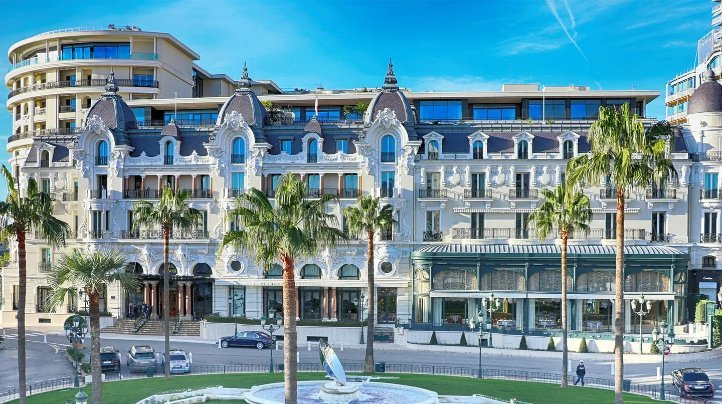
Hôtel de Paris Monte-Carlo. Opened in 1864 to turn a stretch of olive and lemon groves into an international resort, it still faces the Casino across the square that made it famous. Alain Ducasse’s Le Louis XV and the pastry of Cédric Grolet keep the kitchen current, and heads of state continue to treat it as a second residence.
Ritz Paris. Since 1898 the Place Vendôme address has defined Parisian elegance: monumental stairs, hand-woven carpets, gilded swan taps and the Bar Hemingway. Its 142 rooms and suites are each decorated differently, which is the whole point.
A KING’S COMMISSION, A HOTEL SINCE 1909. IMAGE: PRESS
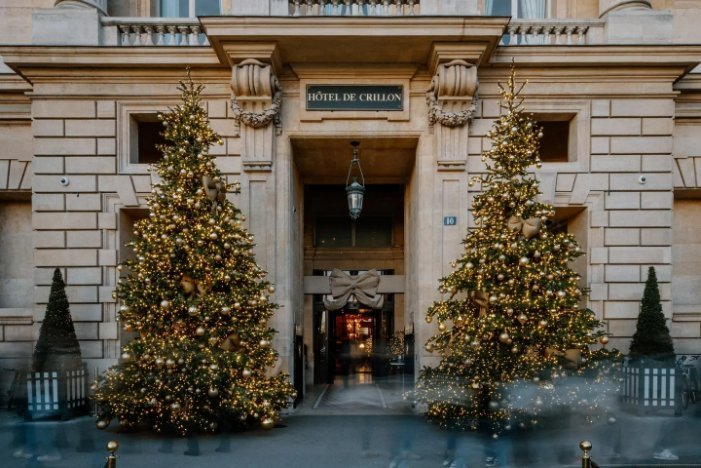
Hôtel de Crillon. Commissioned under Louis XV and a hotel since 1909, the Crillon on Place de la Concorde is now run by Rosewood. Neoclassical volumes, gilded detail and the Grands Appartements designed by Karl Lagerfeld let the present and the eighteenth century share the same rooms without argument.
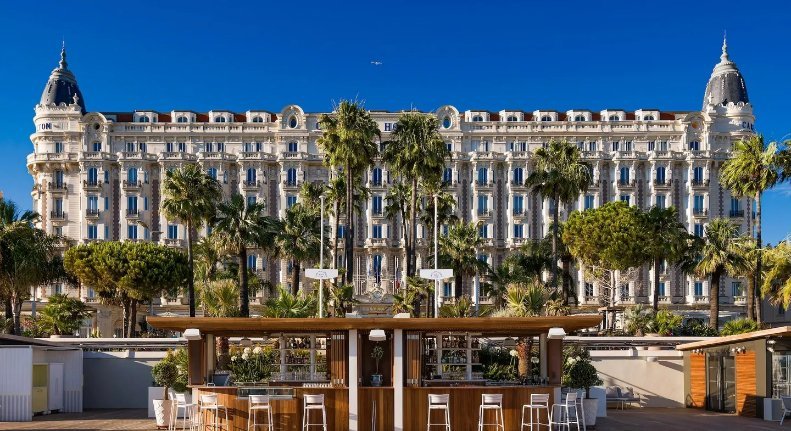
Carlton Cannes. Built in 1913 on La Croisette, with the patronage of Russian aristocrats wintering on the coast, the Carlton has since become the backdrop of the Cannes Film Festival. Its white façade, restored in a recent renovation, remains the most photographed on the Riviera.
THE FESTIVAL’S PERMANENT SET. IMAGE: PRESS
London, Edinburgh and the continent
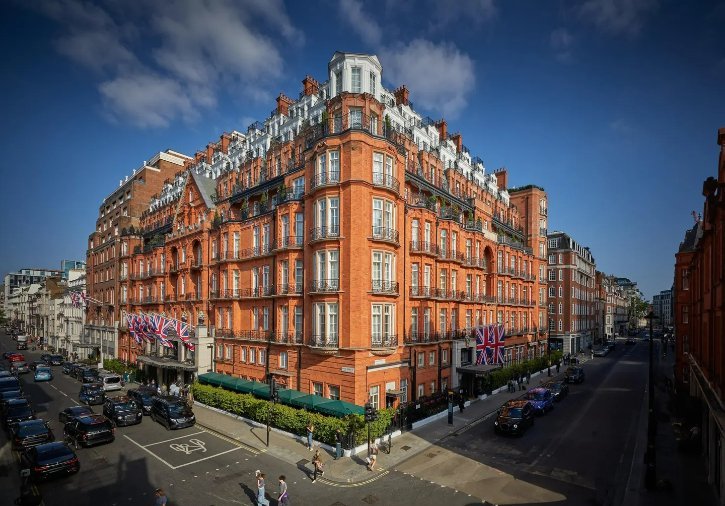
MAYFAIR, IN ITS ART DECO HOUR. IMAGE: PRESS
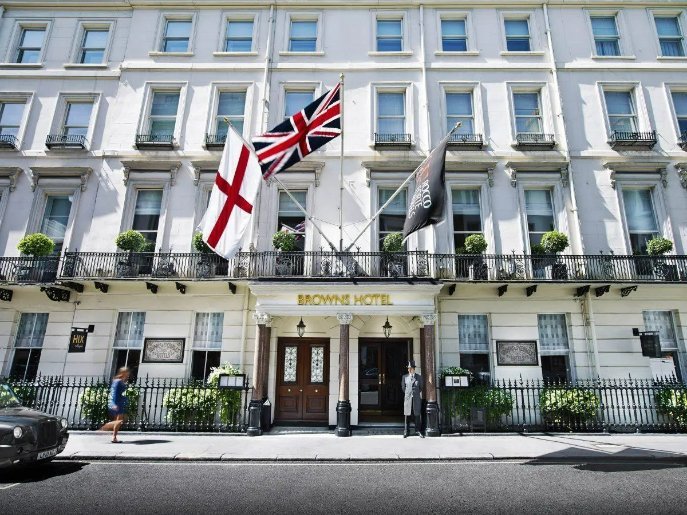
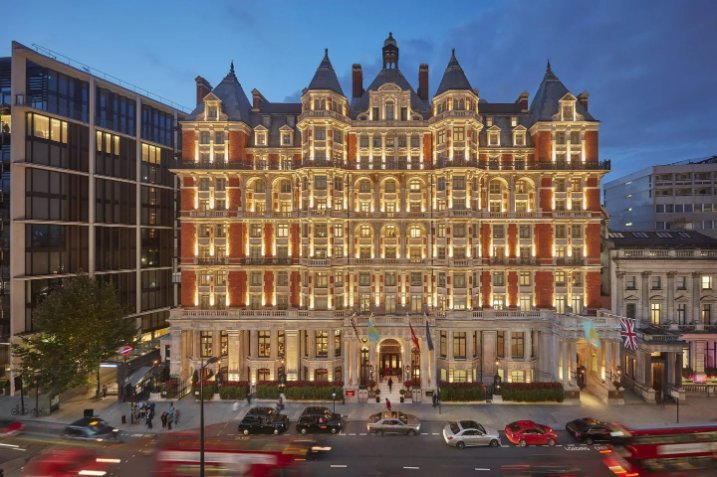
London holds the densest collection. Brown’s Hotel, often called the oldest in the city, has received Rudyard Kipling, Mark Twain and Agatha Christie, and its afternoon tea in the panelled Drawing Room still feels like a period piece. Claridge’s, the Mayfair institution, pairs Art Deco interiors with a hushed, almost domestic service. The Savoy was the first public building in Britain lit entirely by electricity, and its American Bar is still the city’s reference for a cocktail. The Goring, run by the same family for four generations, has the largest private hotel garden in London and a quiet line in royal guests. Mandarin Oriental Hyde Park, a Victorian gentlemen’s club that became a hotel in 1902, looks over the park from Knightsbridge.
TEA, PANELLING, A LITERARY PAST. IMAGE: PRESS
In Edinburgh, The Balmoral, a former railway hotel now run by Rocco Forte Hotels, keeps its clock tower, its grand staircases and a whisky bar of more than 500 labels. In Rome, Hotel de la Ville sits at the top of the Spanish Steps in an eighteenth-century palazzo, its design a nod to the Grand Tour. In Amsterdam, Waldorf Astoria occupies six seventeenth and eighteenth-century canal palaces on the Herengracht. In Madrid, the Mandarin Oriental Ritz was built in 1910 at the wish of King Alfonso XIII, with César Ritz’s ideas in its foundations.
The Alps, by lake and by snow
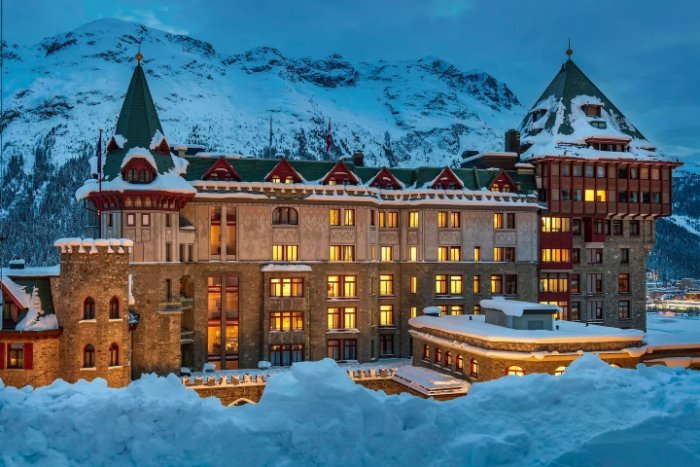
A WINTER TALE, RETOLD EACH SEASON. IMAGE: PRESS
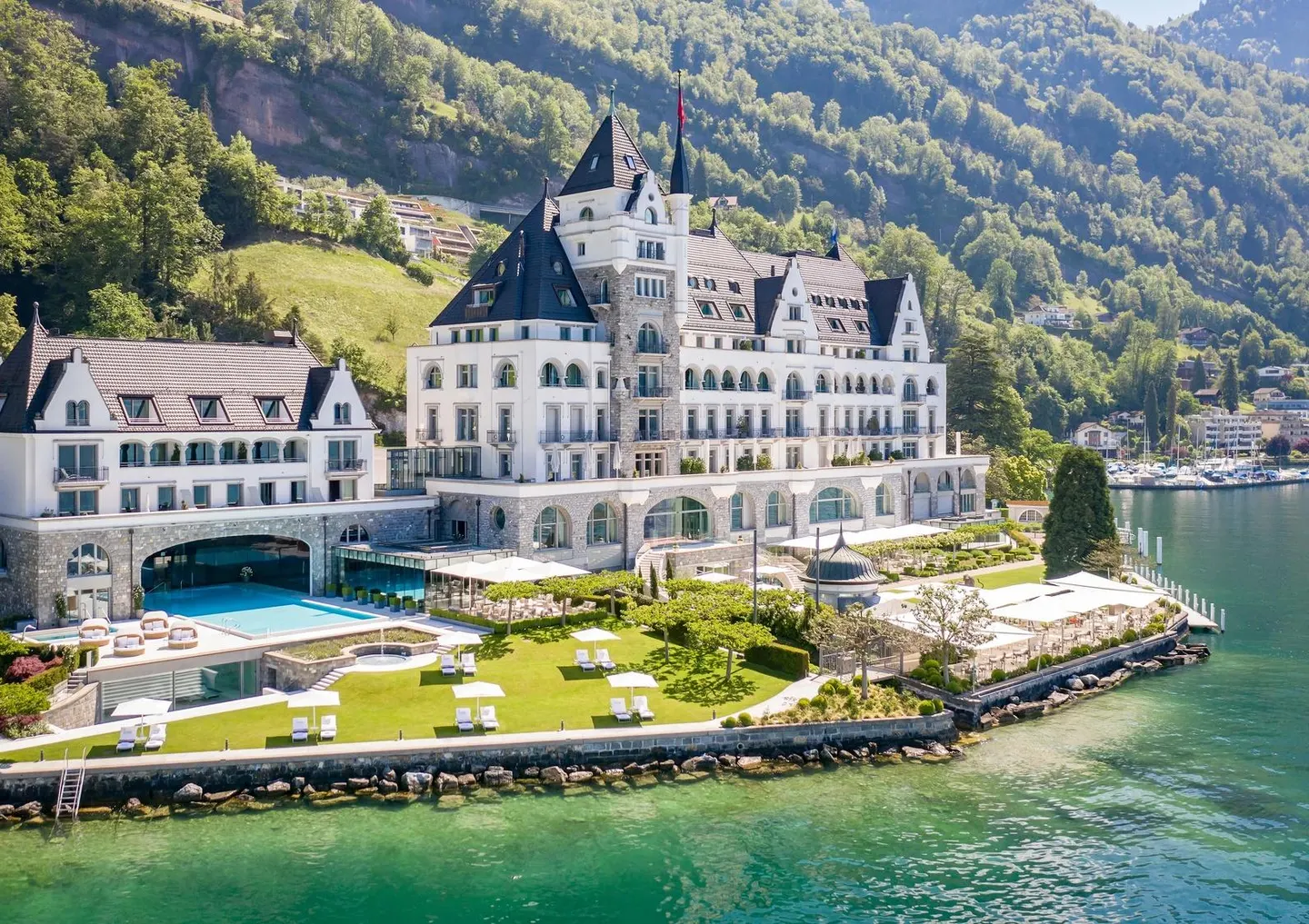
Badrutt’s Palace has been in the hands of the Badrutt family since 1896 and remains the centre of gravity in St. Moritz, from its tower to its Matsuhisa outpost. On Lake Lucerne, Park Hotel Vitznau, a Belle Époque palace of 1903, pairs residences and suites with wine cellars arranged by region and a spa whose pool appears to run straight into the lake and the mountains beyond.
THE LAKE AS A PRIVATE VIEW. IMAGE: PRESS
Asia and the Americas
A CENTURY AND A HALF ON THE RIVER. IMAGE: PRESS
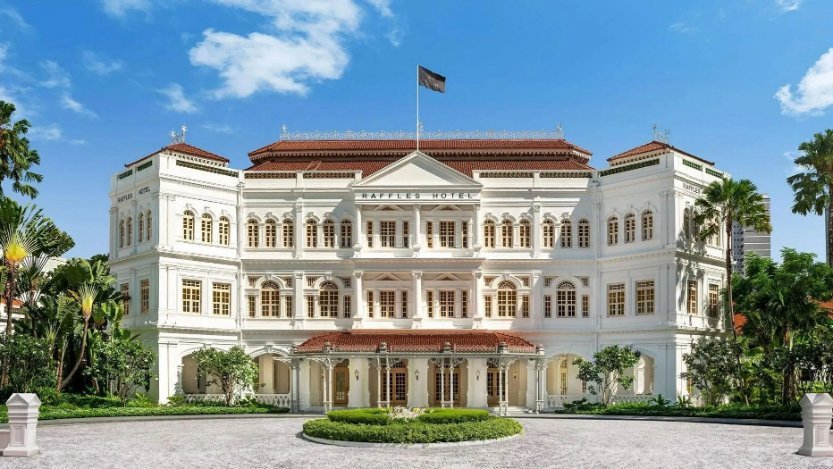
Mandarin Oriental, Bangkok opened in 1876 as the first hotel in what was then Siam, and was the first building in the country to have electric light. In 2026 it marks 150 years on the Chao Phraya, freshly renovated, with the new Le Normandie by Anne-Sophie Pic. In Singapore, Raffles grew from a ten-room bungalow in 1887 into the neo-Renaissance landmark that hosted Charlie Chaplin and Ava Gardner; restored and reopened in 2019, it still offers a butler to every suite.
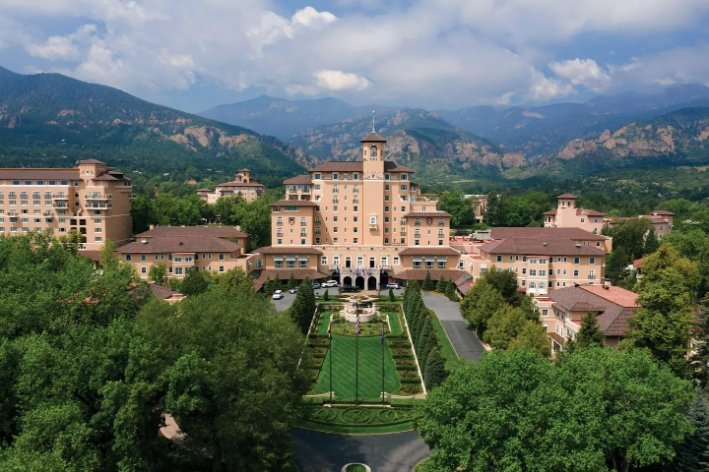
In the United States, the New England coast keeps its old summer houses. Chatham Bars Inn on Cape Cod opened in 1914 and now has its own farm. Wequassett, nearby, marked its centenary with a full renovation. In Rhode Island, Ocean House was rebuilt and reopened in 2010 as a faithful copy of its 1868 original, while Weekapaug Inn, founded in 1899, keeps just over thirty rooms between a salt pond and a protected beach. In New York, The St. Regis, opened in 1904, preserves its marble and bronze and the King Cole Bar. And in Colorado Springs, The Broadmoor, open since 1918, spreads across golf courses, a fishing camp and wilderness lodges at the foot of Cheyenne Mountain.
THE WEST, AT ITS MOST COMPOSED. IMAGE: PRESS
Trends arrive, peak and leave, and these hotels watch them go from the same doorway. A century is not a marketing claim. It is a record of decisions repeated every morning: polish the brass, remember the name, keep the room as it was meant to be. That is the whole secret, and almost nobody keeps it.
From St Andrews and Royal County Down to Cabot Saint Lucia, Hirono and Tara Iti, eleven courses that justify the journey, with how to get a tee time and where to sleep afterwards.
From the three rivers of Passau to the thermal baths of Budapest, by way of Linz, the Wachau, Vienna and Bratislava: Central Europe read slowly, one bend of the Danube at a time.