Cecilia Shen and the bet on an AI-native Hollywood studio
Still in her mid-twenties, the former Google X engineer runs Utopai Studios, valued at a billion dollars, and wants to own the one territory artificial intelligence has not yet conquered in film: the long form.
The next Hollywood mogul may never have set foot on a studio lot. When Carmelo Anthony looked for a way to tell his own story after basketball, he passed over the memoir and the biopic and chose Utopai Studios, a company in Mountain View that makes film and television with artificial intelligence. His production company, Creative 7, invested in May 2026 in a deal estimated at around five million dollars, one that valued Utopai at a billion.
It is a striking number for a company whose 2025 revenue was estimated at under fifty million dollars and which has yet to release a finished feature or series. It is also a statement of intent. Utopai wants to be a studio, not a supplier.
An engineer, not an auteur
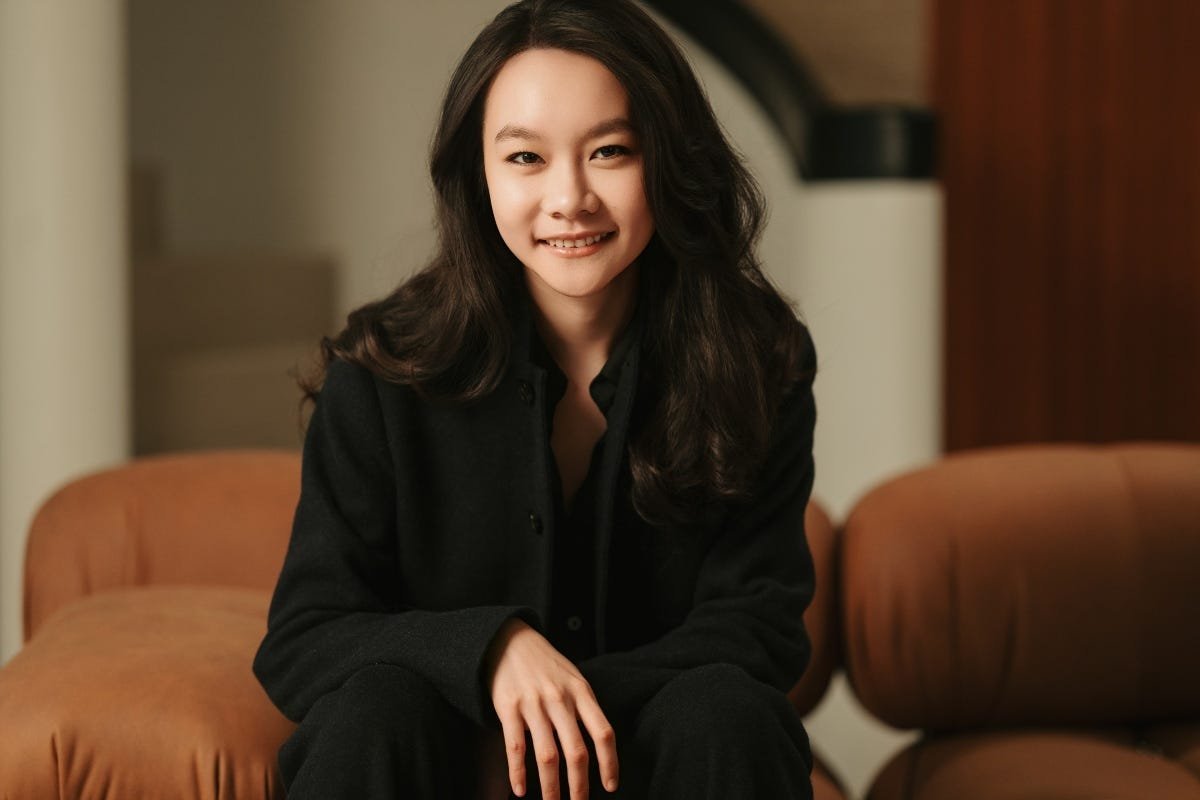
CODE FIRST, STORY SECOND, AND THEN THE OTHER WAY ROUND. IMAGE: PRESS
Cecilia Shen does not fit the old silhouette of the studio chief. Born in China and raised in Toronto, she left the University of Waterloo during the pandemic, worked on artificial intelligence at the Royal Bank of Canada and then joined X, Google’s experimental lab. There she met Jie Yang, a researcher and software engineer who became her co-founder and chief technology officer.
In 2022 the pair launched Cybever, a tool for generating 3D environments for video games. The film and television potential arrived later, and with it a change of name. In August 2025 Cybever became Utopai Studios, with a plan to finance its own slate. Shen’s reasoning was blunt: a technology vendor, however clever, does not become a ten-billion-dollar company. A studio might.
A crowded gold rush
She is far from alone. An industry report counts more than 65 AI studios launched since 2022, most of them somewhere between workflow assistance and fully machine-made content. The established players are moving too. Netflix bought Ben Affleck’s InterPositive, a filmmaking toolkit, for a reported sum of up to 600 million dollars. Disney’s billion-dollar agreement with OpenAI collapsed in March when OpenAI closed Sora. Lionsgate works with Runway, and Fox has invested in Holywater.
Utopai’s early backers include Pluto TV, the former Paramount+ president Tom Ryan and the director Roland Emmerich. Bryn Mooser, founder of the rival Asteria Film Co., frames the contest in a single question: “who’s still standing in this?”
Shen’s answer is the long form. Nobody has yet made a commercially successful feature-length narrative with these tools, and she argues that the market is, for now, entirely empty. Her instrument is PAI, the storytelling platform Utopai released in March 2026. Characters are designed once and reused across scenes; a filmmaker can choose camera angles, adjust performances and environments, and iterate without rendering whole sequences again. In its first sixty days PAI generated eleven million dollars in annual recurring revenue from licensing alone. The NBA’s James Harden used it for a short animated film in April.
The arithmetic of a smaller crew
The economics are the real provocation. Shen estimates that a project such as Cortés, the historical epic written by the Oscar-nominated screenwriter Nicholas Kazan, needs thirty to forty people, about ten of them creatives, where a conventional production would need hundreds or thousands. Estimates put such productions below ten million dollars each, against the 250 million and more spent on the season’s largest blockbusters. ZDF Studios in Germany is among the broadcasters that have pre-bought rights at ordinary market rates, and the two flagship projects, Cortés and the science-fiction series Space Nation, could together earn an estimated 110 million dollars.
Shen has also found less resistance abroad than at home. Markets with a strong appetite for local stories and modest budgets see the technology as a door, not a threat. In 2026 Utopai partnered with Huace, one of China’s leading film and television producers, and has expanded into Korea and Japan through Utopai East.
Since the spring
The months since Anthony’s investment have been busy. PAI 2.0 arrived in July with an editing canvas and 4K rendering, and on 30 September Utopai released a further update built around Utopai X, a video model designed for professional film and television production. By September the studio said it had 25 projects in development and named five for release in 2027: Cortés, Space Nation, the animated feature The Most Serious Fart, the series Journey to the West: The Lost Five Hundred Years with Huace, and Half Moon, a Korean German co-production by the director Yang Hyo-ju that began shooting in Germany. In October Shen gave the opening keynote of the first MIP AI Entertainment Forum at MIPCOM in Cannes, where Utopai was headline partner.
Carmelo Anthony chose a company over a book to tell his story. Cecilia Shen is wagering that the rest of the industry will make the same choice, and that the first person to master this new grammar of cinema will not be a classic director or a studio veteran, but someone fluent in both code and narrative, in the algorithm and the audience.
Details: Utopai Studios is based in Mountain View, California. utopaistudios.com
Mike White's fourth season unfolds during the Cannes Film Festival, between a castle in Saint-Tropez and the Croisette. The subject this time is fame, and the series is due on screen in 2027.
Derek Ridgers' Hello, I Love You gathers kisses caught by flash on London nights in the early 1980s. Seen today, the pictures record something more fragile than romance: a night that did not need to be documented to exist.
Brisbane leads a 50-city index of the best places to raise children, ahead of London and Auckland. The ranking reads less like a league table than a verdict on how cities choose to spend space, time and money.