The other Côte d’Azur: where the Riviera still works
The Riviera is not over, but the version still sold by the brochures has expired. From the calanques of Cassis to the two capes, a map of the coast that still rewards the informed traveller.
Images: press; Claude Monet, Columbus Museum of Art
TRAVEL · CÔTE D’AZUR
The Riviera has not ended; it has moved. The version still sold in glossy itineraries, Pampelonne in August, the Croisette in May, Saint-Tropez as an idea, is a product past its date. Those who have returned for a decade know it. Those arriving now tend to learn it on the third day.
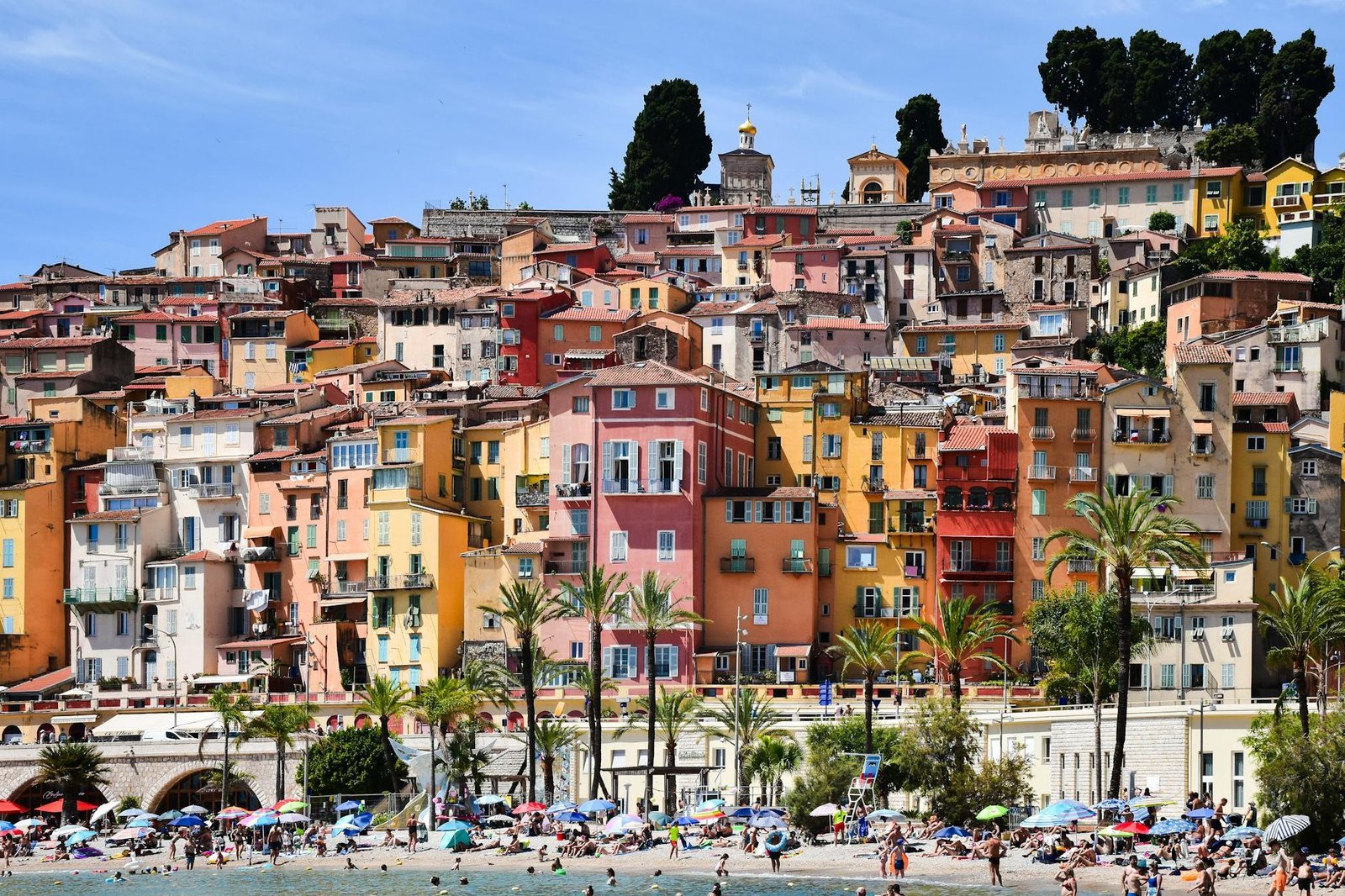
Picture the Croisette on a late August night. The air has cooled to the low twenties, and the pavement between the Carlton and the Martinez carries a crowd barely distinguishable from Times Square, save for the price of a glass of champagne on the rooftops. A hired SUV tries to park where it will not fit. What is sold as the Côte d’Azur is, at that hour, an industrial replica of it, calibrated for the cruise excursion and the phone screen.
The real Riviera, the one that justifies the myth and the bill, is still there. It has simply stepped back. Saint-Tropez in August is no longer Saint-Tropez; Cannes during the festival is a pitch market with a glamorous facade; Monaco, outside a handful of days, is a very handsome tax address. None of this means the south of France has lost its meaning. It means it has reorganised itself, and the serious traveller’s task is to read the new map before spending a fortune to discover the wrong hotel, on the wrong beach, in the wrong week.
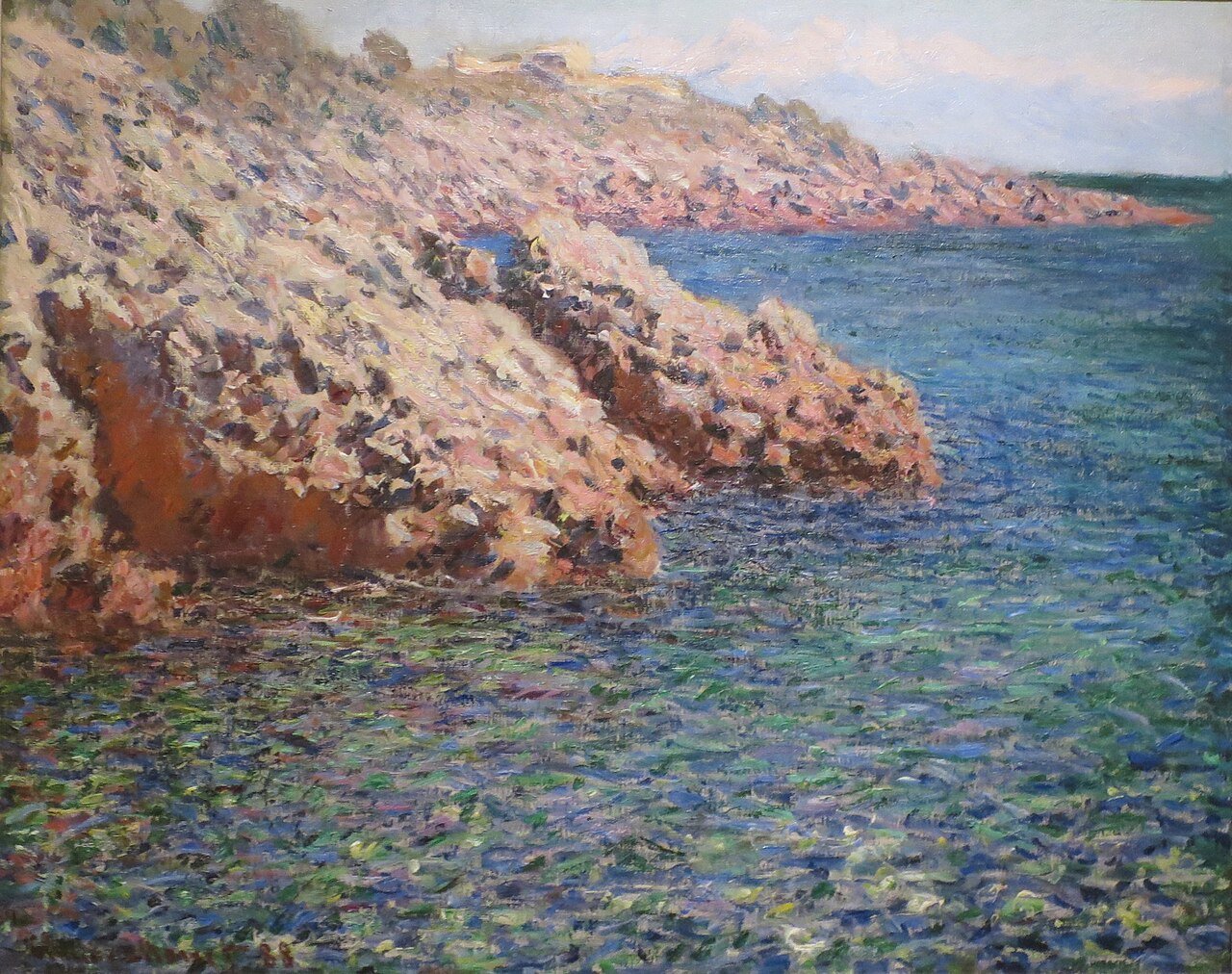
THE SAME SEA, BEFORE THE ROOFTOPS. CLAUDE MONET, THE MEDITERRANEAN (CAP D’ANTIBES), 1888. IMAGE: COLUMBUS MUSEUM OF ART
The west: Cassis, where Provence pretends to be Greece
Begin in the west, because the west is where the coast still allows itself to be strange. Cassis, about forty-five minutes from Marseille, is a fishing village that declined to become Saint-Tropez. Its calanques, En-Vau, Port-Pin, Sugiton, Sormiou, are Mediterranean fjords of white limestone and water in three blues, a landscape with few equivalents anywhere.
The rule is to arrive by sea, before ten. Small boats that need no licence can be hired by the day in the Cassis marina, and a skippered charter is the more graceful option. Lunch belongs at La Villa Madie, Dimitri Droisneau’s three-star table in the Anse de Corton, facing Cap Canaille; book weeks ahead, and note that it opens Thursday to Sunday. For the night, Les Roches Blanches is a five-star house dressed in Art Deco, with an infinity pool that watches the boats come into the harbour.
The unwritten advice: Cassis is best in June and October. In high summer the national park limits access to Sugiton through a free, compulsory reservation, a response to erosion caused by overcrowding, and the coves remain full regardless.
The centre: Saint-Tropez without the theatre
Saint-Tropez has not died. One version of it has. Pampelonne in August is a well-oiled commercial machine, Club 55, La Réserve à la Plage, Loulou, where a single sunbed can cost more than a dinner elsewhere before the first rosé, bookings are made weeks out, and the soundtrack is that of a shopping centre with a sea view. Having done it once, repeating it is a matter of taste, not of editorial advice.
The more interesting question is where the Saint-Tropez that matters now lives. The short answer is at the edges. The northern end of Pampelonne, near the Plage des Salins, and the southern stretch beyond Cap Camarat still offer what the centre lost: silence, space, sand without choreography. Italian and Swiss families have used them for generations. There is no list, no door, and the water is the same.
For a bed, the choice falls between two houses. Cheval Blanc St-Tropez is for those who understand that privilege today means not being seen arriving: an entrance from the old village, an unshowy facade, the harbour straight ahead. Lou Pinet is the generational counterpoint, a jade-green mosaic pool and a Beefbar on the terrace, with a younger pulse. Choosing between them is choosing between two philosophies of social presence. Both work. Above the bay, Airelles’ Château de la Messardière, a nineteenth-century castle in its own pine woods, offers a third answer: not on the beach, and that is precisely the point.
The east: the return of the two capes
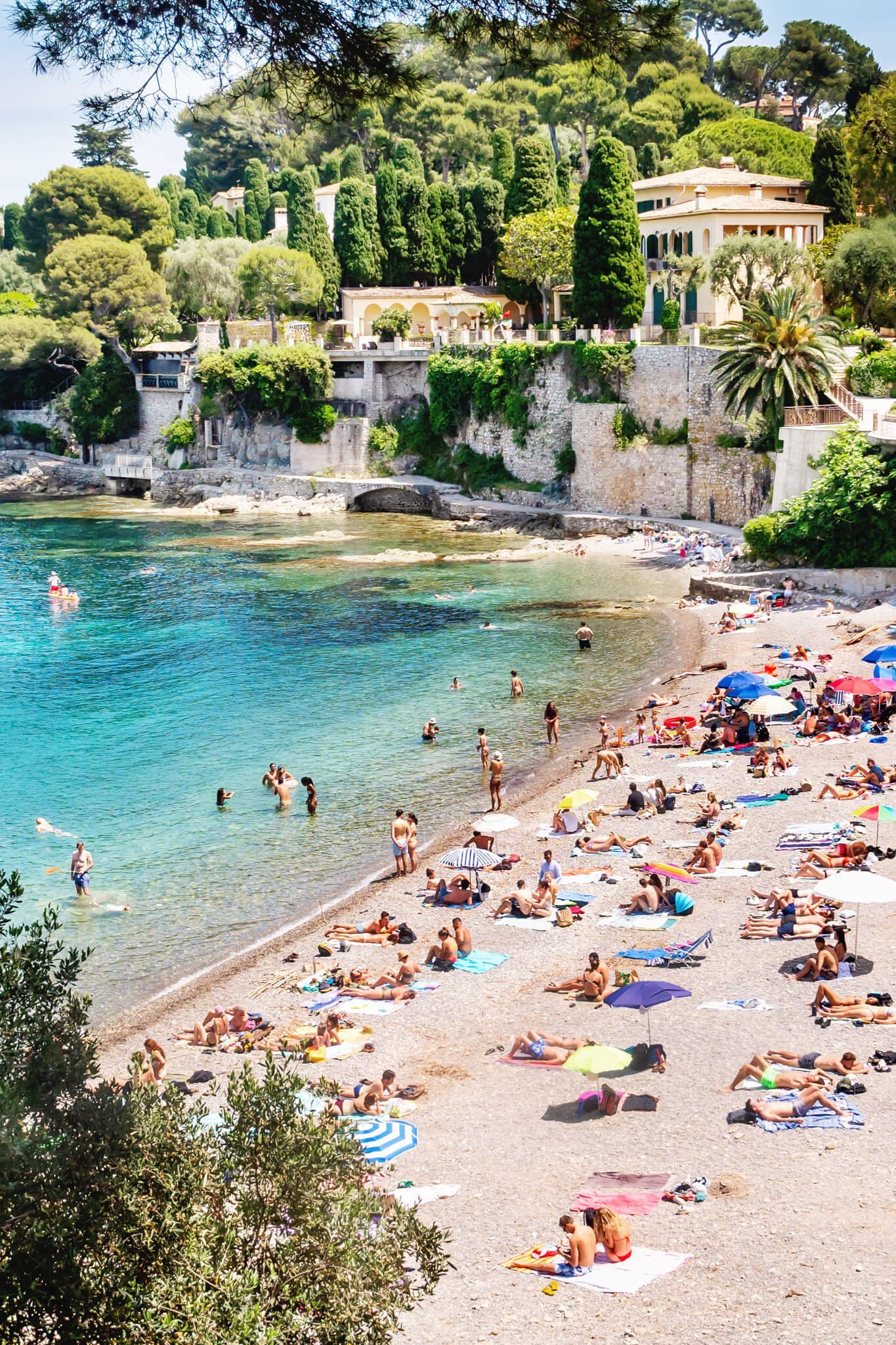
CAP FERRAT, WHERE THE OLD CURRENCY OF THE COAST STILL HOLDS. IMAGE: PRESS
If there is one structural shift on the coast in recent years, it is the rediscovery of the two capes. Cap d’Antibes and Saint-Jean-Cap-Ferrat, eclipsed through the 2010s by the energy of Saint-Tropez, have become the coast’s hard currency again.
On Cap d’Antibes, the Plage de la Garoupe is the best-drawn bay on the French Riviera: fine sand, rare on a coast of pebbles, calm water and the Maritime Alps behind. The beach clubs there keep standards without the Pampelonne theatre. This is the cape where Fitzgerald spent the summers that became Tender Is the Night, and where English families still send their children before the season.
Here the question of where to stay has one answer: the Hôtel du Cap-Eden-Roc, the house that measures time in decades rather than seasons. It took no credit cards until 2006, and the legend has outlived the policy. Pines, a pool cut into the rock above the sea, and the kind of silent service that makes three days feel like ten.
Further east lies Saint-Jean-Cap-Ferrat. The Paloma beach club, a refuge for Sean Connery, Roger Moore and Elton John over the decades, has been dismantled so the site can be rebuilt, and the commune has been looking for a new operator; check the beach’s status before planning a day around it. For the structured version of the experience there is the Grand-Hôtel du Cap-Ferrat, a Four Seasons Hotel: gardens, an infinity pool over the Mediterranean, and the most theatrical setting on the coast, the only one that earns the adjective.
The address few people write about is Cap Estel at Èze-Bord-de-Mer: a private peninsula, twenty-eight rooms and suites, a Michelin-starred table, no passing trade. It understands that refinement is increasingly about what does not happen. It closes for the winter in mid October and reopens in spring.
The calendar that matters
May and September have become the adult months. June is still pre-season theatre. July and August are pure logistics: higher rates, kitchens in survival mode, and a drive from Cannes to Monaco that can take two hours. October remains the best-kept secret, the sea still warm, the dining rooms quiet, a golden light that justifies the word Mediterranean. Early November works too, though many beach clubs close by the middle of the month.
There are three windows in which the south of France stops being itself: the Cannes Film Festival, from 11 to 22 May 2027; the Monaco Grand Prix, from 4 to 6 June 2027; and Les Voiles de Saint-Tropez, at the turn of September and October. Rooms must be booked months ahead and rates can triple. Anyone without professional reasons to be there should, frankly, stay away.
Is the south of France still worth it? The Riviera was never about beaches. Sardinia has better ones, Greece cleaner seas, Mallorca more dramatic geography, the Alentejo more silence. The south of France is worth it for its cultural density per square kilometre, for a social choreography that has survived two centuries of tourism, and for rural Provence an hour from the glamorous sea. Five well-designed days there still do more for a serious traveller than two weeks almost anywhere else in Europe.
The coast that Monet painted at Antibes has not vanished; it has simply stopped waiting on the obvious corners. It rewards those who arrive informed and punishes, with surgical precision, those who arrive on a package. The rest is detail, and on this coast the details were always the point.
Details: Cassis is about 45 minutes by road from Marseille; Nice Côte d’Azur airport serves the capes and Monaco. La Villa Madie, Anse de Corton, Cassis, lavillamadie.com. Sugiton access dates and reservations: Calanques National Park.
From St Andrews and Royal County Down to Cabot Saint Lucia, Hirono and Tara Iti, eleven courses that justify the journey, with how to get a tee time and where to sleep afterwards.
From the Hôtel de Paris in Monte-Carlo to Raffles in Singapore and a Mandarin Oriental in Bangkok marking 150 years, the grand hotels that have stayed relevant for more than a hundred years without surrendering their identity.