The Danube, from Passau to Budapest, at the speed of a river
From the three rivers of Passau to the thermal baths of Budapest, by way of Linz, the Wachau, Vienna and Bratislava: Central Europe read slowly, one bend of the Danube at a time.
The best way to understand Central Europe is to stop flying over it. The Danube runs for almost 2,900 kilometres, and along its middle reaches it has carried salt, wine, armies, pilgrims and music for two thousand years. Follow it by boat and the continent stops arriving in fragments. Languages shift, roofs change pitch, the bread changes shape, and none of it happens all at once.
That is the quiet argument for a river journey. Airports and motorways deliver cities; a river delivers the space between them, and the space is where Europe explains itself.
Where three rivers meet
THREE RIVERS, ONE TOWN. IMAGE: PRESS
The journey begins in Passau, in the south-east corner of Germany, where the Danube is joined by the Inn and the Ilz. The confluence made the town rich in salt and trade for centuries, and it shows in pale façades, cobbled lanes and Baroque towers. St Stephen’s Cathedral houses one of the largest church organs in the world, and the midday recitals explain, better than any guidebook, how sacred music shaped this part of the continent.
Many itineraries add a day inland to Salzburg, on the Salzach rather than the Danube, for Mozart’s birthplace, the formal gardens of Mirabell and the Hohensalzburg Fortress above a centre still built to walking scale.
A DETOUR THAT EARNS ITS DAY. IMAGE: PRESS
Downstream, Linz began as the Roman settlement of Lentia and grew rich on river trade. Today it is the Danube’s most contemporary voice, home to the Ars Electronica Center and the Lentos art museum, sitting comfortably beside churches and a long musical tradition.
The Wachau, where the river slows down
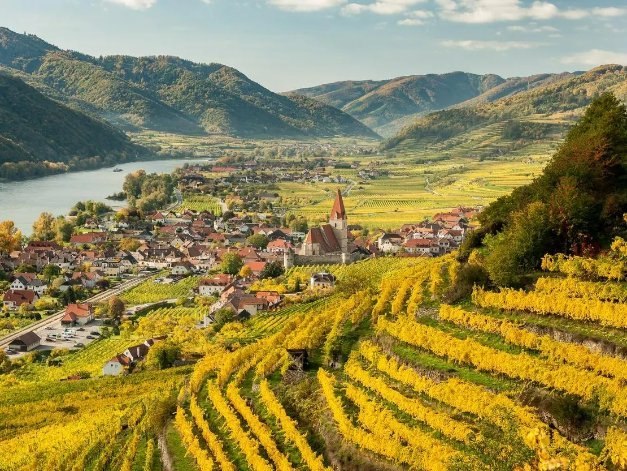
TERRACES, STEEPLES, THE PATIENCE OF VINES. IMAGE: PRESS
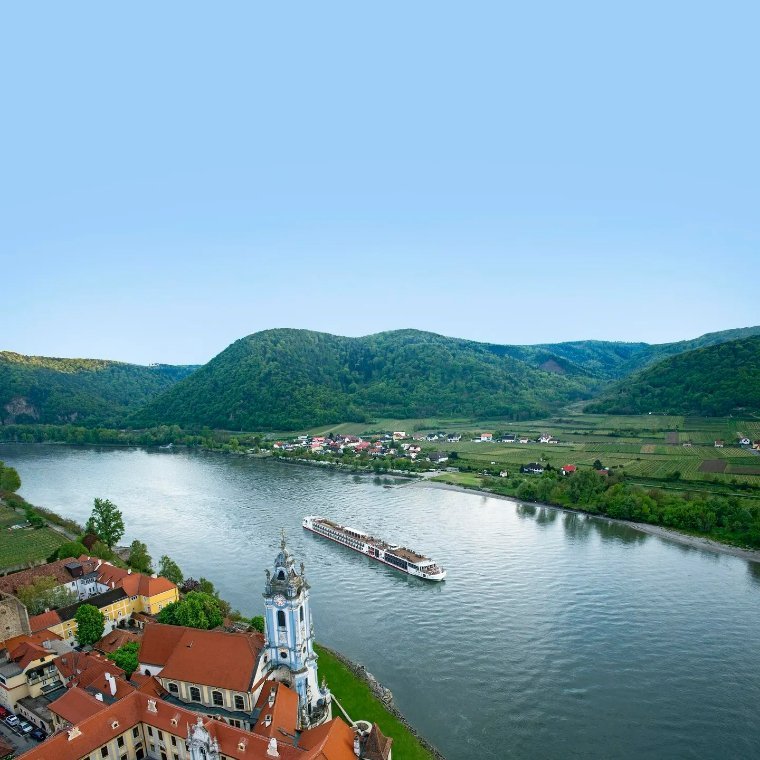
Between Melk and Krems, the Wachau is the stretch most travellers remember, and UNESCO lists it as a World Heritage cultural landscape. Terraced vineyards of Grüner Veltliner and Riesling climb the banks, villages appear at each bend, and the ruins of Dürnstein castle, where Richard the Lionheart was once held for ransom, watch over the water. Krems and Dürnstein keep their medieval streets and their wine taverns, the Heurigen, where the year’s vintage is poured beneath a bunch of pine.
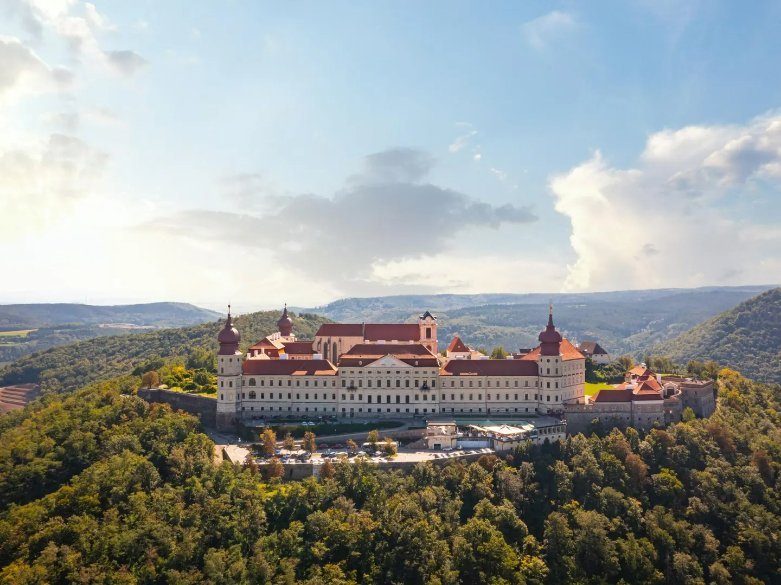
Above the valley, Göttweig Abbey has stood since the eleventh century. The Benedictine complex, with its library, art collections and Baroque imperial staircase, is a reminder that the monasteries kept knowledge, farming and culture alive here long before the river carried tourists.
Two capitals, an hour apart
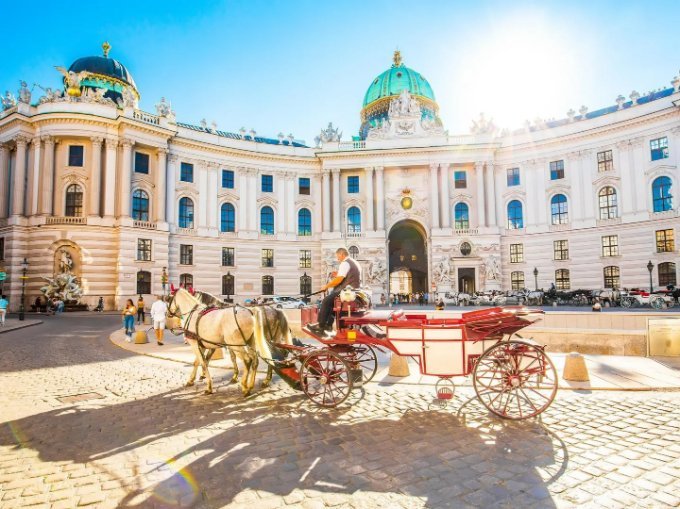
AN EMPIRE STILL DRESSED FOR DINNER. IMAGE: PRESS
In Vienna the Danube meets its most monumental city. The former capital of the Habsburg empire still dresses in the architecture of its peak: the Ringstrasse, the palaces, the ministries built to look permanent. The State Opera, the Musikverein and the houses of Mozart, Beethoven and Strauss remain part of daily life rather than museum pieces, and the old coffee houses preserve a sociability built on newspapers, conversation and time.
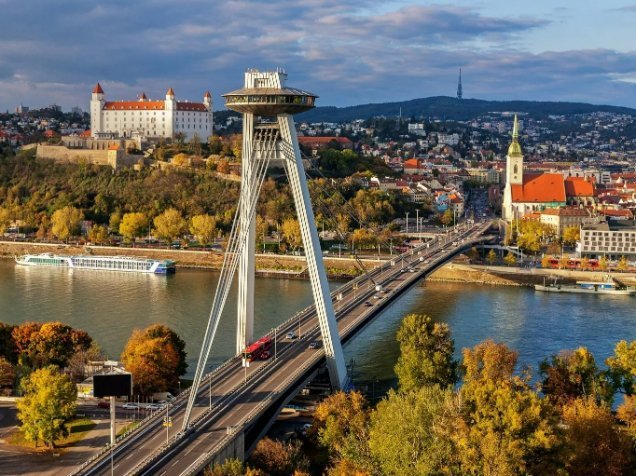
THE SMALLER CAPITAL, AND THE BETTER FOR IT. IMAGE: PRESS
Bratislava, the Slovak capital, is a deliberate change of scale. Its compact old town layers Gothic, Baroque and Rococo, and the castle on its hill watches over a crossing that mattered on the old trade routes. So close to Vienna, it keeps a rhythm entirely its own.
Budapest, the last word
TWO CITIES, ONE RIVER BETWEEN THEM. IMAGE: PRESS
The journey ends in Budapest, two cities joined by bridges, with Buda on its hills and Pest on its plain. Roman, Ottoman and Austro-Hungarian layers show in the streets and in the habits. The thermal baths, fed by geothermal springs and used since Ottoman times, are the city’s most singular inheritance. Around them, basilicas, a fortified hill and the lit bridges at night close the voyage with some ceremony.
The Danube does not explain Europe in a sentence. It does it over a week, a bend at a time, until the borders soften and the continent appears as it always was: a single story told in several languages, carried along by the same slow water.
From St Andrews and Royal County Down to Cabot Saint Lucia, Hirono and Tara Iti, eleven courses that justify the journey, with how to get a tee time and where to sleep afterwards.
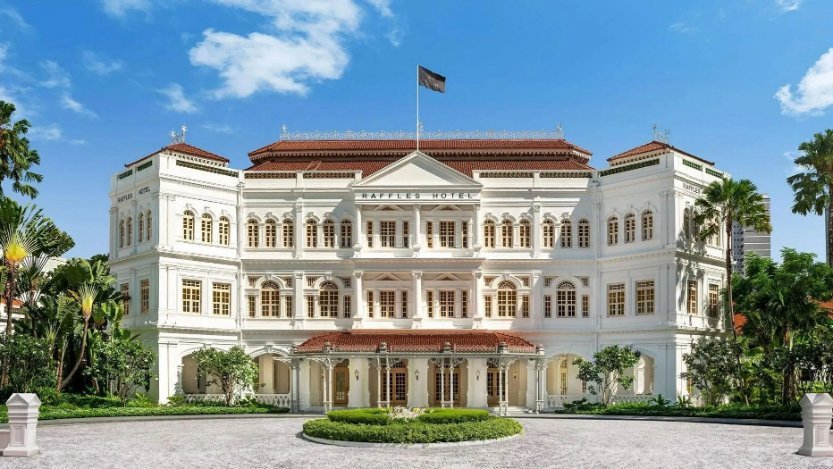
From the Hôtel de Paris in Monte-Carlo to Raffles in Singapore and a Mandarin Oriental in Bangkok marking 150 years, the grand hotels that have stayed relevant for more than a hundred years without surrendering their identity.