De Mains en mains: Van Cleef & Arpels makes the jewellery professions visible
A jewel reaches the display case as a finished object, but its making depends on several professions whose work is rarely visible together. Van Cleef & Arpels's De Mains en mains programme reverses that perspective. It begins with the people, tools and stages behind a piece, asking how those skills can be understood by students, career changers and the wider public.
A jewel reaches the display case as a finished object, but its making depends on several professions whose work is rarely visible together. Van Cleef & Arpels’s De Mains en mains programme reverses that perspective. It begins with the people, tools and stages behind a piece, asking how those skills can be understood by students, career changers and the wider public.
Launched in 2021, the initiative combines education throughout the school year with a public encounter in Lyon. The 2025 edition took place from 24 to 30 November at the InterContinental Lyon – Hotel Dieu. Its programme connected practical demonstrations with an exhibition and discussions about professional pathways.
A sequence of specialised skills
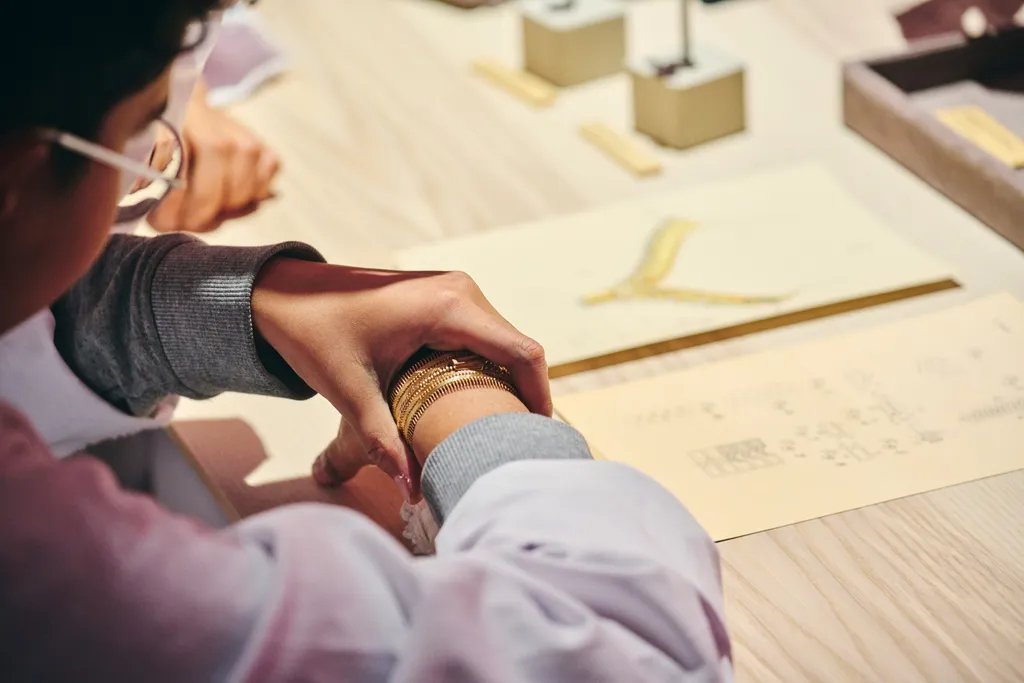
The Parcours des Savoir-faire introduces the different stages of jewellery-making. Stone expertise, three-dimensional design, goldsmithing, setting, polishing and enamelling are not interchangeable tasks. Each requires a particular form of attention, and each depends on decisions made elsewhere in the process.
Small-group encounters make those relationships easier to grasp. The visitor sees that a finished surface or a secure setting is not a decorative flourish applied at the end, but part of a chain of technical decisions. Exercises built around the Alhambra motif provide a recognisable point of entry into that chain.
The classroom connection
The wider educational programme continues outside the event. Specialists visit partner schools and connect jewellery to subjects such as history, mathematics and language. Public-speaking workshops then help students explain what they have learned, making communication another part of the process.
That approach gives craft a different place in education. It is not presented only as something to admire from a distance, but as a set of professions with training routes, daily practices and possibilities for the future.
Objects that show collective work
The accompanying exhibition places historical and contemporary pieces alongside more complex creations. The 2025 programme included the Naissance de l’Amour automaton, bringing mechanics, jewellery and decorative arts into the same object. L’École, School of Jewelry Arts, also participated through its educational programme.
The value of De Mains en mains lies in making collaboration tangible. A jewel may carry the name of one house, but its construction depends on several kinds of expertise. Showing those hands at work changes the way the finished piece can be read, from a solitary precious object to the result of a disciplined conversation between professions.
The handover between professions
A setter encounters decisions already made about the stone and the metal supporting it. A polisher works on surfaces whose form has been established elsewhere. Following those handovers gives jewellery a more concrete history than presenting the finished piece as the work of a single undifferentiated artisan.
The educational programme’s strength is in making that interdependence visible. A familiar motif offers an entry point, while tools and demonstrations reveal how specialised tasks contribute to it. The automaton expands the same argument into mechanics and decorative arts. The 2025 event is a dated example, but the professional chain it introduces remains the subject: a jewel acquires its coherence through several kinds of expertise.
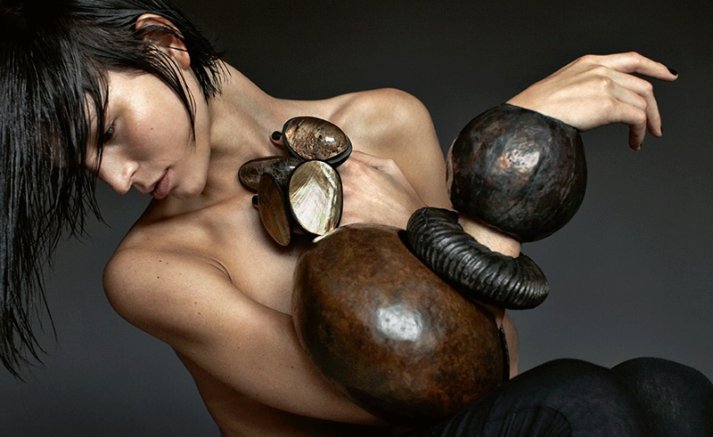
Edited by Melanie Grant for Phaidon, The Jewelry Book gathers 300 entries across two hundred years, from the great maisons to studio jewellers, and asks a better question than what a jewel is worth: what it changed.
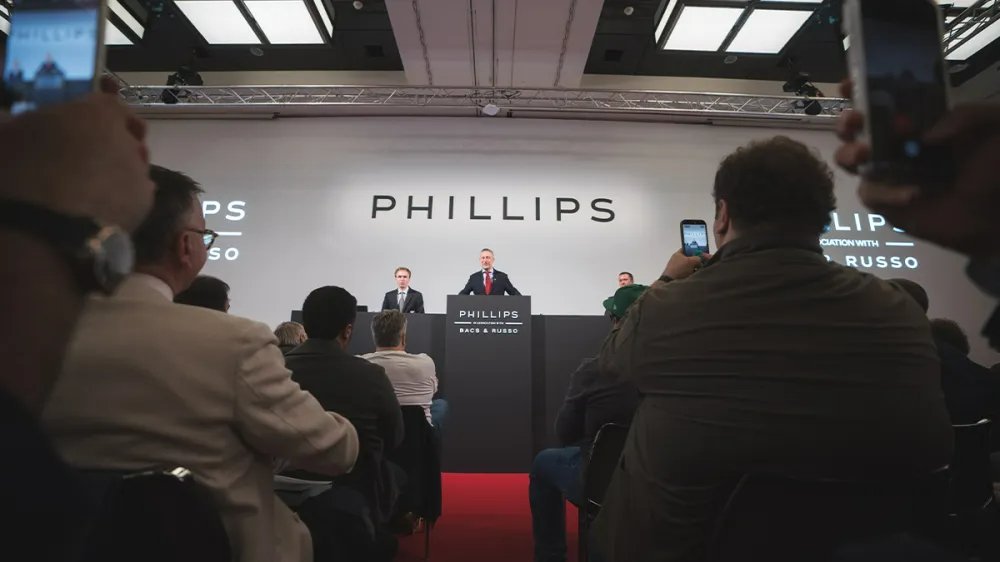
In November 2025 Phillips closed its first decade in Geneva with a white-glove sale of CHF 66.8 million, led by a 1943 steel Patek Philippe ref. 1518 at CHF 14.2 million. Six months later, the same room went higher still.
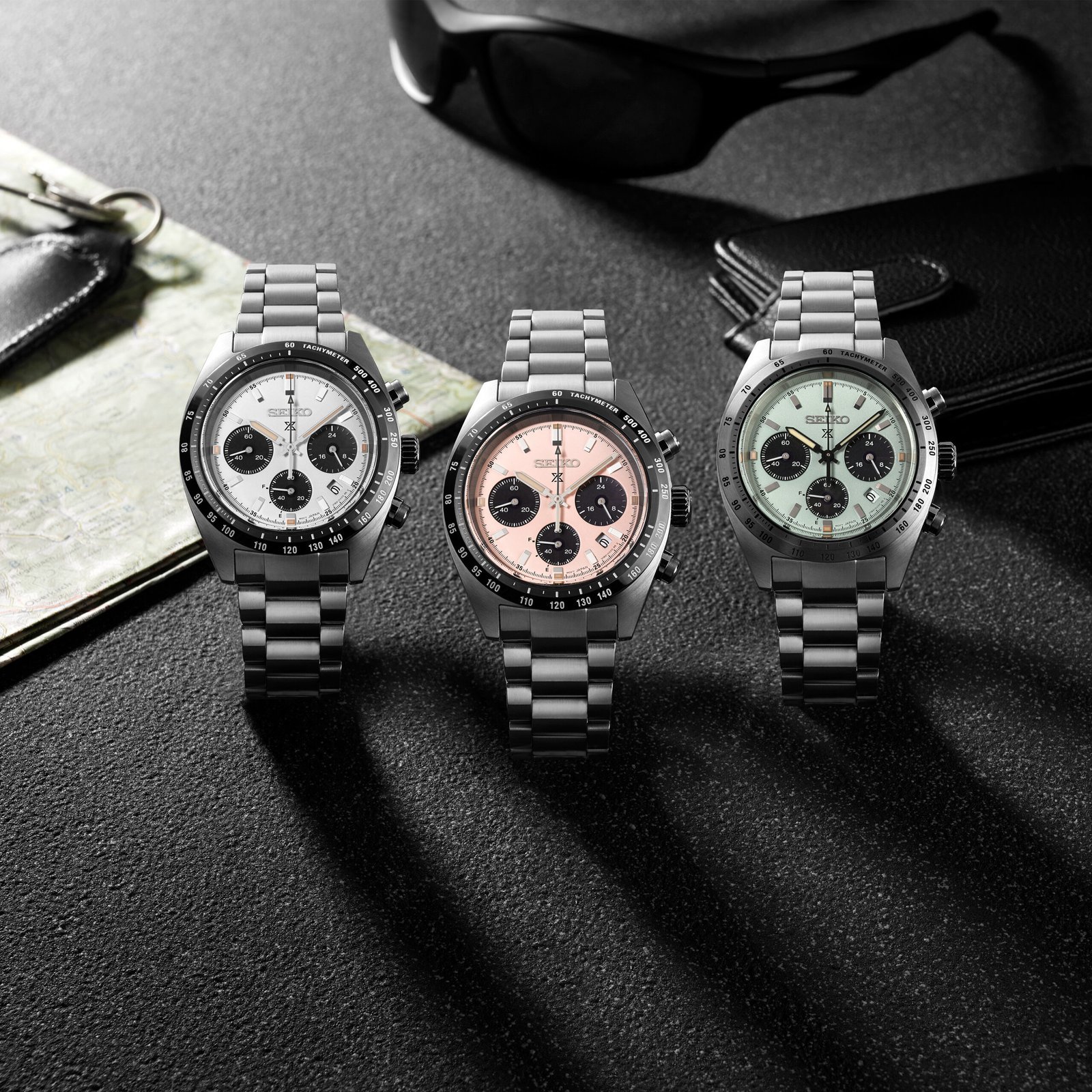
Maurice Lacroix, Frederique Constant, TAG Heuer and Tissot are returning to solar quartz, with a decade between battery changes and photovoltaic cells hidden beneath translucent dials or the crystal itself.