Épi 1959, Pampelonne. Image courtesy of Épi 1959. / Reporting: Luiza Rodas
HOTELS
At Épi, the garden and the morning air are as important as the room. Luiza Rodas’s account begins with that change of pace near Pampelonne: a short walk towards the beach, damp planting early in the day and the sense that life can move outdoors without a complicated plan.
The property stands in Ramatuelle, close to Saint-Tropez but not inside its centre. That distinction is useful. The town supplies restaurants, shops and evening movement; Épi supplies a different base, with nine bungalows and a setting that encourages guests to stay where they are.
A small property with a long social history
Jean Castel created Épi in 1959, bringing his understanding of Parisian nightlife to the Riviera. The address became associated with the people and social life of that period, but its present appeal is not dependent on reproducing a celebrity guest list.
The later chapter under the McCourt family retained the limited scale. Monica Damonte worked on the interiors and Madison Cox on the landscape. The important decision was not to fill the site with more rooms. Planting, timber and the relationship between each bungalow and its outdoor space remained central.
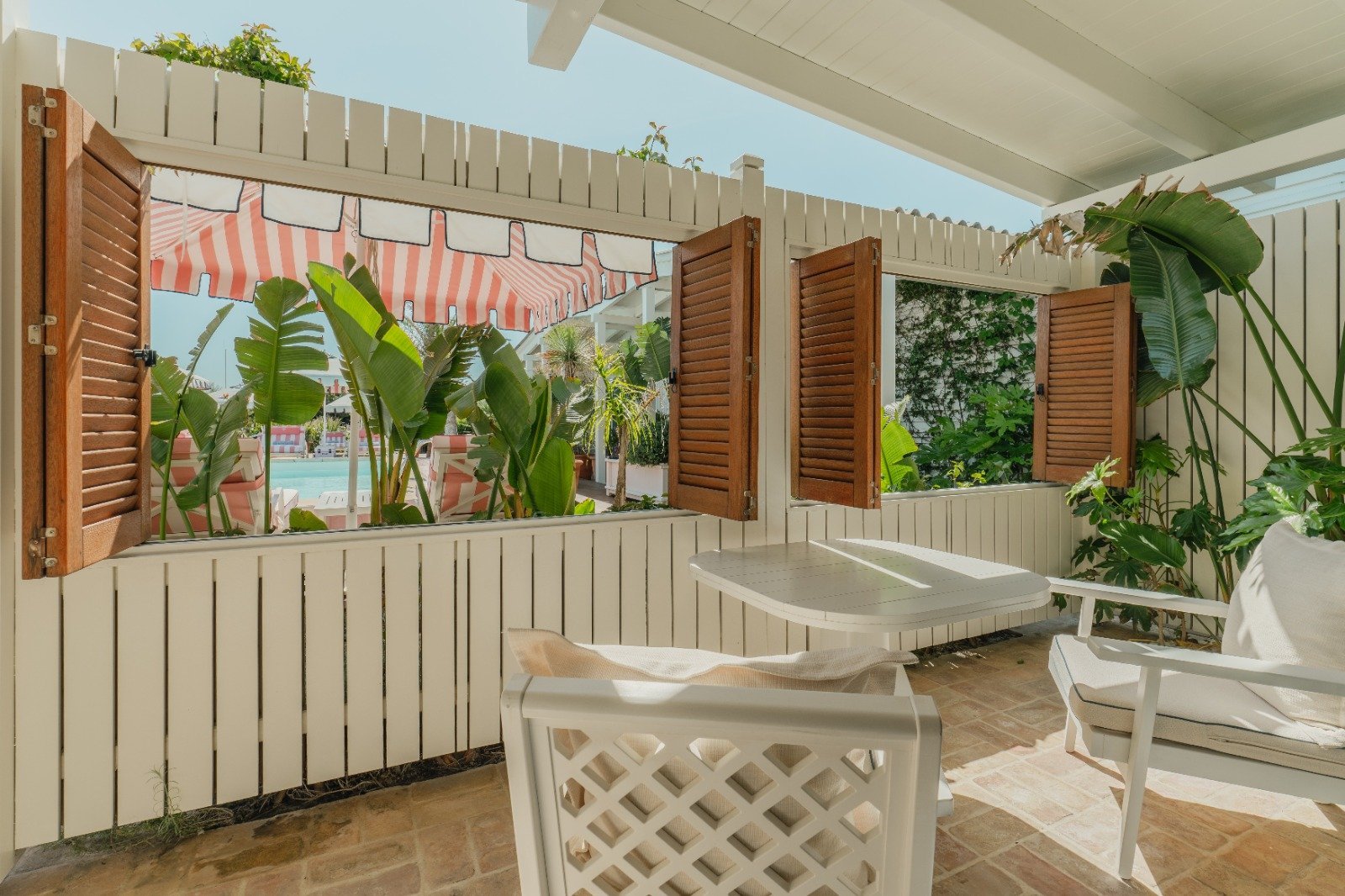
ÉPI 1959. The bungalow terrace opens towards the garden. Photo: Épi 1959.
The bungalow rather than the corridor
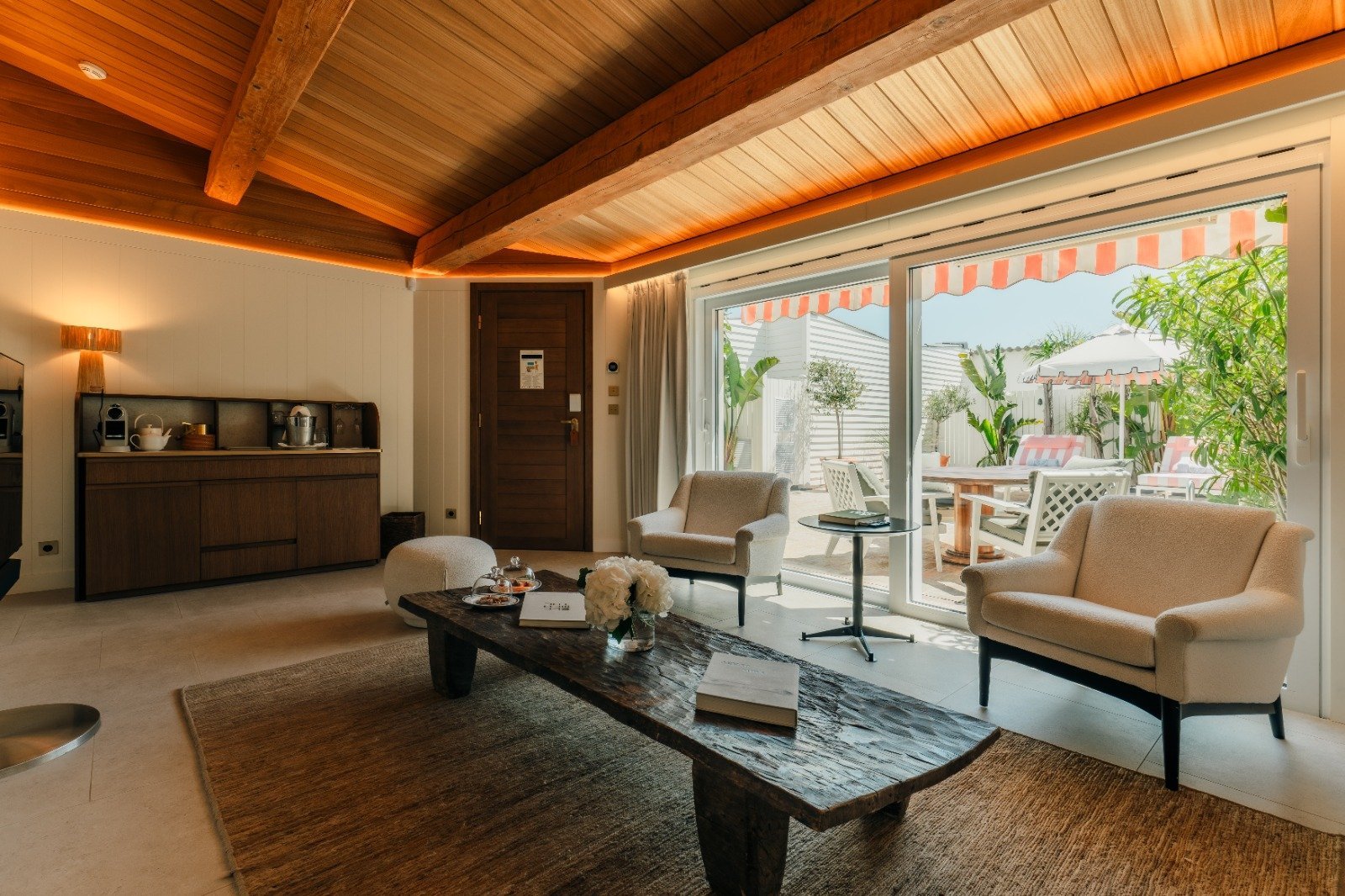
Each accommodation unit has its own relationship with the garden. A patio, shutters, exposed timber and light fabrics create a domestic arrangement rather than the repeated experience of a hotel corridor. Outdoor showers reinforce the connection with a day spent between swimming, the beach and the room.
The palette allows the planting and daylight to do much of the work. There is no need for a heavily staged interior when the stay naturally extends beyond the door. Differences between bungalow categories still matter, so a preferred position or configuration should be checked rather than assumed.
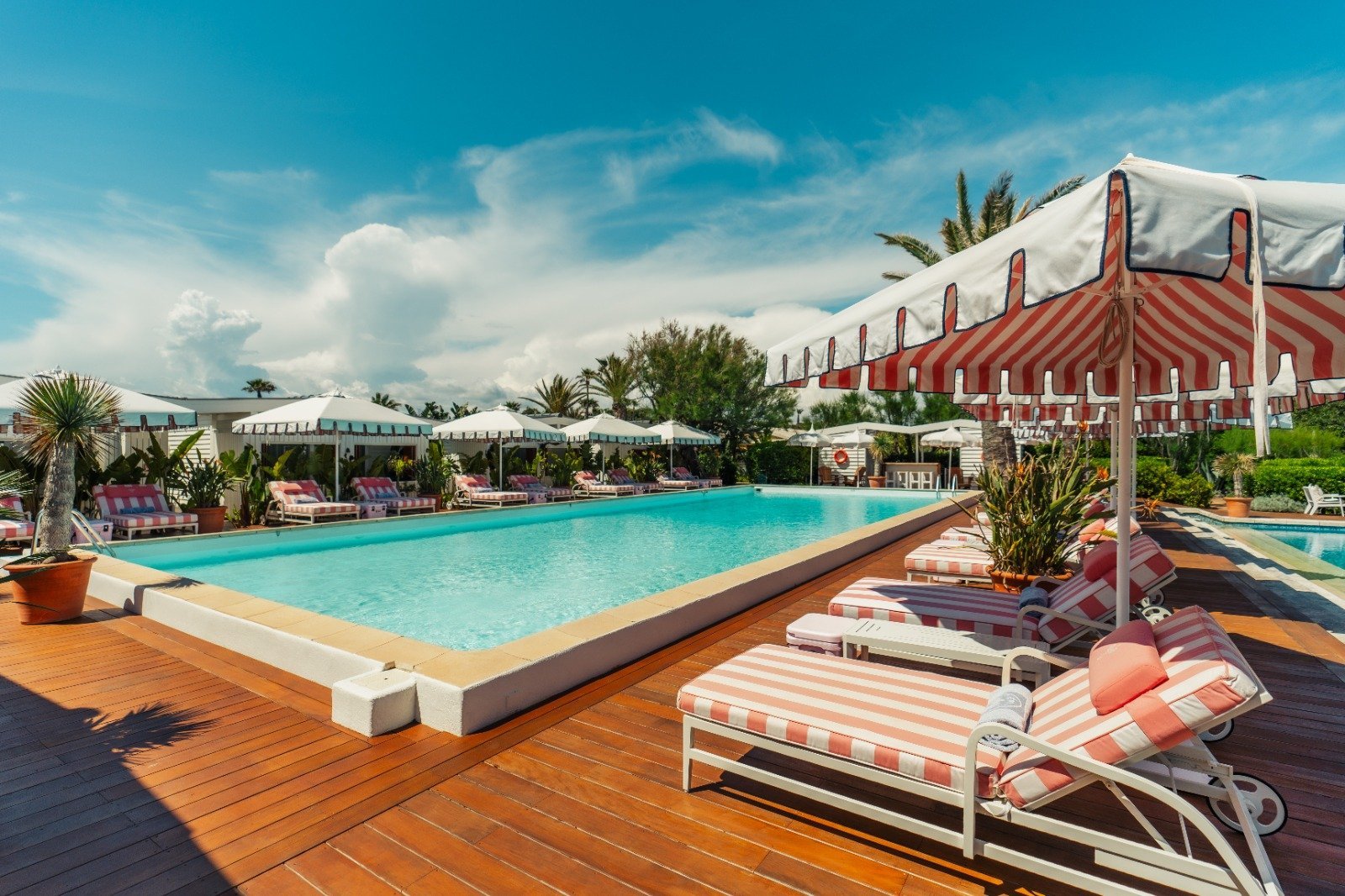
Rodas’s enthusiasm is particularly clear around the pools. The two twenty-one-metre freshwater basins are long enough for proper swimming, not merely for appearing beside the water. Blue mosaics and striped furnishings give them an identity without displacing that practical pleasure.
ÉPI 1959. Timber, shutters and a direct connection with the terrace. Photo: Épi 1959.
Enough to do, without a compulsory programme
Tennis is a distinctive part of Épi, with two courts and the John McEnroe tennis-club association. Pilates, gym sessions, yoga, bicycles and water-based activities offer other routes through the day. The spa uses Biologique Recherche within its treatment programme.
These facilities need not turn the stay into a schedule. The original account is persuasive precisely because swimming, reading and being outside can remain sufficient. A small hotel does not have to imitate the activity list of a much larger resort to justify its address.
Pampelonne provides the surrounding beach setting. Its present arrangements reflect changes to concessions and environmental protection, so memories of the Riviera’s earlier beach clubs do not describe every condition today. Épi belongs to that landscape while offering its own garden and pool life beside it.
The table and the dog
Paolo Amadori’s Italian and Mediterranean approach gives the restaurant a focus on products and recognisable preparations. The possibility of receiving diners who are not staying at the hotel adds another dimension, though arrangements and availability need to be confirmed in advance.
The welcome given to Rodas’s dog, Fluffy, is not a minor footnote in the account. The Dog Pampelonne menu and the ease of moving through the property with a pet make the distinction between being tolerated and being genuinely included. Guests should still confirm current pet conditions for their own stay.
Why return
Épi’s argument is not that nine bungalows can contain every possible service. It is that their scale allows a recognisable rhythm: a swim, a meal, a walk towards the beach, another hour in the garden.
Rodas’s wish to return belongs to that rhythm, including the same dog and the familiarity of a bungalow. The original visit does not need to be inflated into a promise that the property suits everyone. It explains something more useful: why a particular combination of space, outdoor living and an unforced welcome can make a small address worth revisiting.
From St Andrews and Royal County Down to Cabot Saint Lucia, Hirono and Tara Iti, eleven courses that justify the journey, with how to get a tee time and where to sleep afterwards.
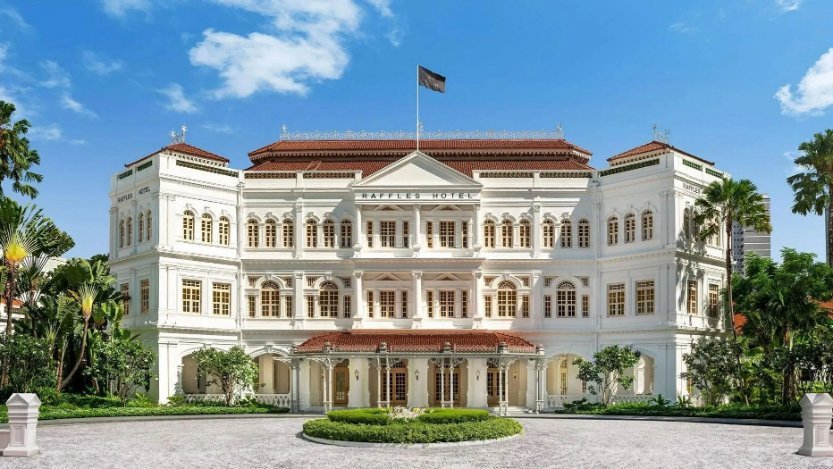
From the Hôtel de Paris in Monte-Carlo to Raffles in Singapore and a Mandarin Oriental in Bangkok marking 150 years, the grand hotels that have stayed relevant for more than a hundred years without surrendering their identity.