From the castles of Ludwig II to the lakes of Slovenia and the fjords of western Norway, a selection of European places that look invented and are, in fact, the product of centuries, with a note on when to go.
Images: Yasiruae, Patrick Nouhailler (Wikimedia Commons); cameralends (Pixabay); Kevin Poh (Flickr)
TRAVEL · EUROPE
Europe’s fairy tales were not invented; they were inherited. The towers, lakes and painted villages that seem to have been drawn before they existed are the residue of centuries of architecture, dramatic geography and communities that kept their outlines almost intact. Nothing here is scenery. It is history laid over terrain that happens to be cinematic.
Lists of such places tend to run to dozens and blur into one postcard. What follows is shorter and more useful: the places that justify the journey, grouped by what makes them extraordinary, and a word on how to see them before the coaches arrive.
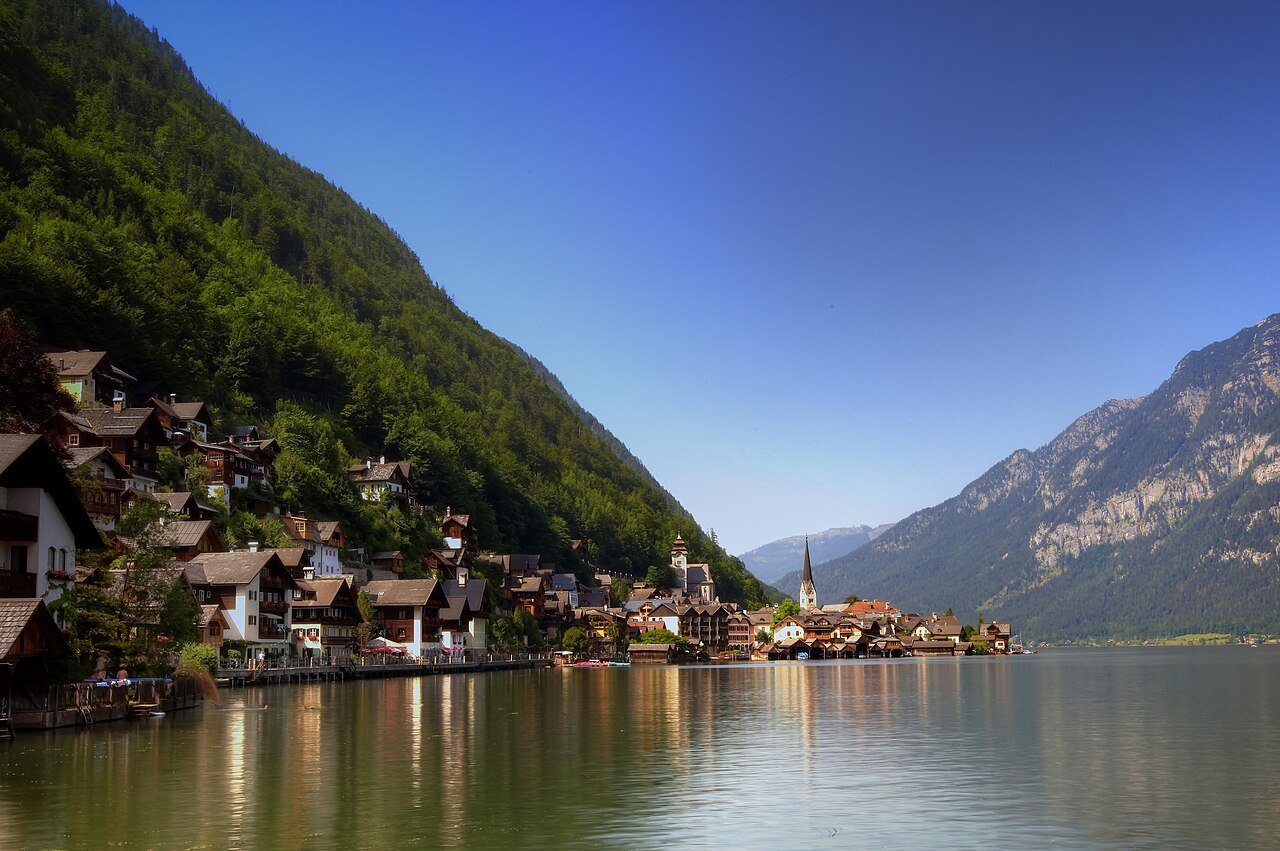
A VILLAGE THAT LEARNT TO RATION ITS ADMIRERS. IMAGE: YASIRUAE / WIKIMEDIA COMMONS, CC BY 3.0
Castles that shaped the collective imagination
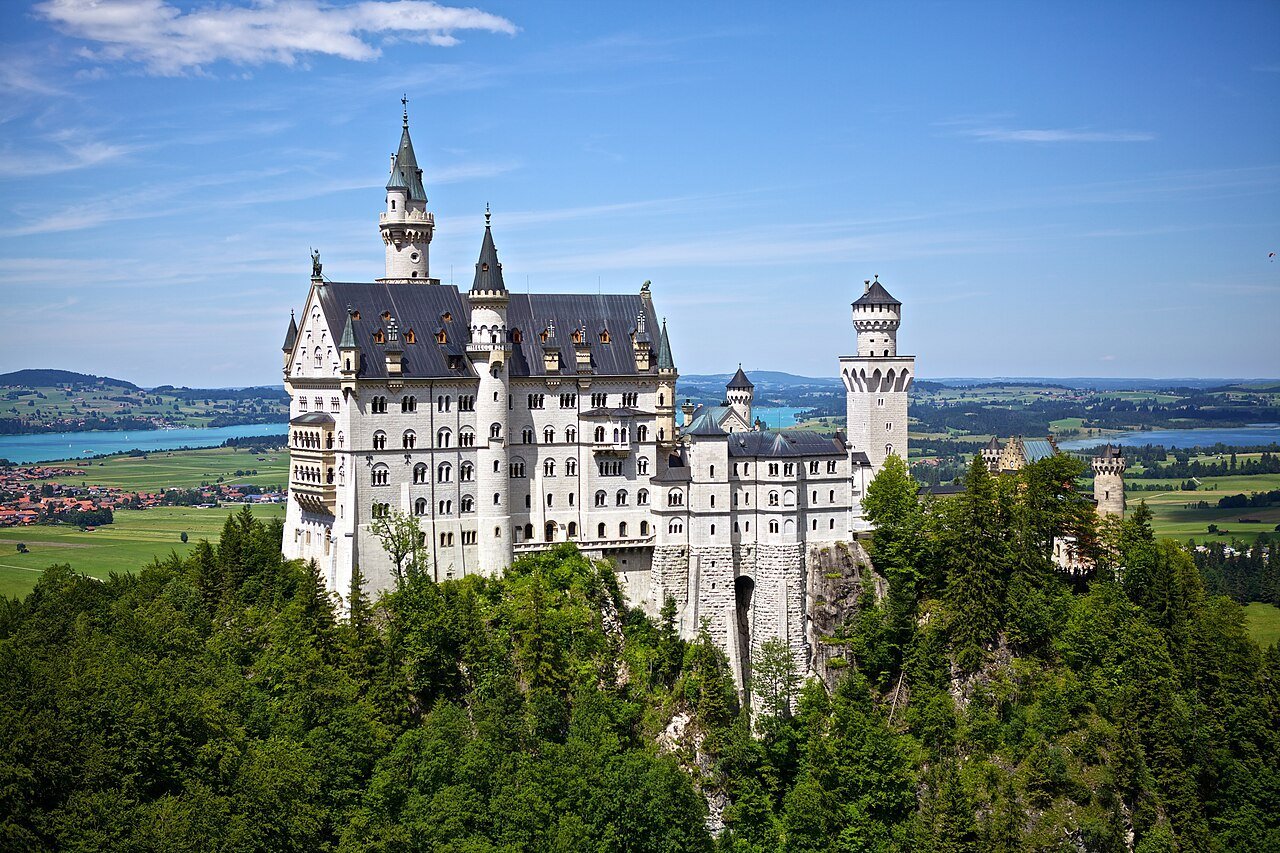
The template for the storybook castle was drawn in Bavaria. Neuschwanstein, the unfinished romance Ludwig II built above the Alpine foothills, inspired generations of fictional kingdoms, and in July 2025 it was inscribed on the UNESCO World Heritage list together with the king’s other retreats, Linderhof, Herrenchiemsee and the hunting lodge at Schachen. Linderhof, smaller and more intimate, is the one that rewards a slow visit.
Further east, Český Krumlov in southern Bohemia wraps a Renaissance town around a bend of the Vltava beneath one of central Europe’s largest castle complexes, a whole ensemble on the World Heritage list since 1992. In the Moselle valley, Burg Eltz rises from a forest clearing as if no century after the Middle Ages had reached it. These castles are not exceptions in the landscape; they are its punctuation, the record of territorial quarrels, dynastic alliances and a taste for the theatrical that has outlived its patrons.
A KING’S DAYDREAM, NOW A WORLD HERITAGE SITE. IMAGE: CAMERALENDS / PIXABAY, CC0
Villages that kept their original scale
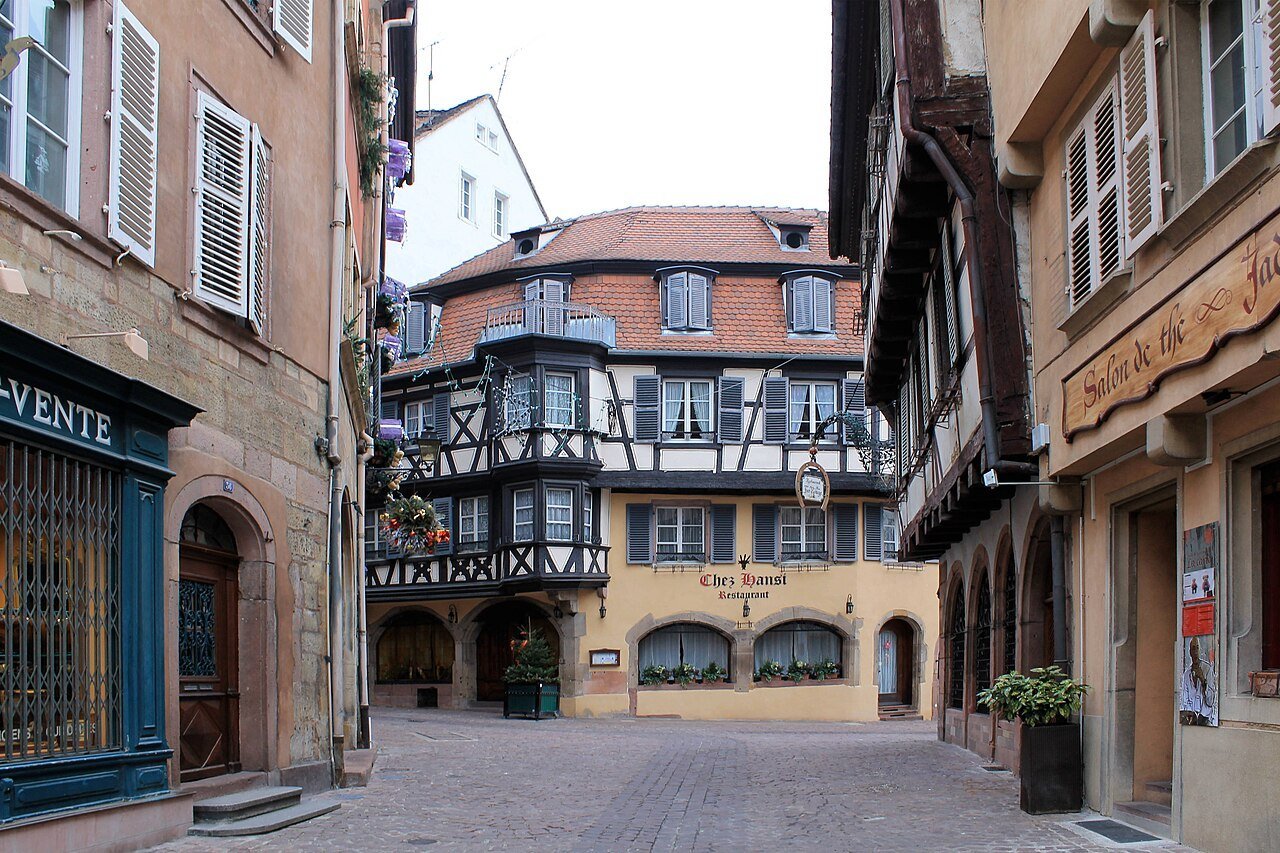
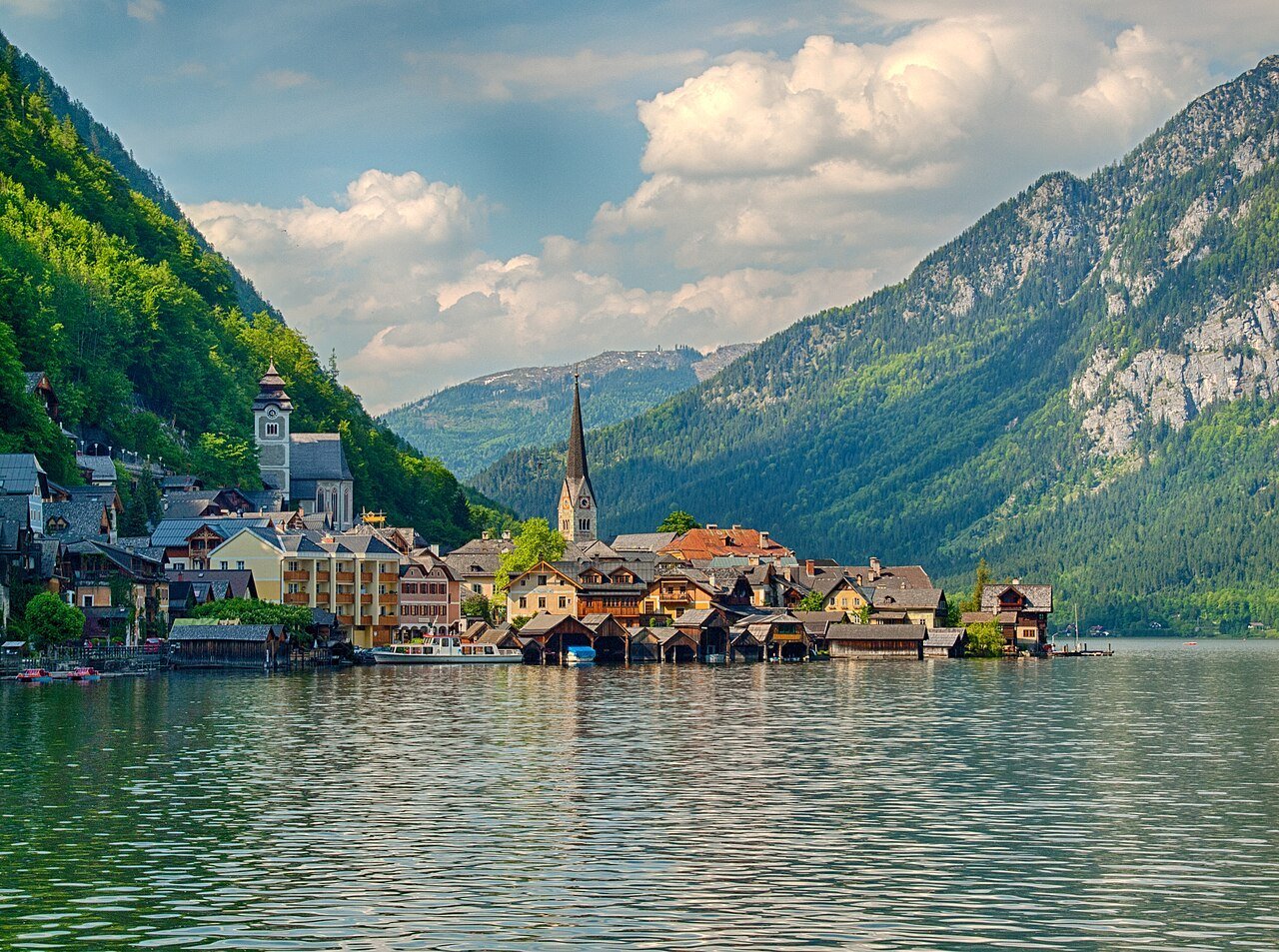
The second family is defined by scale. Narrow streets, a central square and coloured facades keep proportions from before the age of mass urbanisation. Colmar, in Alsace, is the purest example: half-timbered houses in ochre, rose and blue line the canals of its Petite Venise, and the surrounding wine villages, Riquewihr and Eguisheim among them, repeat the formula at an even smaller size. Hallstatt, on its Austrian lake, is the other archetype, a village of fewer than a thousand residents that receives more than a million day visitors a year and now limits and pre-books tour coaches to survive its own beauty.
This continuity is not an accident. Many of these communities adopted strict heritage rules long ago, which protected historic facades and held back careless development. The same discipline shows along the Croatian coast, where Rovinj’s Venetian town climbs a small peninsula toward its campanile, and in the hill villages of rural France.
SCALE AS A FORM OF COURTESY. IMAGE: PATRICK NOUHAILLER / WIKIMEDIA COMMONS, CC BY-SA 3.0
Landscapes that do half the work
Beyond architecture, geography plays the decisive role. At Lake Bled, in the Julian Alps of Slovenia, a medieval castle stands on its cliff above green water, and a pletna, the flat wooden boat rowed standing up, carries visitors to an island church reached by ninety-nine stone steps. The boatmen still descend from the families granted the right to ferry pilgrims by Maria Theresa in 1740. In western Norway, the Geirangerfjord and the Nærøyfjord, inscribed together by UNESCO in 2005, set waterfalls and abandoned clifftop farms against walls of rock that drop straight into the sea. Germany’s dense forests complete the repertoire, the same woods that gave the Brothers Grimm their settings.
In each case the pairing of rugged relief and historic building creates a sense of continuity, as if one had been designed for the other. It is the rare chance to walk through a place that seems composed but is, in truth, the work of geology, climate and human patience over centuries.
THE LAKE BEFORE THE FIRST COACH. IMAGE: KEVIN POH / FLICKR, CC BY 2.0
How to see them
The rule is the same everywhere: stay the night. The day-trip crowd defines these places between ten and five; the version that justifies the legend belongs to whoever is there at seven in the morning or after dinner. Shoulder seasons, May, late September and October, return the scale the villages were built for, and in winter Hallstatt and Bled become quieter, colder and more beautiful.
The towers, lakes and painted streets look as if they were drawn before they existed. They were not drawn at all; they were kept. The real enchantment is that, despite everything, they are still there to be found, early in the morning, by those patient enough to wait for them.
Details: Neuschwanstein and Linderhof sell timed tickets; book well in advance in summer. Hallstatt tour coaches must pre-book arrival slots; independent travellers are best served by an overnight stay. Bled is about 50 minutes by road from Ljubljana.
From St Andrews and Royal County Down to Cabot Saint Lucia, Hirono and Tara Iti, eleven courses that justify the journey, with how to get a tee time and where to sleep afterwards.
From the Hôtel de Paris in Monte-Carlo to Raffles in Singapore and a Mandarin Oriental in Bangkok marking 150 years, the grand hotels that have stayed relevant for more than a hundred years without surrendering their identity.