The European ski season 2026-2027: a guide to the Alps, the Dolomites and the Pyrenees
From Courchevel to Baqueira, the resorts, hotel openings and winter dates that justify the journey this season, chosen with a single criterion: what is worth it.
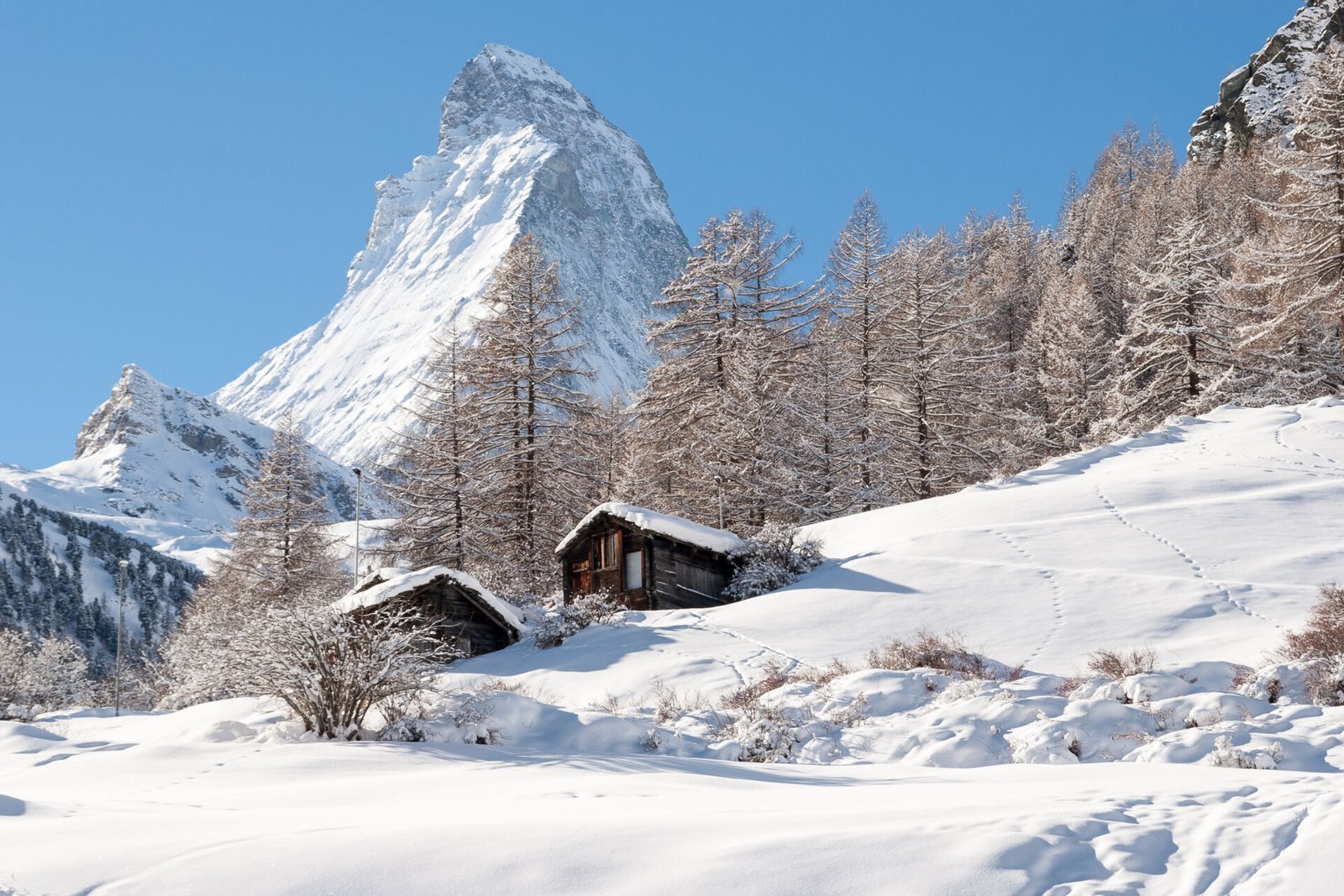
The Matterhorn, a constant presence in Zermatt. Photo: Joachim Kohler / Wikimedia Commons (CC BY-SA 4.0) / WAYFARER Edition | Photographs: Wikimedia Commons, credited in each caption
TRAVEL · WINTER GUIDE 2026-2027
There is a silence that only snow can make. It begins at half past eight in the morning, on the first run, when the piste is still freshly groomed and nobody has said a word. It ends at night in front of a fire, legs tired and face marked by the sun. That silence is what people cross oceans for. The rest, the palaces, the chefs, the spas, is only the frame.
The 2026-2027 season opens with the Dolomites still carrying the echo of the Milano Cortina Winter Olympics, held last February, and with a crop of hotels opening or reopening in the first half of December. We travelled the map with a single criterion: what justifies the journey. This is not a list of everything that exists. It is a selection of what is worth it.
Which resort is yours
To see and be seen: St. Moritz and Courchevel 1850
To disappear: Gstaad and Lech
To ski seriously: Verbier, Zermatt and Chamonix
To eat well and look at the view: the Dolomites
For the party: Kitzbühel in Hahnenkamm week
To escape the obvious: Baqueira Beret
For an easy family trip: Andorra
The openings of the season
Hotel
Where
Opens
Why it matters
Sivolière
Courchevel 1850
3 Dec
An 800 m² spa with a 25-metre pool
The First Cortina
Cortina d’Ampezzo
4 Dec
76 rooms, Zuma and a 1,000 m² spa
Bârma
Courchevel La Tania
5 Dec
Susanne Kaufmann spa, ski-in, ski-out
THE GREEN
Zillertal, Austria
11 Dec
3,300 m² of wellness and a natural swimming lake
Saint Roch
Courchevel 1850
18 Dec
An institution returns, by Maisons Pariente
Bourbon Hotel
Courchevel 1850
18 Dec
Five stars from the Chapitre Six collection
Le Morgane
Chamonix
Dec
Reopens with 54 rooms and suites
The Ski Lodge
Verbier
Dec
36 rooms and not a single television
I. COURCHEVEL 1850, FRANCE
The capital that never stops reinventing itself
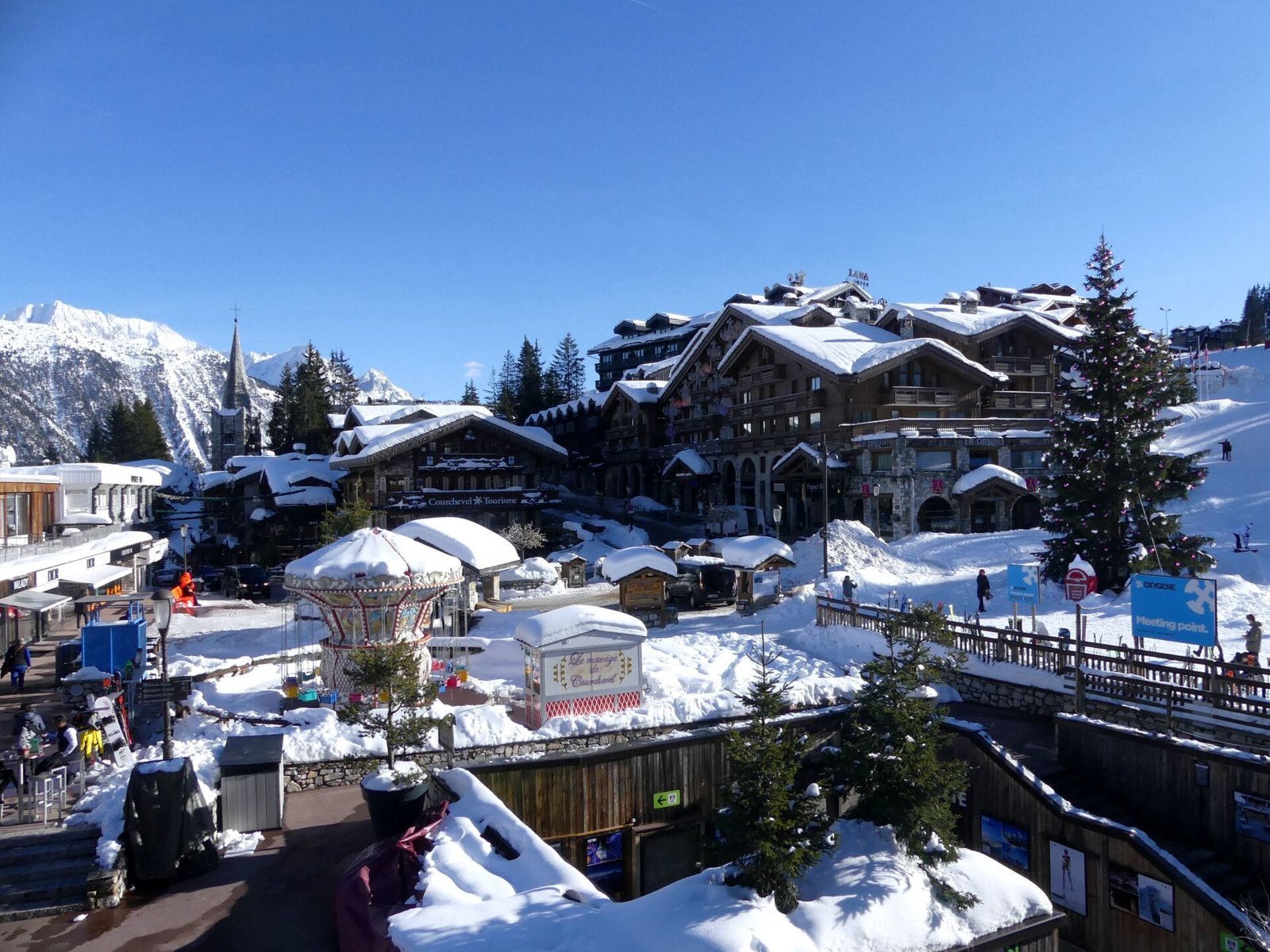
Courchevel 1850, gateway to Les Trois Vallées. Photo: Florian Pépellin / Wikimedia Commons (CC BY-SA 4.0)
Nowhere else concentrates so much luxury per square metre of snow. Courchevel 1850 is the gateway to Les Trois Vallées, the largest linked ski area in the world, with around 600 kilometres of pistes connecting Courchevel, Méribel and Val Thorens. Arrival is by helicopter or by small plane onto the altiport, a short, steep runway carved into the mountain itself and one of the most talked-about landings in the Alps.
What changes this season. No resort is renewing itself more this winter. On 18 December, Maisons Pariente return a local institution to 1850: the Saint Roch, with 37 rooms and suites, a 244 m² penthouse, a Prunier restaurant and a Tata Harper spa. The same day sees the debut of the Bourbon Hotel, a five-star from the Chapitre Six collection, with 31 rooms, the Simonetta trattoria and skiing from the door. Before them, on 3 December, the Sivolière reopens with 35 rooms, residences for up to 15 guests and an 800 m² spa with a 25-metre pool. Further down, in La Tania, Bârma opens on 5 December with 75 rooms and a Susanne Kaufmann spa.
The classics. Cheval Blanc, Les Airelles, L’Apogée and Le K2 Palace remain the quartet that sets the resort’s standard. The future already has names: Raffles and One&Only have announced projects in 1850, expected in 2028 and 2030.
Lunch. Cap Horn, beside the altiport, is the most sought-after mountain table in the resort, with a sunny terrace and a view of every landing and take-off.
II. CHAMONIX, FRANCE
The mountain in its raw state
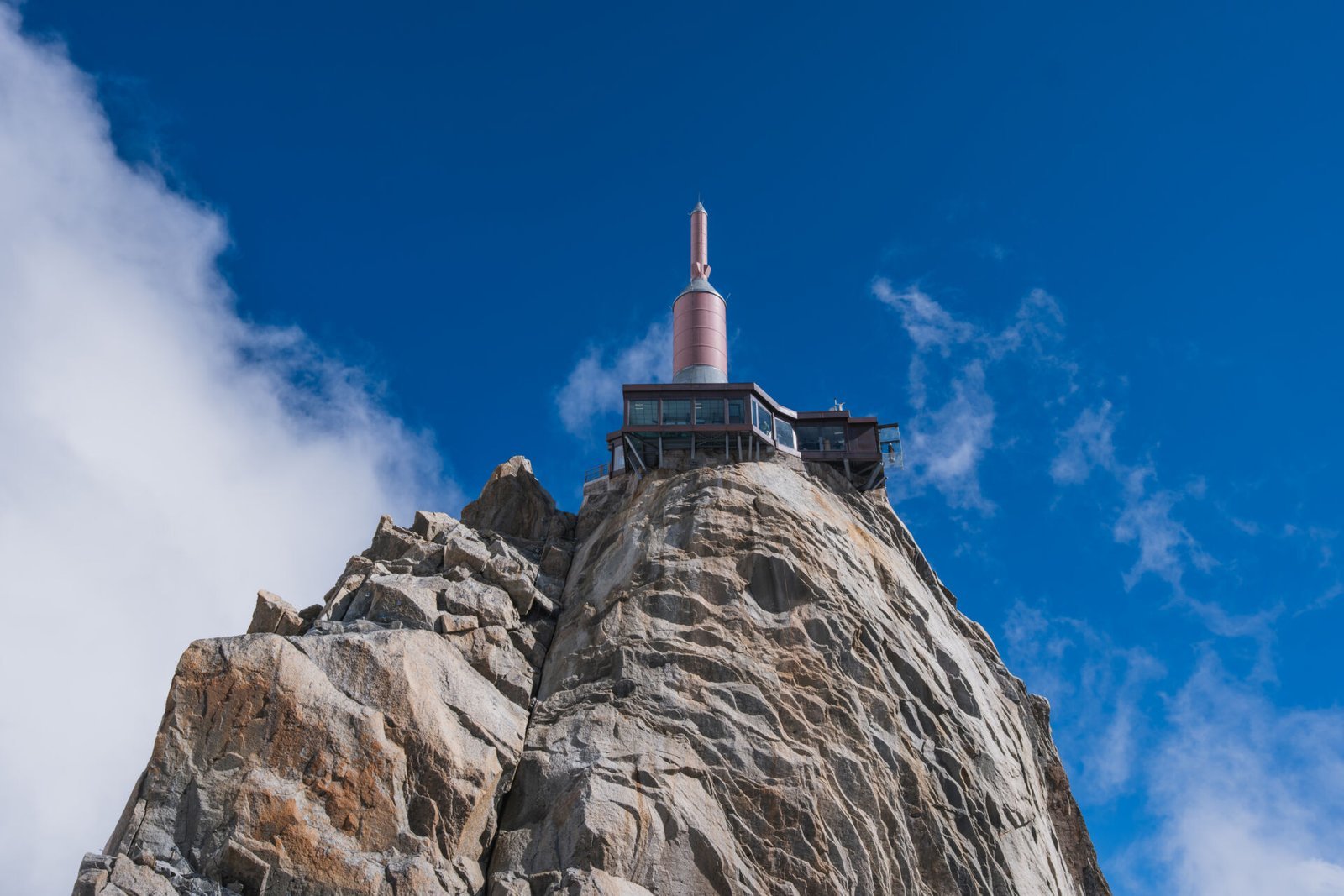
The Aiguille du Midi, starting point of the Vallée Blanche. Photo: Christian David / Wikimedia Commons (CC BY-SA 4.0)
If Courchevel is a showroom, Chamonix is a workshop. At the foot of Mont Blanc, the town that hosted the first Winter Olympics, in 1924, is the world capital of mountaineering and high-mountain skiing. Its most legendary outing is the Vallée Blanche: an off-piste descent that leaves from the top of the Aiguille du Midi and crosses some 20 kilometres of glacier, always with a guide. Nothing else in the Alps quite compares.
The news is the return of the historic Le Morgane in December after a renovation, with 54 rooms and suites, each with a balcony or terrace facing the massif. It is the right base for those who travel for the mountain rather than the scene.
III. ZERMATT, SWITZERLAND
The mountain as protagonist
Zermatt has no cars, only electric taxis, sledges and the train that climbs from the valley. The Matterhorn fills the window of almost every room, and the whole village seems arranged around it. This is the resort for altitude: the Matterhorn Glacier Paradise cable-car station sits at 3,883 metres, the highest in Europe, and the snow usually lasts until the end of April.
The great outing is to ski across the border. From the upper slopes you descend to Cervinia, in Italy, for fresh pasta at lunch and a return to Switzerland in the afternoon. Since 2023 the Matterhorn Alpine Crossing has also linked Zermatt and Cervinia by cable car, from one valley to the other.
Where to stay: The Omnia, on a rock above the village, for lovers of contemporary architecture; CERVO Mountain Resort, for a more relaxed lodge spirit; and Riffelalp Resort, at 2,222 metres, to sleep inside the landscape. Where to eat: Chez Vrony, in Findeln, is the mountain lunch everyone recommends, the Matterhorn framed from its terrace.
IV. ST. MORITZ, SWITZERLAND
Where winter became a way of life
St. Moritz invented winter tourism and still behaves like a place that knows it. The story goes that in 1864 the hotelier Johannes Badrutt made a wager with English guests at his Kulm Hotel: if they came back in winter and did not enjoy it, he would pay for their journey. They came, they stayed, and the idea of spending the cold season in the mountains was born. The town has hosted two Winter Olympics, in 1928 and 1948, and in the Engadin the sun shines on most days.
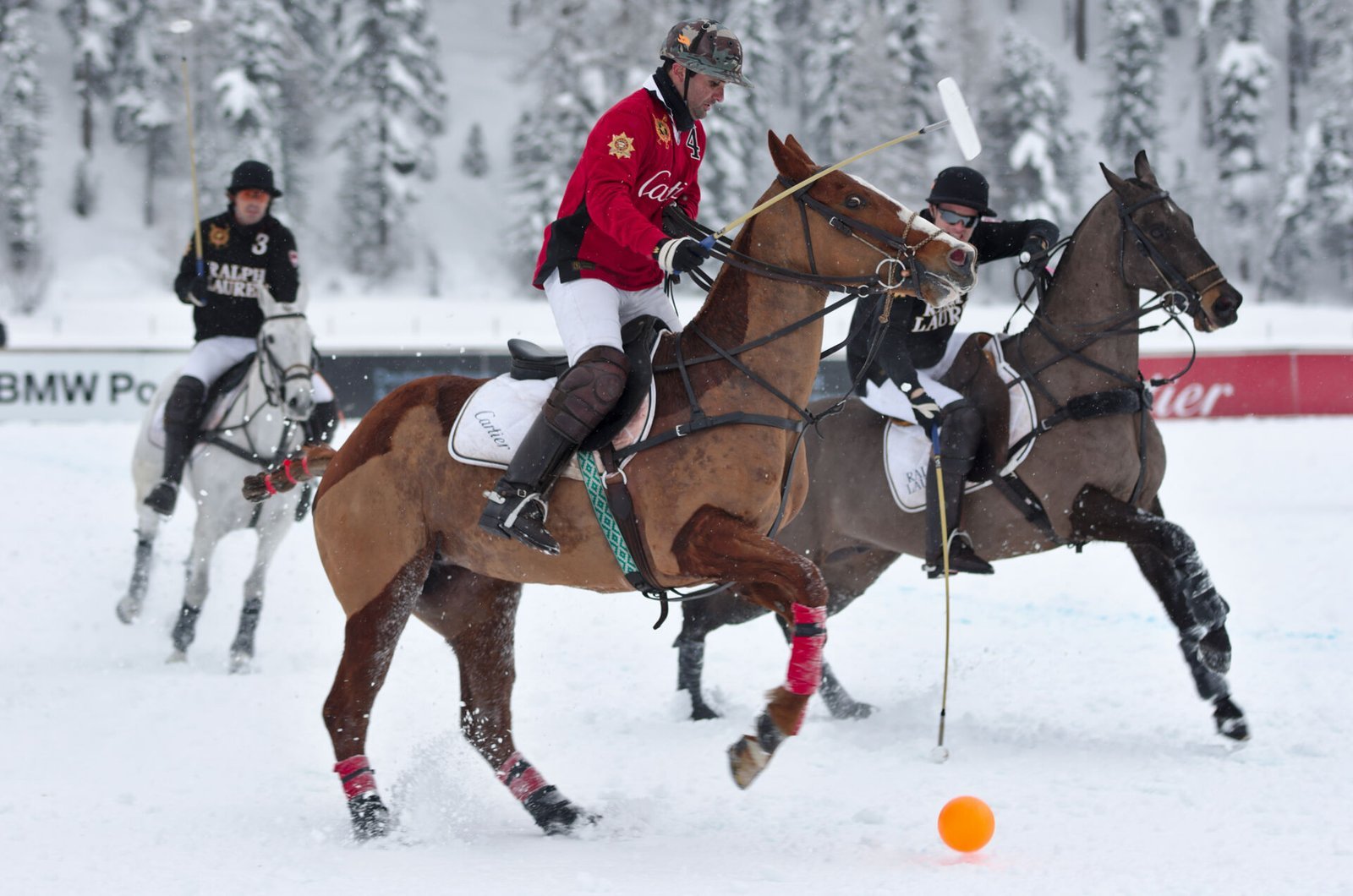
Polo on the frozen lake of St. Moritz. Photo: Clément Bucco-Lechat / Wikimedia Commons (CC BY-SA 3.0)
Winter here keeps a social calendar. From 22 to 24 January 2027 the frozen lake hosts the Snow Polo World Cup. On the Sundays of February comes White Turf, horse racing on ice that gathers European society in fur and champagne. And there is the Cresta Run, the head-first toboggan run kept for more than a century by a private club.
Where to stay: Badrutt’s Palace, with its unmistakable tower, is the historic address; the Kulm, cradle of that 1864 wager, keeps the town’s memory; Suvretta House offers more distance from the centre and its own lift to the Corviglia slopes.
In the Alps, the greatest luxury is not the chalet. It is the first run of the morning, before anyone else.
V. GSTAAD AND VERBIER, SWITZERLAND
The whisper and the shout
Gstaad is the opposite of noise. Dark wooden chalets, a car-free promenade, the Gstaad Palace on its hill like a castle from a fairy tale, with The Alpina Gstaad and Le Grand Bellevue as contemporary versions of the same calm. One skis a little and well, lunches at length, and nobody asks who you are, because they probably already know. For guaranteed snow, Glacier 3000, about 20 minutes away by car, completes the programme. It is luxury that does not need to be seen.
Verbier, the most athletic of the Swiss resorts. Photo: Realleok / Wikimedia Commons (CC BY-SA 4.0)
Verbier is the youngest and most athletic of the Swiss resorts. It belongs to Les 4 Vallées, peaks at Mont Fort at 3,330 metres, and is home to the Xtreme Verbier, the final of the world freeride circuit, contested on the near-vertical face of the Bec des Rosses. Après-ski runs well past midnight. New this season is The Ski Lodge, a 36-room boutique hotel near the Place Centrale, opening in December with no televisions in the rooms and a bar called The Listening Room. The message is clear: here, the night is meant to be heard. Among the established addresses, W Verbier and Chalet d’Adrien.
VI. AUSTRIA
Lech and Kitzbühel: discretion and adrenaline
Lech, in the Arlberg, is Austria’s answer to Gstaad: a small village with a white church and wooden chalets, frequented by European royal families and by those who would rather not be photographed. It belongs to Ski Arlberg, the largest linked ski area in Austria, with more than 300 kilometres of groomed pistes and a further 200 off-piste, connecting Lech, Zürs, Warth, Stuben and St. Anton. The Almhof Schneider and the Post are the addresses of tradition; the Aurelio is the most contemporary.
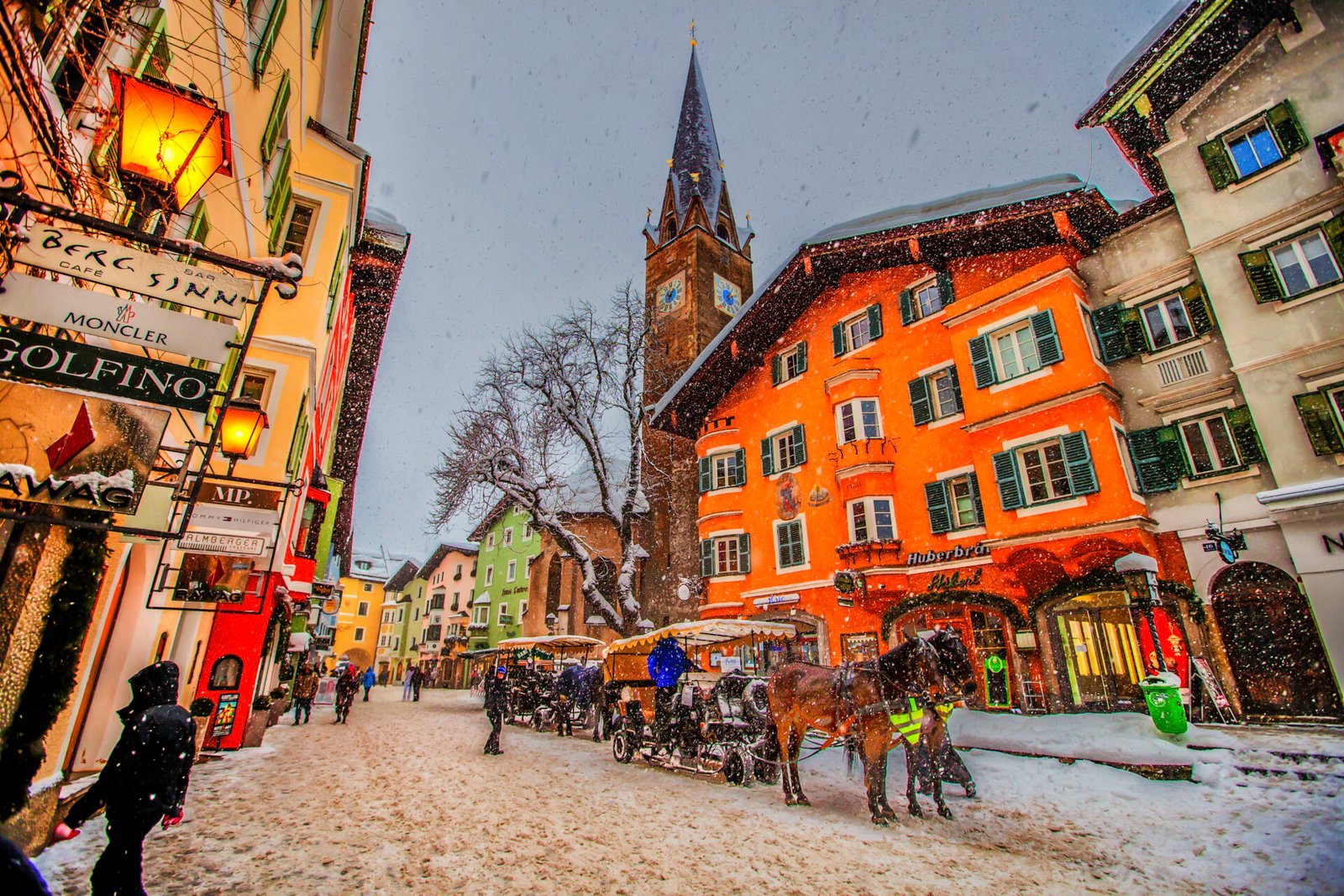
The medieval centre of Kitzbühel. Photo: Valerii Tkachenko / Wikimedia Commons (CC BY 2.0)
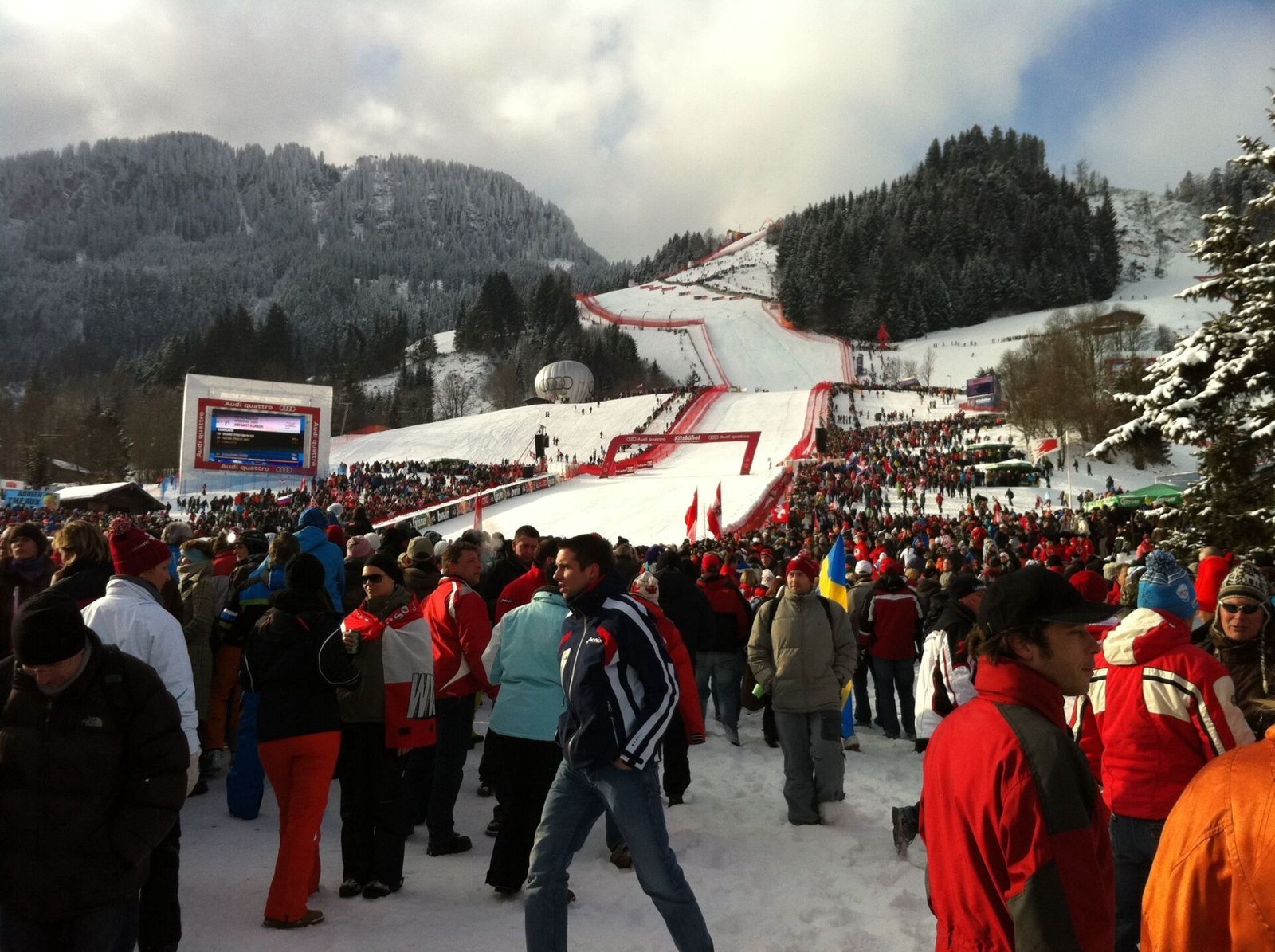
Kitzbühel pairs a medieval town of painted façades with the most feared run in world skiing. On the Streif, World Cup racers pass 140 km/h, and Hahnenkamm week, from 18 to 24 January 2027, turns the town into the great social gathering of the Austrian winter: super-G, downhill and slalom by day, coveted parties and dinners by night. For those who want to see skiing as spectacle, there is no better date in the European calendar.
The finish of the Streif during Hahnenkamm week. Photo: Neo_II / Wikimedia Commons (CC BY-SA 2.0)
Also in Tyrol, in the Zillertal, THE GREEN opens on 11 December with 75 rooms and suites and 3,300 m² of wellness, including a natural lake for swimming and a rooftop pool. It is Austria’s new address for those travelling with children, kids’ club included.
VII. DOLOMITES, ITALY
Winter after the Games
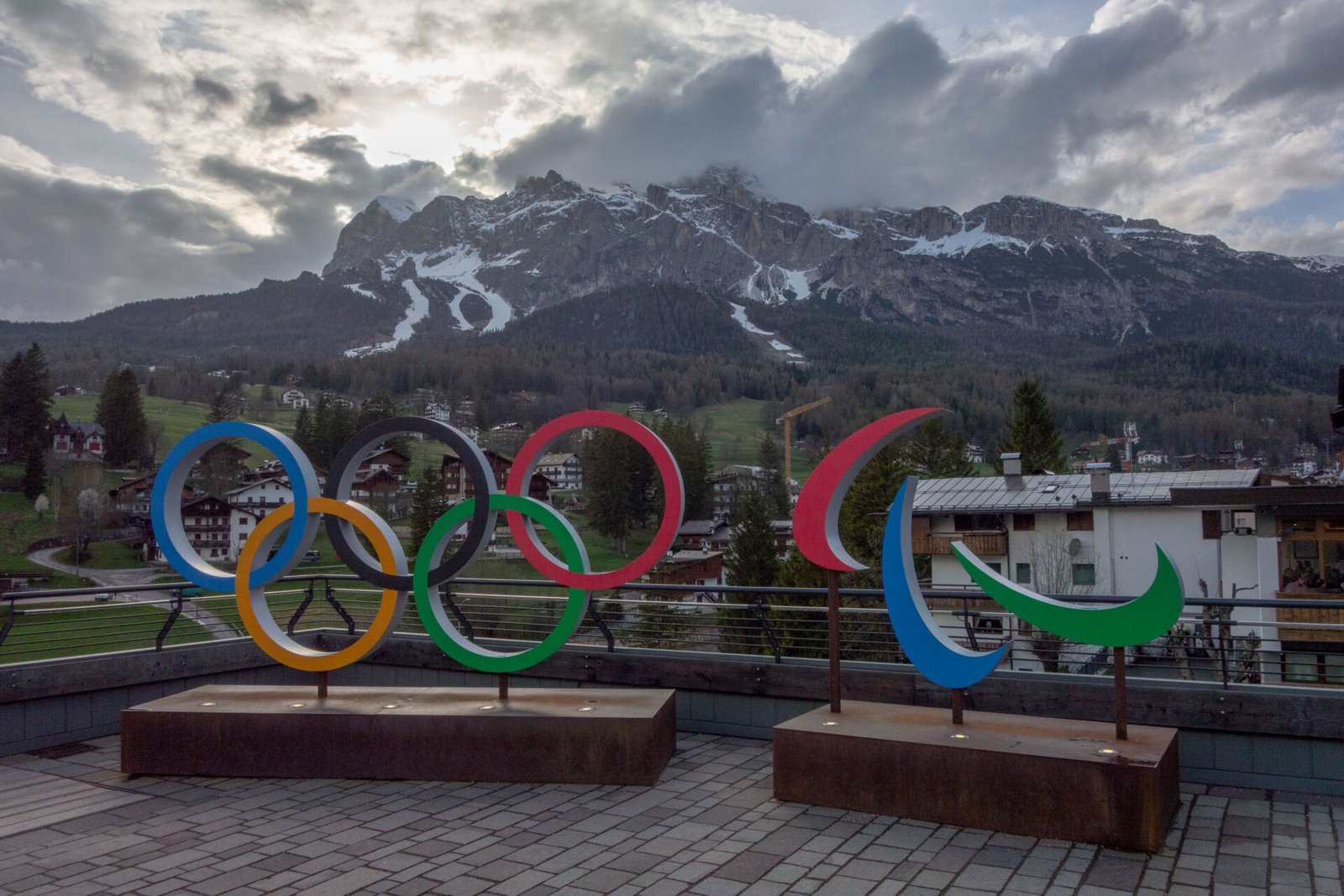
Cortina d’Ampezzo, Olympic host in 2026. Photo: Marmolada48 / Wikimedia Commons (CC BY 4.0)
For many, the Dolomites are the most beautiful mountains in the Alps: pale rock walls that turn pink at dusk, a phenomenon the Ladin people call enrosadira. They have been a UNESCO World Heritage Site since 2009, and skiing here feels a little like visiting an open-air museum. This is also where one eats best on the mountain. The rifugi serve canederli, polenta and Alto Adige wines that hold their own against many city restaurants.
Cortina d’Ampezzo arrives at the season with the renewed prestige of having hosted the women’s alpine events of the 2026 Games, on the Olympia delle Tofane, and with a new hotel. The First Cortina, from The Pavilions group, opens on 4 December on the Corso Italia, with 76 rooms and suites facing the mountains, a Zuma restaurant, the Velo pâtisserie and a 1,000 m² spa. Among the classics, the historic Cristallo is preparing to reopen as Mandarin Oriental Cristallo, expected in early 2027, and the Corso Italia remains the late-afternoon catwalk of long coats and dark glasses.
Alta Badia is the quieter, more gastronomic alternative. In San Cassiano, the former Rosa Alpina reopened in 2025 as Aman Rosa Alpina, Aman’s second hotel in Italy after Venice and the brand’s only address in the Dolomites. This is its second winter. From its door you reach the region’s most famous circuit.
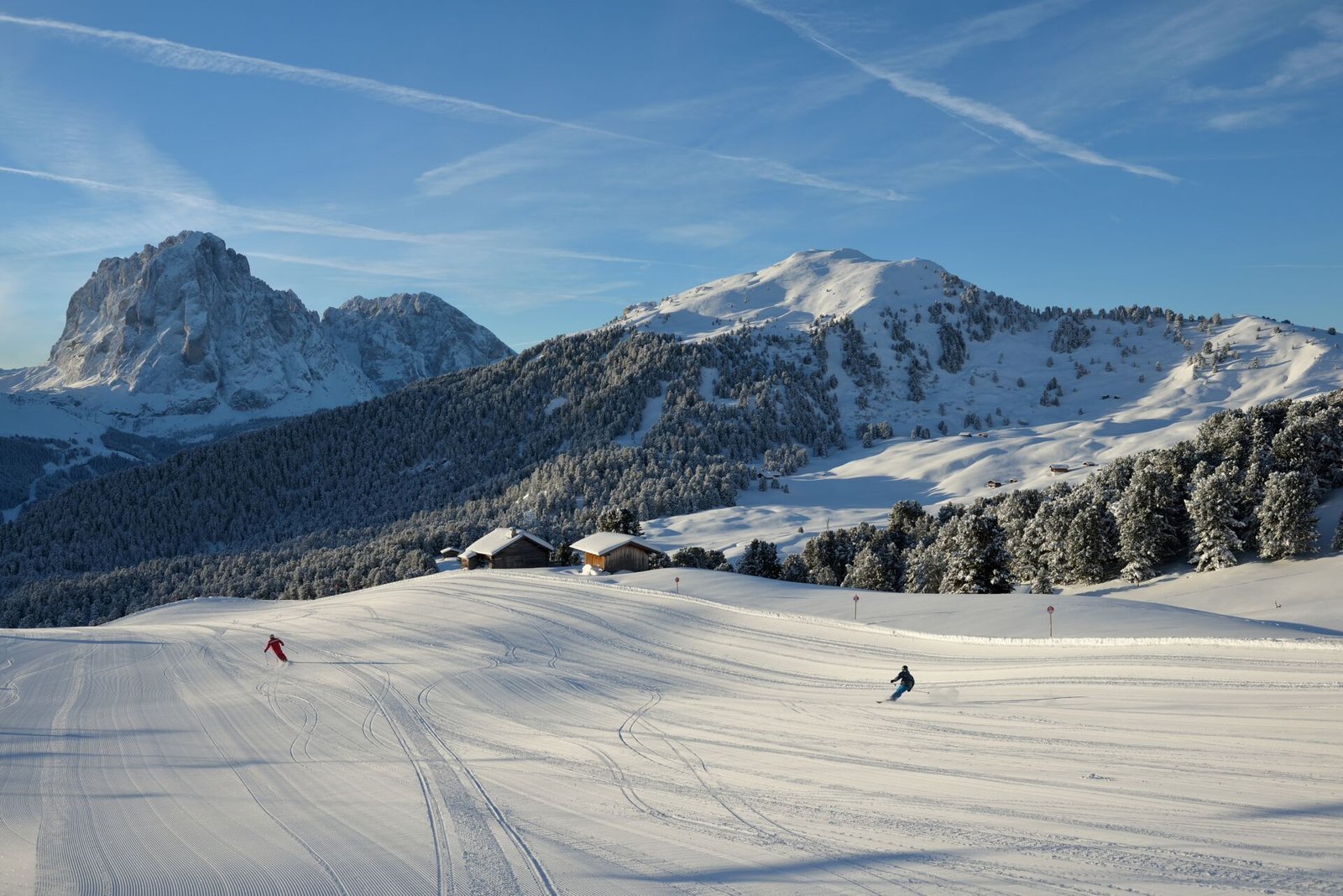
A slope on the Seceda, Val Gardena. Photo: Wolfgang Moroder / Wikimedia Commons (CC BY-SA 3.0)
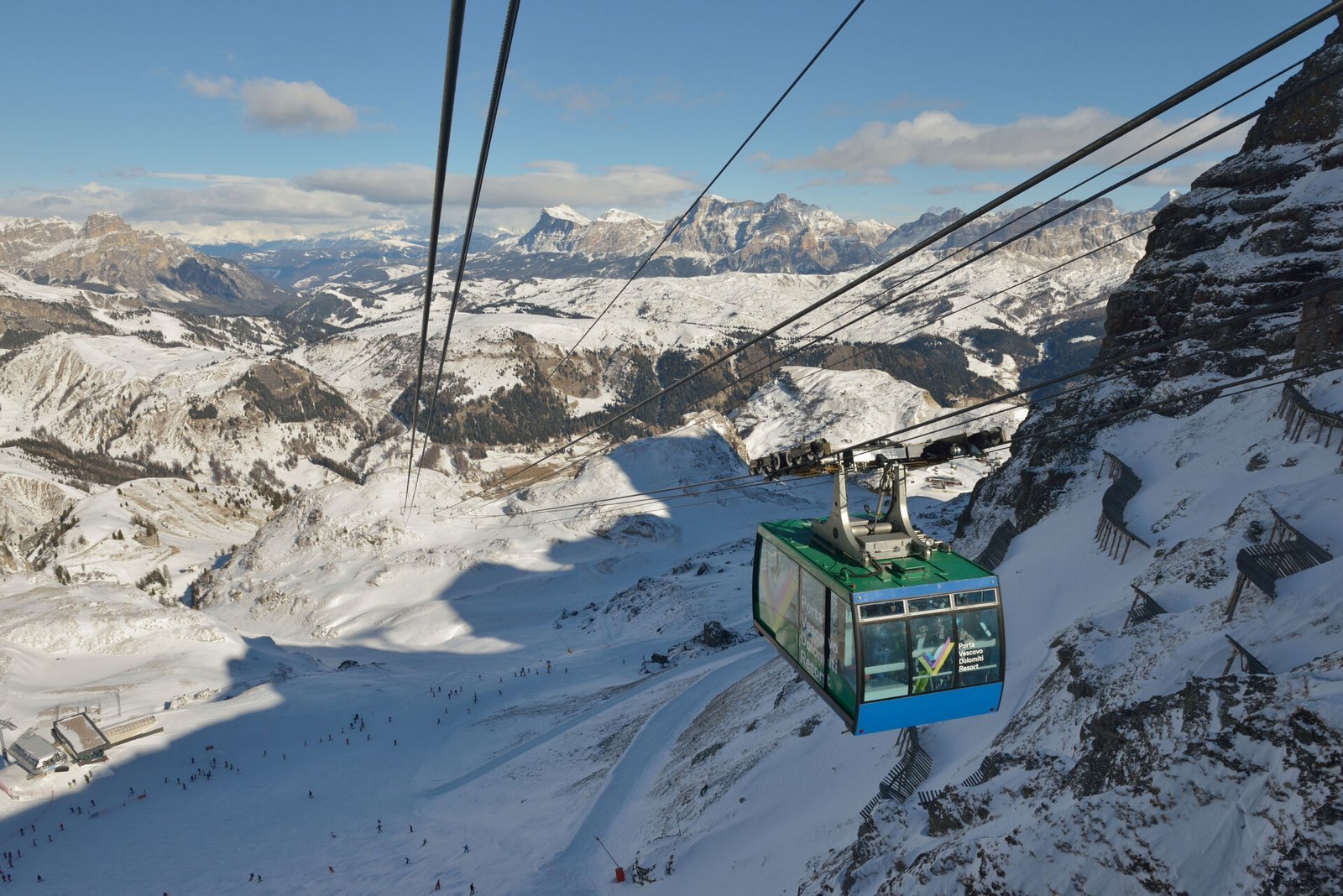
The trump card of the Dolomites is Dolomiti Superski, a single pass connecting 12 ski areas and some 1,200 kilometres of pistes. The essential outing is the Sella Ronda, which circles the Sella massif in a full day through Val Gardena, Alta Badia, Arabba and Val di Fassa without taking off your skis. It runs in both directions, orange clockwise and green anticlockwise, and each has a personality of its own.
Arabba, one of the stops on the Sella Ronda. Photo: Wolfgang Moroder / Wikimedia Commons (CC BY-SA 3.0)
VIII. THE PYRENEES
Baqueira and Andorra: the Iberian secret
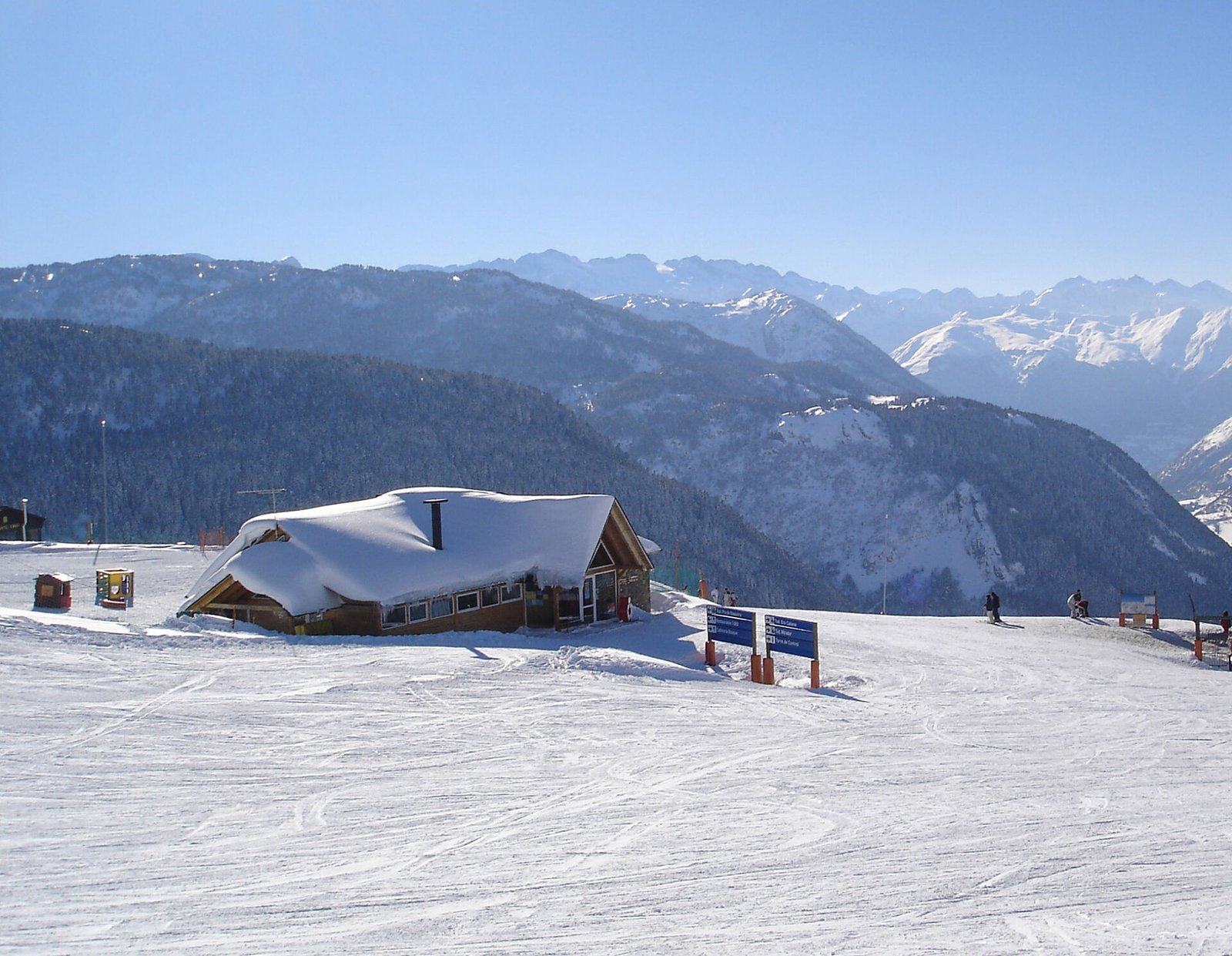
Baqueira, in the Val d’Aran. Photo: Faras / Wikimedia Commons (CC BY-SA 4.0)
The Pyrenees rarely appear on lists of luxury skiing, which may be exactly why they deserve the trip. Baqueira Beret, in the Val d’Aran in Catalonia, is the favourite resort of the Spanish royal family and of the elite of Madrid and Barcelona. The snow is reliable thanks to the Atlantic influence, the queues are short, and at night conversation turns to wine, jamón and long tables that end late, as Spanish tradition demands. The Hotel Val de Neu, at the foot of the slopes, is the classic choice.
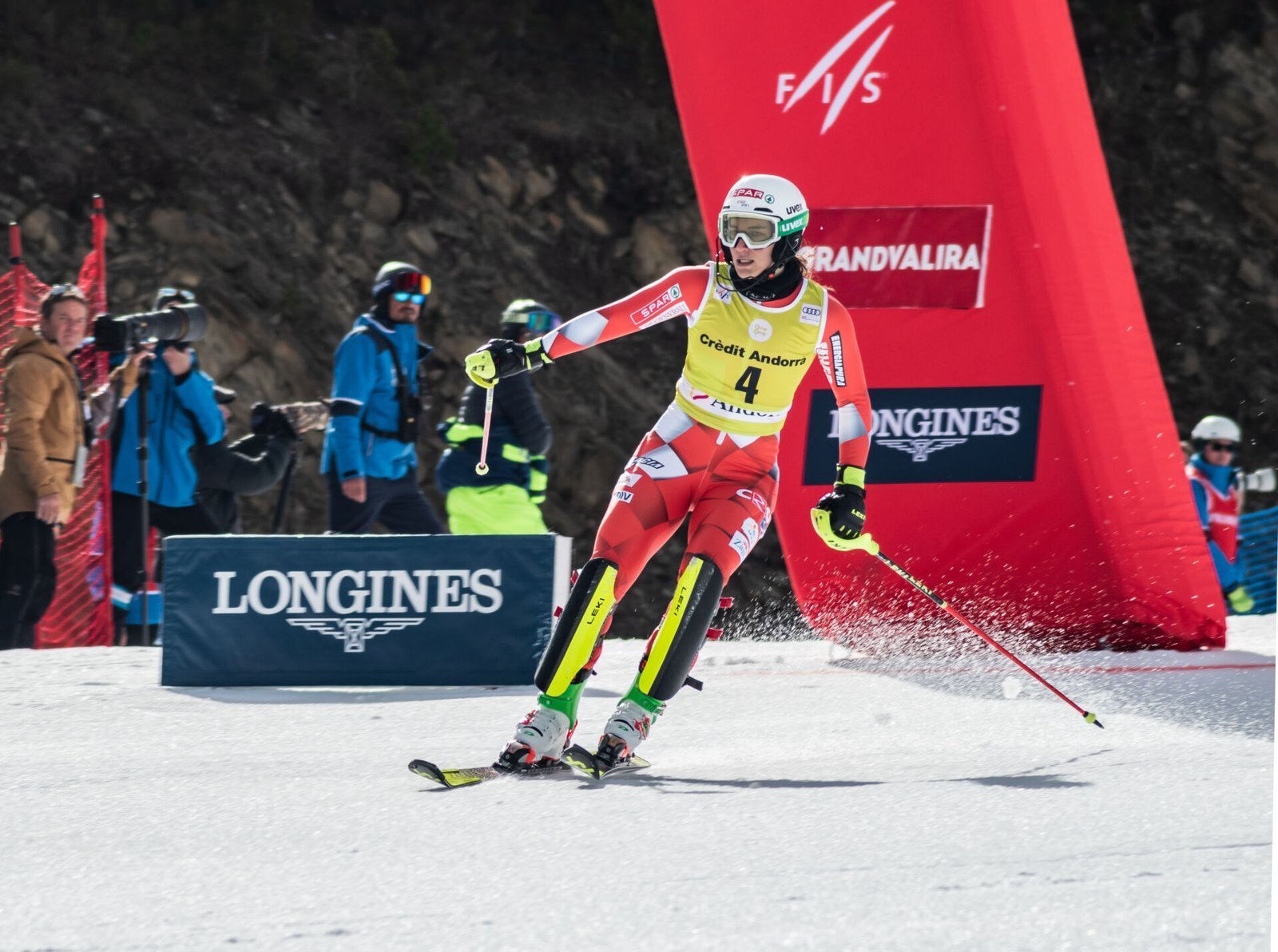
Andorra has Grandvalira, the largest ski area in the Pyrenees, which hosted the alpine skiing World Cup Finals in 2023, in Soldeu. Right there, the Sport Hotel Hermitage pairs direct access to the slopes with one of the largest mountain spas in the region. It is the most accessible option in this guide and the easiest for families, without giving up comfort.
Grandvalira, host of the 2023 World Cup Finals. Photo: Krzysztof Golik / Wikimedia Commons (CC BY-SA 4.0)
IX. THE CALENDAR
The dates that shape the winter
Early December: the big resorts and most of the new hotels open
18 to 24 January 2027: Hahnenkamm week, Kitzbühel
22 to 24 January 2027: Snow Polo World Cup, on the frozen lake of St. Moritz
Sundays in February: White Turf, horse racing on ice in St. Moritz
Late March: Xtreme Verbier, the freeride world final
April: the end of the season, with good snow still at altitude, from Zermatt to Val Thorens
X. THE WARDROBE
Dressing for the mountain
On snow, elegance begins with technique. The houses born in the Alps remain the most respected: Moncler, founded in 1952 in Monestier-de-Clermont, near Grenoble, which began with sleeping bags and quilted clothing for expeditions before becoming a fashion icon; Fusalp, created the same year in Annecy, with close-fitting cuts and a French heritage; and Bogner, founded in Munich in 1932, which has dressed generations of skiers and Olympic teams. Off the slopes, the rule of the more discreet resorts applies everywhere: long coats, snow boots with a good sole and no logo that is too large.
XI. BEFORE YOU GO
What to know when planning
Getting there: Geneva is the gateway to Courchevel, Chamonix and Verbier; Zurich to St. Moritz and Lech; Geneva or Zurich to Zermatt; Geneva or Bern to Gstaad; Innsbruck, Munich or Salzburg to Kitzbühel; Venice and Innsbruck to the Dolomites; Barcelona and Toulouse to the Pyrenees.
The final stretch: transfers by car take two to four hours. Courchevel and St. Moritz receive helicopters and private aircraft at their own altiports and airfields.
When to book: Christmas, New Year and the European February school holidays sell out months ahead. For those dates, book in October.
The best window: the weeks of January after New Year, with firm snow and empty pistes, and March, with long days and sun for lunch outdoors.
For beginners: every resort in this guide has schools offering private lessons in English. Book the instructor with the hotel, especially in high season.
Insurance: check that your travel insurance covers winter sports and mountain rescue. Many basic policies do not.
In the end, every resort in this guide sells the same thing, wrapped differently. A palace in St. Moritz, a refuge in the Dolomites, a long table in Baqueira. What one takes home, however, is always the same: the silence of the first run, the piste still untouched, and the rare feeling that, for a few minutes, the whole mountain was yours alone.
From St Andrews and Royal County Down to Cabot Saint Lucia, Hirono and Tara Iti, eleven courses that justify the journey, with how to get a tee time and where to sleep afterwards.
From the Hôtel de Paris in Monte-Carlo to Raffles in Singapore and a Mandarin Oriental in Bangkok marking 150 years, the grand hotels that have stayed relevant for more than a hundred years without surrendering their identity.