From Marrakech to Fès, Peter Ydeen’s intimate Morocco
In Waiting for Palms, the American street photographer Peter Ydeen crosses central Morocco looking not for monuments but for the pauses between them. A route from Marrakech to Fès, told by someone who looks slowly.
PHOTO: PETER YDEEN, FROM THE SERIES WAITING FOR PALMS / Photos: Peter Ydeen, from the series Waiting for Palms
TRAVEL · MOROCCO
Some journeys are built around monuments; others are built around pauses. Waiting for Palms, a series by the American street photographer Peter Ydeen, belongs to the second kind: a route through central Morocco that ignores the obvious map of tourism and looks for the intervals instead.
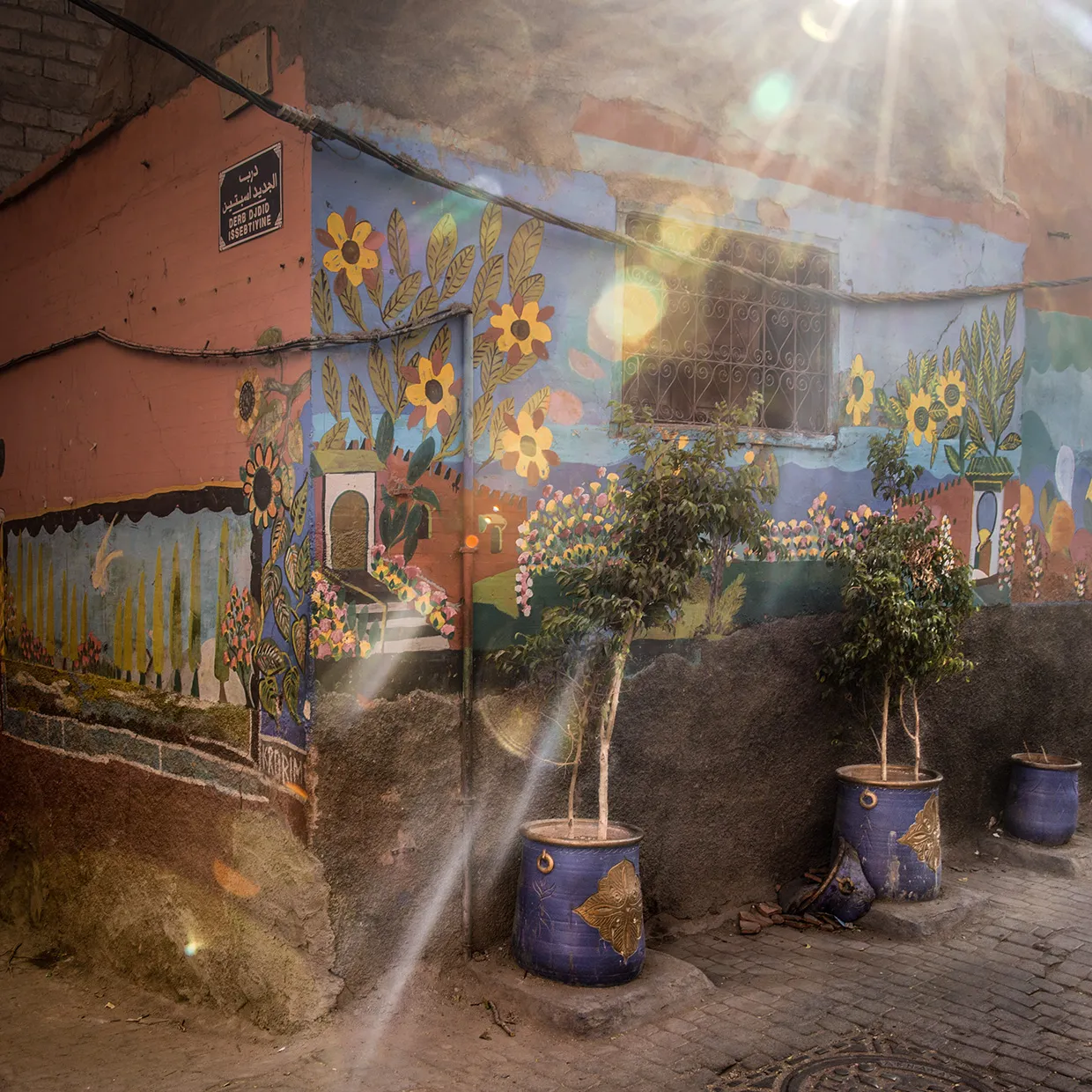
In Marrakech the first challenge was domestic: finding the dar, the traditional courtyard house where he would stay. The walled medina proved a maze of lanes and blind turns, the kind where, even after days, you still pay a passer-by to lead you home. Scooters cut through stone corridors no car could enter, and the gendarmes kept an almost symbolic presence, as if the city looked after itself.
MARRAKECH, WHERE LIGHT SLIPS THROUGH THE GAPS AND RETREATS A FEW METRES ON. PHOTO: PETER YDEEN, WAITING FOR PALMS
Around Jemaa el-Fnaa, the great market square, the tourist shops spread in concentric rings without the theatrical excess you might expect. There, facing a group of gendarmes standing still while scooters, carts and pedestrians flowed around them, Ydeen made one of the few tilted frames in the series: a kind of Brownian motion in which everyone moved in a different direction yet seemed bound by a shared rule.
IN THE MEDINA, THE STONE LANES BELONG TO THOSE ON FOOT OR ON HOOF. PHOTO: PETER YDEEN, WAITING FOR PALMS
Towards the ocean
Leaving for Essaouira, the instruction to the driver was clear: no goats in trees for the perfect shot, no stops at argan-oil cooperatives staged for coach tours. The interest lay in the cafés where people actually live, and in squares where little happens and therefore much can be seen. In Sidi Mokhtar, a near-empty café with chipped cups and a television on low framed a car loaded to the roof crossing the square. In Essaouira, near the ramparts, a labourer slept in the bed of a truck, the only shade available.
Over the Atlas, to the houses on pedestals
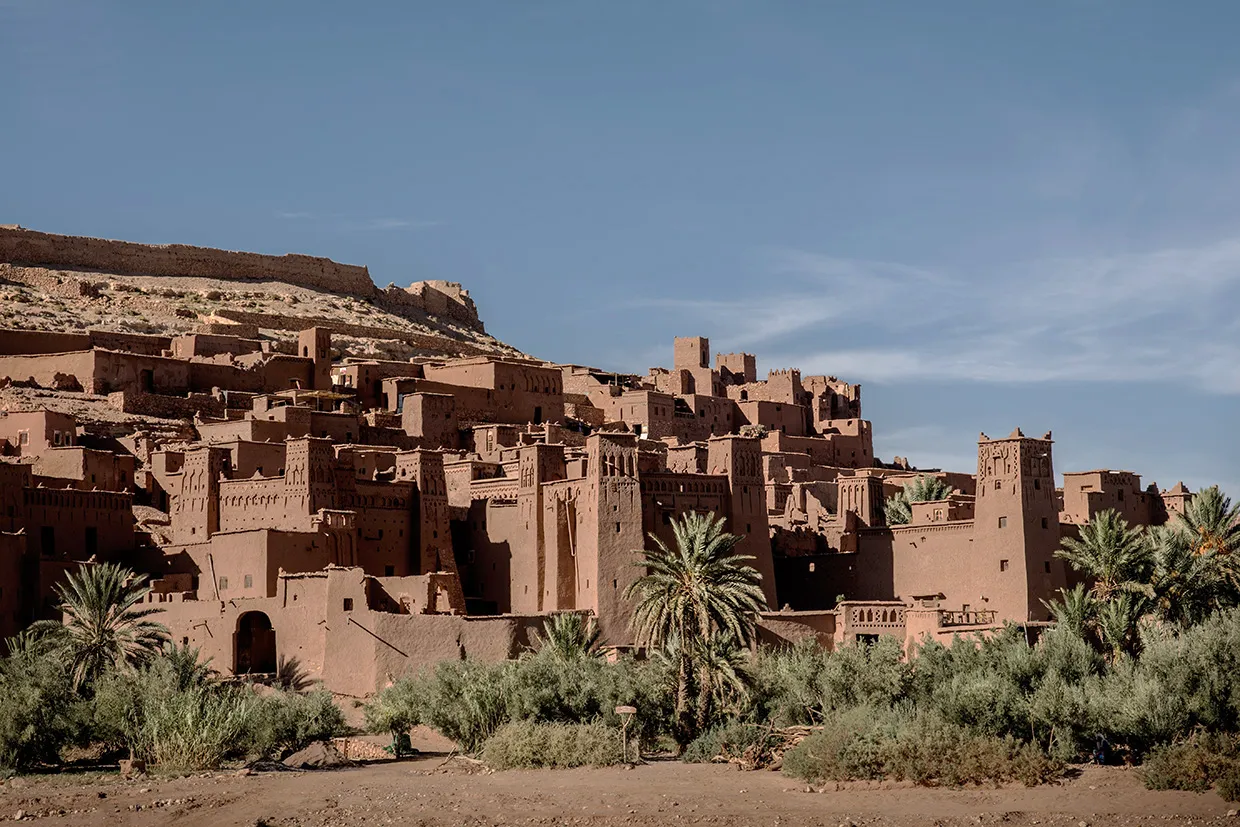
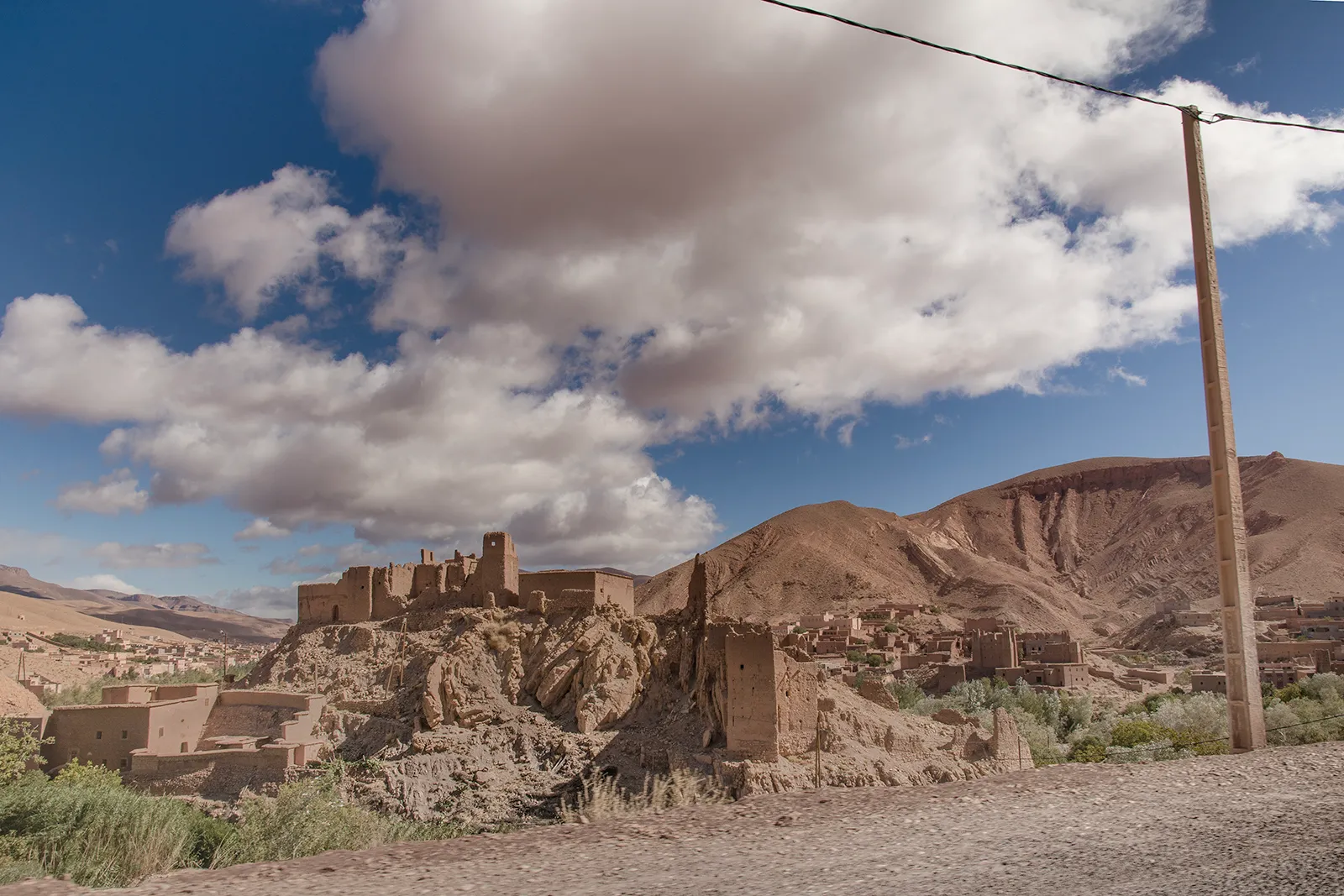
Back inland, the road climbs the High Atlas and the Tizi n’Tichka pass. Green gives way to bare rock, scrub and junipers clinging to stone. At Ait Benhaddou, the old earthen ksar beside a dry riverbed, the surprise was the silence: few visitors, far more wall than voices.
AIT BENHADDOU, THE OLD EARTHEN KSAR ON THE ROAD THROUGH THE ATLAS. PHOTO: PETER YDEEN, WAITING FOR PALMS
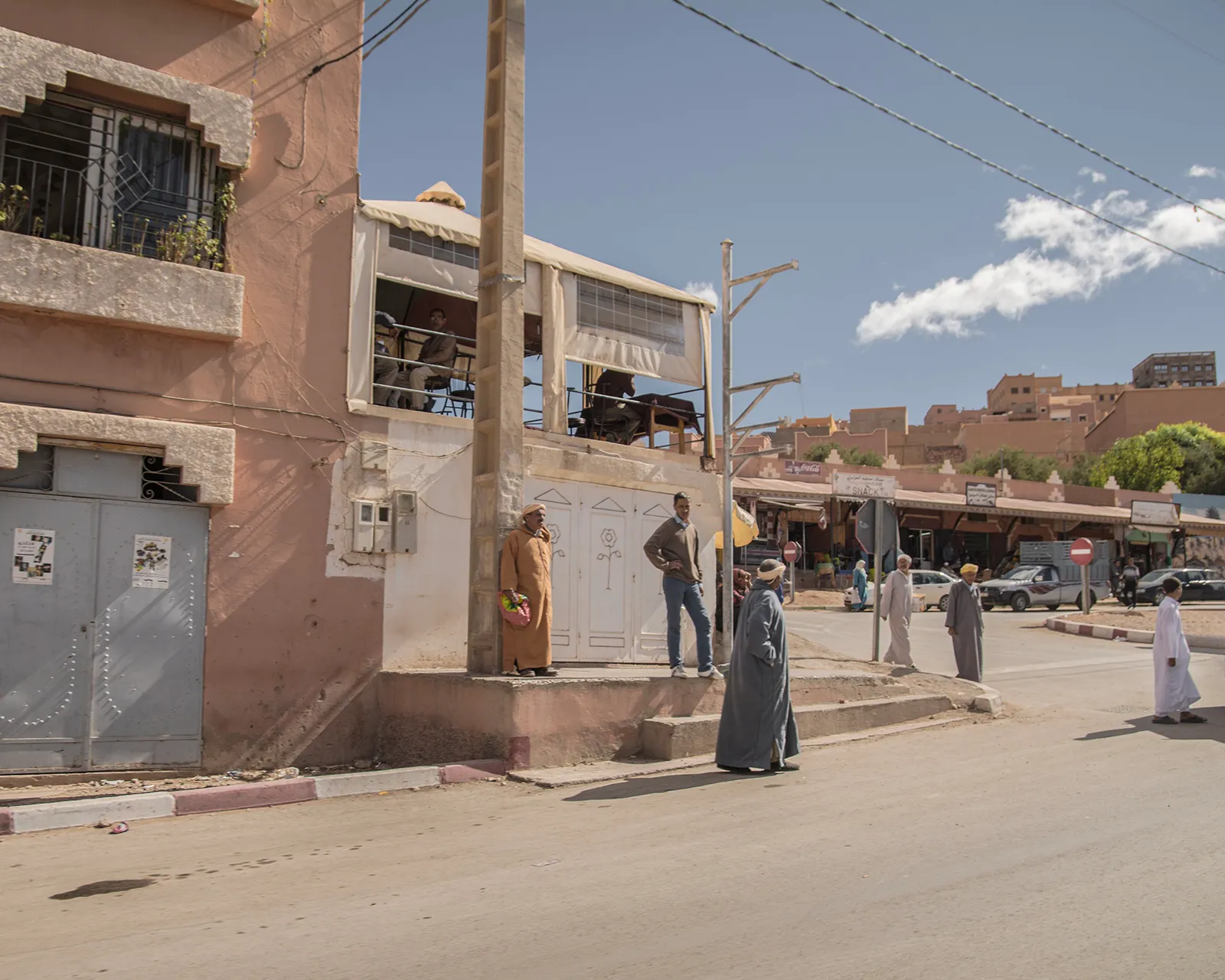
In the Dadès Valley, houses and kasbahs appear on the slopes as though set on pedestals. Simple dwellings, seen together, become monumental. A blue truck parked in front of a modest house became one of the strongest pictures of the stretch: nothing remarkable, and for that very reason strangely grand. In Boumalne Dadès, a crossroads town, people talking on corners and cafés with tables on the pavement recalled squares anywhere else, only with other clothes, other materials, other colours.
IN THE DADÈS VALLEY, HOUSES SEEM TO REST ON PEDESTALS OF STONE. PHOTO: PETER YDEEN, WAITING FOR PALMSBOUMALNE DADÈS AND THE MUTED COLOURS OF THE SOUTH. PHOTO: PETER YDEEN, WAITING FOR PALMS
The Road of a Thousand Kasbahs
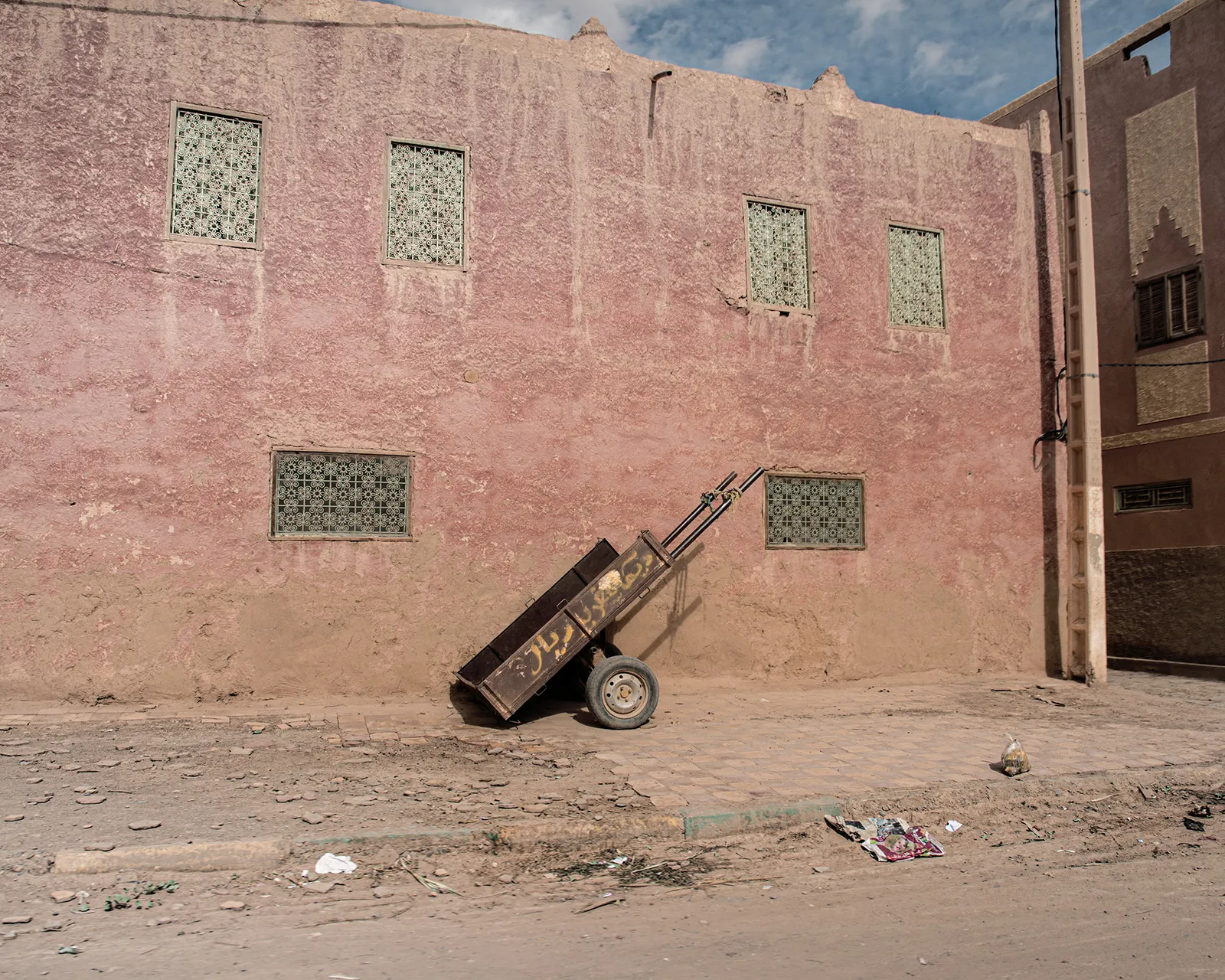
From Boumalne the route follows the so-called Road of a Thousand Kasbahs, through Tinghir, an oasis town above its palm grove, and Erfoud, gateway to the Tafilalet, to Rissani, the old caravan market. The land opens into low red and ochre hills. The villages have magnificent but softened colours, as if the light had polished them for decades. In Erfoud the walk had no destination: a motorcyclist on a dusty street, a wheelbarrow left between wall and kerb, a workshop with hanging tools and oil on the floor.
ERFOUD, WHERE EVEN A WHEELBARROW SEEMS TO BE WAITING FOR ITS PICTURE. PHOTO: PETER YDEEN, WAITING FOR PALMS
It was in Rissani that the series found its name. On one street, a woman dressed entirely in black, only her eyes visible. Beside her, on a wall, a mural of an oasis with palm trees. Inner world and painted dream in the same space, separated by a few centimetres of plaster. In Morocco, photographing people without asking is frowned upon, and many pictures are born in a single instant, where respect meets speed.
Each image is a negotiation between my vision and the lives of the people I met.
Peter Ydeen, to Domus
From the desert to Fès
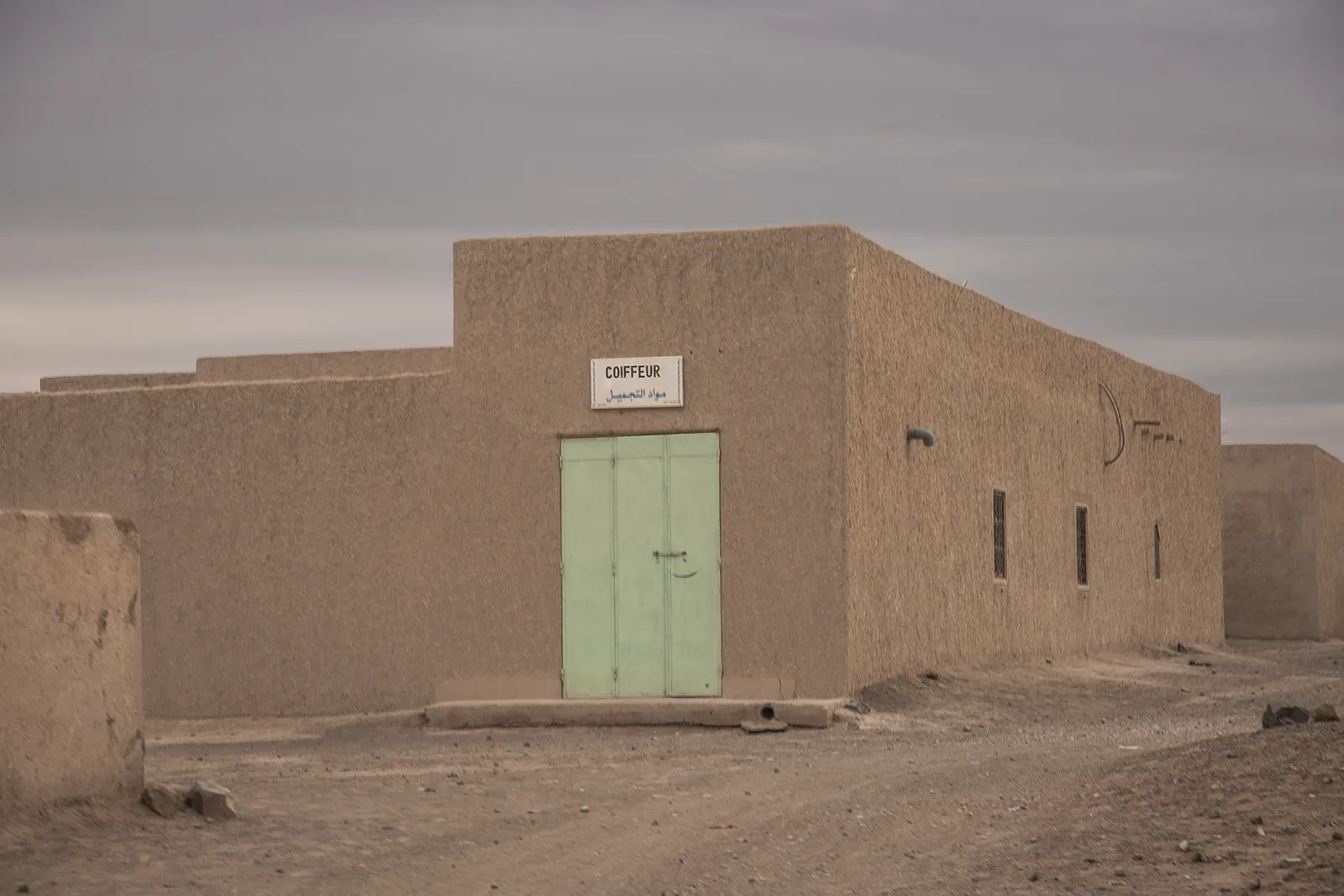
Merzouga is where the dunes of Erg Chebbi become easy to reach, with their camel rides and sunset dinners. Some images were made a few metres from those routes, where the visitors had already passed. Outside town, a tiny barber shop, little more than a room with a mirror and a chair, summed up the life that carries on at the edge of the scenery.
A BARBER SHOP ON THE EDGE OF THE TOURIST ROUTES. PHOTO: PETER YDEEN, WAITING FOR PALMS
Heading north through the Middle Atlas, the villages thin out. In one, the streets were completely empty except for a donkey standing at the entrance like a discreet sentry. In Fès, the picture grows complex again: the modern city around, the medina at the centre, riads hidden behind anonymous doors. The much-photographed tanneries carry on as if the cameras did not exist. On one street, the only bright red in a corner of shade was a sneaker as worn as the walls behind it.
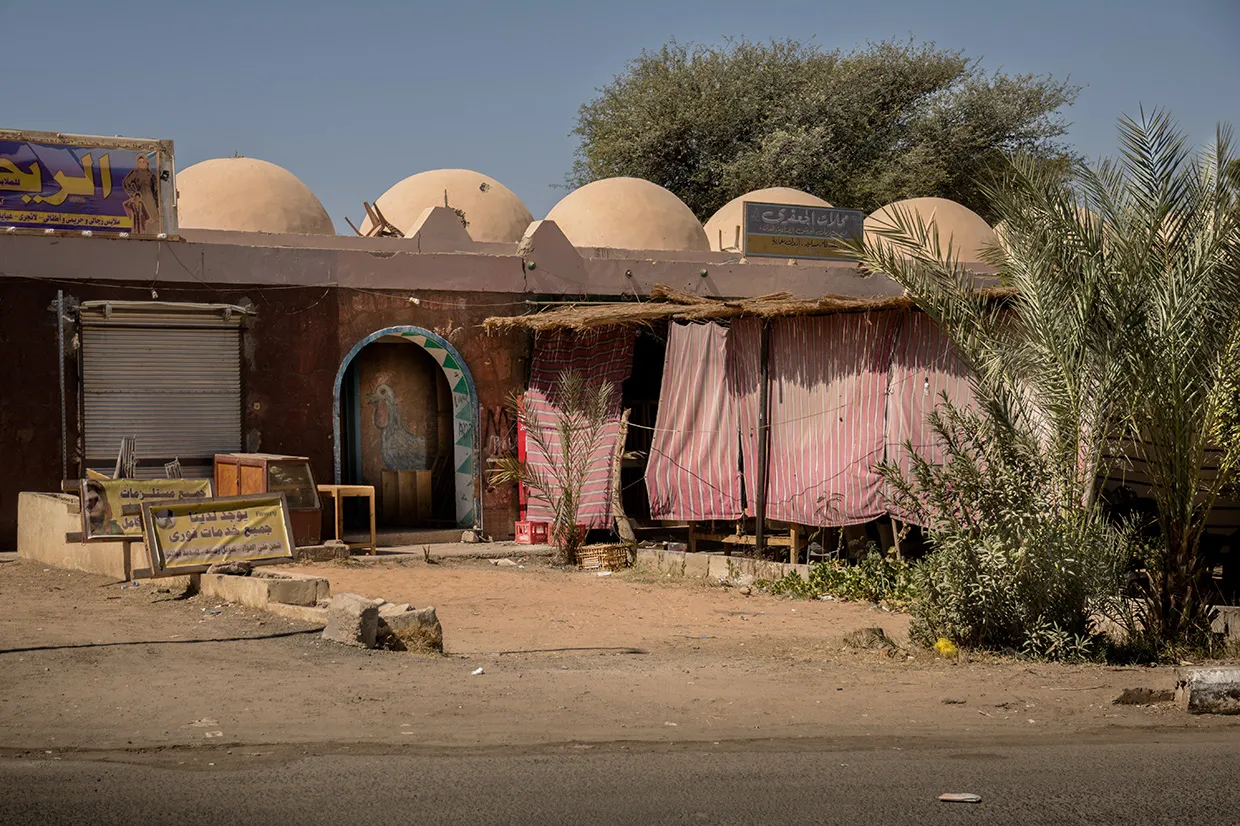
Ydeen’s Morocco is built not around monuments but around pauses: an empty café, a blue truck, a woman beside painted palms. Anyone retracing the route may find the same places. The pauses, each traveller will have to wait for on their own.
Details and further reading: Waiting for Palms, by Peter Ydeen. Begun in 2016 and 2017 across Morocco and Egypt, and ongoing. Exhibited at Galleria Bruno Lisi (AOC F58), Via Flaminia 58, Rome, 1 to 19 December 2025, curated by Camilla Boemio. Route: Marrakech, Sidi Mokhtar, Essaouira, Ait Benhaddou, Dadès Valley, Tinghir, Erfoud, Rissani, Merzouga and Fès.
From St Andrews and Royal County Down to Cabot Saint Lucia, Hirono and Tara Iti, eleven courses that justify the journey, with how to get a tee time and where to sleep afterwards.
From the Hôtel de Paris in Monte-Carlo to Raffles in Singapore and a Mandarin Oriental in Bangkok marking 150 years, the grand hotels that have stayed relevant for more than a hundred years without surrendering their identity.