Hearst Castle: the rooms, the pools and Julia Morgan’s remarkable task
Above California’s Pacific coast, William Randolph Hearst’s collection became an architectural project that Julia Morgan shaped over twenty-eight years.
The climb from San Simeon changes the scale of Hearst Castle. The coast drops away, the Pacific broadens and a house conceived as a ranch retreat becomes a composition of towers, terraces and guest buildings on the hill Hearst called La Cuesta Encantada.
Gabriel Silveirado’s visit followed the rooms and pools through that composition. What makes the place memorable is not simply the quantity of art or the size of the property. It is the way fragments collected from other centuries were given new architectural settings, with Julia Morgan doing the difficult work of making the accumulation inhabit a house.
Twenty-eight years of decisions
Construction began in 1919 and continued until 1947 without bringing every ambition to completion. The complex contains 165 rooms across the principal house and guest buildings. Changes were not exceptions to the process: they were part of it, as Hearst’s purchases and intentions required Morgan to keep revising the plan.
Morgan was the first woman admitted to the architecture programme at Paris’s École des Beaux-Arts and the first woman licensed as an architect in California. Her wider career extended to hundreds of buildings. At San Simeon, correspondence and repeated journeys made a demanding collaboration possible over decades.
The surviving letters reveal practical decisions behind the theatrical result. A ceiling acquired overseas might determine the dimensions of a room. A new object could alter an arrangement that had already been drawn. Morgan’s contribution was structural, spatial and organisational, not merely decorative.
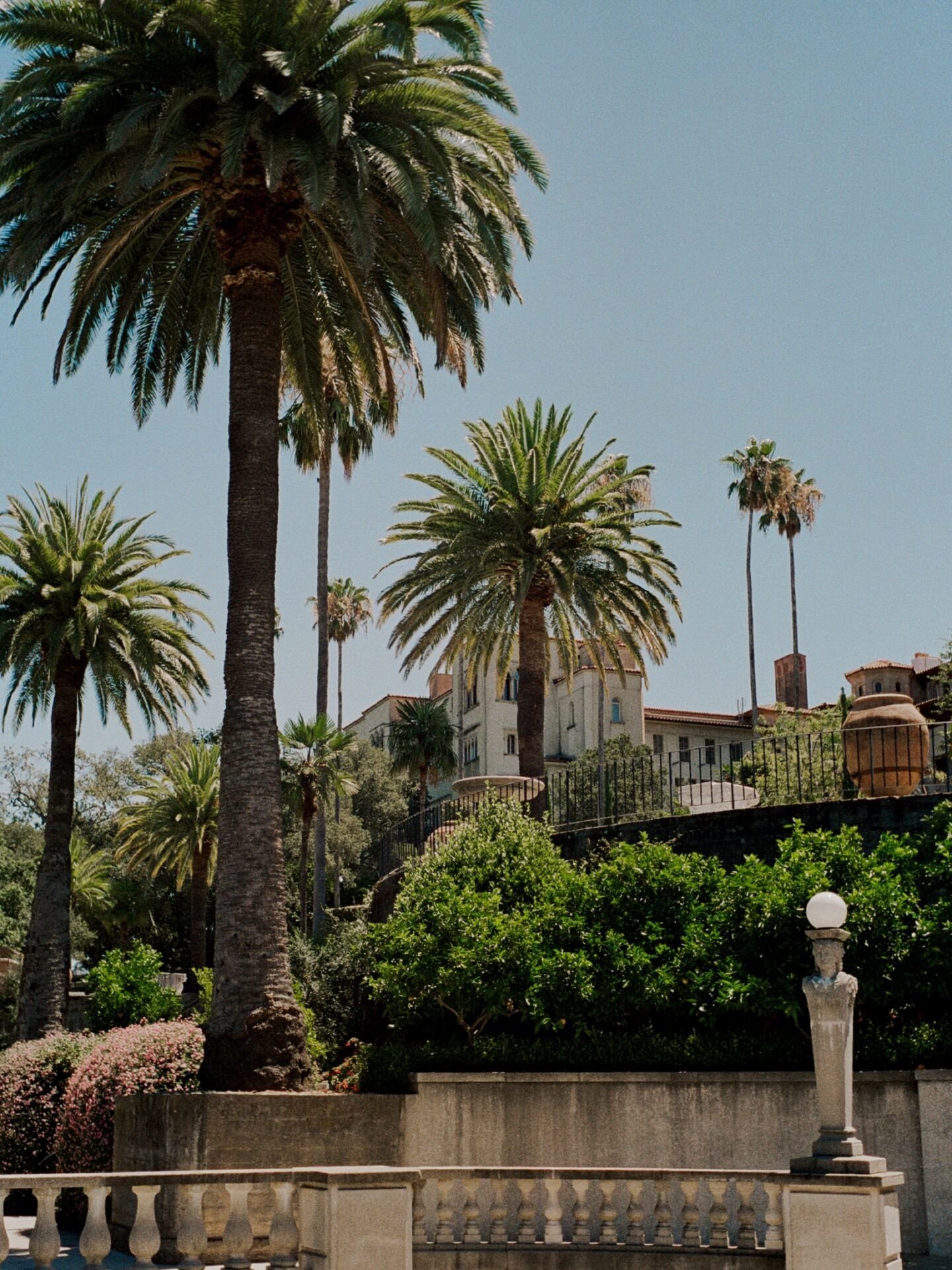
HEARST CASTLE. Casa Grande seen between the palms. Photo: @austiinjohn.
A house made around a collection
Hearst acquired European architectural fragments, furniture, sculpture and works of art through dealers and intermediaries. Italian and Spanish ceilings from earlier centuries became part of a twentieth-century Californian house. The collection supplied material; Morgan supplied the relationships that allowed it to be lived among.
The towers of Casa Grande draw on the church of Santa María la Mayor in Ronda. Their religious appearance does not mean that they function as the towers of a chapel. The building repeatedly turns an architectural reference towards another use.
In the Refectory, choir stalls from La Seu d’Urgell and banners associated with Siena’s Palio surround the dining table. Mustard, ketchup and paper napkins introduced a deliberately ordinary counterpoint. Hearst’s idea of ranch life could therefore coexist with furnishings whose earlier settings were anything but domestic.
The social machinery
The guest list linked Hollywood, politics and public life. Charlie Chaplin, Cary Grant, Clark Gable and Winston Churchill were among the visitors associated with the estate. Arrival, meals, games and film screenings formed an organised sequence, while Hearst continued to manage his media interests.
A private cinema gave the evening another destination after dinner. Telephones connected the retreat with the outside business world. The house was neither a purely private refuge nor a museum at the time: it was a working setting for a powerful host and the people he gathered around him.
The former animal collection left another trace. Zebras can still be seen grazing on the surrounding property, descendants of the estate’s zoo. Their presence beside a Californian road offers one of the most unexpected continuities with Hearst’s original ambitions.
The two pools
The Neptune Pool developed through several versions before reaching its familiar scale. Colonnades, marble and sculpture turn an outdoor swimming pool into a monumental setting, with the ocean beyond supplying a distance no painted backdrop could reproduce.
Its restoration addressed the engineering beneath the image, including leaks and the systems supporting a basin holding roughly 1.3 million litres. The result is impressive partly because the theatrical surface depends on less visible technical work.
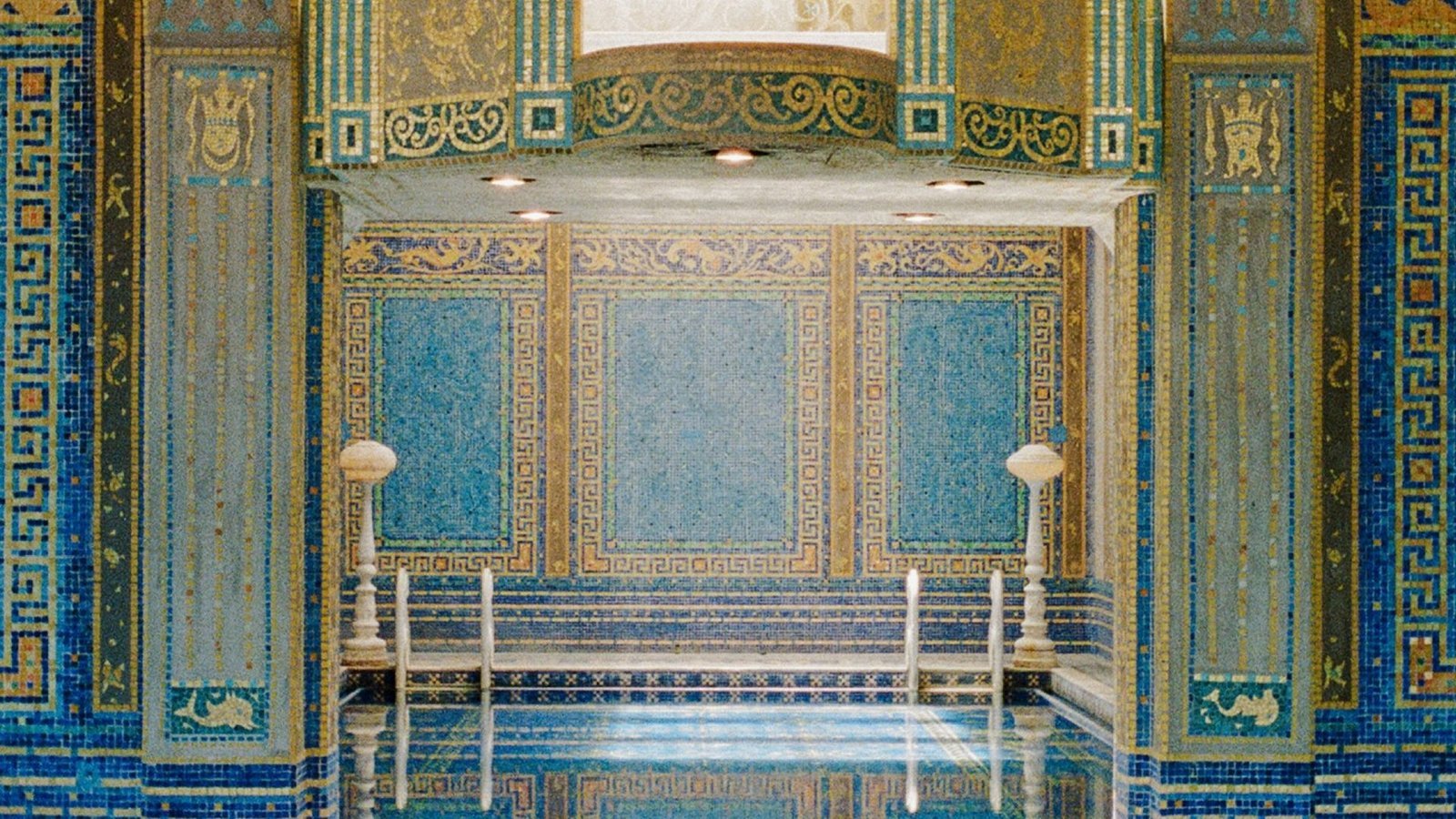
The Roman Pool offers a different experience indoors. Venetian glass mosaics, including gold-coloured elements, cover the surfaces. Camille Solon’s designs connect the water with walls, arches and reflected light. Sculpture and lamps complete a room whose effect changes as the eye moves between the pool and its enclosure.
Neither pool is included as an ordinary swimming facility for tour visitors. Occasional fundraising events have separate conditions. A castle admission should not be mistaken for permission to enter the water.
The house after Hearst
Citizen Kane made the association between Hearst and a fictional estate, Xanadu, part of cinema history. The film is not a documentary guide to San Simeon, and its force should not replace attention to the actual rooms or to Morgan’s work.
Hearst left the hill in 1947 because of his health and died in 1951. The property was donated to the State of California in 1957 and opened to visitors the following year. A setting once organised around invitations became a public monument with conservation needs of its own.
Planning the visit
Visits begin at the visitor centre on Hearst Castle Road, with a shuttle taking guests up the hill. Visitors do not drive their own cars to the house. The Grand Rooms, Upstairs Suites, Cottages & Kitchen and Julia Morgan programmes offer different routes through the estate; availability and access conditions should be checked with the official tour operator.
The first visit is best approached as a choice of subjects rather than an attempt to see every room at once. The principal social spaces explain how the house received people. Other tours show more of its domestic arrangements or Morgan’s architectural decisions.
Hearst Castle does not operate as a hotel. Nearby coastal towns, including Cambria, provide bases for the visit. Driving plans along Highway 1 require a current check of road conditions rather than an assumption that every coastal section is open.
The lasting impression is of a project with two authors of different kinds. Hearst supplied the appetite and the collection. Morgan made the house possible. Looking closely at the rooms restores the second part of that story to its proper scale.
Mike White's fourth season unfolds during the Cannes Film Festival, between a castle in Saint-Tropez and the Croisette. The subject this time is fame, and the series is due on screen in 2027.
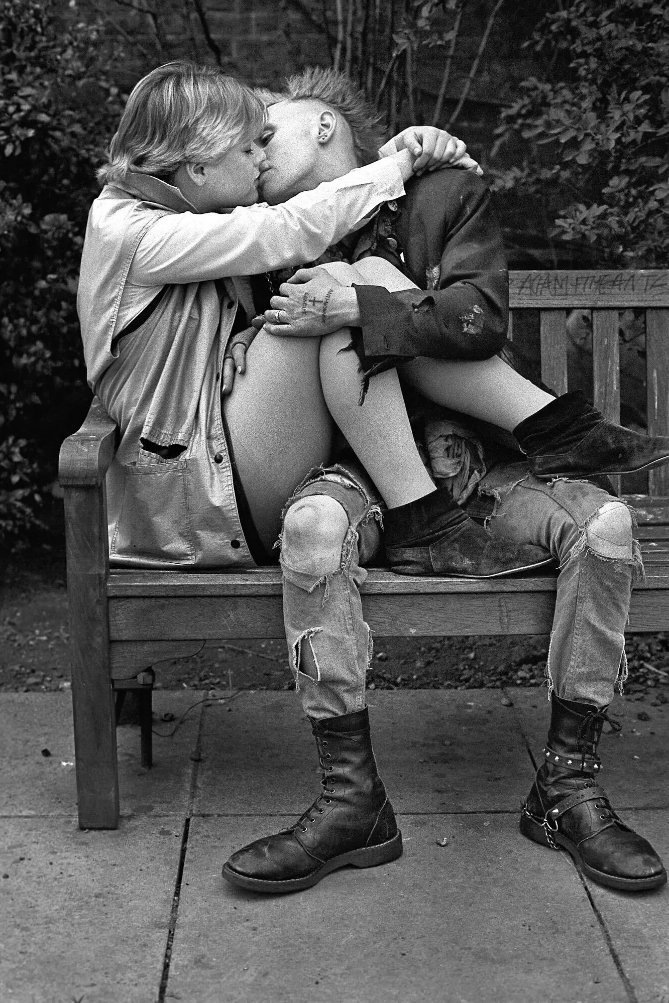
Derek Ridgers' Hello, I Love You gathers kisses caught by flash on London nights in the early 1980s. Seen today, the pictures record something more fragile than romance: a night that did not need to be documented to exist.
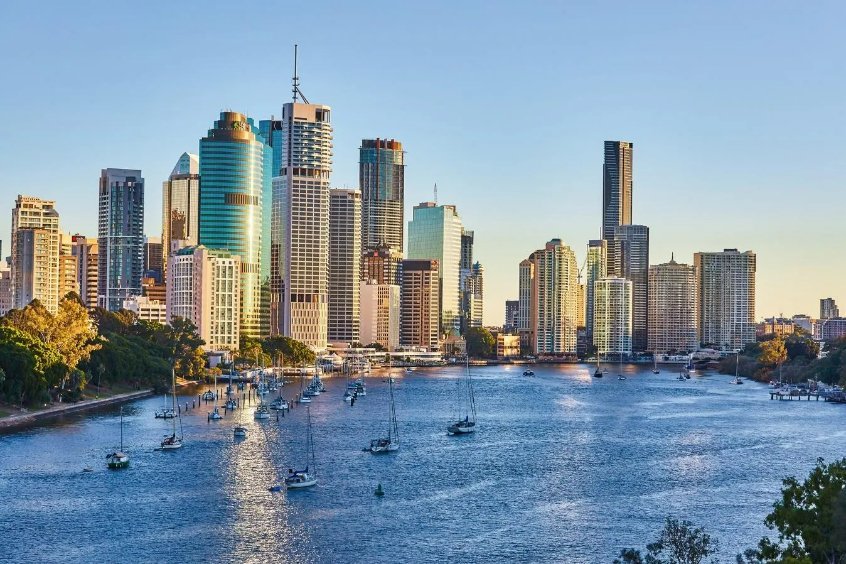
Brisbane leads a 50-city index of the best places to raise children, ahead of London and Auckland. The ranking reads less like a league table than a verdict on how cities choose to spend space, time and money.