Almost half a century after its first watch, Hermès is still building its legitimacy in fine watchmaking. Laurent Dordet and Philippe Delhotal on the patience behind the H08 and the prize-winning Le Temps Suspendu.
Some houses enter watchmaking asking permission; others arrive determined to rewrite the vocabulary. Hermès chose a rarer path: deliberate patience. At a recent dinner on the terrace of the maison’s boutique in the Miami Design District, a guest studied an image of the new H08 Skeleton on a green rubber strap and asked the question that follows any fashion-house watch into technical territory: do collectors really care about Hermès?
The doubt carries a financial subtext, but also one of identity. Buying a Hermès watch for 21,600 dollars means trusting a trajectory the market still sees as under construction, even though the house has been in the business for almost half a century.
Legitimacy takes time
Hours earlier, at an event at the Rubell Museum, devoted to contemporary art, Laurent Dordet, CEO of Hermès Horloger, had addressed the same tension with near-philosophical calm. “Legitimacy takes time,” he said, in a conversation moderated by Geoff Hess, global head of watches and senior vice president at Sotheby’s in New York. “When Hermès began with silk, in the 1940s, it took time. The same happened with watches. Since 1978, the ambition has been clear: to be as competent as our competitors in technique, but different in creativity, materials and lightness.”
THE H08 IN DEEP BLUE, ONE OF THE NEW ITERATIONS OF THE HOUSE’S SPORTS MODEL
From Vaucher to the H08
The technical turn came in 2006, when Hermès took a stake in the Swiss movement maker Vaucher, followed by the acquisition of dial and case suppliers. “For many years, the difference was expressed mainly in style: shapes, colours, materials,” Dordet recalled. “Then we began the technical part of our story, twenty years ago. From Vaucher to our first in-house movement took six years. Vertical integration now lets us create features that were impossible before.”
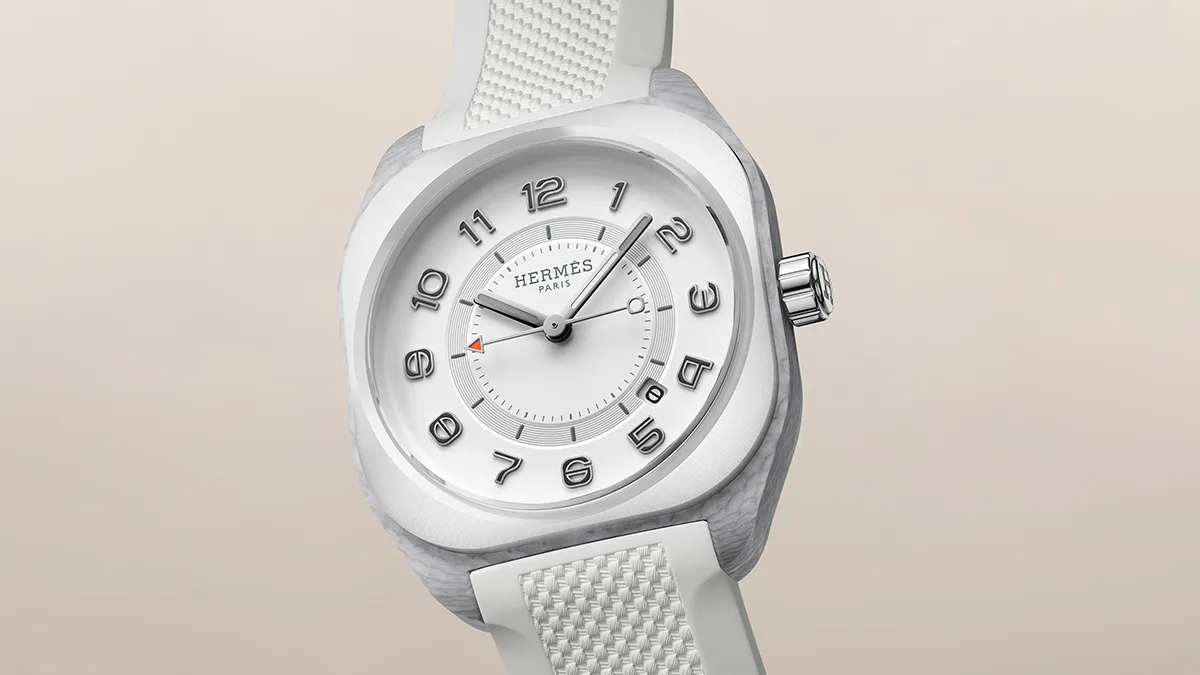
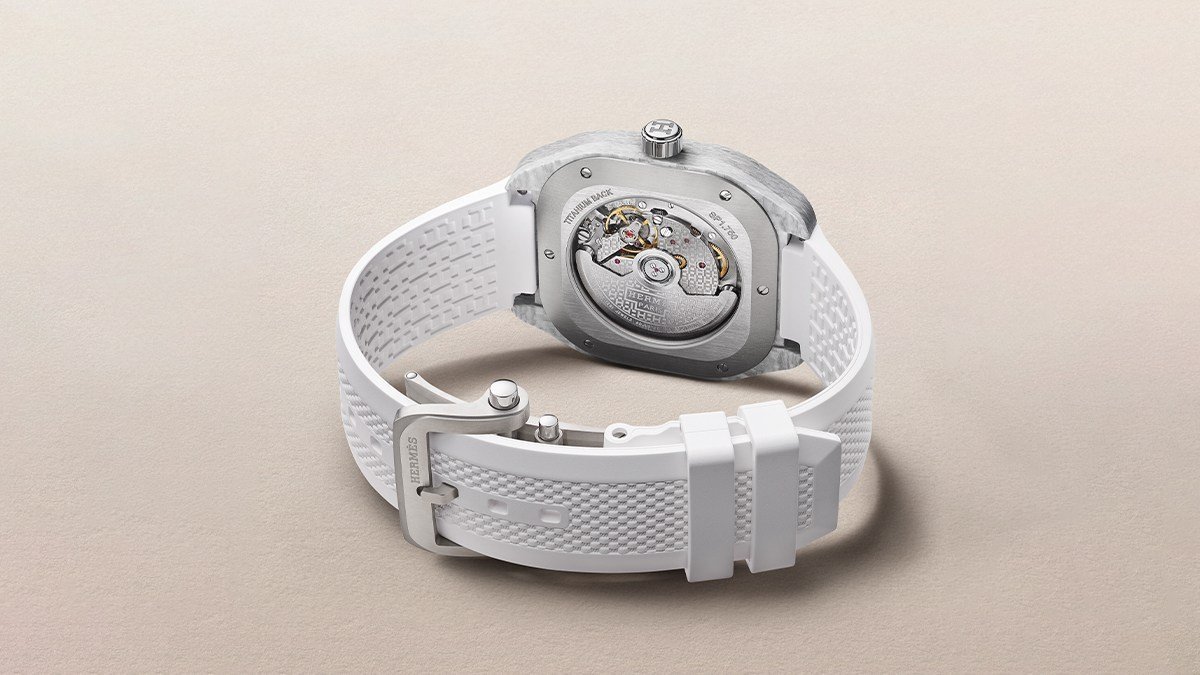
This is the ground on which the H08 operates as a continuing experiment. The new versions keep the signature cushion case, in fibreglass with a marbled surface and aluminium coating, now with satin-finished ceramic bezels in white or Malta blue, mirror-polished bevels and a white lacquered dial with rhodium-treated Arabic numerals. Inside beats the automatic H1837 calibre, developed entirely by the manufacture.
Launched in 2021, the H08 anchors the house’s men’s line and, according to Dordet, serves as a living platform for future experiments. “The question is: how do you make the model evolve without betraying its essence? The values are lightness and robustness. That is why the skeleton is open without being excessive. It has to be robust to be sporty, but it also needs design.”
Philippe Delhotal, creative director of Hermès Horloger, described the original brief. “We wanted a shape within the Hermès vocabulary, and it came naturally: a round inside a square. A watch like that needed lightness, different materials, titanium, carbon. Its identity is urban, very specific, far from the traditional watch.”
THE CASEBACK REVEALS THE H1837 CALIBRE, DEVELOPED ENTIRELY BY THE MANUFACTURE
Time as an ally
The same logic runs through the maison’s entire watchmaking repertoire, built deliberately outside the industry’s conventions. Hess, who wore an enamelled piece depicting a fantastical bird lifted by balloons, pointed to what sets the house apart: a commitment to play without sacrificing technical seriousness. “We talk so much about watches as important or magnificent objects that we forget: watches should also bring joy. Hermès has not forgotten. That is why so many pieces combine serious complications with a spirit of play. There is an orchestra on my wrist: hand-carved mother-of-pearl, animation, balloons turning. You are one of the few brands able to balance lightness and horological seriousness.”
That balance was recognised in 2011, when the jury of the Grand Prix d’Horlogerie de Genève, often called the Oscars of watchmaking, named the Arceau Le Temps Suspendu best men’s watch of the year. Delhotal describes it as a turning point, the moment Hermès fully embraced its interest in unconventional complications. “With Le Temps Suspendu, we wanted to play with time, but differently. Time is treated as an ally, elastic, not always precise. The idea was to suspend it. For a watchmaker, that is not a common bet. The exterior is simple and singular; inside, we could express the possibility of stopping time.”
A young house, almost 50 years on
Today Dordet, Delhotal and the 600 people working across the brand’s three Swiss sites (Vaucher, devoted to movements; a second facility for cases and dials; and a third for assembly, development and production) remain focused on turning the curiosity of clients like the Miami guest into conviction. “Many people still don’t know what we do, but when we have time to explain, perceptions change and people start to consider us,” Dordet said. “We are a young brand. Our first in-house movement dates from 2012. We are still on the way. And the ambition is that, every year, we have something new to add to our reputation.”
Back on the terrace in Miami, the guest’s question remains without a definitive answer, and perhaps that is the answer. Hermès does not ask the buyer of an H08 for haste. It asks what it once asked of those who bought its first silk scarves: time for the object to prove, year after year, what the house already knows about it.
The watch
Hermès H08: launched in 2021, the house’s men’s sports line
Case: cushion-shaped, fibreglass with marbled surface and aluminium coating; satin ceramic bezel in white or Malta blue
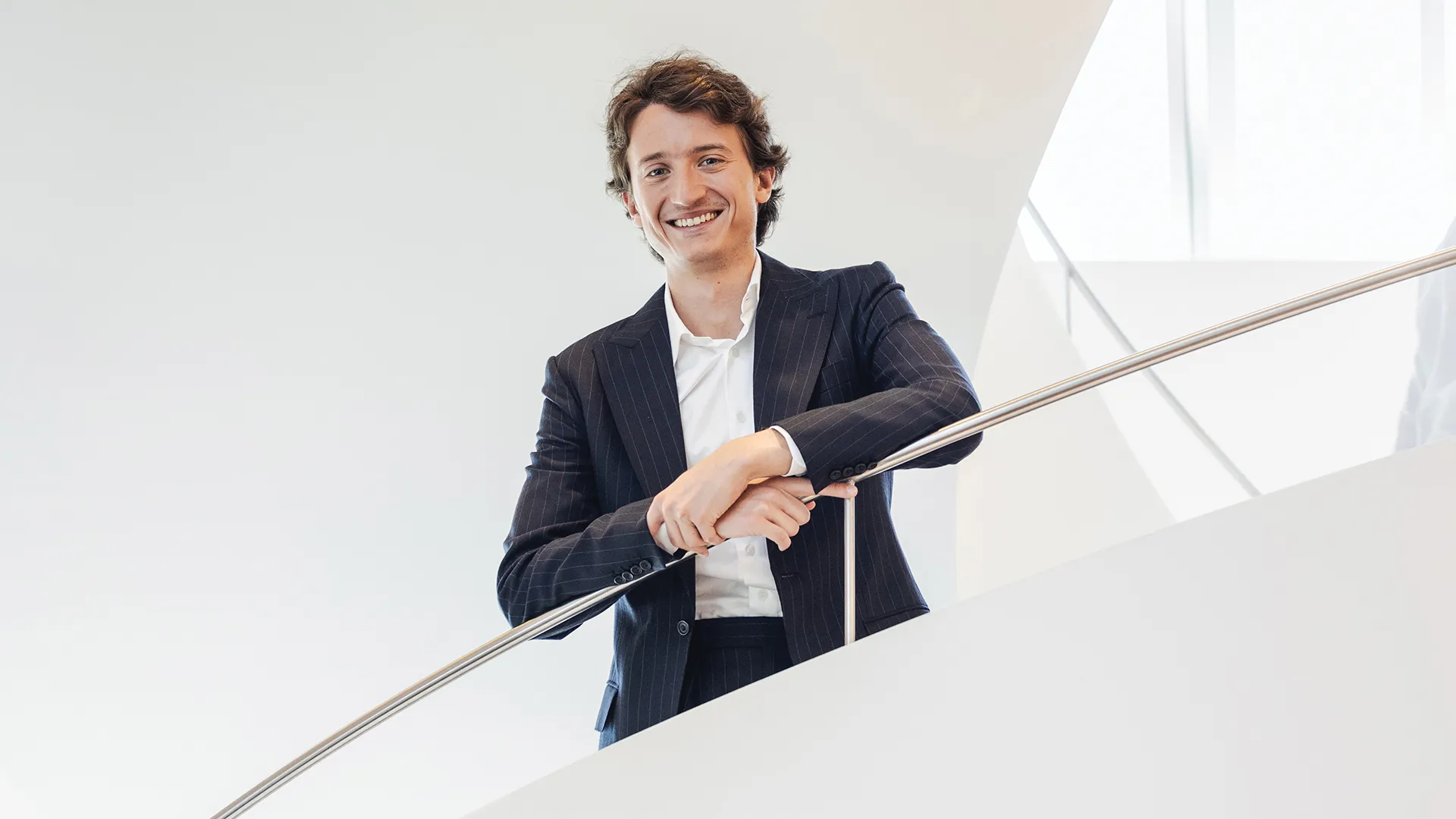
Bernard Arnault's youngest son traded volume for craft and made Louis Vuitton watches a serious subject among collectors. A portrait of an executive who has learned to measure success in years rather than quarters.
Edited by Melanie Grant for Phaidon, The Jewelry Book gathers 300 entries across two hundred years, from the great maisons to studio jewellers, and asks a better question than what a jewel is worth: what it changed.
For the London house of Asprey, Silvia Furmanovich has made ten unique jewels in jadeite of pink, lavender, red, white, orange and green, set among wood marquetry, hand-carved bamboo, braided horsehair and Shibayama inlay.
Nineteen pieces translate the bracelet’s recognisable structure into necklaces, cuffs and earrings, with colour and stones opening another design vocabulary.
THE CURATED GLOBE / FROM THE EDITORS
Good stories. Better company.
A considered selection of people, places and ideas from WAYFARER Edition, delivered to your inbox.
Welcome aboard. Your first letter is on its way.
We could not complete your subscription. Please check your email and try again.