Silvia Furmanovich for Asprey: ten jadeite jewels, each one a single stone’s story
For the London house of Asprey, Silvia Furmanovich has made ten unique jewels in jadeite of pink, lavender, red, white, orange and green, set among wood marquetry, hand-carved bamboo, braided horsehair and Shibayama inlay.
Some jewellers begin with the stone. Others begin with the journey. Silvia Furmanovich belongs firmly to the second kind: for years she has travelled to remote workshops, learning from artisans whose techniques have crossed centuries without losing their precision. Now she has brought that repertoire to one of London’s oldest houses, and to one of the oldest treasures on earth.
Working with the craftsmen of Asprey, founded in 1781, she has created ten unique pieces in jadeite. There are no two alike and there is no series: each jewel began with a single stone, chosen by hand, and was designed around it.
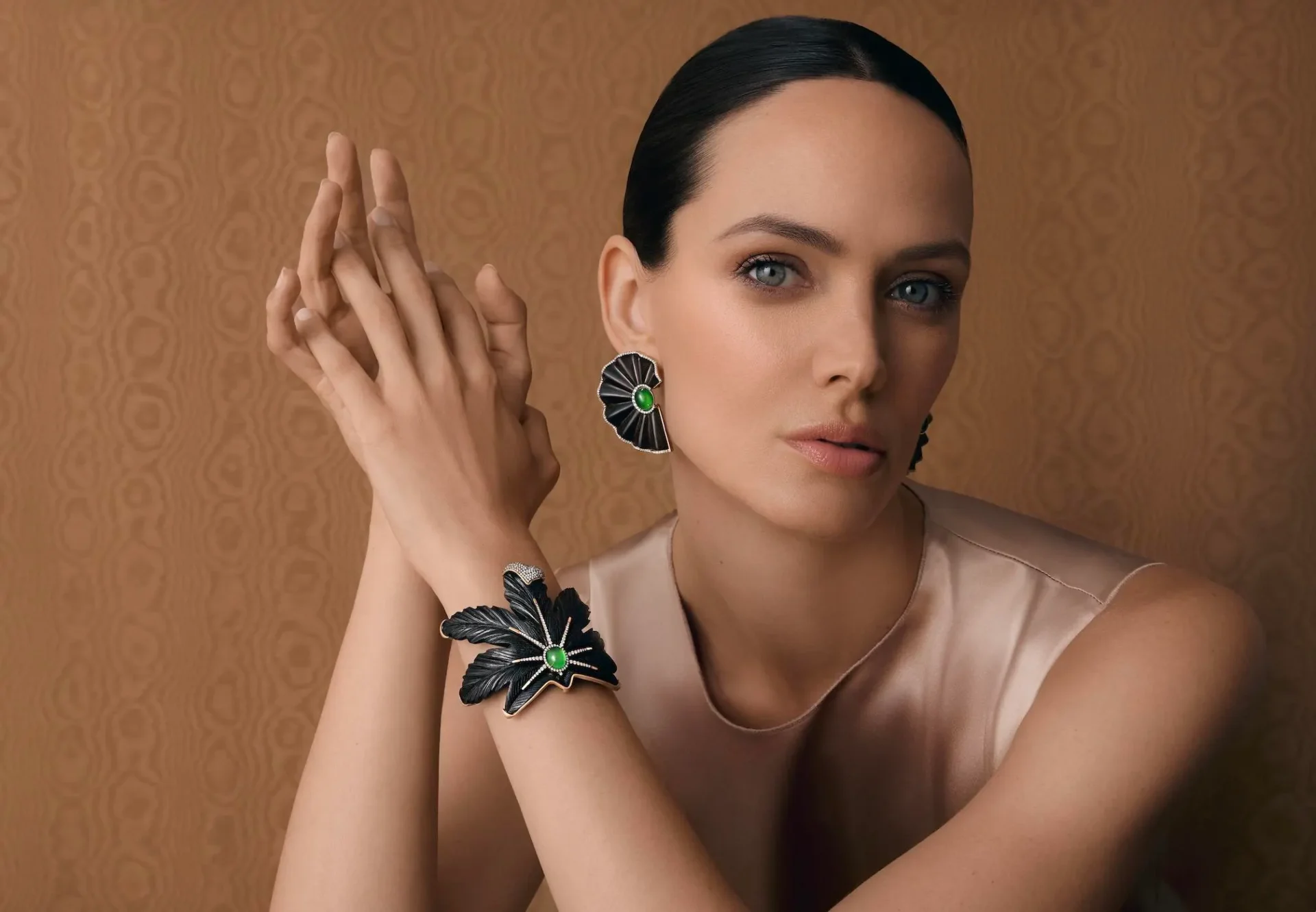
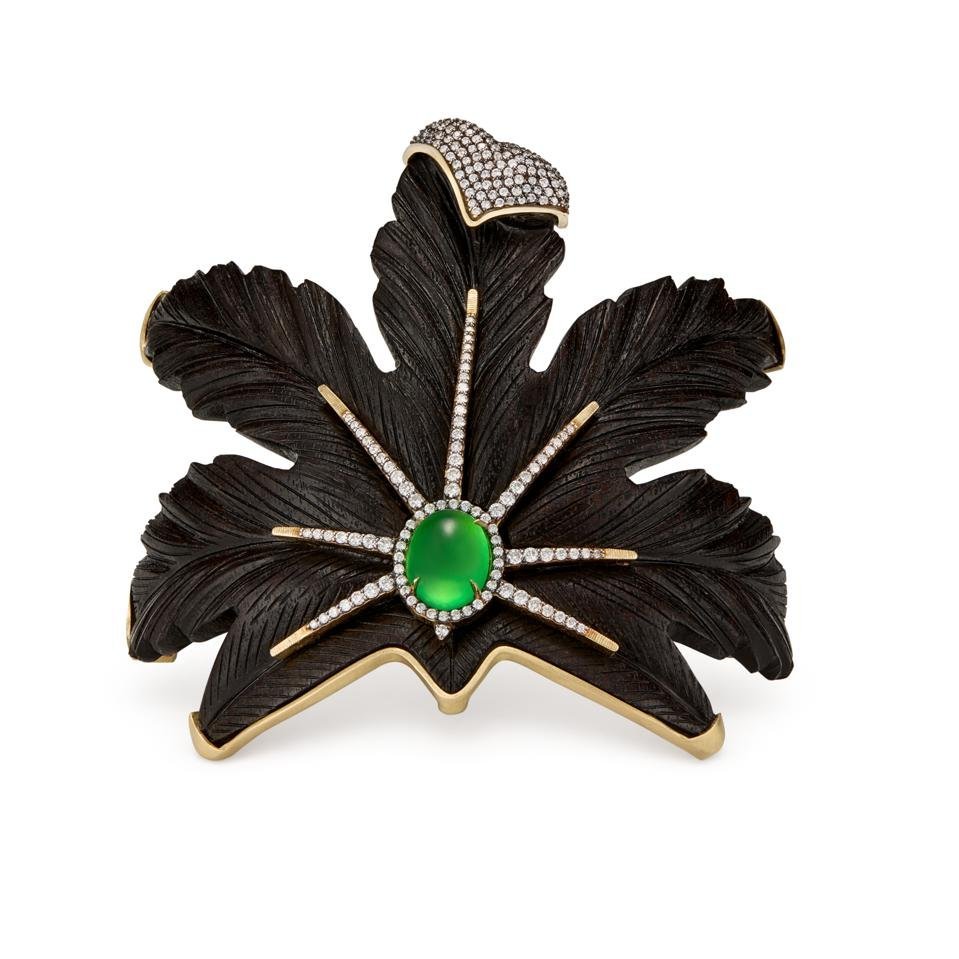
Sacred Leaf: bangle and earrings in 18k gold with carved wood, green jadeite and diamonds. Image: Asprey
A house that has always travelled
The pairing is less unlikely than it first appears. Asprey began as a silk-printing business in Mitcham, Surrey, and made its early name with dressing cases built for the new habit of travelling by rail. It moved to New Bond Street in 1847, received its first Royal Warrant from Queen Victoria in 1862, and spent the following century fulfilling commissions for maharajas, financiers and royal households. In 2021 it moved its flagship to Bruton Street in Mayfair, where its workshops still allow a piece to be altered while the client waits.
Jadeite, too, has a long history in the house. Asprey has worked with the stone for more than a century, and in 2023 it introduced a dedicated Imperial Jadeite category, with a certification process developed alongside the Department of Earth Sciences at the University of Oxford. In a market long known for its opacity, that rigour is part of the offer.
Beyond green
Jadeite, the rarest and most prized form of jade, is almost always remembered in green. This collection moves the other way, exploring the stone’s chromatic range in pink, lavender, red, white and orange. The house supplied jadeite in many colours, and Furmanovich chose each stone herself.
“Each stone seemed to have its own personality, and I wanted every jewel to offer a unique setting for that individual character,” she says. Colour, shape and translucency set the composition of every piece. It is in this method that her signature shows: a particular use of colour, intricate drawing and an almost miniaturist precision.
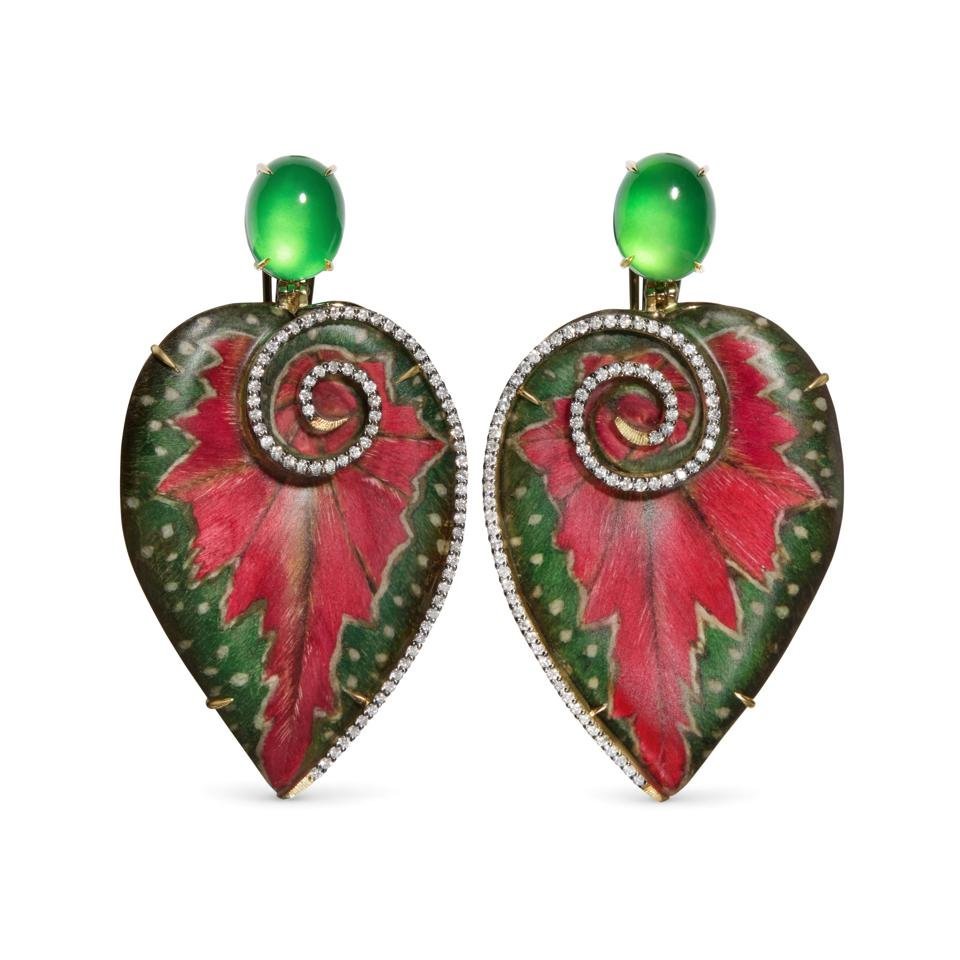
Begonia Leaf: a begonia leaf in marquetry frames green jadeite. Image: Asprey
“Jade has an extraordinary stillness. There is something almost spiritual about its presence.”
Silvia Furmanovich
A goldsmith’s daughter who chose wood
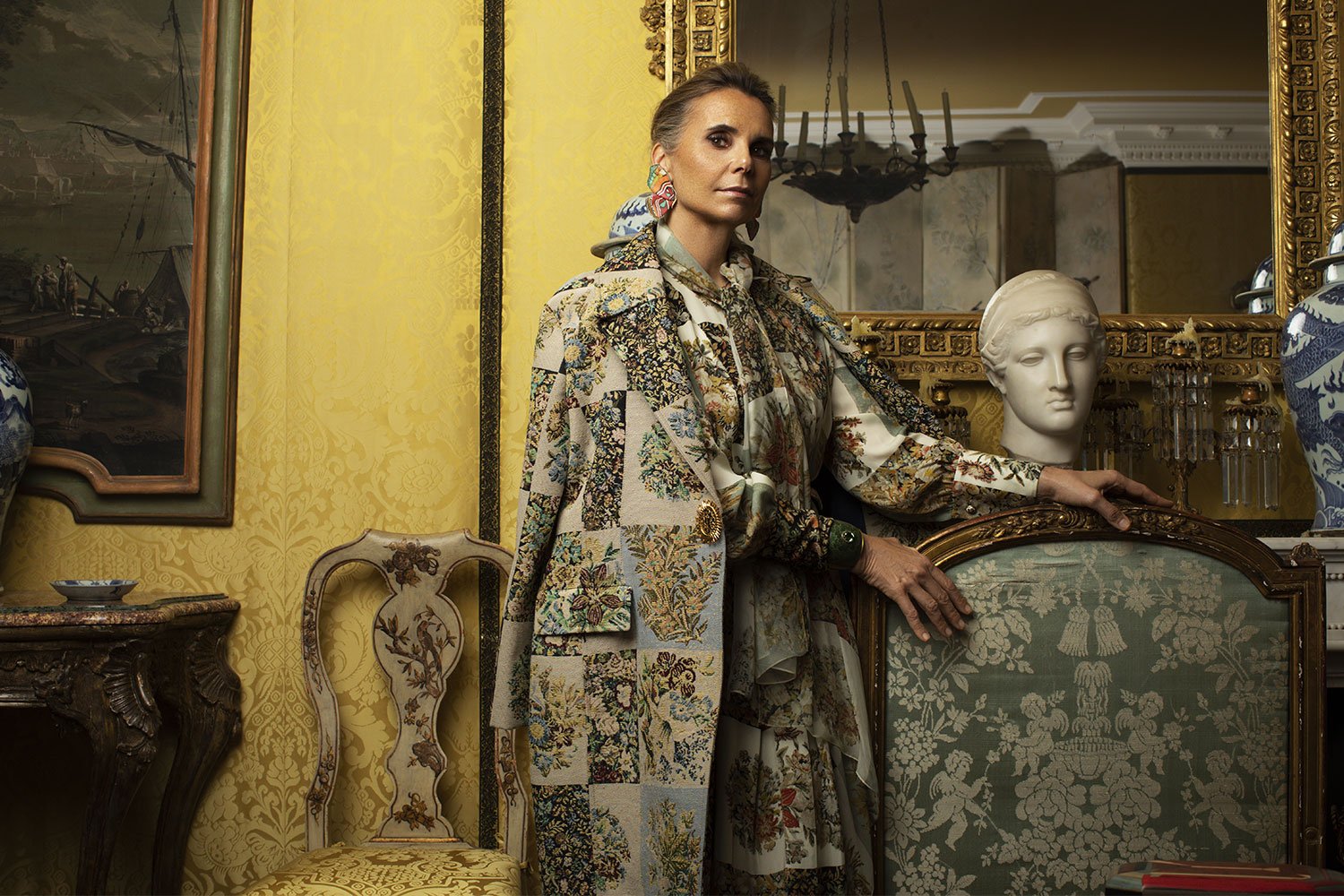
Furmanovich comes from a family of Italian goldsmiths: her great-grandfather made ornaments for the Vatican, and she grew up watching her father at the bench. Yet the material that made her name is not gold. Since founding her house in 1998, she has built a language out of wood marquetry, lacquer, miniature painting, bamboo and silk, set with precious stones, learned not in a school but beside master craftsmen in Japan, India and Uzbekistan.
Marquetry, the signature she brought to Bruton Street. Image: Silvia Furmanovich
“Wood is also very lightweight, which makes it ideal for jewellery,” she has said, and the practical point conceals a philosophical one. Her pieces have entered the collections of the Minneapolis Institute of Art and the Hispanic Society Museum & Library in New York, and she has worked with The Metropolitan Museum of Art. This is not her first project with Asprey either: in 2023 the two collaborated on a collection for the home.
Wood, horsehair and memory
For Furmanovich, a precious stone gains depth when it converses with organic materials. Here the jadeite is surrounded by rare and reclaimed woods, hand-carved Japanese bamboo and braided horsehair. “I wanted to surround it with materials that share the same sense of life and history. Each wood carries its own grain, colour and memory. Rather than competing with the jade, they create a natural landscape around it.”
There is an idea behind the pairing, too. “Jade is one of the earth’s oldest treasures, while wood reminds us of growth, renewal and the passing of time. Bringing them together creates a balance between permanence and nature.”
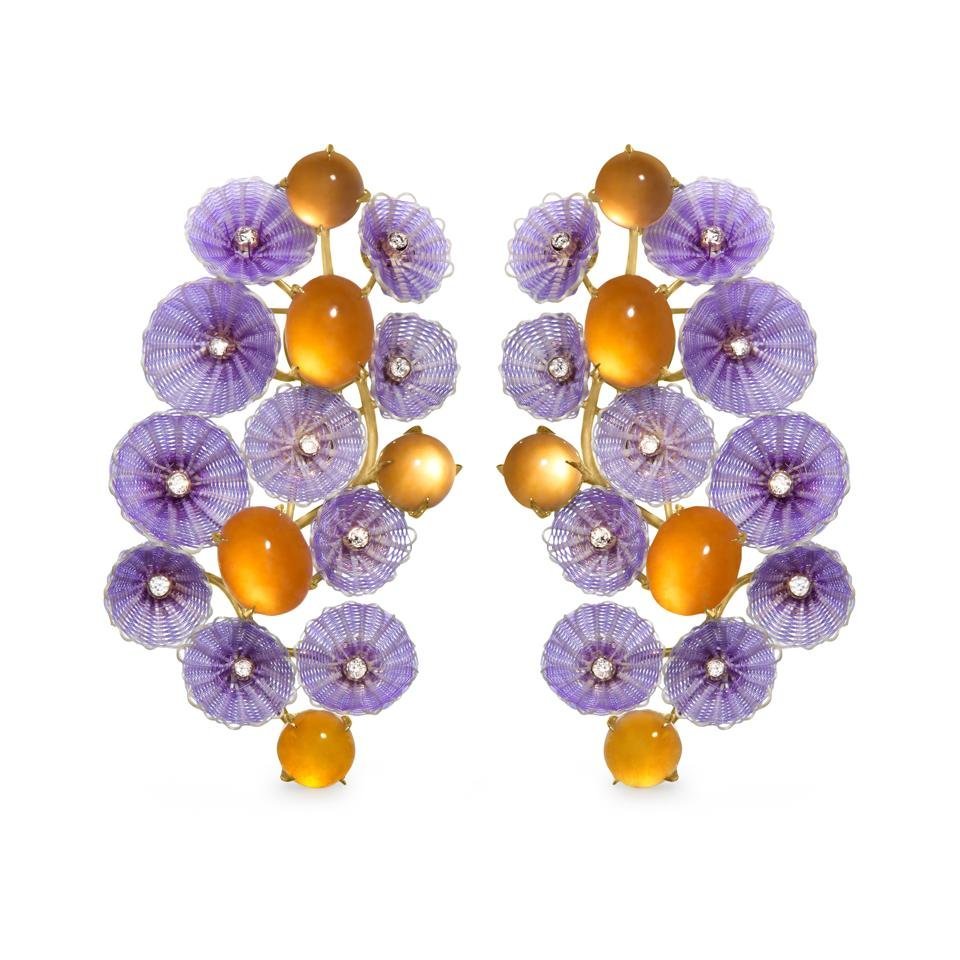
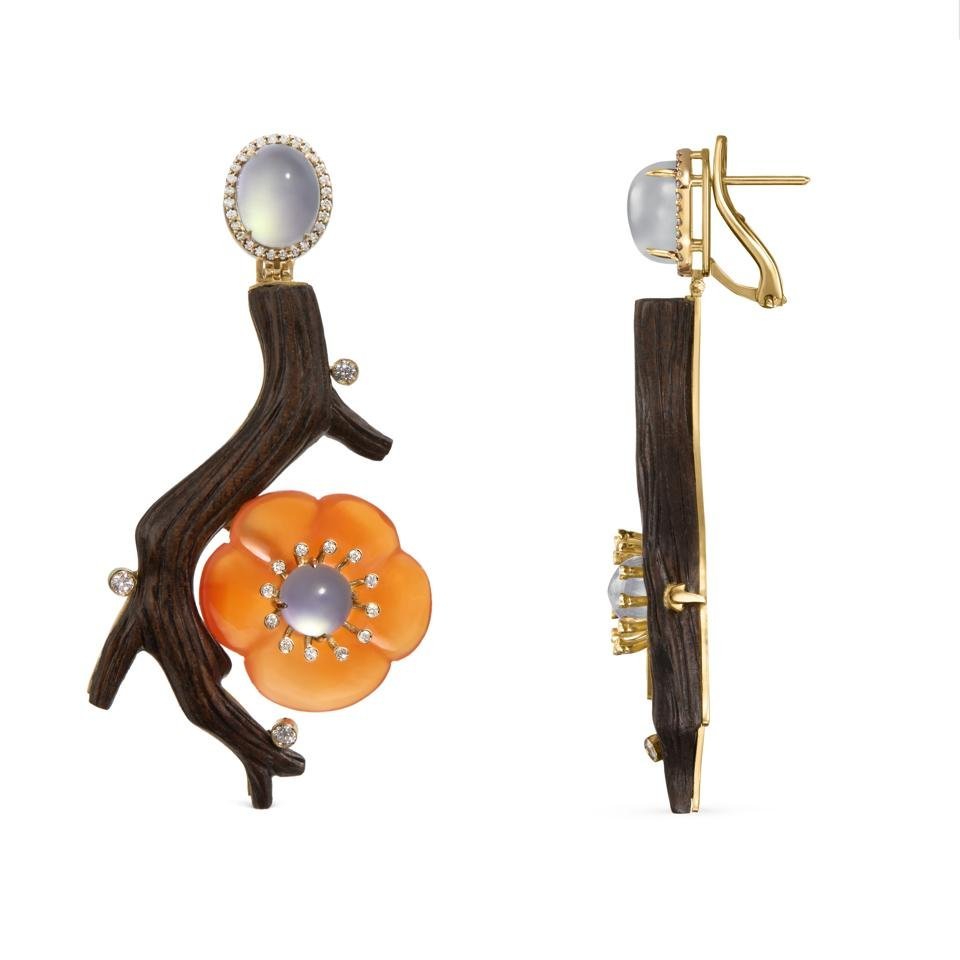
Cascade: tiny braided-horsehair flowers frame orange jadeite. Image: AspreyCherry Blossom: carved wood, agate and red and white jadeite. Image: Asprey
The lesson of Japan
Many of the collection’s techniques were learned over years of travel in Asia, above all in Japan, “where craft is treated with immense patience and respect.” Among them is Shibayama, the Japanese art of raised inlay that turns a surface into a small sculpture. Each piece required hundreds of hours from artisans who specialise in rare techniques.
“Collectors may notice the jade first, but I hope they also take time to discover the details: the delicate marquetry, the hand-carved bamboo, the braided horsehair, the relief of the Shibayama inlay,” she says. “Every surface reveals the hand of the artisan who made it, and those human traces are what give an object a soul.”
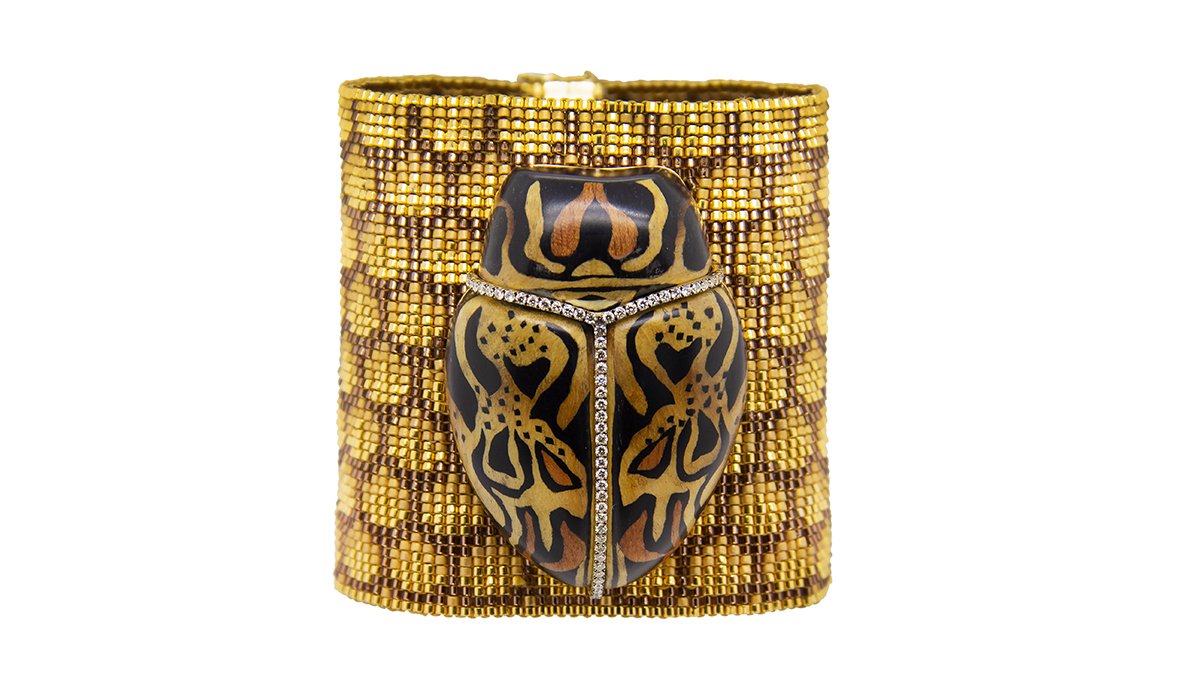
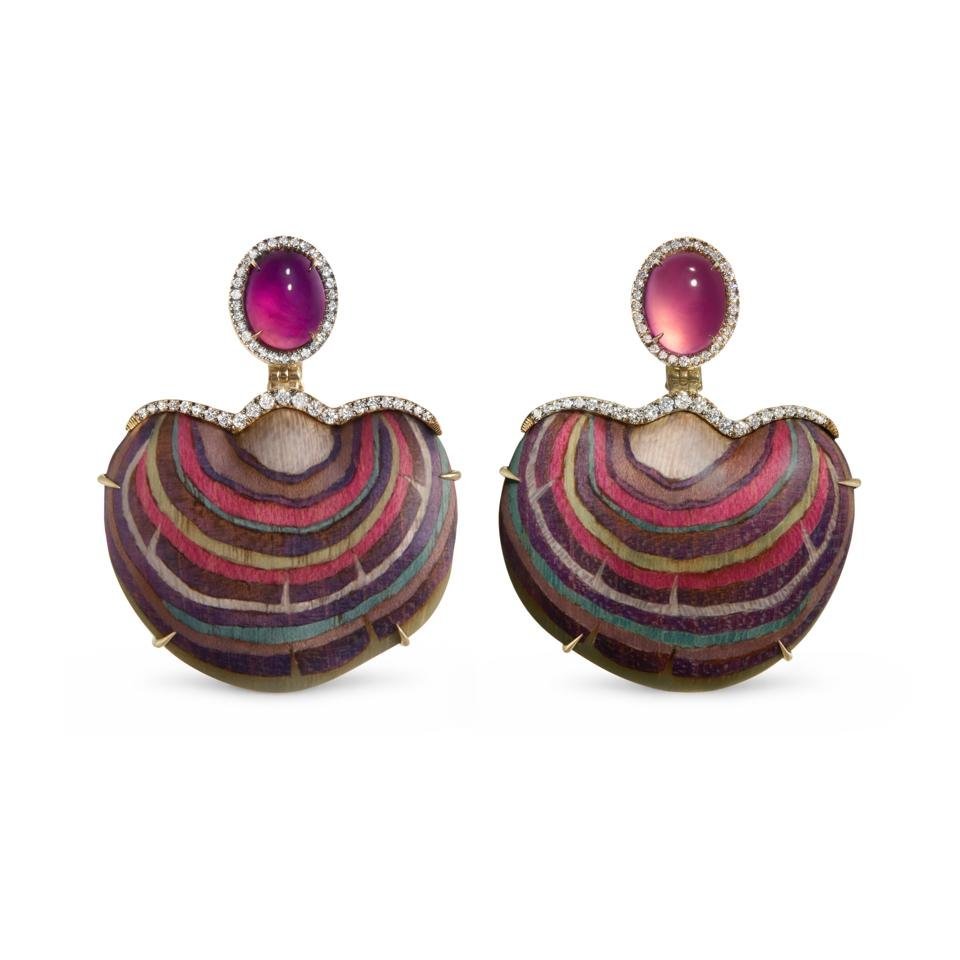
An earlier piece: a marquetry scarab on a beaded cuff in gold and diamonds. Image: Silvia FurmanovichWild Mushroom: marquetry mushrooms, pink and lavender jadeite, rose gold. Image: Asprey
Wild Orchid, a pointillist flower
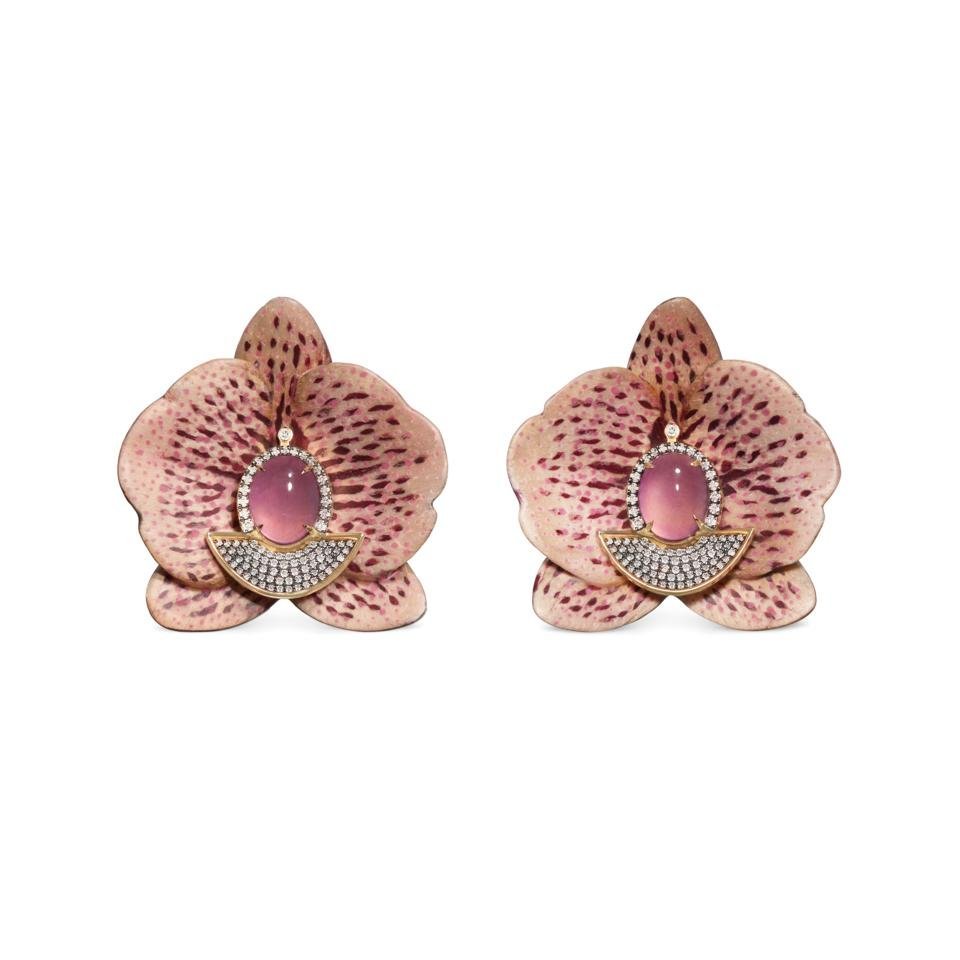
Of the ten, the designer’s own favourite is the Wild Orchid pair, born of her fascination with orchids and the speckled pattern of their petals. To recreate it, minute fragments of different woods were cut and assembled one by one. “Together, these tiny pieces create an almost pointillist quality. From a distance, the surface looks simple. Up close, it reveals the complexity of its construction. Nature often appears simple, but it is built from endless layers of detail.”
Wild Orchid: marquetry recreates the natural markings of the petal. Image: AspreySacred Leaf bangle. Image: Asprey
In the end, the collection brings together two kinds of patience: that of the stone, which took millions of years to form, and that of the hand, which took hundreds of hours to give it a setting. Between the rigour of a London house and the eye of a designer who learned by travelling, each jewel tells the story of the stone that began it.
Details and further reading:Asprey. Each of the ten pieces is unique.
Valentino Garavani died at home in Rome in January 2026, at 93. From his Paris apprenticeship and the red that bears his name to the Florence show that made him and the foundation he built with Giancarlo Giammetti.
The Metropolitan Museum of Art and John Galliano have jointly cancelled Horizons, the Costume Institute retrospective due to open with the 2027 Met Gala, after a backlash over the designer's past antisemitic remarks.
Chanel has never launched a men's line, and says it has no plans to. From Gabrielle Chanel and Karl Lagerfeld to Harry Styles, Pedro Pascal and Jacob Elordi, the house has built a menswear of suggestion instead.