Hope Lodge: another chapter for the Sutherland landscape
WildLand’s Highland project brings a seven-bedroom lodge, Scottish stone and a long conservation ambition into a landscape shaped by people as well as nature.
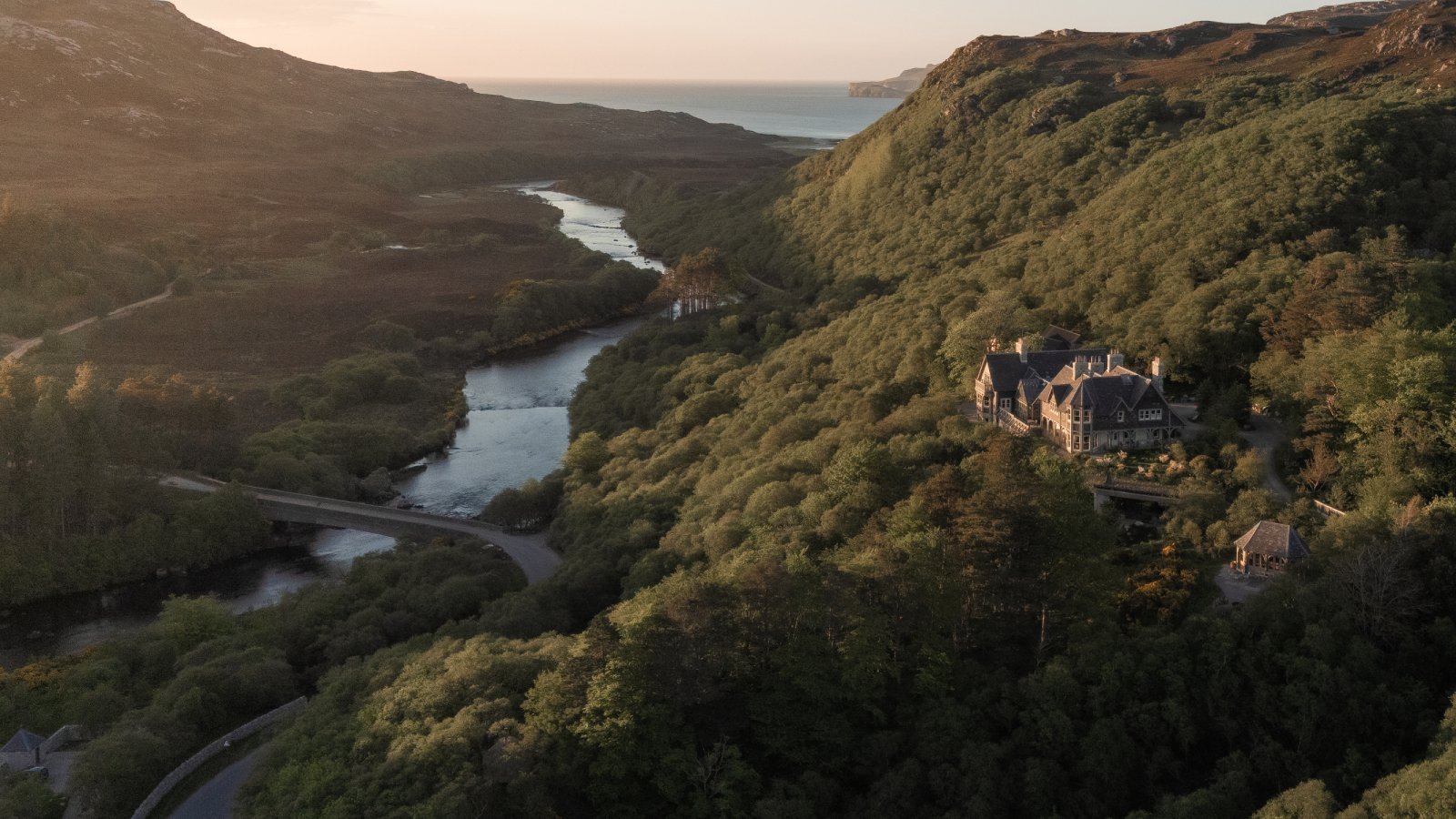
Hope Lodge and its surrounding landscape. Archive image.
HOTELS
Loch Hope and Ben Hope establish the setting before the lodge enters view. In this part of Sutherland, water, mountain and changing weather give a stay its daily conditions. They also make it easy to describe the landscape as untouched, a description that would leave out much of its history.
Hope Lodge occupies a nineteenth-century sporting property within WildLand, the estate business associated with Anders Holch Povlsen. Its declared two-hundred-year conservation horizon places the hotel inside a project much longer than a season’s visitor programme. That is an ambition, not proof that every ecological outcome has already been achieved.
A lodge, not a country-house performance
The principal house dates from the 1870s and contains seven bedrooms. Its scale allows the property to work as an intimate lodge, with exclusive-use and room arrangements dependent on the programme offered at the time of travel.
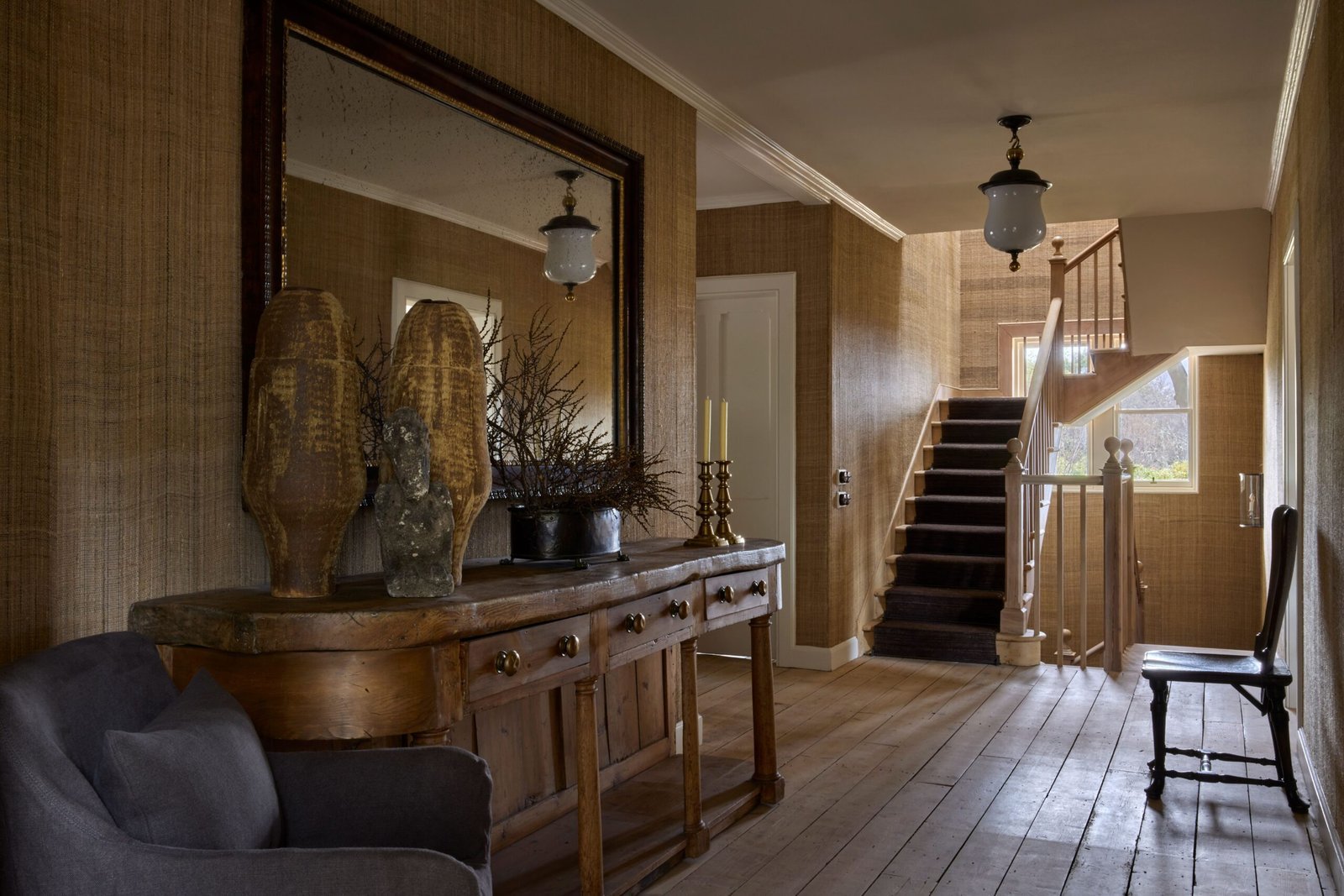
South African studio Cécile & Boyd approached the interiors with an understanding of lodge life rather than elaborate country-house formality. Materials and furnishings have to withstand wet clothes, outdoor days and the return from a walk. Comfort comes from that practical reading as much as from a polished room.
GRAS, the practice associated with Nicholas and Gunnar Groves-Raines, worked on the restoration and new architecture. The use of local Moine schist connects walls and floors to the terrain. Reactivating a local stone source made the relationship physical, not merely a palette chosen to resemble the hillside.
HOPE LODGE. The restored hall combines stone, wood and antique furniture.
The village supporting the house
Clachan, named for a small village, brings operational spaces together across the road. A tunnel connects the arrangement, allowing kitchens, storage and other support functions to work without turning the lodge’s immediate surroundings into a service yard.
Additional accommodation includes the two-bedroom An Cala cabin and restored riverside cottages. These are different ways of occupying the estate, not extra wings of the main house. The relevant choice is whether a guest wants the sociability of the lodge or a more independent base.
Reading the land with a guide
Walking, kayaking, fishing, foraging and time beside the water are central to the stay. Saunas and the estate’s wellbeing programme provide another pace. Cold-water activities require local guidance and attention to conditions; a photograph of clear water says little about its temperature or a safe route into it.
Guides can also explain what the open landscape does not immediately reveal. Sutherland’s nineteenth-century Clearances displaced communities as land use changed towards sheep farming and sporting estates. The apparent emptiness is therefore not simply a natural condition.
That human history belongs beside the account of habitat restoration. Conservation on a large private estate involves questions of access, ownership and local life as well as trees, rivers and wildlife. A thoughtful visit should be able to accommodate those questions.
A long horizon and a short stay
Hope’s hospitality supports a broader land-management proposition while giving guests a comparatively brief encounter with it. The two timescales do not automatically align: a weekend cannot establish whether a centuries-long plan is working.
What the lodge can offer is a precise introduction. Scottish stone underfoot, the mountain across the loch, the work of a guide and the history of the estate make the place more substantial than a remote address. Its strongest version allows the landscape to be complicated, rather than asking it to perform as scenery without a past.
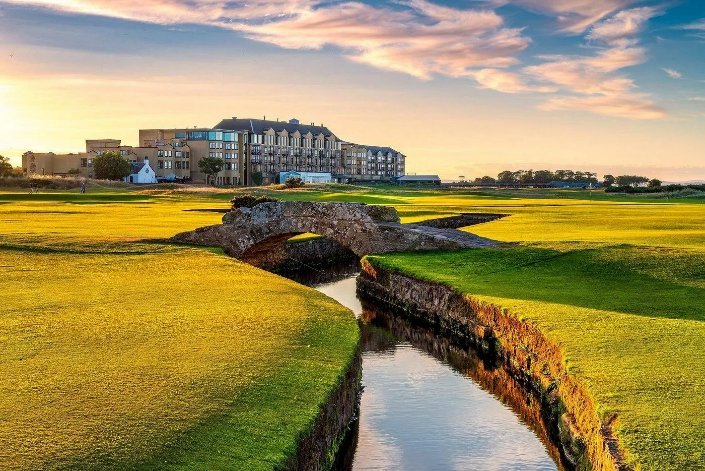
From St Andrews and Royal County Down to Cabot Saint Lucia, Hirono and Tara Iti, eleven courses that justify the journey, with how to get a tee time and where to sleep afterwards.
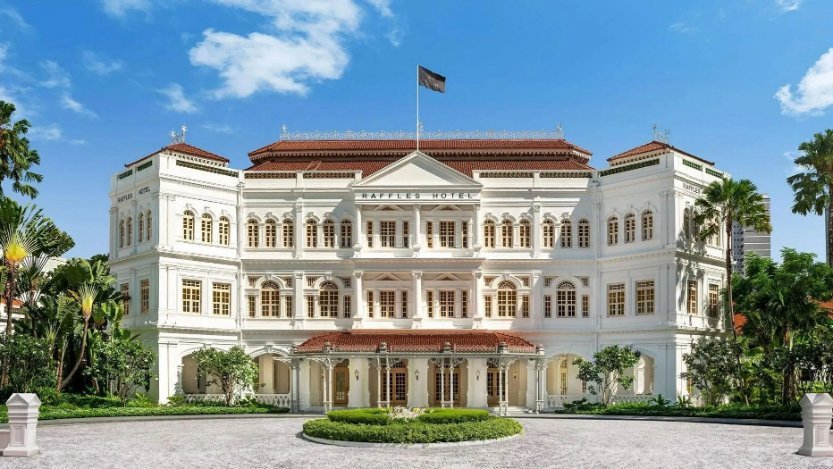
From the Hôtel de Paris in Monte-Carlo to Raffles in Singapore and a Mandarin Oriental in Bangkok marking 150 years, the grand hotels that have stayed relevant for more than a hundred years without surrendering their identity.