Heat and silence: the hotels that treat the sauna as architecture
From a floating ring of saunas in Swedish Lapland to a cedar cabin on a British Columbia bay, eleven hotels where heat, cold water and quiet have become the reason to travel.
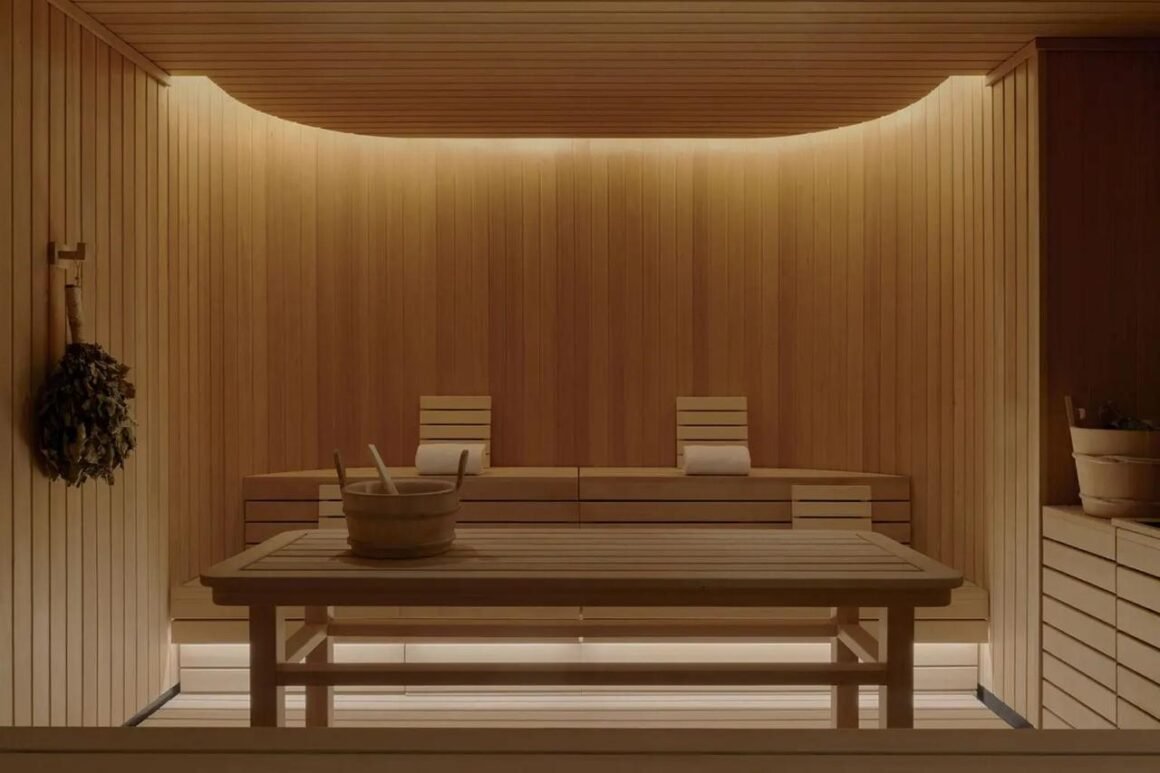
The most sought-after room in a good hotel is no longer the suite. It is a small wooden box, very hot, very quiet, usually a few steps from cold water. The sauna, an ancient habit, has become the centre of travel built around wellbeing, carried by the science of heat therapy and by an aesthetic that joins design, landscape and ritual silence.
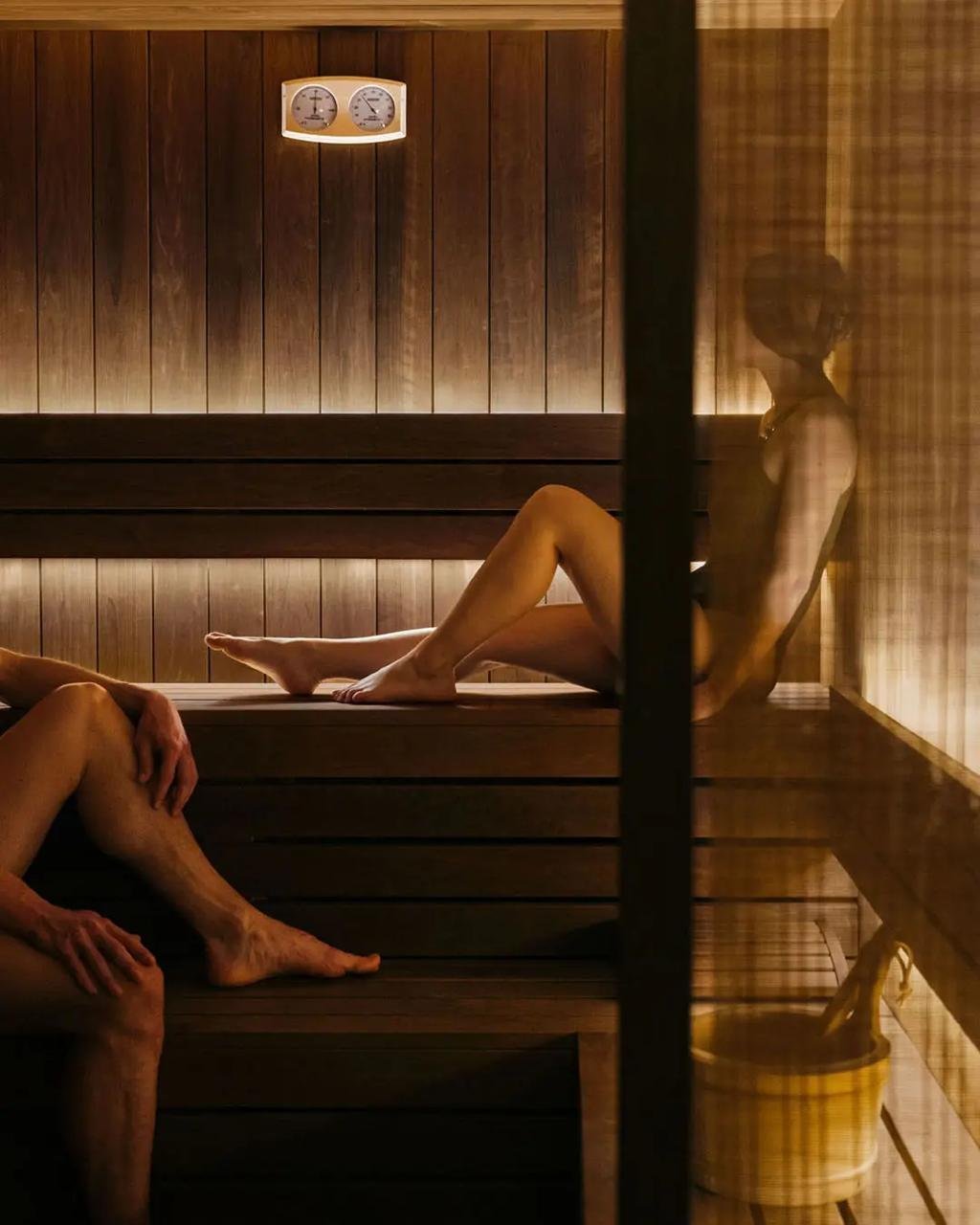
WATER ON STONE, AND THEN NOTHING. IMAGE: PRESS
A secular church
The experience is hard to translate. Water cracks on hot stones, steam rises in heavy waves, the wood releases its scent and the light stays low. Research links regular sessions with lower stress, better sleep and cardiovascular benefits. For many, though, the point is elsewhere: a place of retreat, of conversation, of a rare equality in which nobody is dressed for status. Jasper Pääkkönen, the Finnish actor behind Helsinki’s Löyly, likes to describe the sauna as a kind of secular church. Finland, with more than three million saunas for some 5.6 million people, has made the habit a cultural code, recognised by UNESCO as intangible heritage in 2020.
The modern ritual lives in contrast: the choreographed passage from fierce heat to the shock of cold water. It sits beside the rise of wild swimming, ice baths and other analogue forms of care that return the body to something more elemental. It has become social, too. In several European capitals, friends now meet at a communal sauna where they might once have met at the bar. Hotels have taken note, and the best now treat their saunas as architecture.
Northern waters
Another Place, The Machrie, Islay. In the hotel’s Wild Garden, an outdoor sauna made with Kirami sits above Laggan Bay and the championship links, with a cold tub for the plunge and the long Hebridean sunsets as the view. Inside, big windows and an art collection that runs from Scottish talent to Grayson Perry complete the picture.
HEBRIDEAN LIGHT, WOOD SMOKE AND SALT AIR. IMAGE: PRESS
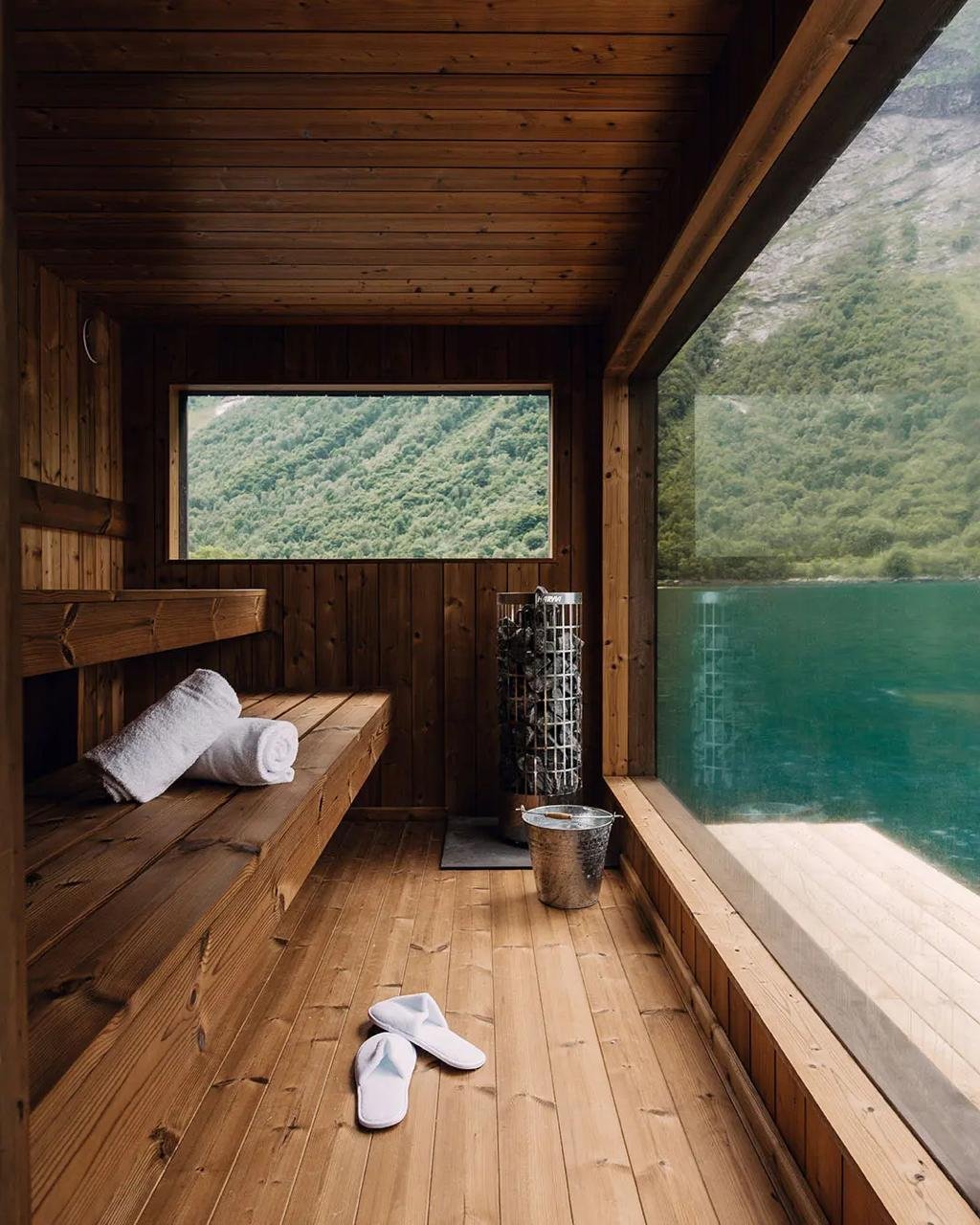
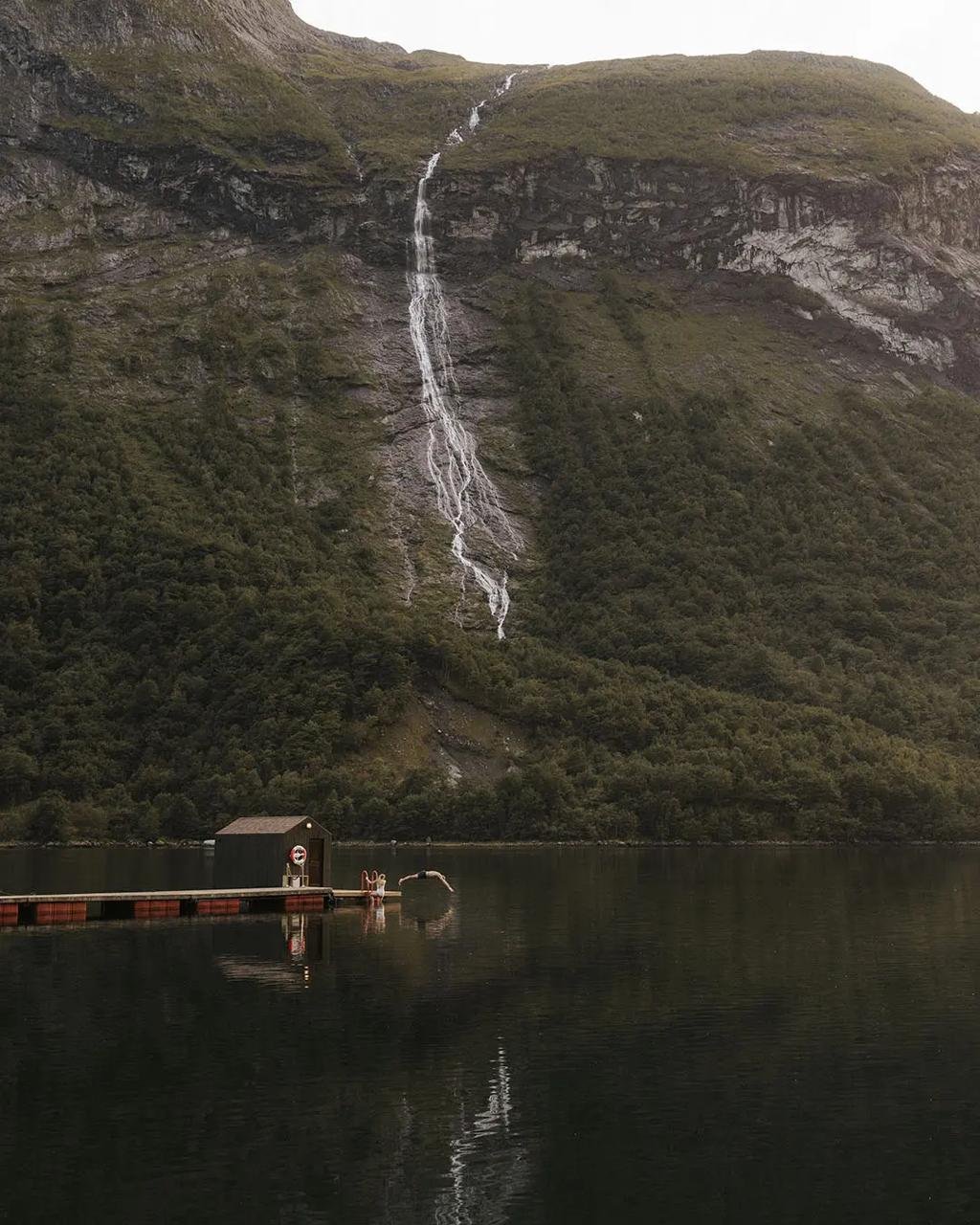
Hotel Union Øye, Norangsfjord. Founded in 1891 and ringed by steep peaks, this historic hotel, now part of the 62°Nord collection, keeps its sauna down by the fjord. The heat inside and the glacial water outside are the whole Norwegian argument in two steps.
THE FJORD AS COLD PLUNGE. IMAGE: PRESS
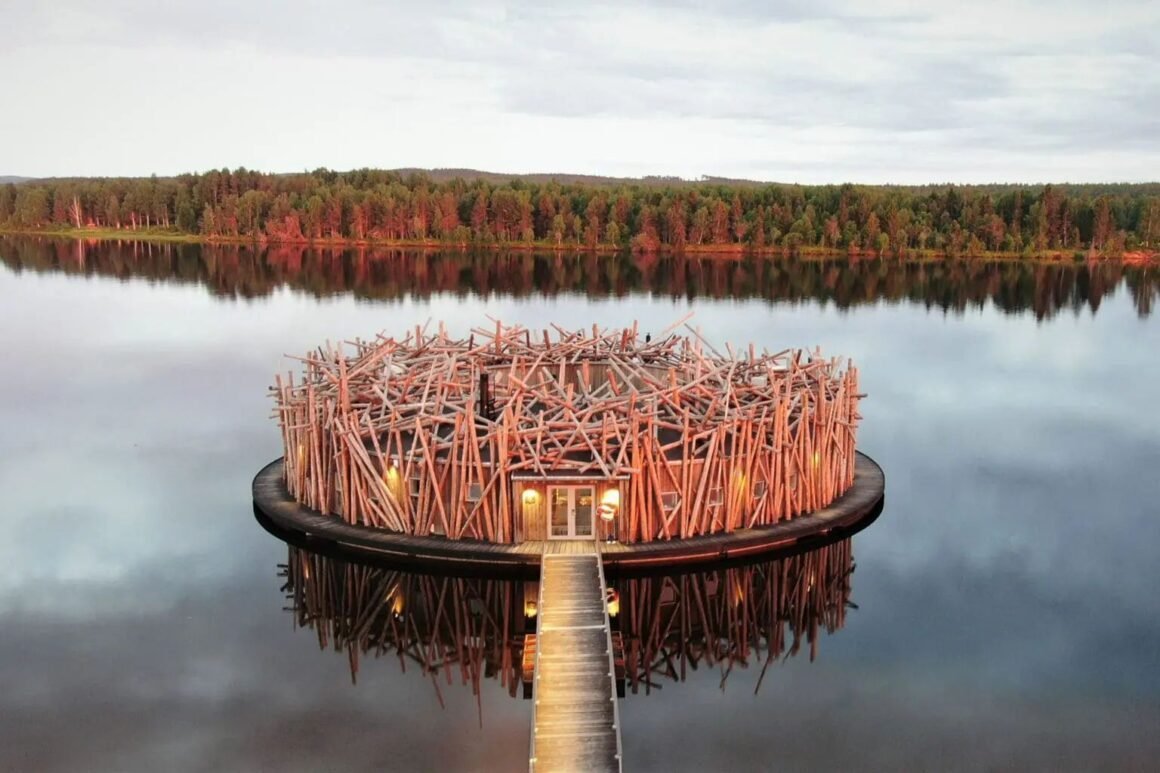
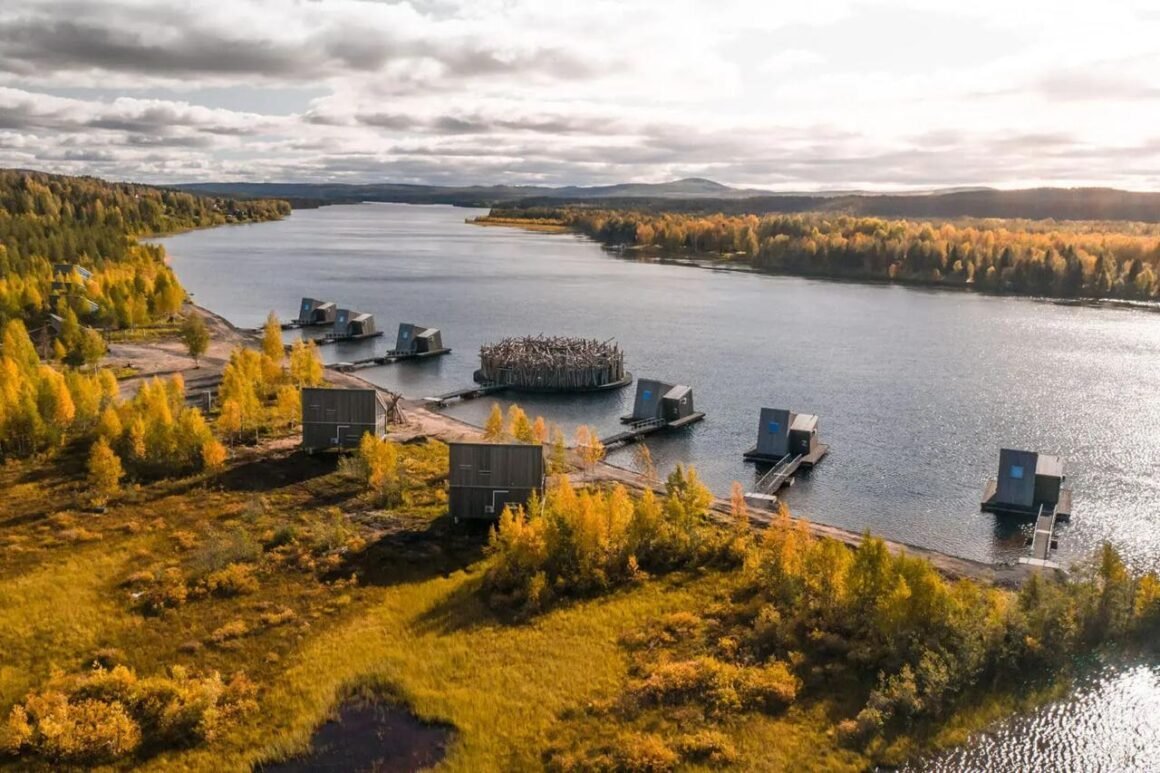
Arctic Bath, Swedish Lapland. Designed to recall timber floating down the Lule River, the circular building floats in summer and freezes into the river in winter. At its centre is an open-air cold bath cut into the water, surrounded by saunas, a steam room and a hot tub. The restaurant follows the same logic of place, with Arctic char and reindeer on the menu.
A RING OF HEAT AROUND A CIRCLE OF ICE. IMAGE: PRESS
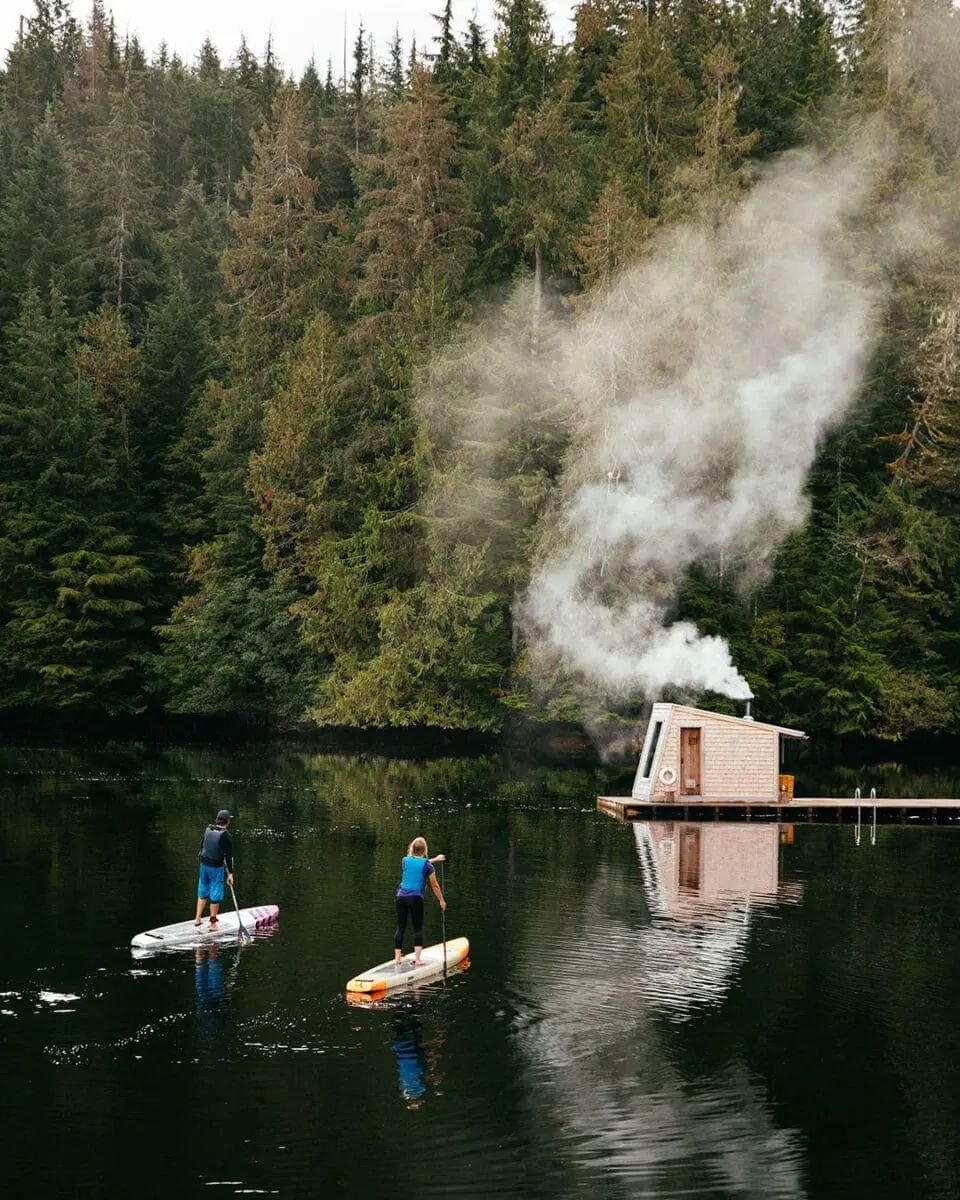
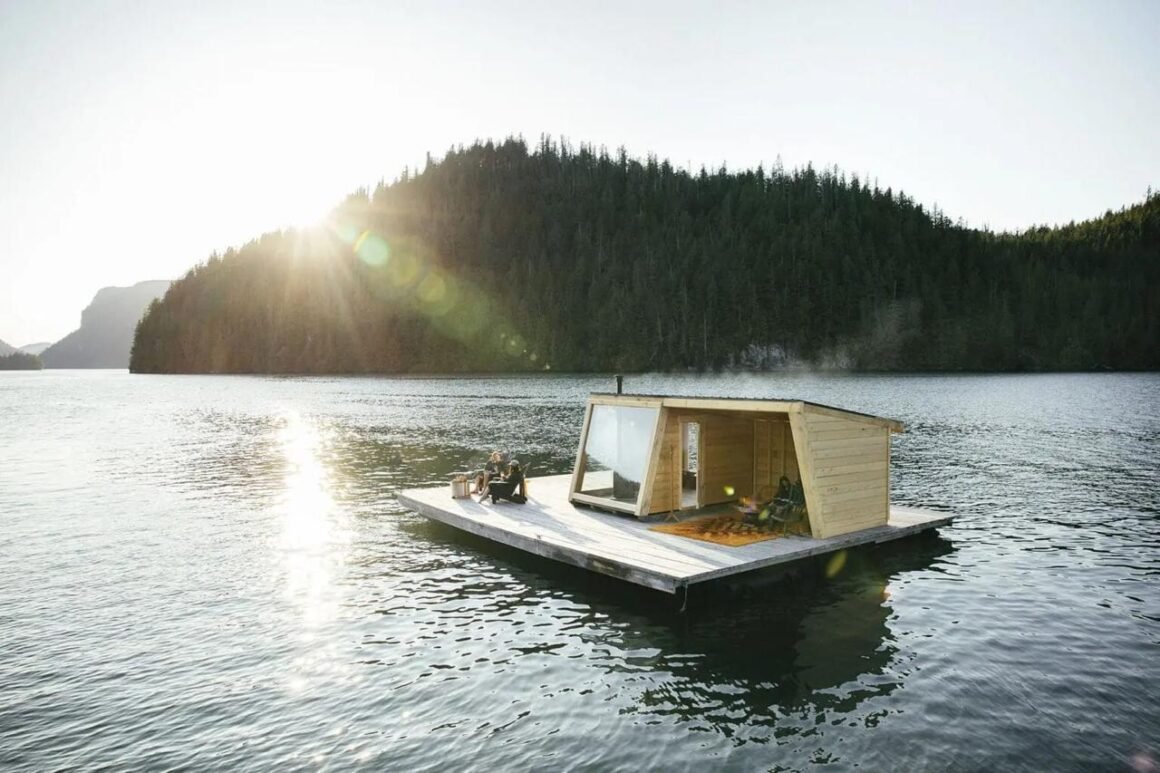
Nimmo Bay Wilderness Resort, British Columbia. On the edge of the Great Bear Rainforest, a Finnish-style cedar sauna floats on the bay, reached by boat, kayak or paddleboard. A wood stove heats it, a picture window frames the water, and the sea itself is the cold plunge.
Mountains, forests, vines
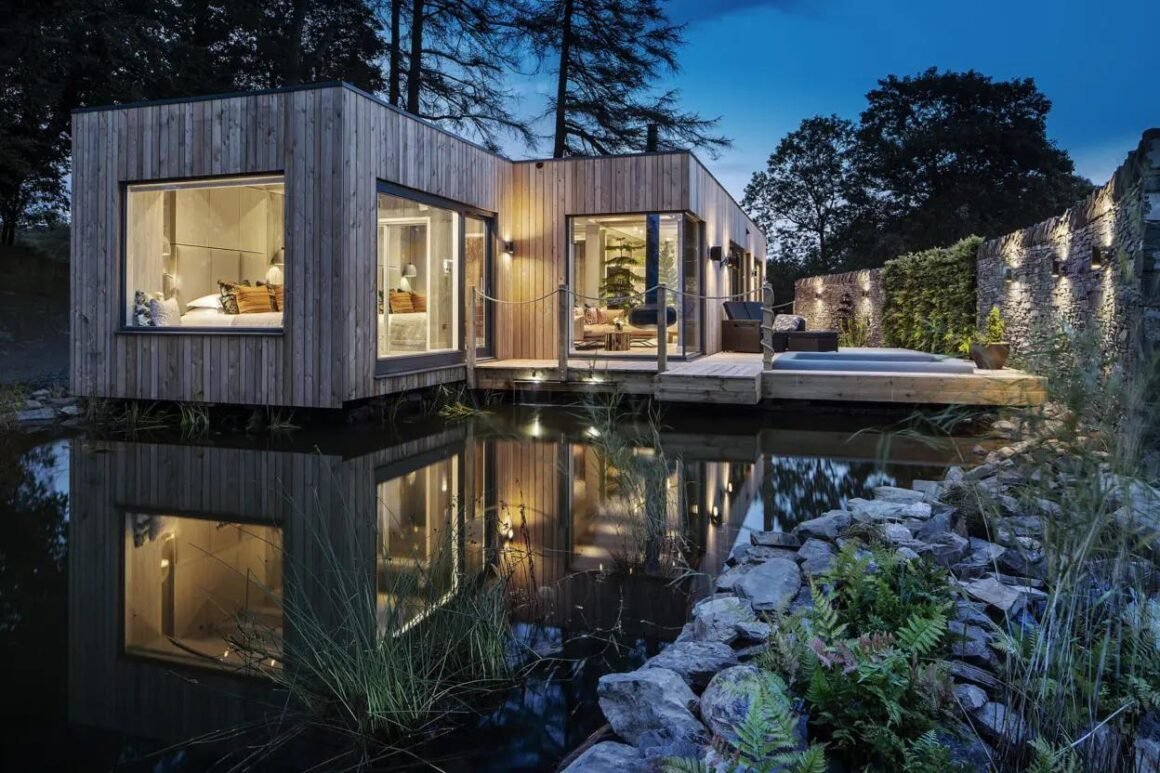
Gilpin Hotel & Lake House, Lake District. This family-run house has reinvented the private spa. Its Spa Suites gather a tulipwood sauna, a steam room, an infrared lounger and a Japanese massage chair in a secluded lodge, with an outdoor hot tub and plunge pond, so that the ritual never requires leaving the room.
A SPA WITH ONLY TWO GUESTS. IMAGE: PRESSTHE LAKES, SEEN THROUGH THE STEAM. IMAGE: PRESS
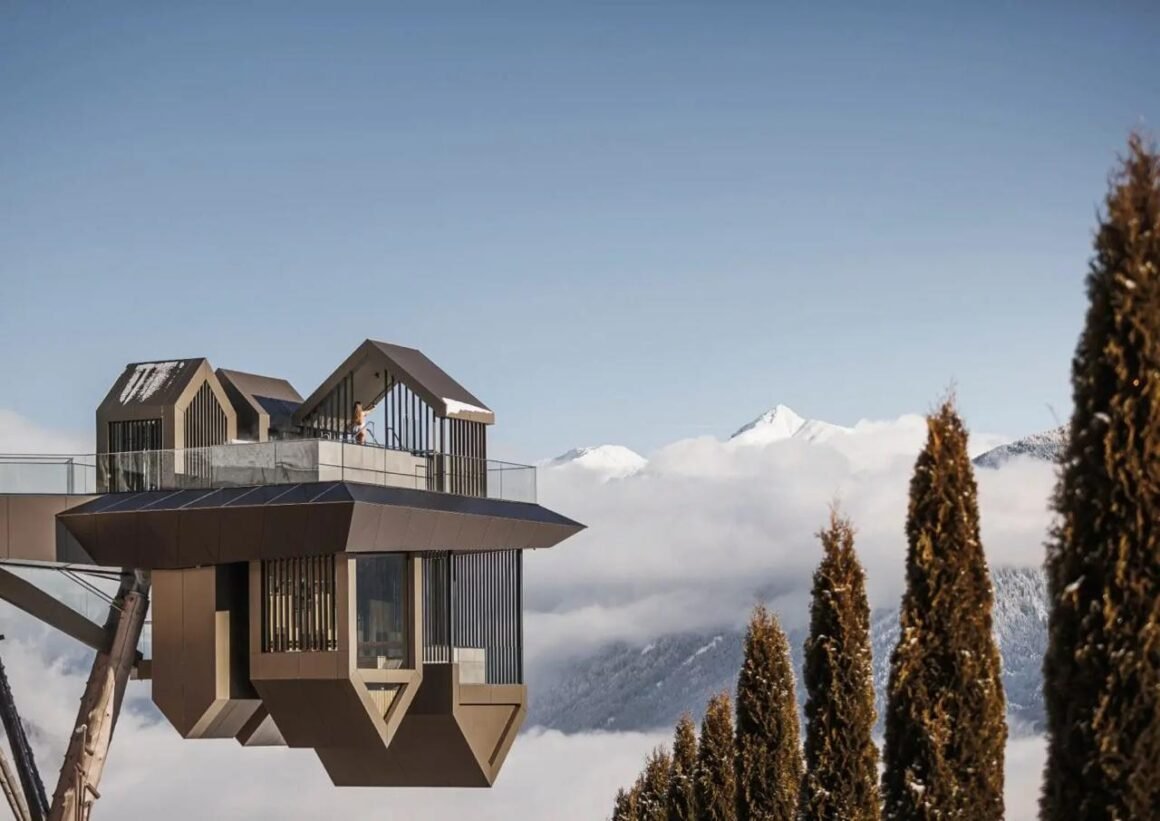
Hotel Hubertus, Dolomites. Few hotels have taken more architectural risk. A 25-metre pool, heated to 33 degrees with spring water, floats above the meadows, and the two-level Sky Spa platform extends out from the building with its saunas, whirlpools and cold rain shower. The mountains do the rest.
HEAT, SUSPENDED ABOVE THE ALPS. IMAGE: PRESS
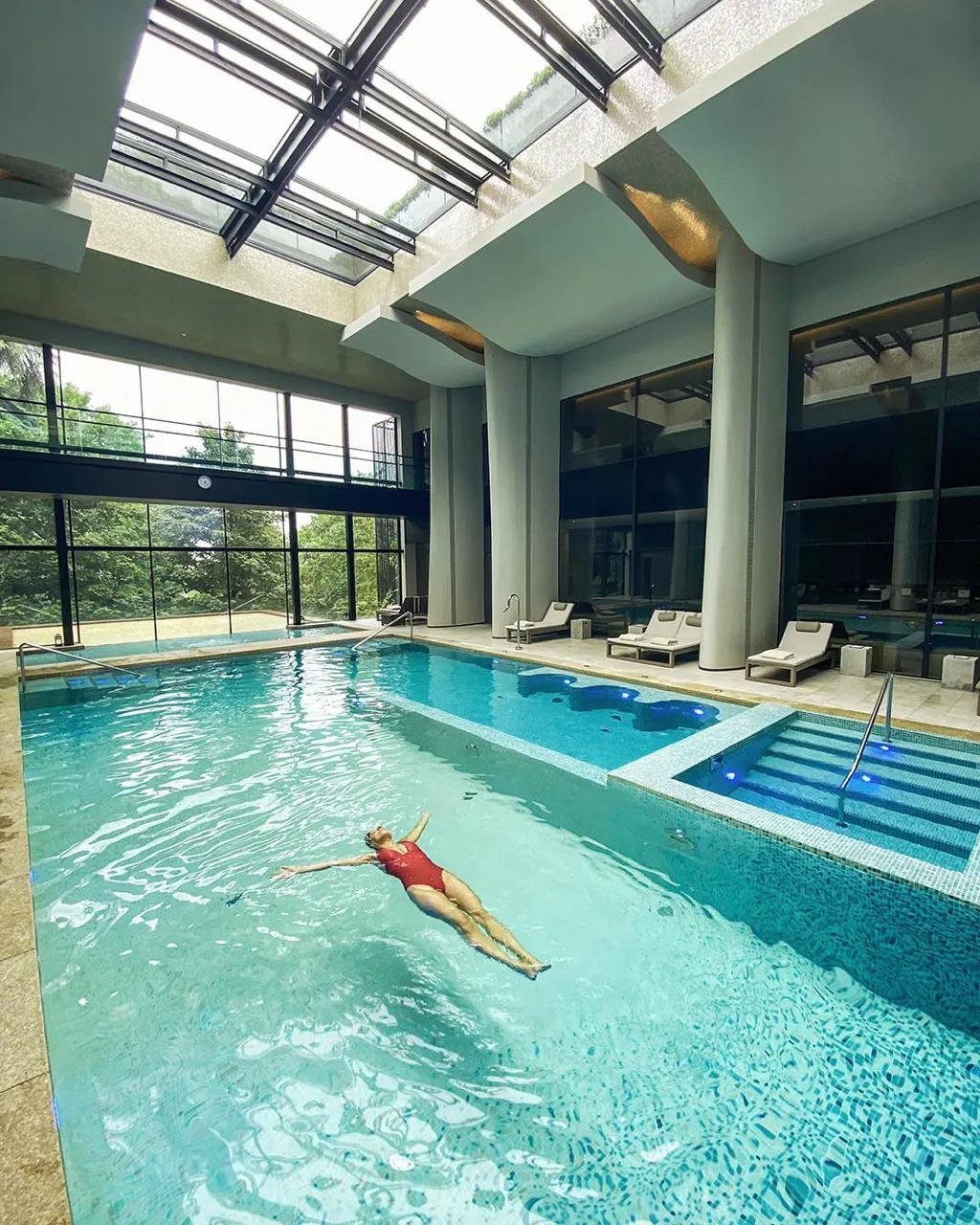
Six Senses Douro Valley, Portugal. In a restored manor above the river, wellbeing sits easily beside wine country. The spa offers infrared saunas, herb-infused saunas and one warmed by a wall of Himalayan salt, along with a Turkish bath and a vitality pool built on thermal contrast.
SALT, HERBS AND THE RIVER BELOW. IMAGE: PRESS
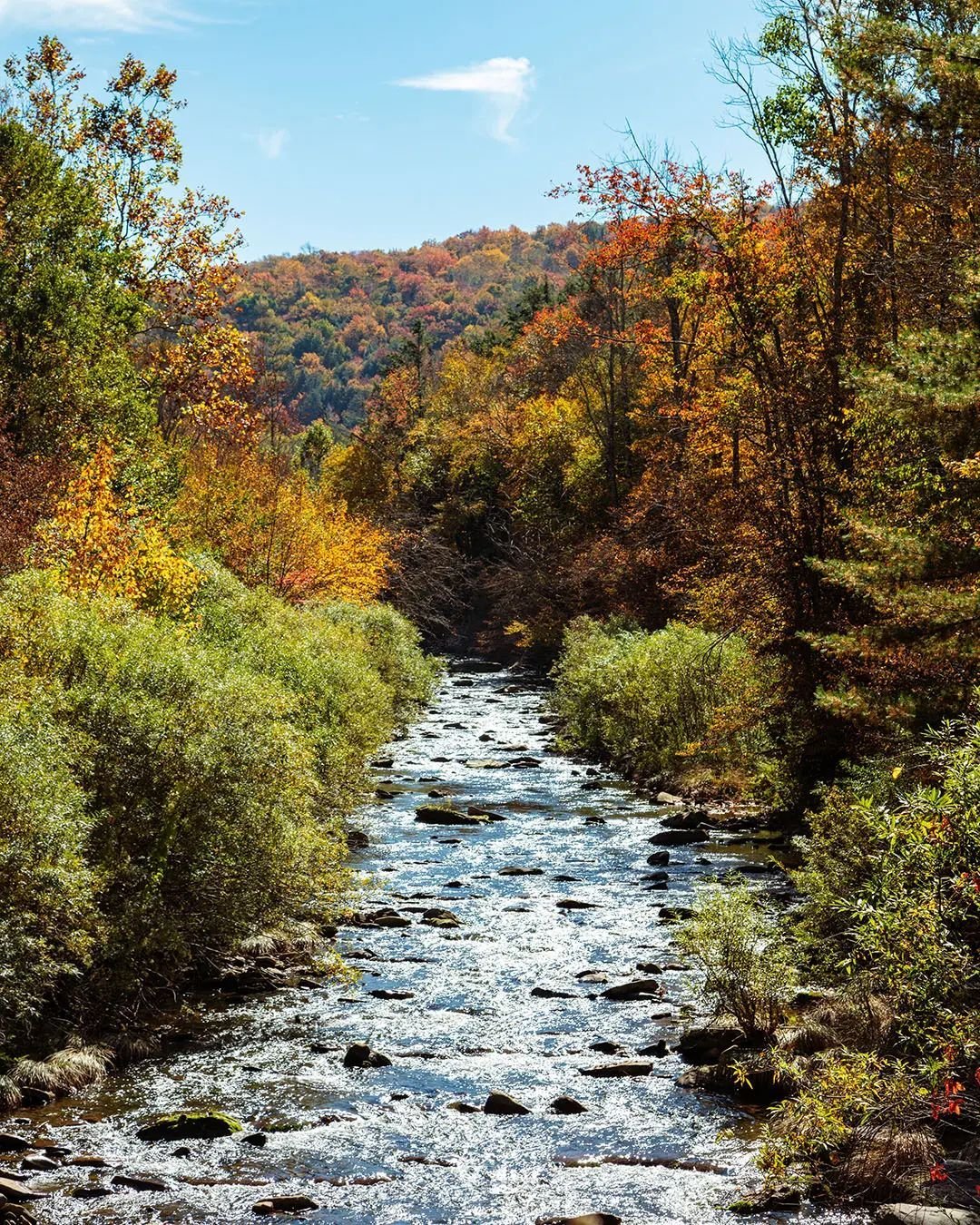
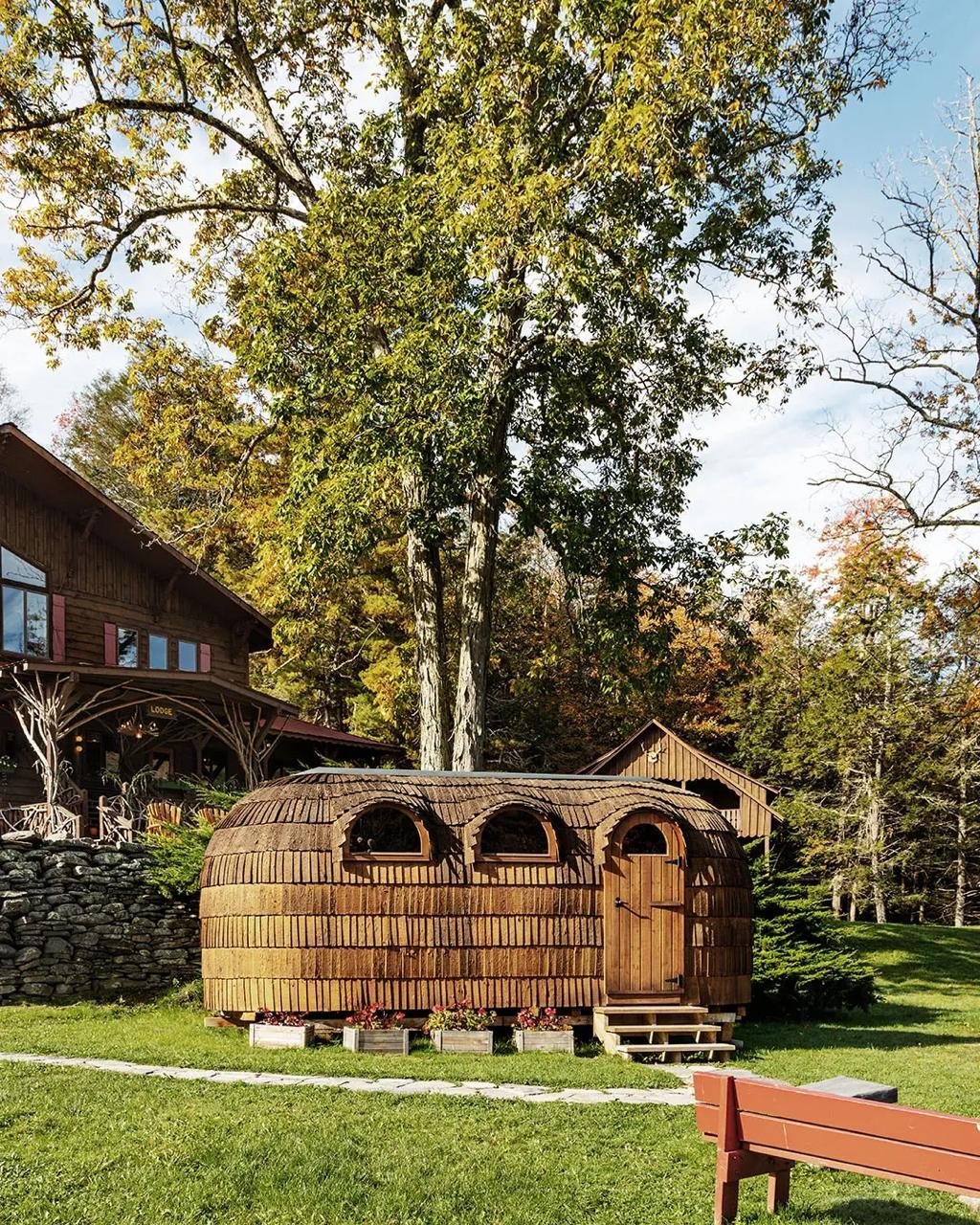
Urban Cowboy Lodge, Catskills. Deep in the Catskill Forest Preserve, at the headwaters of Esopus Creek, a shingled Estonian sauna hides among the trees. Nightly bonfires, an outdoor pool in warm months and a deliberately maximalist interior make it a mountain retreat with a bohemian streak.
A FOREST CABIN THAT RUNS HOT. IMAGE: PRESS
City rituals, old and new
Hôtel Balzac, Paris. Steps from the Champs-Élysées, the renovated hotel’s Ikoi Spa blends Japanese technique with French sensibility. Treatments are given on tatami mats, then guests move to an intimate sauna and an indoor plunge pool. For an hour, the eighth arrondissement feels a long way off.
KYOTO, A FEW STEPS FROM THE ÉTOILE. IMAGE: PRESS
Aman New York. The city’s old bathhouse culture returns in the Spa Houses at the Crown Building. Each has either a traditional banya, moister and gentler than its Nordic cousin, or a marble hammam, with a fireplace in the living area and a private terrace holding a hot bath and a cold plunge.
THE BATHHOUSE, MADE PRIVATE. IMAGE: PRESSMIDTOWN, MUFFLED BY STEAM. IMAGE: PRESS
Hakone Suishoen, Japan. For anyone who wants to understand Japanese bathing culture, this ryokan in a former aristocratic villa, now a protected cultural asset, is a full education. There are private hot-spring baths and mist saunas in the rooms, and a dry sauna in the open-air bath that completes the passage to totonou, the clear, settled state that follows heat and cold.
The sauna asks nothing of its guests except time and a willingness to sit still in the heat. In a century that sells speed, these small wooden rooms, on fjords, lakes and rooftops, offer the opposite: a few minutes in which there is nothing to do but breathe, and then the cold water, and then a silence that feels earned.
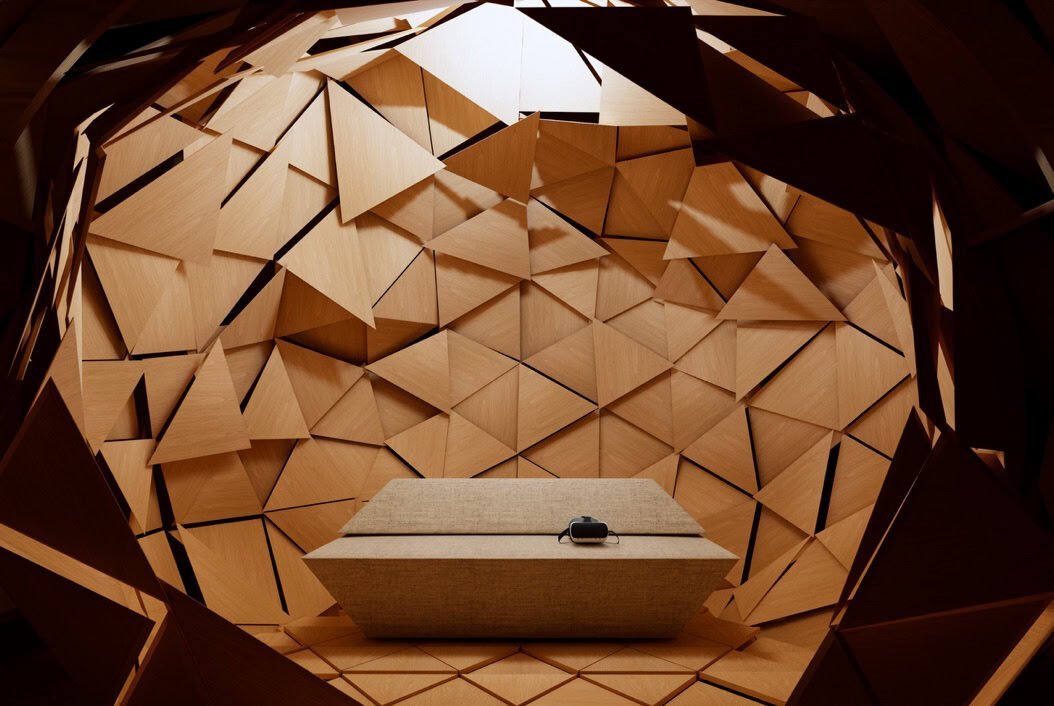
In Geneva, Erkin Bek's ALL HERE pairs guided practice with immersive headsets and live brainwave readings, a meditation centre that treats technology as a door rather than a distraction.
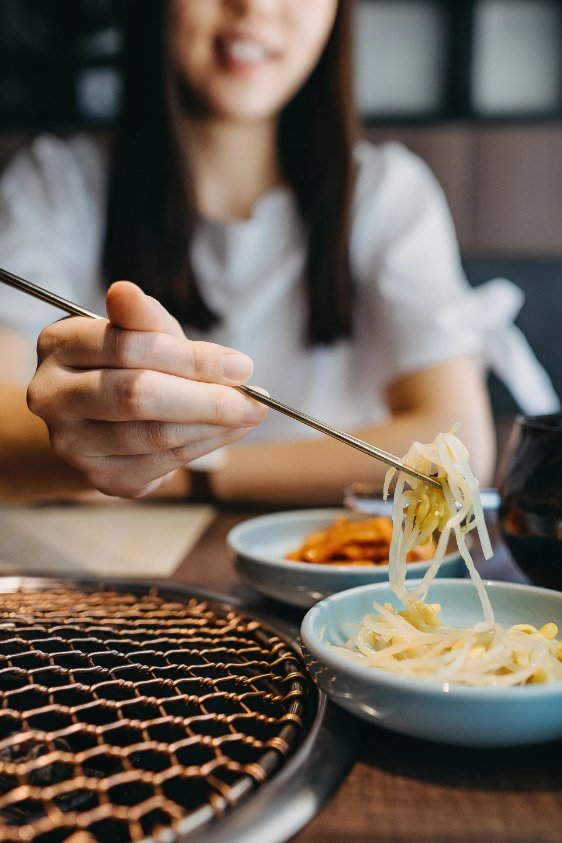
Japan has some of the longest lives on earth, and no single food explains them. From natto to wakame, eight staples of the Japanese table and the habit of stopping before you are full show how a diet built on fermentation, soy, sea vegetables and moderation fits a wider pattern of health.
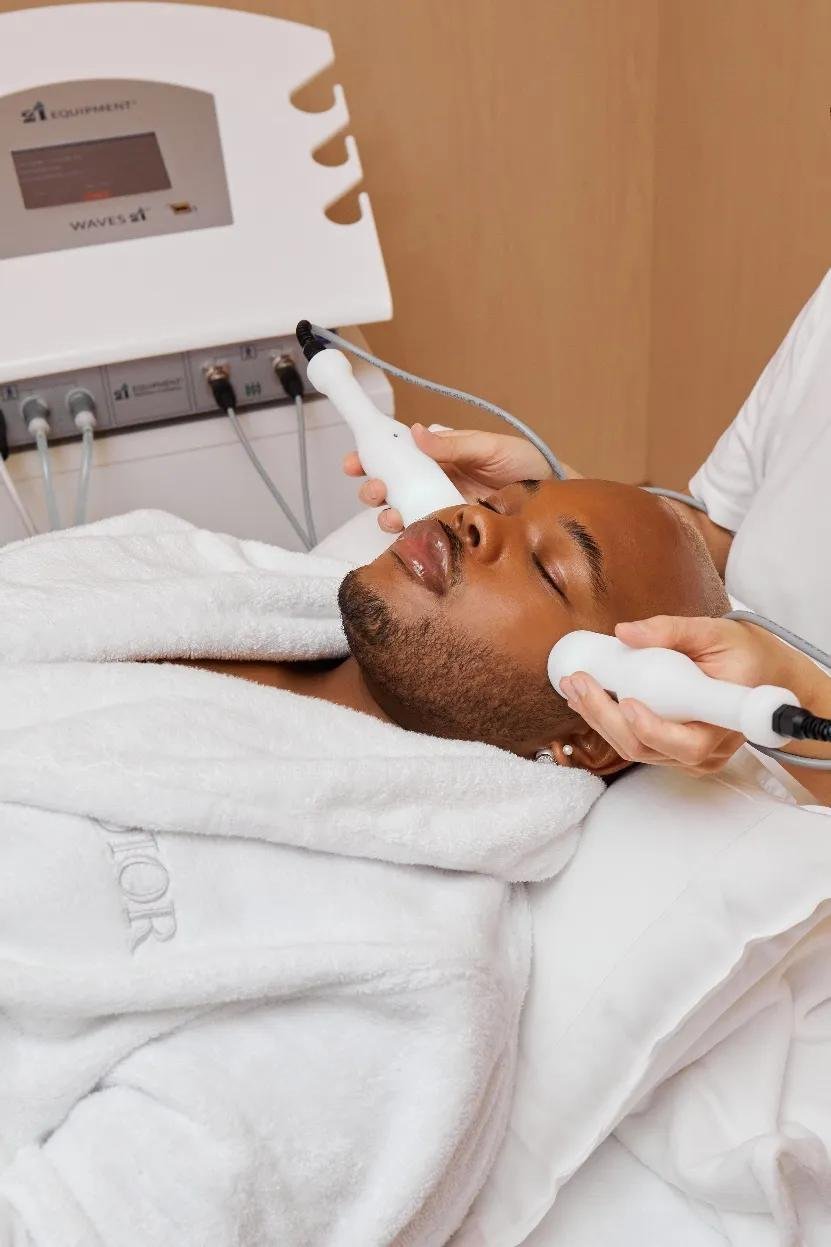
Travelling for an aesthetic procedure used to be a question of price. Today the decision turns on credentials, safety protocols and time to recover, and the trip increasingly folds into a wider programme of wellbeing.