TRAVEL
Italy’s most familiar destinations are not the only places where architecture, food and landscape can shape a journey. A smaller coastal town or an Alpine valley may offer a more useful starting point for a longer stay than another hurried stop on an established circuit.
These ten destinations are not presented as places without visitors. Their appeal is more specific: a particular coastline, a town’s working history, access to walking routes or a concentration of art and craft. Named hotels and restaurants give a starting point for planning, with current availability and seasonal arrangements to be checked directly.
Maratea, Basilicata
Maratea brings a Tyrrhenian coastline into a region often approached through its inland landscape. The town, beaches and hills can be combined without turning the stay into a continuous sequence of transfers.
Casa Maratea adds a contemporary collection of design references, with objects and works associated with Ettore Sottsass, Gaetano Pesce, Gio Ponti and Vanessa Beecroft. Hotel Santavenere offers another connection to the coast’s earlier hospitality history. They are different ways of staying in the same landscape, rather than interchangeable versions of a beach resort.
Baratti, Tuscany
Baratti combines a bay with wooded paths and the history around Populonia. Walks towards the houses associated with Vittorio Giorgini make architecture part of a coastal day, while the route itself requires attention to access and terrain.
Le Moraiole provides a country-house alternative in the hills. That choice gives the visit a different rhythm from remaining directly on the shore, with inland time and the bay available within the same itinerary.
Torre Guaceto, Puglia
The Torre Guaceto reserve offers coastal paths, protected habitats and a shoreline whose conservation rules are part of the experience. Not every stretch should be treated as an unrestricted beach: access, activities and the season need to be considered before arriving.
The wider Puglia journey can extend towards Savelletri and its makers, or continue into Salento, where addresses such as Palazzo Edmondo supply another base. These are regional connections, not claims that every stop lies beside the reserve.
Castro, Salento
Castro’s upper town and marina give the stay two distinct settings. The historic streets reward time on foot, while the coast opens towards boat excursions and caves such as Zinzulusa. Conditions and authorised access determine how those visits are made.
Food can remain straightforward: a rustico, a calzone or a table at Il Posto delle Fragole. The attraction is not a search for constant novelty. It is the connection between a small town, the sea and the dishes encountered within that daily life.
San Teodoro, Sardinia
La Cinta is the obvious starting point, but San Teodoro also connects with Tavolara, Monte Nieddu and Capo Coda Cavallo. A stay can therefore move between beaches, walking and views of the surrounding coast rather than remain on one strip of sand.
The evening market adds another register, with local products and myrtle among the references encountered in the town. Beach access arrangements can change with season and demand; a general description of the coast should not replace checking the specific rules.
Bosa, Sardinia
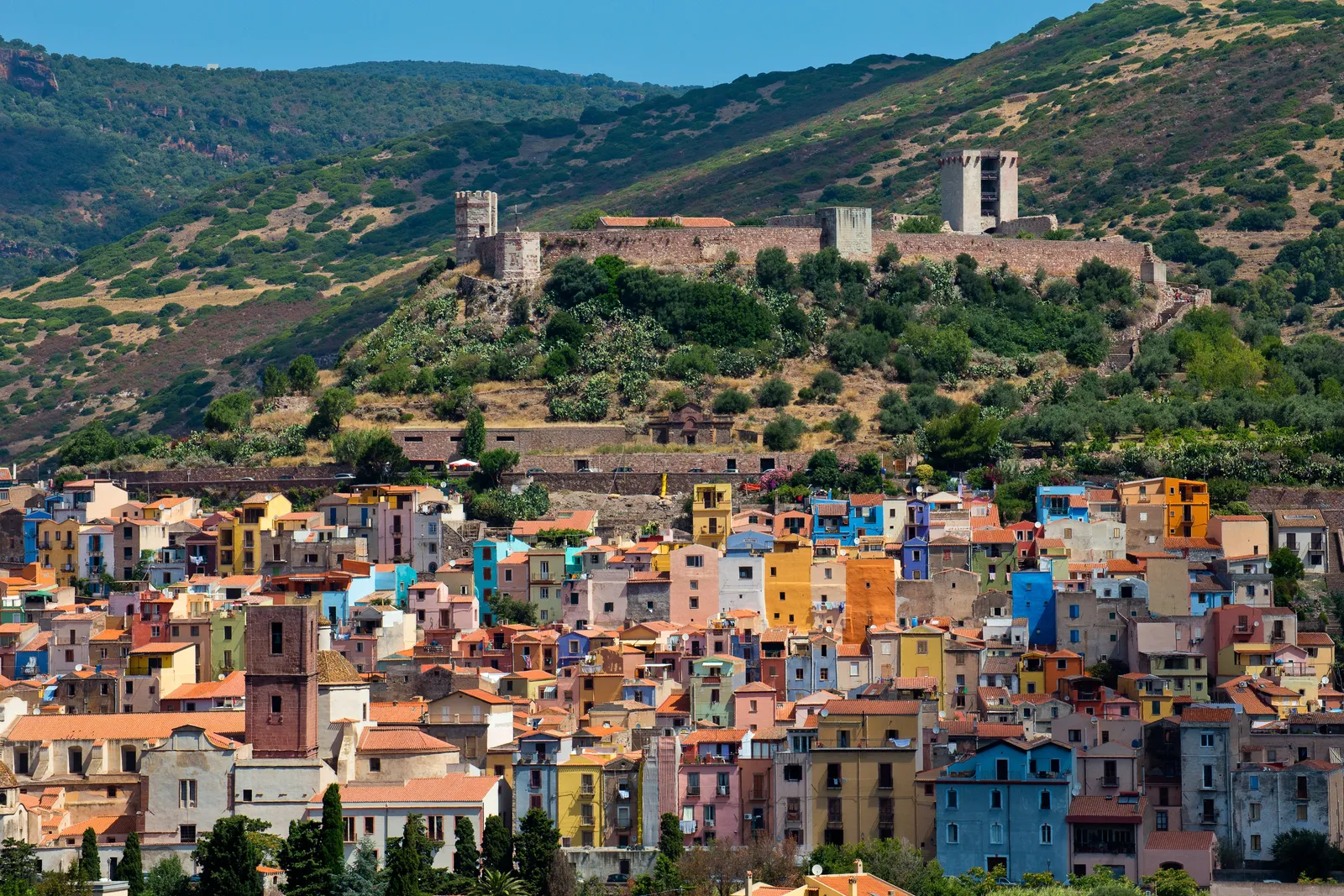
Bosa gives the island a different face. Coloured houses follow the Temo, with the Malaspina castle above them. The river brings movement through the town itself, while Malvasia gives the local wine story a distinctive direction.
At Locanda di Corte, chef Nicola Ibba supplies a dining reference within the historic setting. A river outing, time in the upper streets and a meal can form a coherent day without requiring Bosa to become a stop passed through on the way elsewhere.
Valdidentro, Valtellina
Valdidentro introduces an Alpine itinerary, with the Cancano lakes and routes for walking and cycling. Nearby Bormio and Santa Caterina broaden the mountain possibilities, while Valtellina’s Sforzato brings the region into the glass.
The thermal establishments around Bormio, including the Bagni Vecchi and Bagni Nuovi, can complement the outdoor days. Lac Salin in Livigno offers another regional stay, though it should not be described as a hotel within Valdidentro itself.
Valsolda, Lake Lugano
Valsolda combines the Italian side of Lake Lugano with a landscape close to the Swiss border. Antonio Fogazzaro’s Piccolo mondo antico provides a literary route into its villages, while paths and the water create more practical ones.
Parco San Marco, near Cima in neighbouring Porlezza, can serve as a base for the wider area. The distinction between the valley and the neighbouring towns is worth retaining: a useful itinerary can connect them without collapsing their geography.
Vieste, Gargano
Vieste’s older streets and coastline introduce the Gargano, with olive trees, figs and routes towards the Tremiti Islands extending the visit. The sea remains central, but the setting has more than one kind of day to offer.
Casa Giulia gives a town-based accommodation reference. Al Trabucco da Mimì, near Peschici, brings a traditional fishing structure into the wider coastal dining itinerary. It belongs to the neighbouring area, not to an invented address in Vieste.
Pietrasanta, Tuscany
Pietrasanta’s connection with artists and sculpture gives it a different reason to appear on a Tuscan itinerary. Workshops and galleries surround the streets and the cathedral square, while Forte dei Marmi adds a nearby coastal extension.
Le Bar à Vins, Hotel Paradis and Il Mulino di Nonna Sa provide different points within that stay, from a meal to accommodation beyond the most familiar seaside formula. The town works best when its art-making identity is given time, rather than encountered only through a quick look at the square.
These destinations offer alternatives because they have their own subjects. Maratea’s coast, Bosa’s river, the mountains of Valdidentro and Pietrasanta’s sculpture workshops do not need to compete with Rome or Venice on the same terms. They need an itinerary that allows their differences to become the reason for going.
Further information: tourism authority · cultural itinerary · Bosa · Serravalle castle · official destination profile · public sculpture itinerary.
Cover: Bosa and the River Temo, Sardinia. Archive image.
GABRIEL SILVEIRADO, FOR WAYFARER.