Levi’s 501: a pair of work trousers that learned to tell the story of its wearer
Born of a rivet patent in 1873, the Levi's 501 acquired its pocket, its belt loops and its red Tab over six decades. Its true history is written twice: once by the factory, and again by everyone who wears it.
WAYFARER Edition | Images: Levi Strauss & Co. Archives
STYLE
Some objects become icons by staying the same. The Levi’s 501 became one by changing slowly enough that nobody noticed. Its outline is recognisable across a century and a half, yet almost every detail that defines it arrived later, one practical decision at a time.
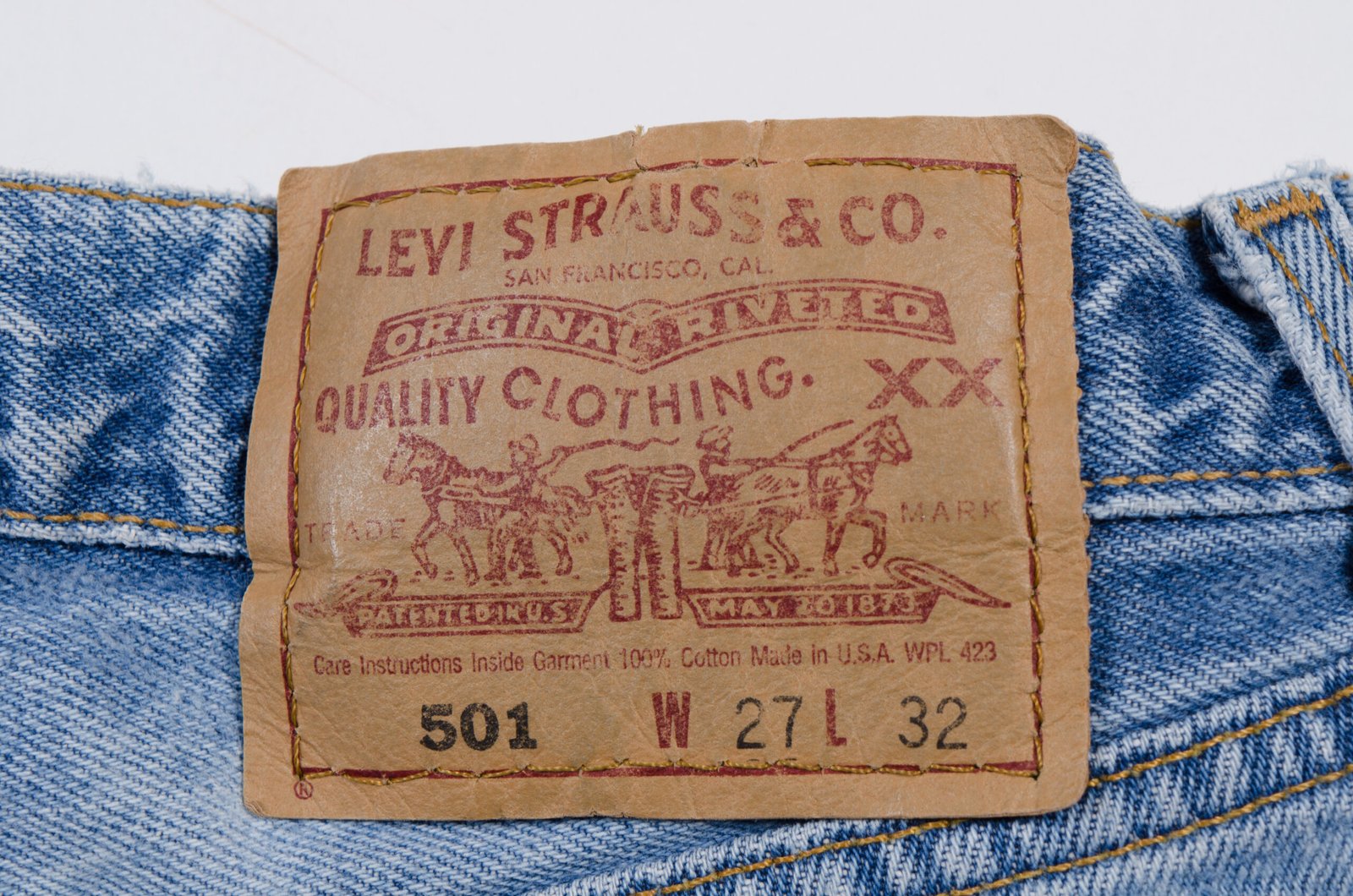
501 Day, from the Levi Strauss & Co. Archives. Image: Levi Strauss & Co.
A tailor, a merchant and a rivet
The beginning was a problem of strain. In late 1870, Jacob Davis, a Latvian-born tailor working in Reno, Nevada, began reinforcing the stress points of men’s work trousers with copper rivets. He bought his fabric from Levi Strauss, a Bavarian dry goods merchant who had arrived in San Francisco during the Gold Rush. Davis needed a partner to patent the idea; Strauss had the means. On 20 May 1873, United States Patent No. 139,121 was granted to them both for riveted work clothing. Later that year, the first “waist overalls” came off the line, cut from nine-ounce XX denim woven at the Amoskeag Mill in New Hampshire, with the arcuate stitching already on the back pockets.
The company still marks the date as 501 Day. It is worth remembering what was patented, though: not a style, not a silhouette, but a way of keeping a pocket attached to a pair of trousers worn by men who worked with their hands.
An icon assembled over sixty years
Familiarity makes a design look inevitable. The 501’s history says otherwise. The Two Horse leather patch appeared in 1886. Around 1890, the lot number 501 was assigned to the copper-riveted overalls, just as the rivet patent passed into the public domain. A second back pocket arrived around 1901, belt loops in 1922, while the suspender buttons and the cinch remained for a while longer. The red Tab was first sewn onto the right back pocket in 1936. In 1937, the back pockets were sewn over their rivets, and the suspender buttons gave way to snap-on buttons.
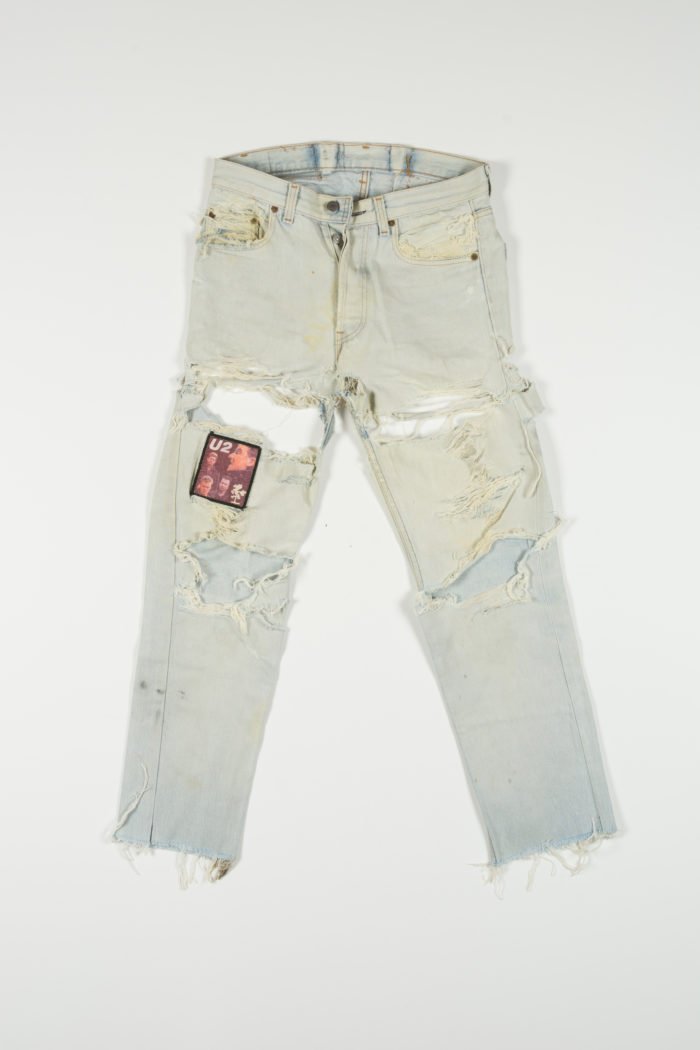
The Shamrock 501, 1986: twenty years of wear in Kildare. Image: Levi Strauss & Co. Archives
War took things away. During the Second World War, the crotch rivet, the watch-pocket rivets and the cinch were removed to save metal, and the arcuate was painted on rather than stitched. In 1954, the zippered 501Z was introduced for customers on the East Coast unused to a button fly. Only in 1960 did the company’s advertising stop calling them overalls and start calling them jeans. In 1964, they entered the permanent collections of the Smithsonian Institution.
What was patented in 1873 was not a style. It was a way of keeping a pocket attached to the trousers of men who worked with their hands.
The second history: wear
Every 501 has two histories. The first belongs to the factory and is written in rivets, pockets and patches. The second belongs to the wearer and is written in fades, creases and repairs. Two pairs cut on the same day begin to diverge the moment they are worn, and that divergence is precisely what the Levi Strauss & Co. Archives in San Francisco set out to keep.
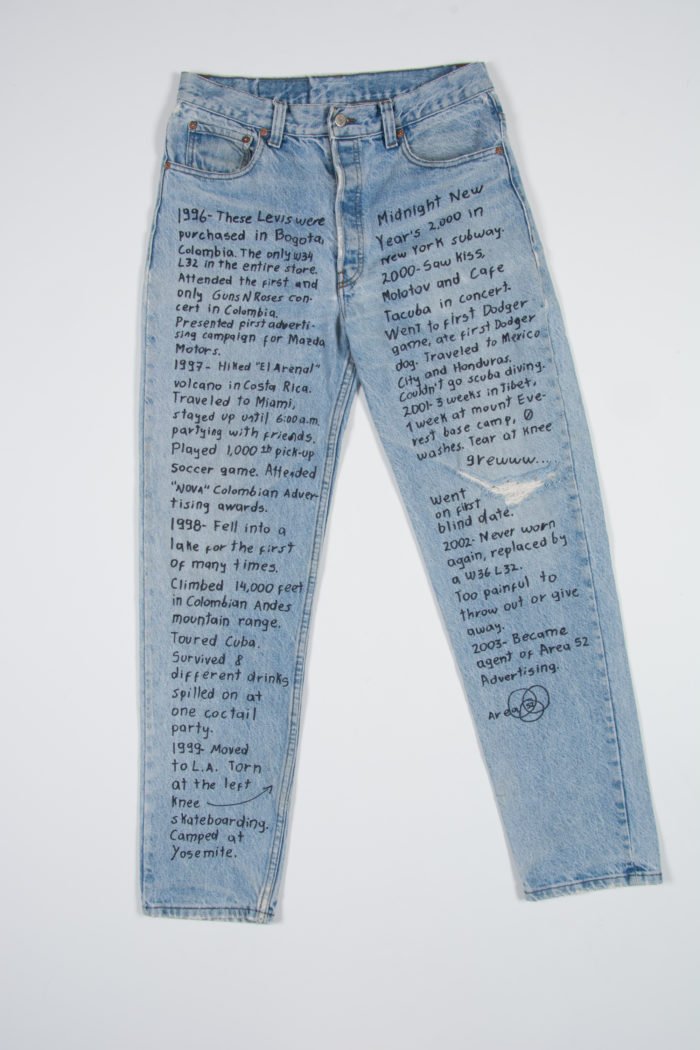
A pair from 1996, worn for nearly a decade and annotated by its owner. Image: Levi Strauss & Co. Archives
Among the pairs held there: a 501 worn for some twenty years by a shepherd in Kildare, Ireland, who stitched a U2 patch onto it; a pair worn for nearly a decade, through travel, skateboarding and concerts, whose owner wrote her adventures on the thigh before donating it; and a professional bull rider’s black 501s, their seams split when a bull stepped on him in the arena. He stayed on his feet and won the belt buckle. None of these garments is in its factory condition. All of them are more complete for it.
A bull rider’s 501, 2019, its seams split in the arena. Image: Levi Strauss & Co. Archives
The value of a neutral form
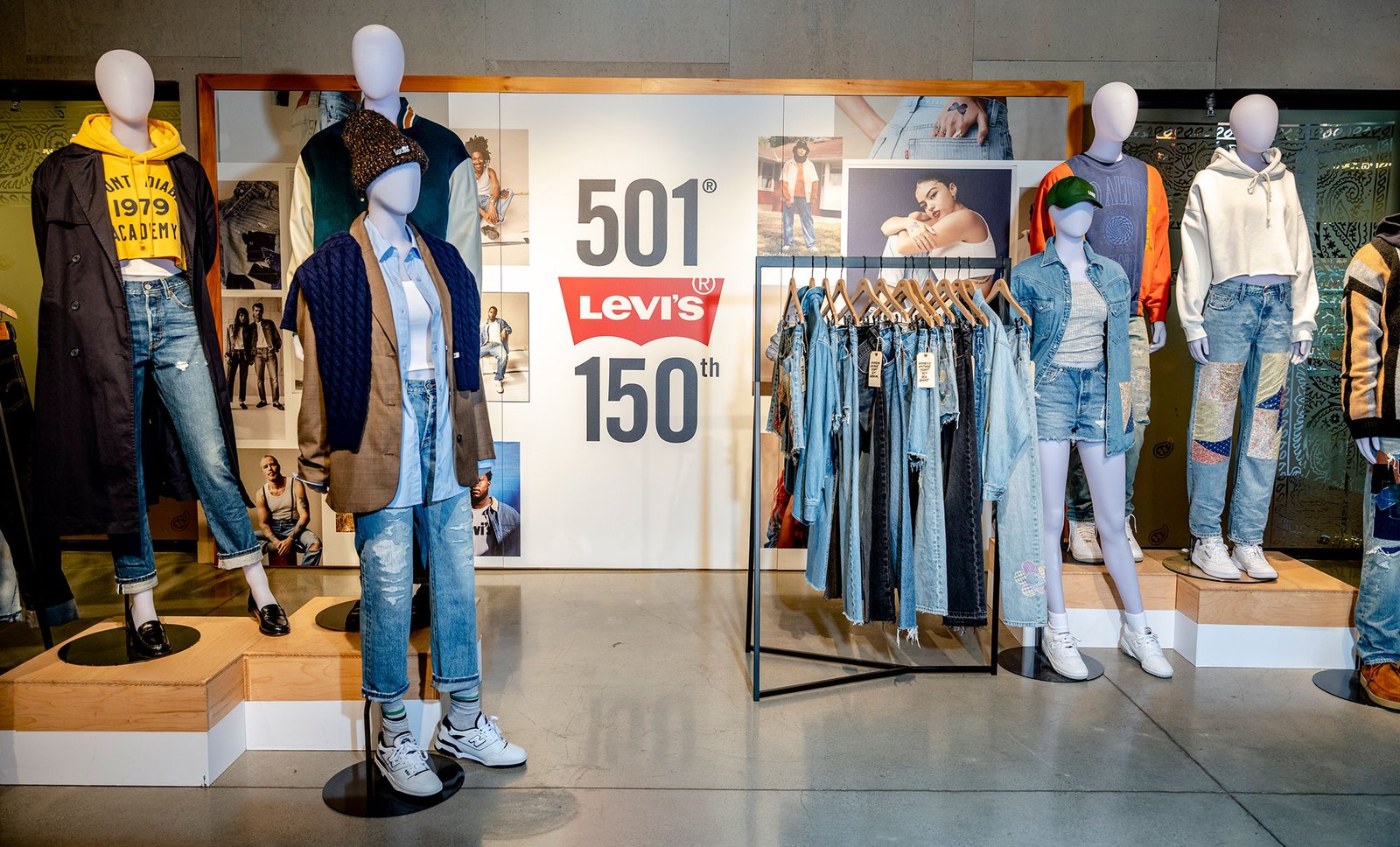
Part of the 501’s longevity lies in its restraint. The straight leg and balanced proportions sit between extremes, so the jean can accompany tailoring or a T-shirt without carrying the whole message of an outfit. Women’s 501s arrived in 1981; the “501 Blues” campaign launched at the Los Angeles Olympics in 1984. Time later named the jean the fashion item of the twentieth century, and in 2023 the brand celebrated the 501’s 150th anniversary with a year-long programme around the world.
The 150th anniversary of the 501, 2023. Image: Levi Strauss & Co.
Vintage collecting adds a further layer. Selvedge edges, hidden rivets, a single-sided red Tab: to the trained eye, each detail dates a pair to within a few years. The model’s continuity is therefore not nostalgia. It is a framework stable enough to be read, and open enough to be written on.
A rivet patent supplied the beginning; the rest was added slowly, and then handed over. In the end, the 501 is the rare object that is finished by someone other than its maker. The factory draws the outline. The life of the wearer fills it in.
Valentino Garavani died at home in Rome in January 2026, at 93. From his Paris apprenticeship and the red that bears his name to the Florence show that made him and the foundation he built with Giancarlo Giammetti.
The Metropolitan Museum of Art and John Galliano have jointly cancelled Horizons, the Costume Institute retrospective due to open with the 2027 Met Gala, after a backlash over the designer's past antisemitic remarks.
Chanel has never launched a men's line, and says it has no plans to. From Gabrielle Chanel and Karl Lagerfeld to Harry Styles, Pedro Pascal and Jacob Elordi, the house has built a menswear of suggestion instead.