Milan Fashion Week Spring/Summer 2027: the changing of the guard
What remains of a house when the name on the door no longer signs the clothes. Milan's Spring/Summer 2027 season, from Prada's skirts to the first Armani collection of the year after.
Bottega Veneta Summer 2027, the finale. Photo: courtesy of Bottega Veneta / WAYFARER Edition | Images: courtesy of Bottega Veneta; Filippo Fior, courtesy of Marni
MILAN FASHION WEEK · SPRING/SUMMER 2027
Every fashion week asks a question. This year Milan asked the hardest one: what remains of a house when the name on the door no longer signs the clothes.
The city arrived at September with its memory still raw. It was the first September women’s season since Giorgio Armani died in September 2025, at 91. Glenn Martens said goodbye to Diesel. Moschino introduced a new design duo. Between absences and first times, each runway answered in its own way, and Italian fashion has rarely seemed so aware of itself.
Prada: a collection made only of skirts
Prada opened the week, and Miuccia Prada and Raf Simons opened with a thesis: 63 looks, no trousers, no dresses, only skirts. They came in every dialect. Pleated in muted grey and black with fluorescent panels, ruched and bowed, printed with graphic sketches, dip-dyed into something close to a Rothko, embroidered with crystals, jewels set onto strips of industrial Velcro. Miuccia Prada once likened the skirt to a T-shirt, a base on which to build. Here it became the whole sentence. Simons, for his part, spoke of the value of illogical behaviour, an idea that runs through the house and through this collection.
Gucci: the shop as runway
For his second Gucci show, Demna did not build a set. He built a store: an entire boutique of marble, velvet stools, classical statues and fitting rooms, a preview of the brand’s new retail concept. The cast looked as if it had wandered out of a Milanese VIP lounge, and the clothes moved between monochrome tailoring with a memory of the 1990s, equestrian silhouettes and schoolboy polos. Behind the shop window there is a balance sheet to close. Gucci remains the largest part of Kering, and its revenue has contracted sharply in recent years. The show was built to be seen, and to be bought.
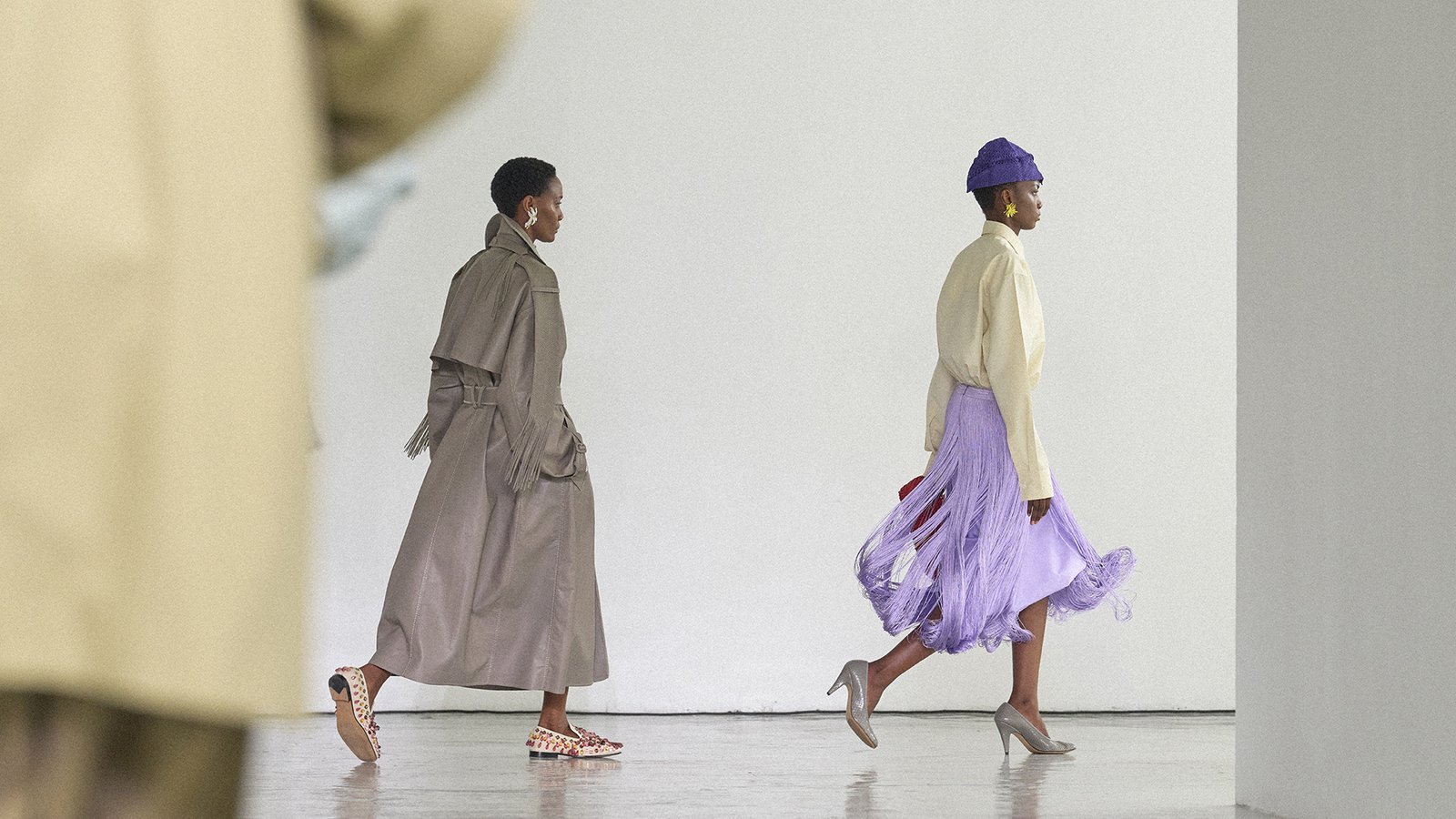
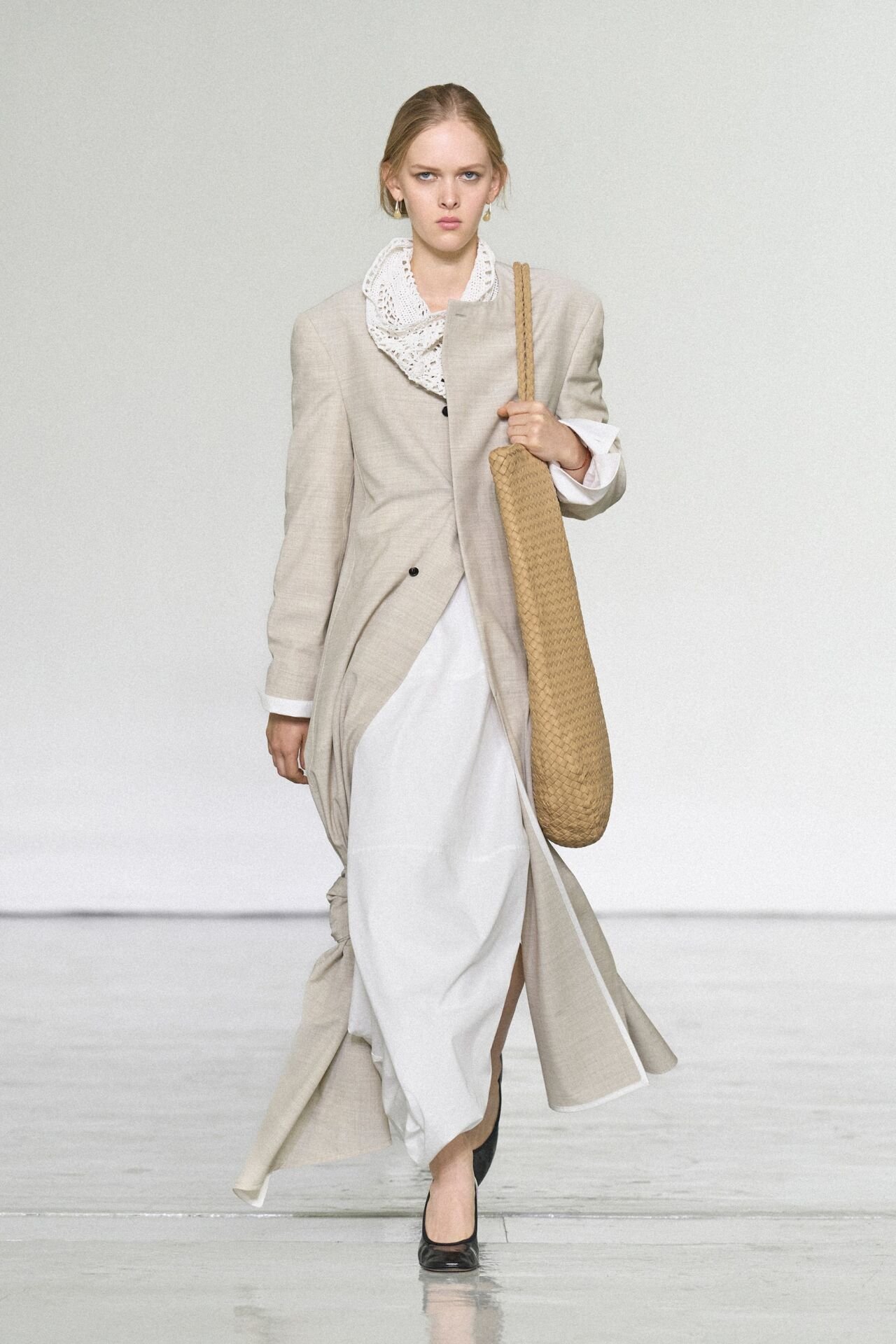
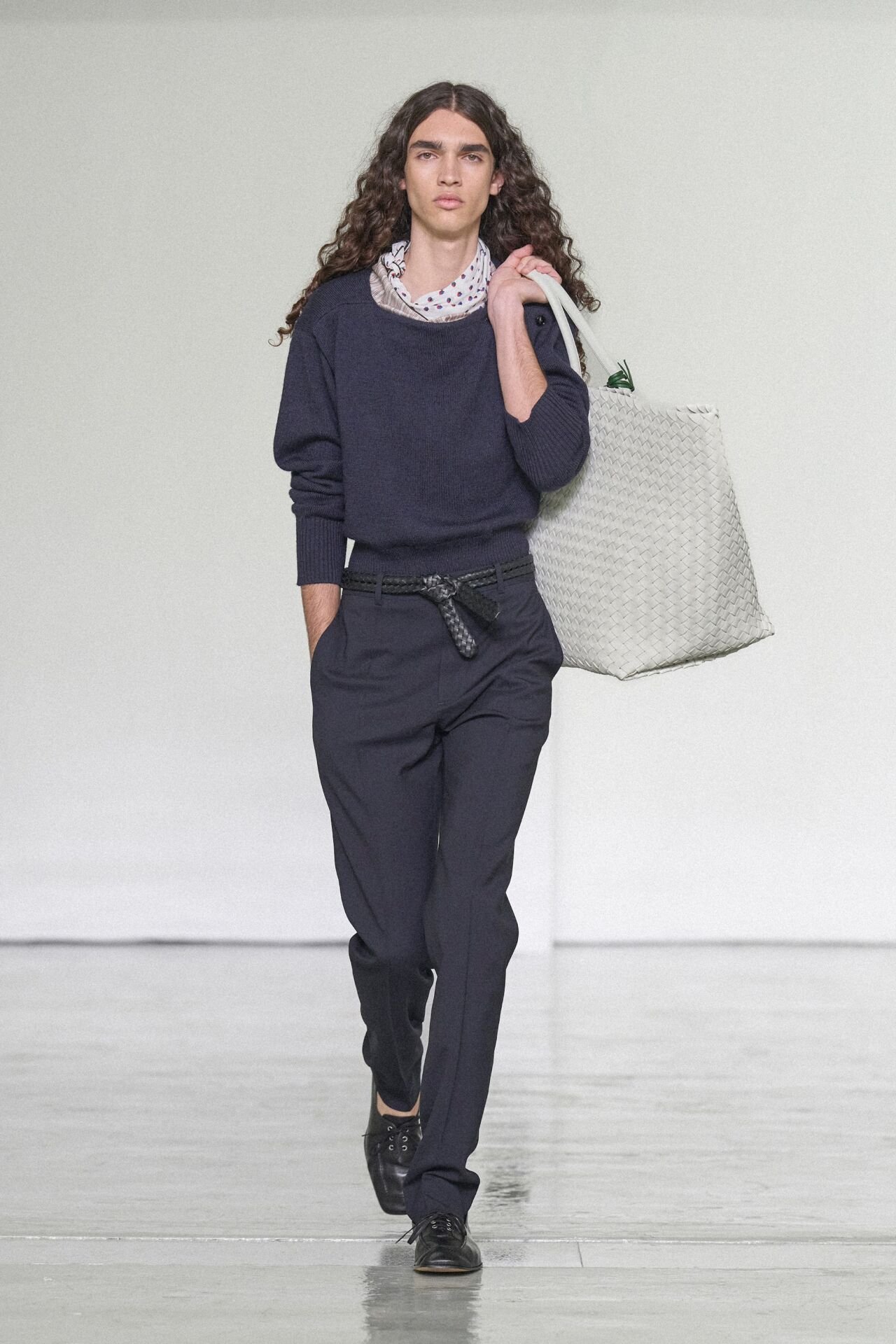
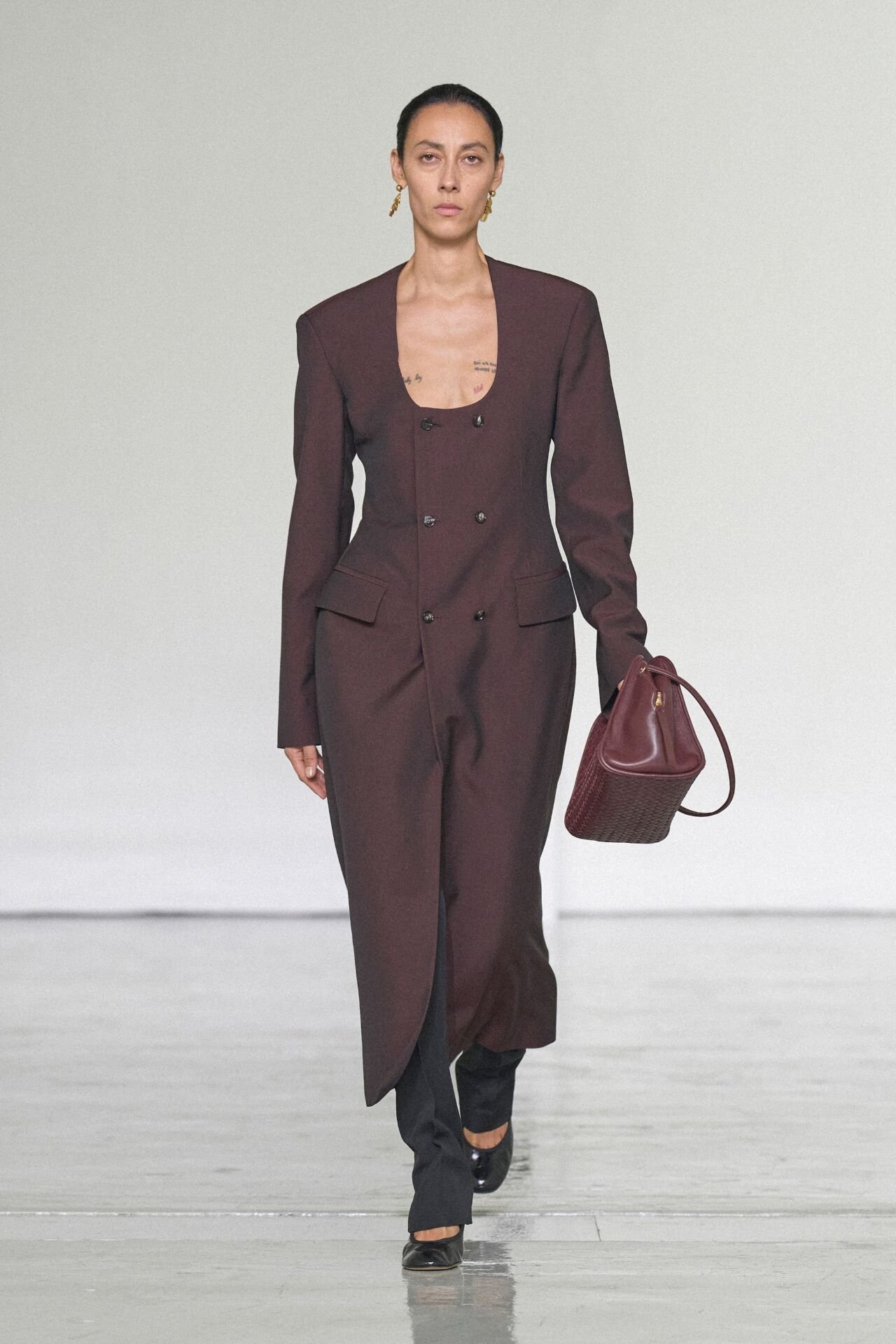
In her third collection, Louise Trotter worked on an almost silent theme: the shedding of layers as the seasons turn. Intrecciato appeared on bags, tuxedo shirts and even on leather newspapers. Crochet was knitted by hand, fringe ran in colour and pattern, and three-dimensional flowers bloomed on dresses. The styling rule was simple: one loud piece, everything else quiet.
Matter is woven, but so are disciplines, gestures, and people.
The most shared moment of the week came at the end. Kendall Jenner, who first walked for the house in 2016, closed the show in black drape and crochet flats while Jacob Elordi photographed her from the front row, Tyler, the Creator seated beside him.
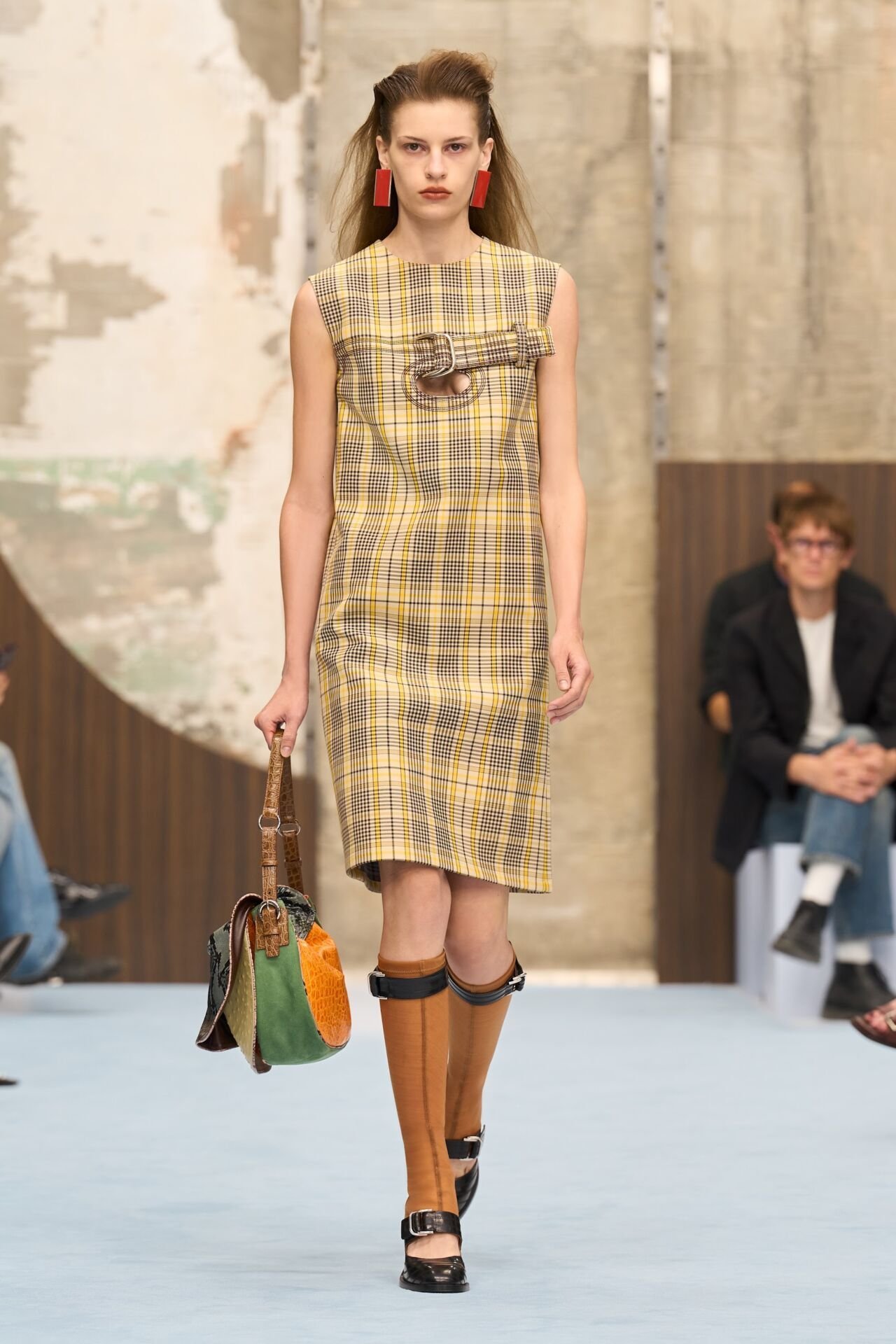
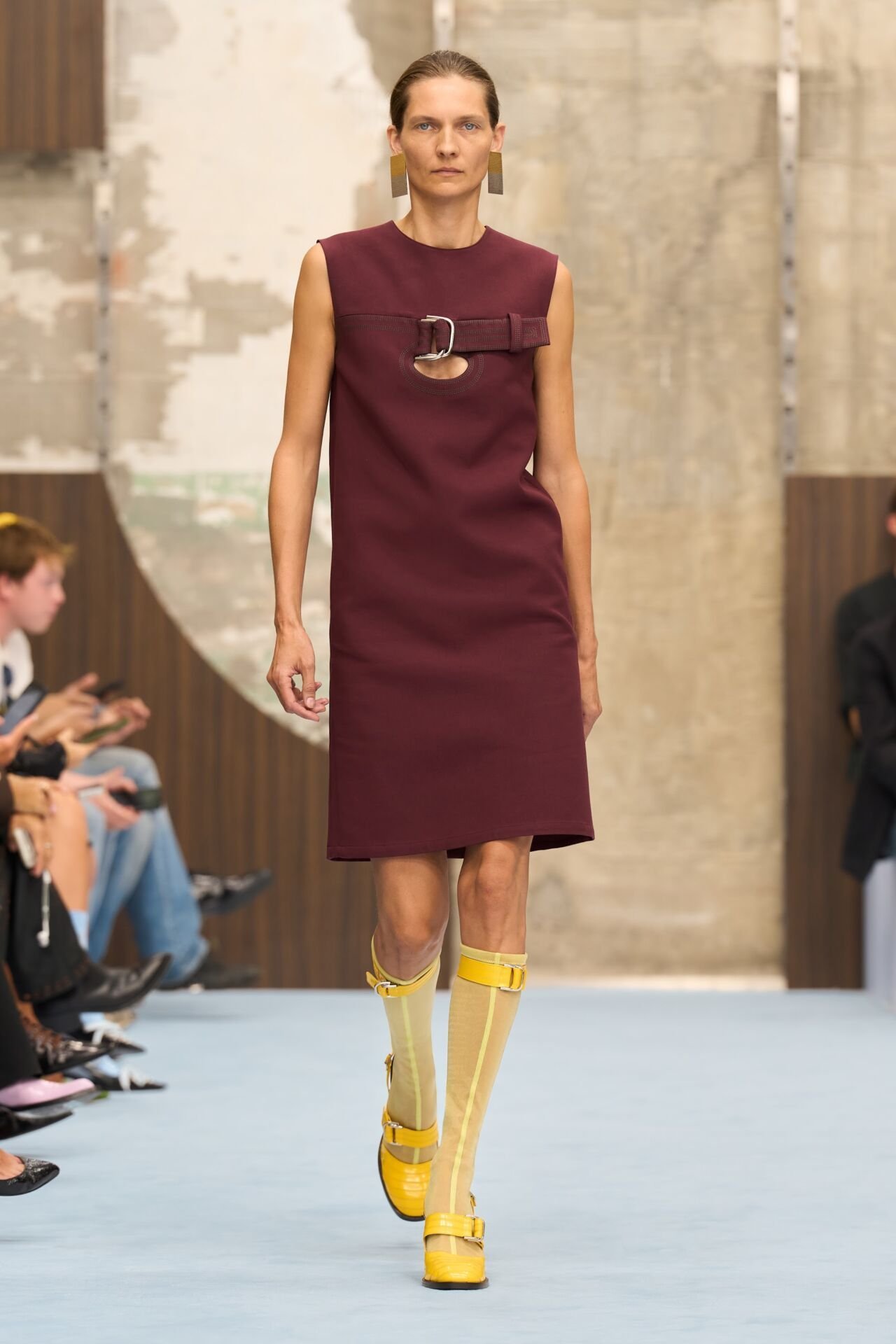
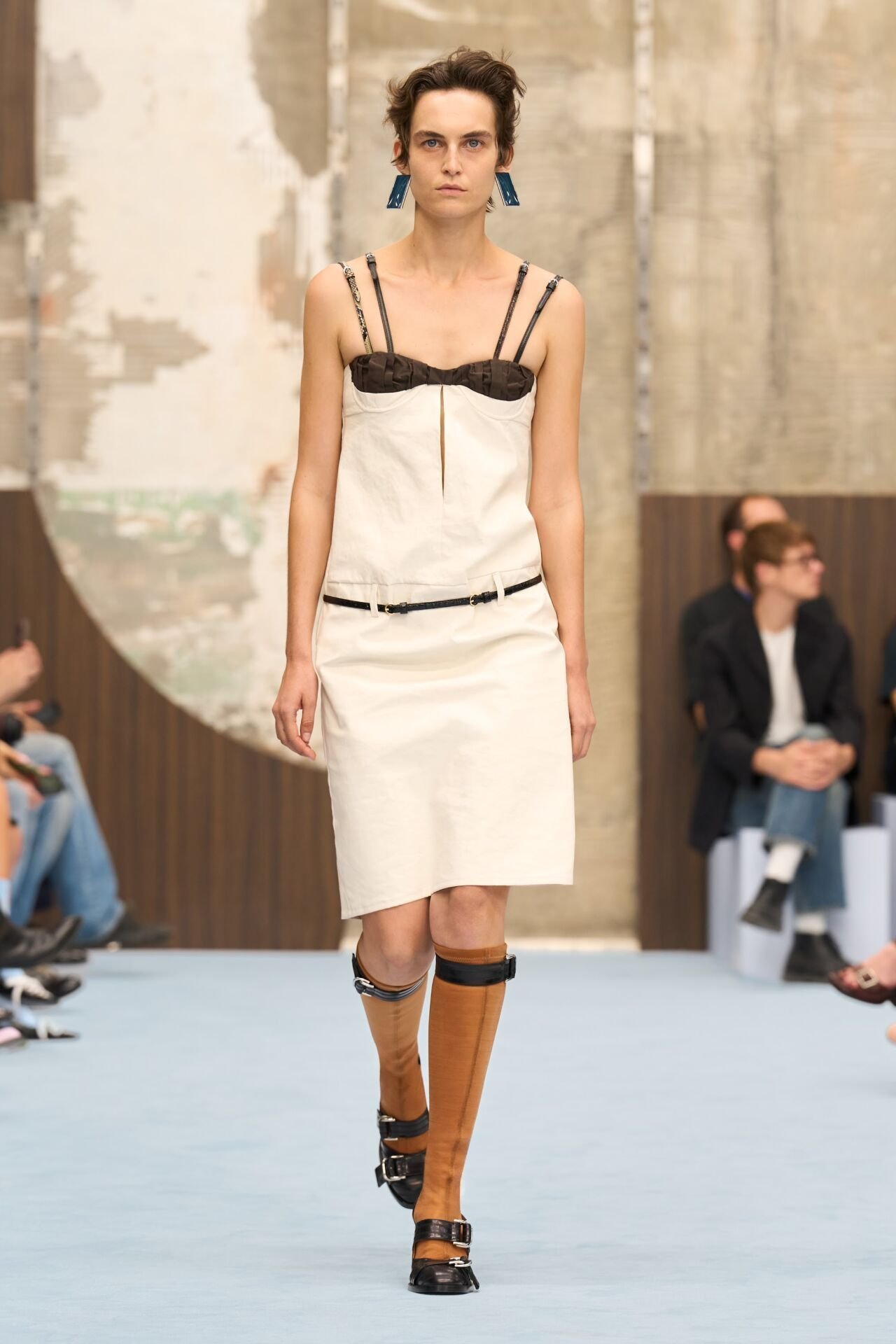
In Meryll Rogge’s second collection, Marni turned revelation into method. Openings, exposed linings, fragmented surfaces and dissected constructions let the inside show. Backless knits, shoes that bared the skin, sheer fabrics. Embroideries were treated as found objects, lifted from one garment and set on another, and the outline of a bra was built into the clothes themselves. The palette of blond, chestnut, black and grey recalled hair and skin.
Marni Spring/Summer 2027. Photo: Filippo Fior, courtesy of MarniMarni Spring/Summer 2027. Photo: Filippo Fior, courtesy of MarniMarni Spring/Summer 2027. Photo: Filippo Fior, courtesy of Marni
Moschino and Diesel: an arrival, a departure
The season’s notable debut belonged to Moschino, where Loris Messina and Simone Rizzo, formerly of Sunnei, presented their first collection and loosened the house’s famous joke rather than repeating it. At the other end, Diesel turned a farewell into a party. Glenn Martens, whose departure was announced days before the show after nearly six years at the brand, staged his last collection as an immersive club, distressed denim and worn knits included. He remains at Maison Margiela, within the same OTB group.
Giorgio Armani: one year later
The closing show belonged to someone who was not in the room. Silvana Armani, the founder’s niece, presented a collection called Evolution at the Armani/Teatro in ivory, black and gold, with long silhouettes and fluid trousers. There was a small transgression, offered with tenderness: cotton, introduced as an example of change within a continuing aesthetic. The house’s notes put it plainly, that style is a way of being rather than an immutable code. This is how a house survives its founder: obeying almost always, disobeying now and then.
Milan asked the hardest question of the season and answered without raising its voice. In a week of debuts, farewells and empty chairs, the houses that spoke loudest were the ones that returned to their own craft. Prada’s skirt, Bottega’s weave, the cotton Armani would not have used. The founder leaves the room. The hand remains.
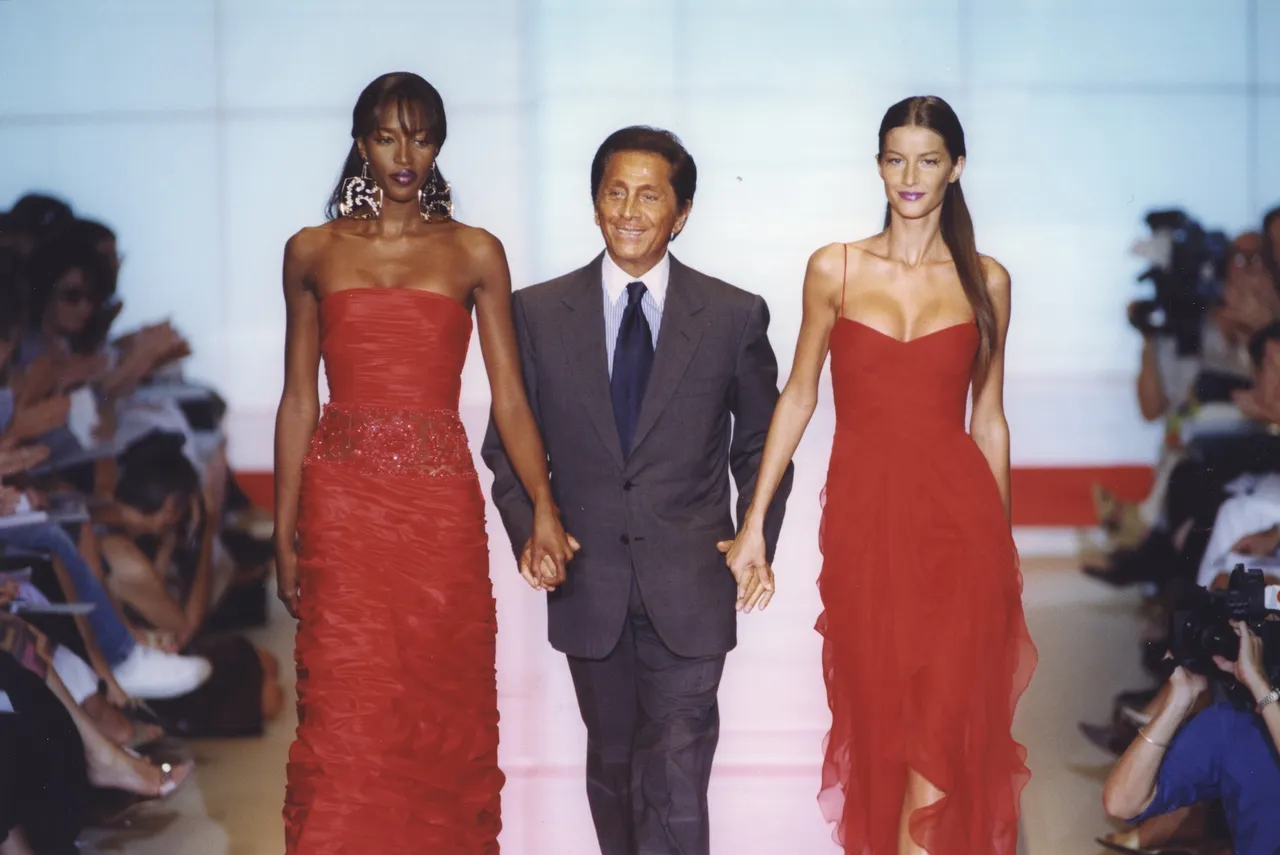
Valentino Garavani died at home in Rome in January 2026, at 93. From his Paris apprenticeship and the red that bears his name to the Florence show that made him and the foundation he built with Giancarlo Giammetti.
The Metropolitan Museum of Art and John Galliano have jointly cancelled Horizons, the Costume Institute retrospective due to open with the 2027 Met Gala, after a backlash over the designer's past antisemitic remarks.
Chanel has never launched a men's line, and says it has no plans to. From Gabrielle Chanel and Karl Lagerfeld to Harry Styles, Pedro Pascal and Jacob Elordi, the house has built a menswear of suggestion instead.