Monaco Grand Prix 2027: a week inside the principality, from the heliport to the last table
From 4 to 6 June 2027 Monte-Carlo becomes the narrowest circuit in Formula 1, and for the first time it hosts a sprint. The complete guide to the week: how to arrive, the circuit corner by corner, where to stay, where to watch, where to eat and go out, and in which order to book.
Photography courtesy of Monte-Carlo Société des Bains de Mer, Explora Journeys and WAYFARER archive
TRAVEL
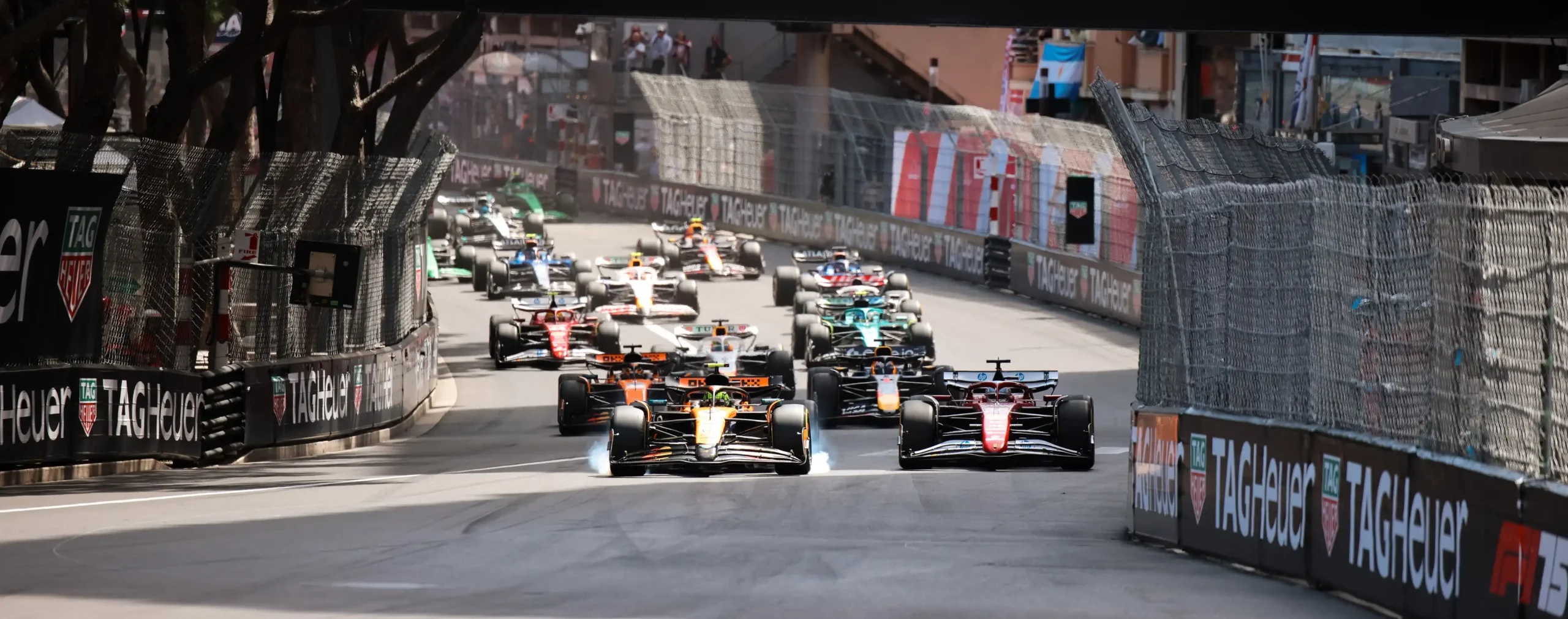
In Monaco the race does not take place at a circuit. It takes place in a city, and the city never quite stops being a city to make room for it. Residents cross the track on footbridges, shops trade behind the barriers, yachts are moored a few metres from the braking zones, and a hotel terrace becomes a grandstand with room service.
From 4 to 6 June 2027, the streets of Monte-Carlo become the 3.337 kilometres that every driver names as the hardest lap of the year. The 84th Grand Prix de Monaco, round eight of the season, arrives with a change that the principality resisted for years: for the first time it adopts the sprint format, one of ten sprint weekends on the 2027 calendar. A short race on Saturday means competitive running on every day of the weekend. For the visitor, the arithmetic changes. There is no quiet Friday left to arrive, the closures last longer and the two square kilometres of Monaco are busier from Thursday night to Sunday evening. Those who come without a plan discover it at the first closed junction.
This is the complete guide to the week: how to arrive, how the weekend runs, the circuit corner by corner, where to stay, where to watch, where to eat and go out, what to do beyond the track and, above all, in which order to book.
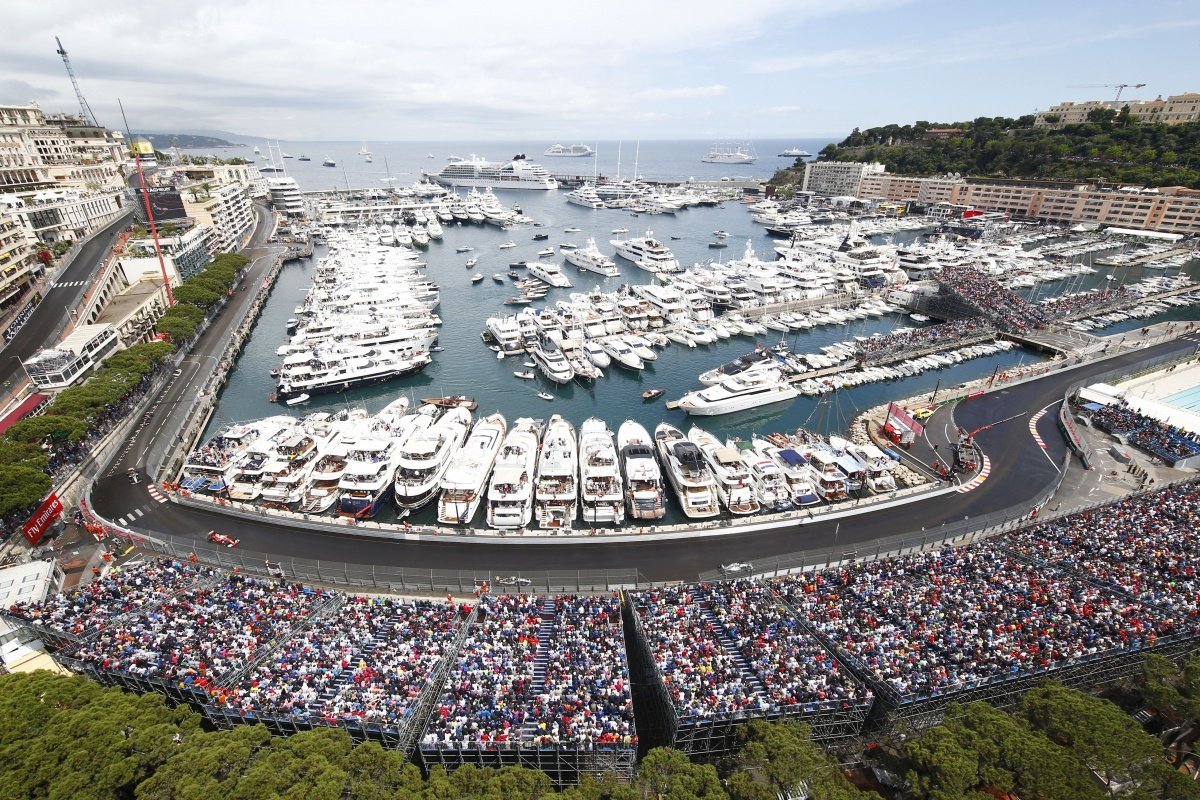
Port Hercule during the Grand Prix: the track wraps around the harbour, and the yachts become private boxes.
Why Monaco is unlike any other Grand Prix
The Monaco Grand Prix has been run since 1929 on very nearly the same streets, and it is the only race in Formula 1 where an entire city keeps functioning around it. There is no car park, no main gate and no single place from which the whole lap can be seen. There is a principality of two square kilometres, a harbour, a hill with a casino at the top and narrow streets where the cars pass within centimetres of the barriers.
That changes everything for the traveller. At Silverstone or Monza, a ticket settles the weekend. In Monaco, the ticket is only the first piece of a puzzle that includes hotels with minimum stays, helicopter slots, pedestrian routes that change with each session, tables that are gone months in advance and a night that begins when the cars leave the track. It is the round on the calendar where the difference between arriving with a plan and arriving with a ticket is most visible.
Arriving: seven minutes, or an afternoon
The gateway is Nice Côte d’Azur airport, about 30 kilometres along the coast and well connected to the major European hubs. For long-haul travellers, it is worth landing in Europe a day early and flying down to Nice rested, because the week leaves no room to recover from jet lag.
During Grand Prix week the only transfer that keeps its promise is the helicopter to the Monaco heliport in Fontvieille, a flight of around seven minutes over the water. By road the same journey can take forty minutes or most of an afternoon, depending on closures that shift with each session and on traffic that builds from Thursday. The regional train from Nice-Ville reaches Monaco in around twenty minutes and is an honest alternative for those travelling light, though it fills at race times.
Inside the principality, walking is often the fastest option. The public lifts and escalators that connect its levels become part of the itinerary, and the footbridges over the track decide where you can cross at any given moment. The water works too: between the harbour, Villefranche and Cap-Ferrat, a boat is often the shortest route.
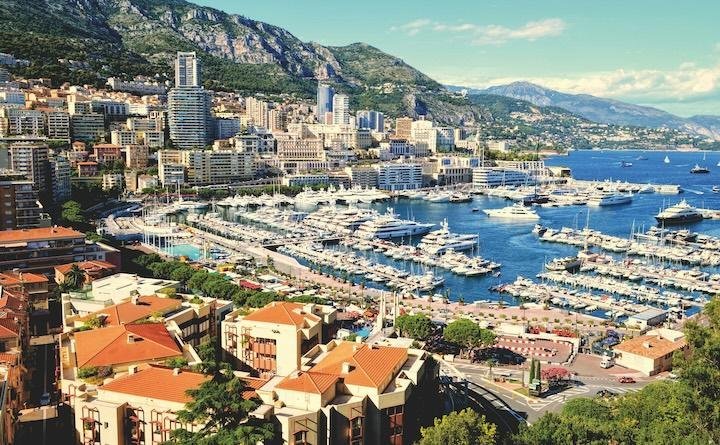
Monte-Carlo from above: the harbour below, the city climbing the hillside.
The weekend, day by day
Thursday 3 June. The last day to arrive without competing against the track. Check in, walk the circuit while it is still a street, and take the evening table that will be impossible to find on Saturday. It is the night for the principality’s great rooms and, for many, the best night of the week.
Friday 4. Under the sprint format there is a single practice session, followed by sprint qualifying in the afternoon. It is the day to learn the noise of the place: in Monaco the cars are heard long before they are seen, and the sound in the tunnel is unlike anything else on the calendar. It is also the day to learn your route between the hotel, your seat and the exit.
Saturday 5. The sprint, then qualifying for the Grand Prix. On these streets overtaking is so rare that Saturday afternoon decides much of Sunday, which makes qualifying one of the most watched hours of the season. The night belongs to the harbour and the clubs, and it is the busiest of the year in Monte-Carlo.
Sunday 6. The Grand Prix itself, traditionally at 3pm local time, over 78 laps. Arrive early, because the principality fills by late morning, and plan the evening around a departure that will compete with everyone else’s. Those with a boat or a helicopter booked leave first.
The final timetable, including supporting series and track access hours, is published by the Automobile Club de Monaco and Formula 1 in the months before the event. It should be confirmed then rather than assumed from previous years, especially in the first year of a new format.
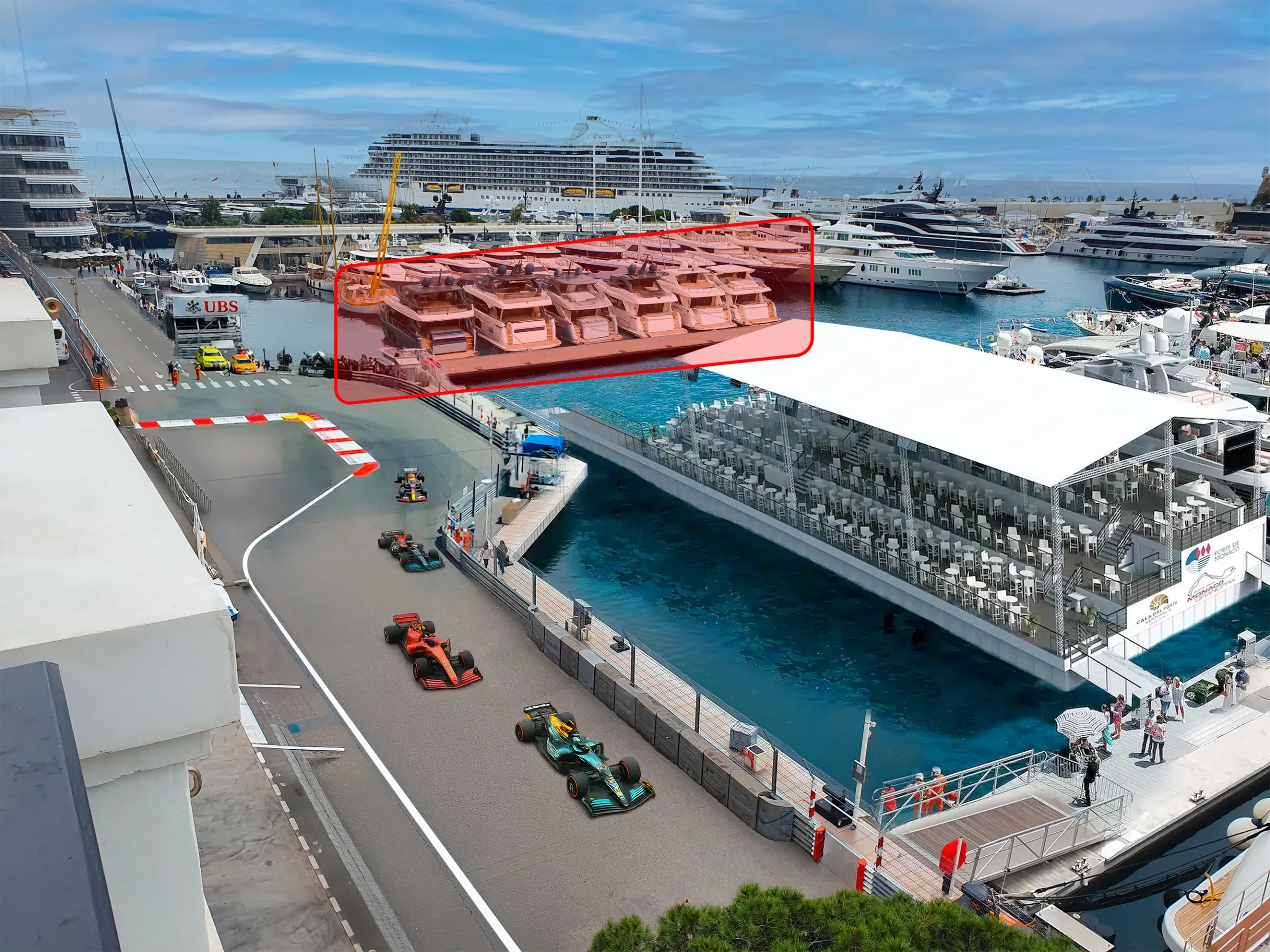
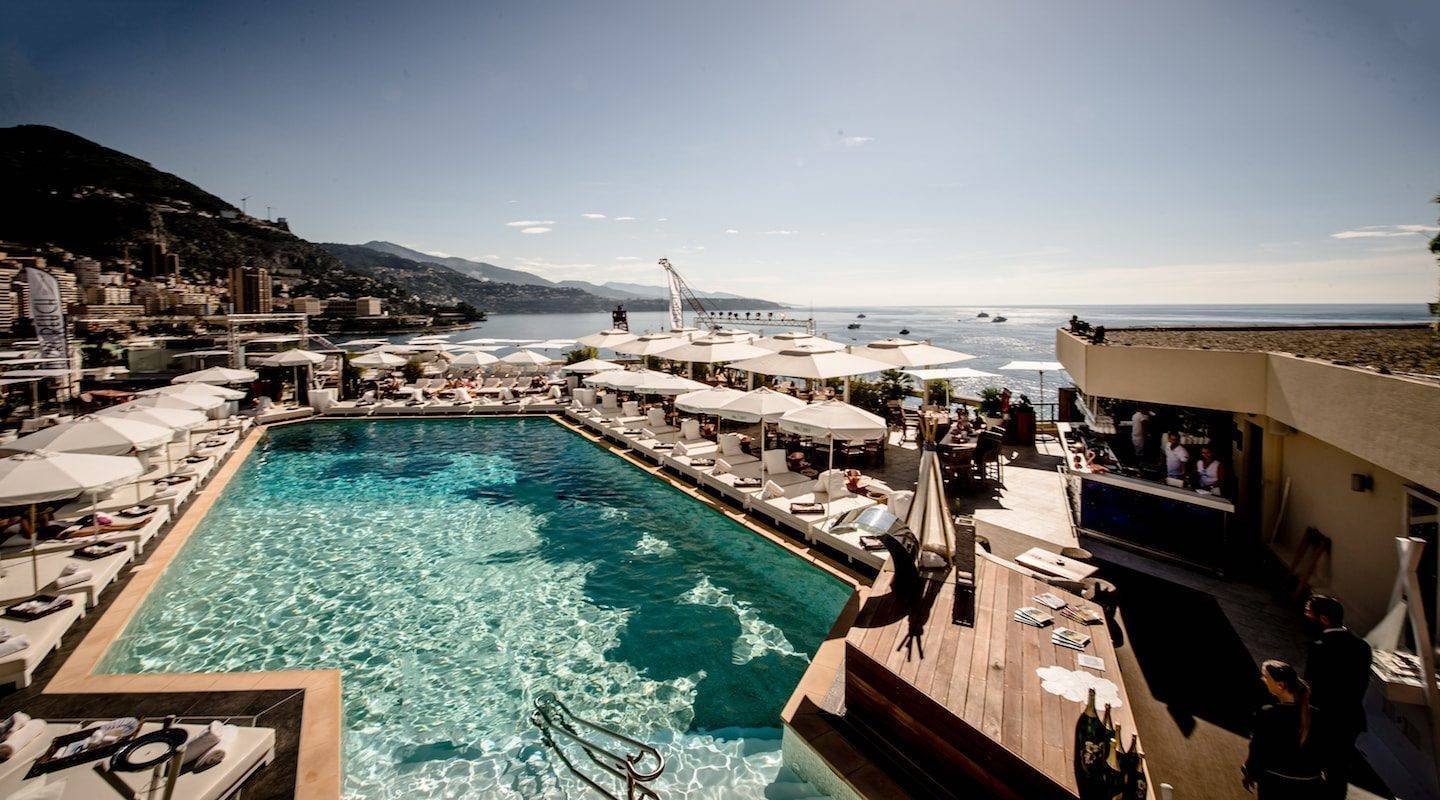
The swimming pool section: a grandstand on one side, the harbour on the other, and the fastest change of direction on the lap.
The circuit, corner by corner
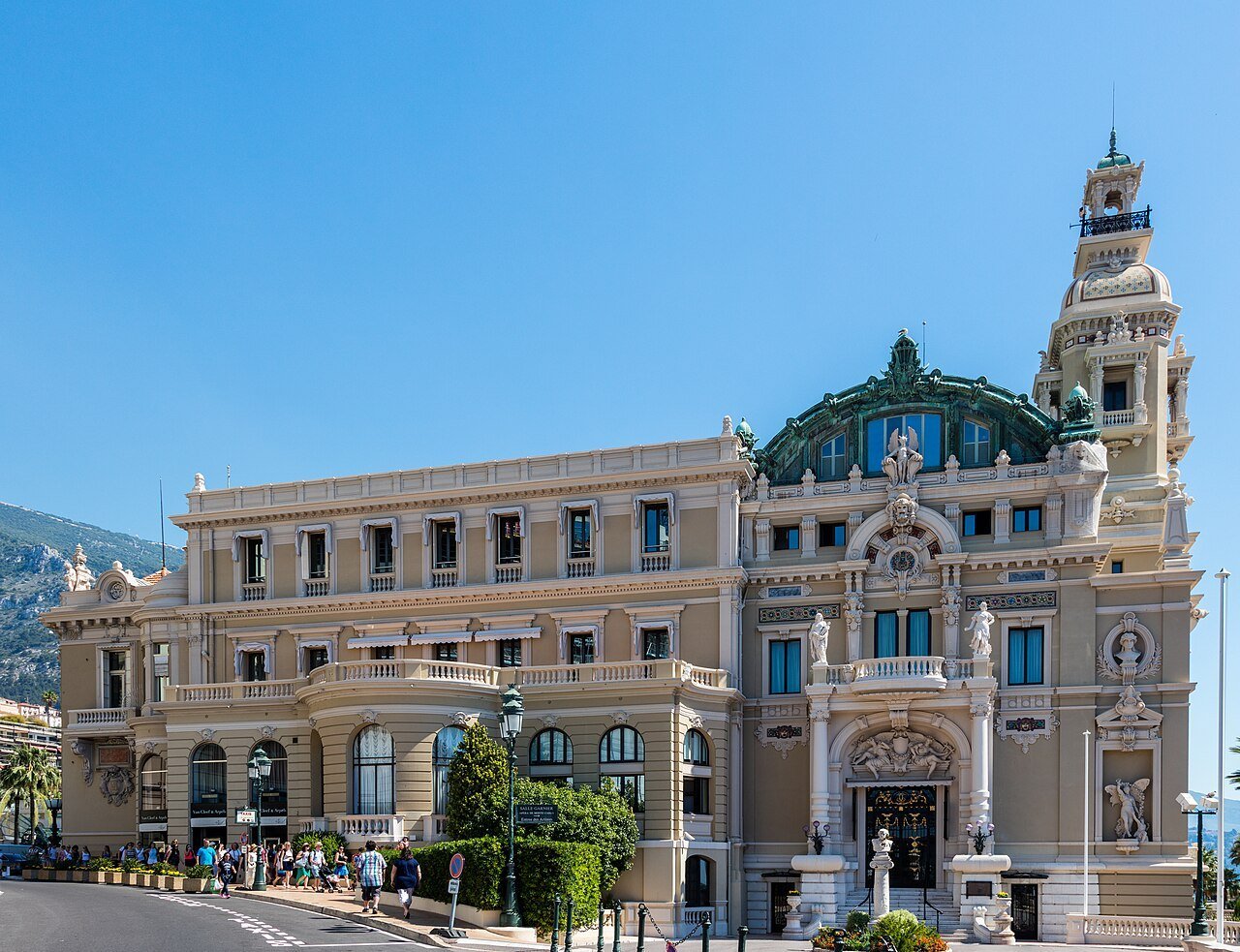
Understanding the lap helps in choosing a place. The start runs along the harbour and drops into Sainte-Dévote, the first corner, narrow and known for first-lap contact. From there the cars climb Beau Rivage to Massenet and arrive at Casino, in front of the Hôtel de Paris and the Casino de Monte-Carlo, the most photographed stretch of the calendar.
The descent passes Mirabeau to reach the Fairmont hairpin, the slowest corner of the season, taken at little more than walking pace. Then come Portier and the tunnel, where the cars reach their highest speed of the lap in semi-darkness before braking hard for the harbour chicane. Tabac, the Piscine complex, the Rascasse and Anthony Noghès close the lap back onto the straight.
In short: the upper section, between Casino and the Fairmont, shows the cars slow and close; the harbour shows speed, braking and the yachts; the straight shows the start, the pit stops and the finish.
Where to stay: the track at the door, or the silence of the cape
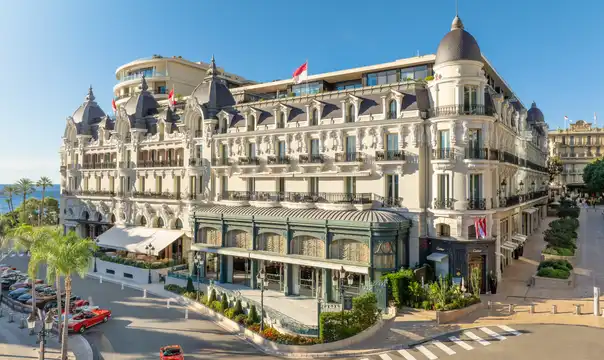
The Hôtel de Paris Monte-Carlo, on the Place du Casino, has the circuit running past its entrance. That is both its privilege and its constraint: arrivals and departures follow the timetable of the track, and the terrace becomes one of the most coveted viewpoints in town. For those who want to be at the centre of everything, there is no better address.
The Hôtel de Paris Monte-Carlo, on the Place du Casino section of the circuit. Photo: Monte-Carlo Société des Bains de Mer
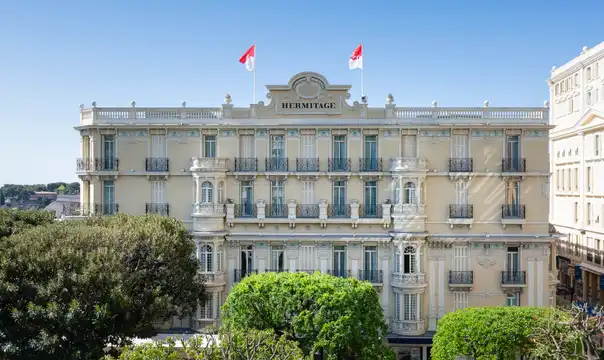
The Hôtel Hermitage, a few steps away, keeps its Belle Époque calm and its views over Port Hercule, and its kitchens give the week some of its best tables. It is the choice for those who want to be close without being inside the noise.
The Hôtel Hermitage, a Belle Époque address above the harbour. Photo: Monte-Carlo Société des Bains de Mer
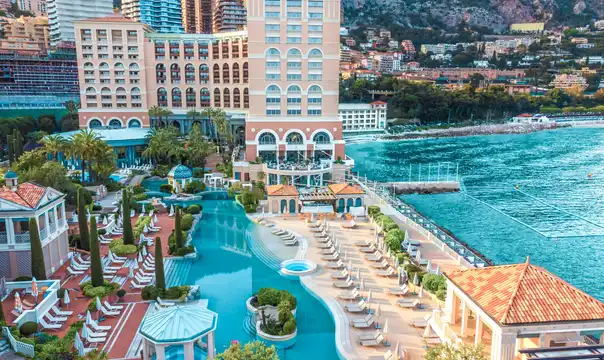
The Fairmont Monte Carlo sits above the slowest corner of the season, the hairpin that carries its name, and its terraces look straight onto the braking zone and the run down towards the tunnel. The Monte-Carlo Bay, on the Larvotto peninsula, is further from the noise, with its own lagoon and a pace closer to a resort. The Hôtel Métropole Monte-Carlo, behind the Casino gardens, offers a quieter address within walking distance of the circuit.
The Monte-Carlo Bay and its lagoon, on the Larvotto peninsula. Photo: Monte-Carlo Société des Bains de Mer
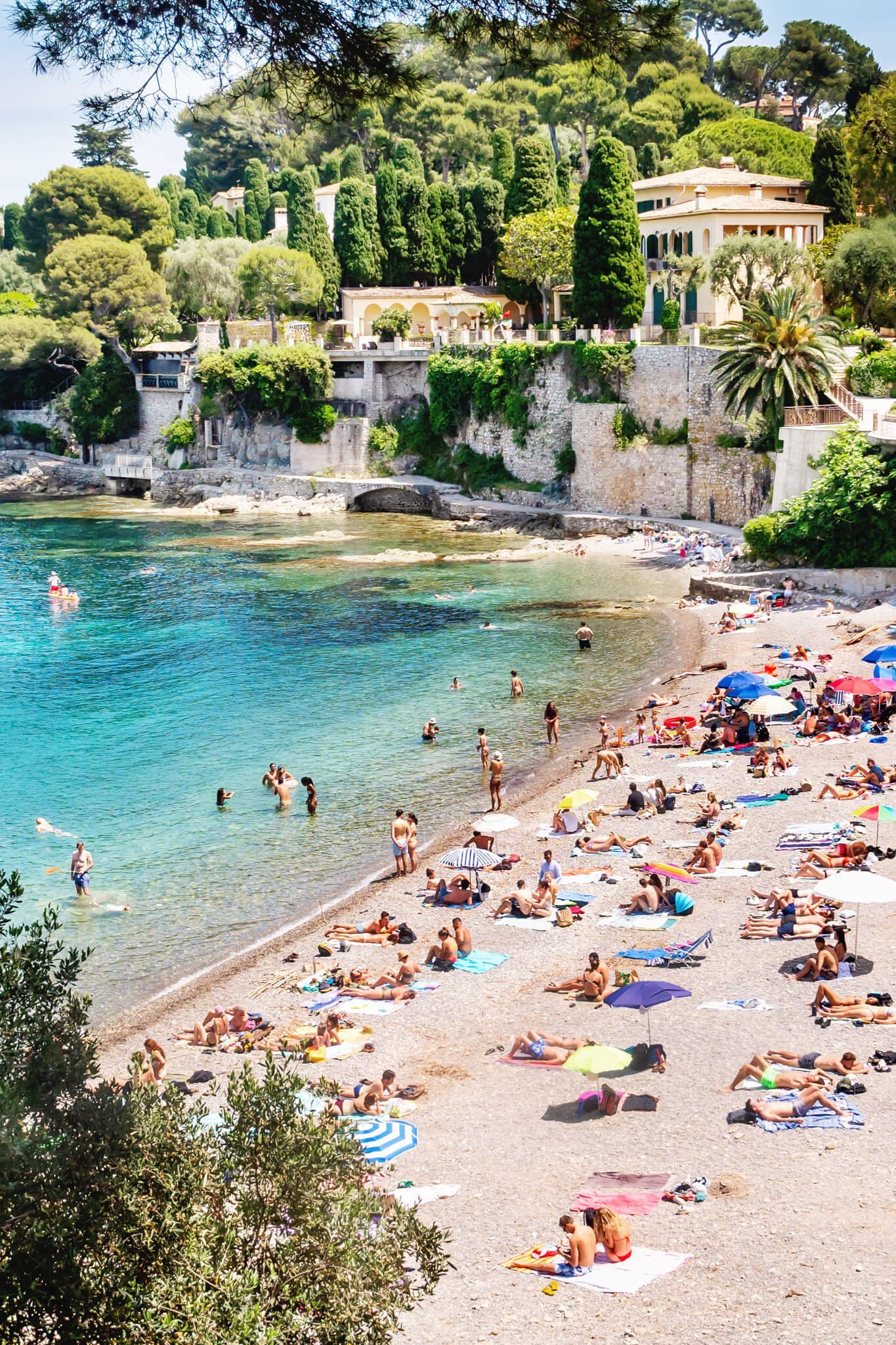
For those who would rather sleep away from the track altogether, the Grand-Hôtel du Cap-Ferrat, along the coast in Saint-Jean-Cap-Ferrat, restores the silence between one day at the race and the next. The price is a transfer that must be planned around the closures, by road or by boat. Across all of them the rule is the same: Grand Prix week is sold in minimum stays, and the best rooms are committed long before the timetable is published.
Saint-Jean-Cap-Ferrat, the quiet alternative a few kilometres from the circuit.
Where to watch: each place shows a different race
Monaco cannot be seen whole from anywhere, so choosing a vantage point is choosing a race.
The Paddock Club. Above the pit lane, with the garages below, the team atmosphere, pit lane walks and the most complete hospitality of the weekend. It is the choice for those who want to understand the race rather than only watch it.
A terrace above the hairpin or the Casino. Private apartments and hotel terraces show the slowest and most technical moments of the lap from above, with a table and shade. They are booked by the day and vary widely in what they include.
The grandstands. Each tells its own story: the start and finish straight, Sainte-Dévote after the start, the swimming pool section and the Rascasse at the end of the lap. A seat at the pool shows the fastest change of direction on the circuit; one on the straight shows the start and the pit stops.
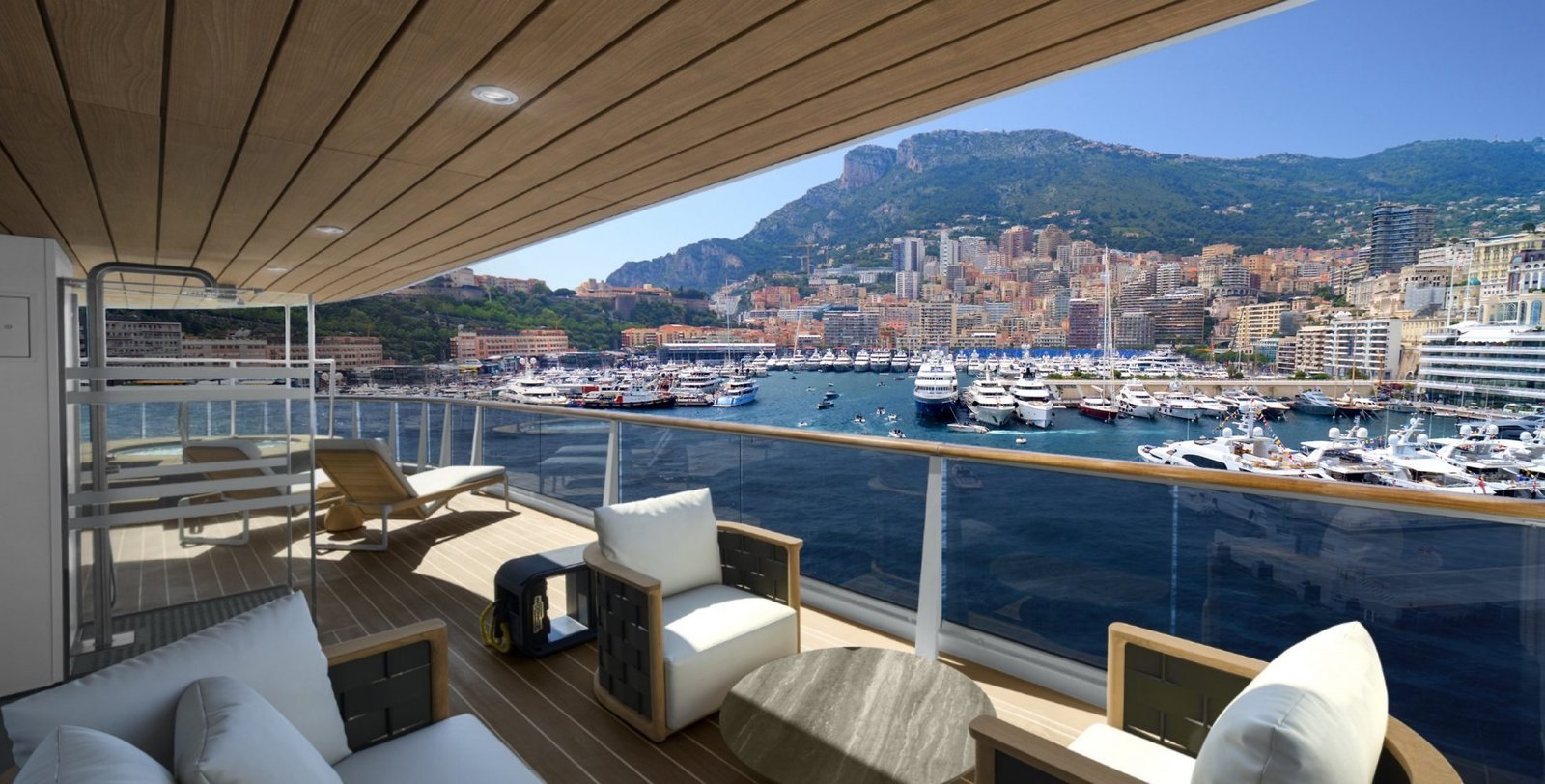
A yacht in Port Hercule. It trades the most precise view for service on board, the harbour as a backdrop and a party that does not end with the chequered flag. Berths and charters for the week are among the first things to disappear.
A ship in the harbour. Some lines berth in the principality for Grand Prix week and sell the race from on board, with a cabin, meals and a deck above the track.
Port Hercule seen from the water, where yachts and ships take the harbour section as their view. Photo: Explora Journeys
The order is always the same: access first, then the hotel, then the transfers.
WAYFARER
At the table
With competition now on every day, Thursday is the evening on which a table is most easily secured, and it is the night for the principality’s great rooms. Le Louis XV-Alain Ducasse à l’Hôtel de Paris, with its three Michelin stars, remains the classic. At the Hôtel Hermitage, Pavyllon Monte-Carlo, by Yannick Alléno, brings a counter and an open kitchen to the week. At the Monte-Carlo Bay, Blue Bay Marcel Ravin cooks with the memory of the Caribbean.
Thursday is the night for the principality’s great tables.
Beyond the principality, the coast holds some of the most beautiful tables of the week. Èze, perched above the sea, has dining rooms whose views justify the climb; Villefranche and Beaulieu serve fish at the water’s edge; Cap-Ferrat offers the long lunch the week rarely allows. Book them for the days without a decisive session, or for Sunday evening after the race.
The nights
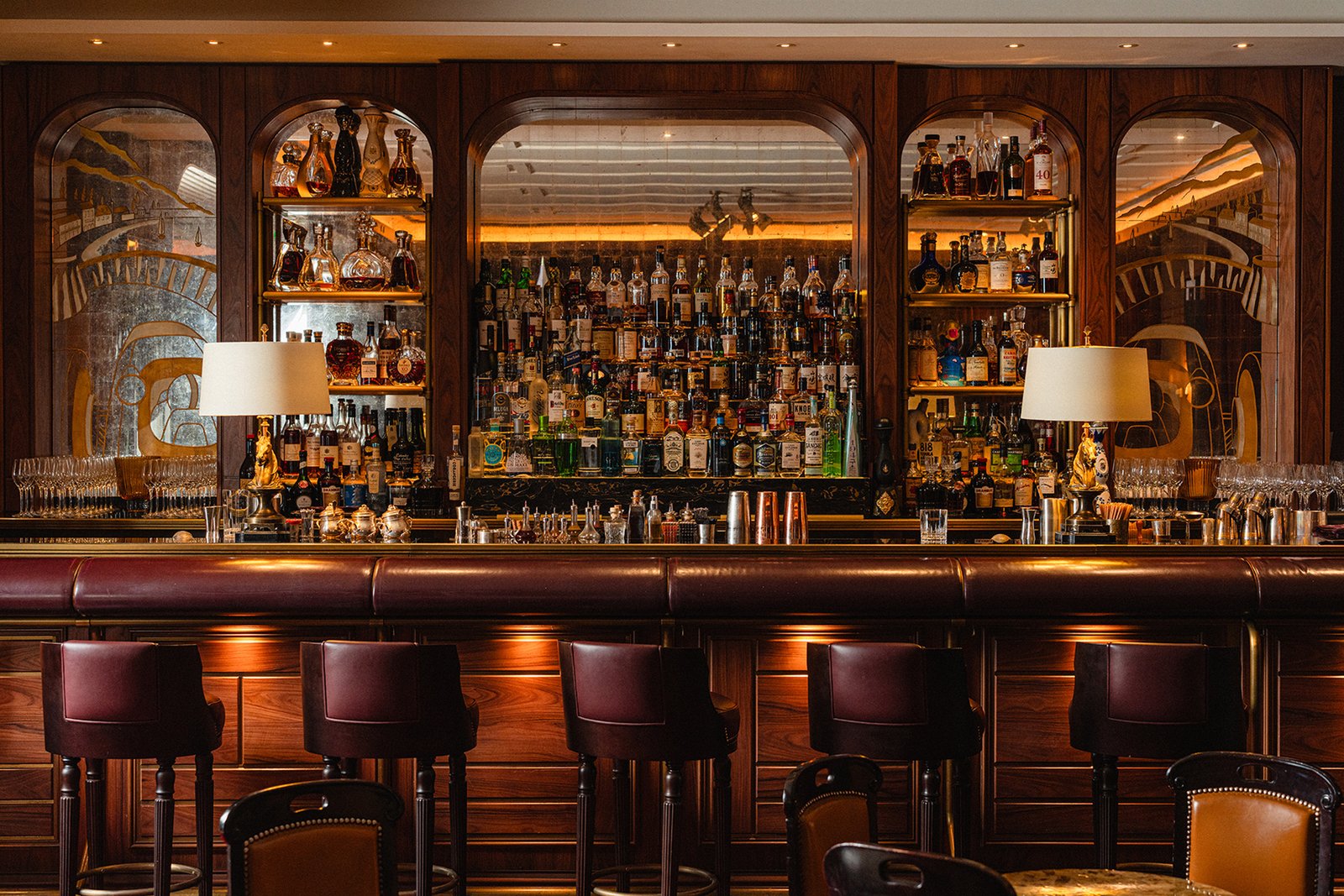
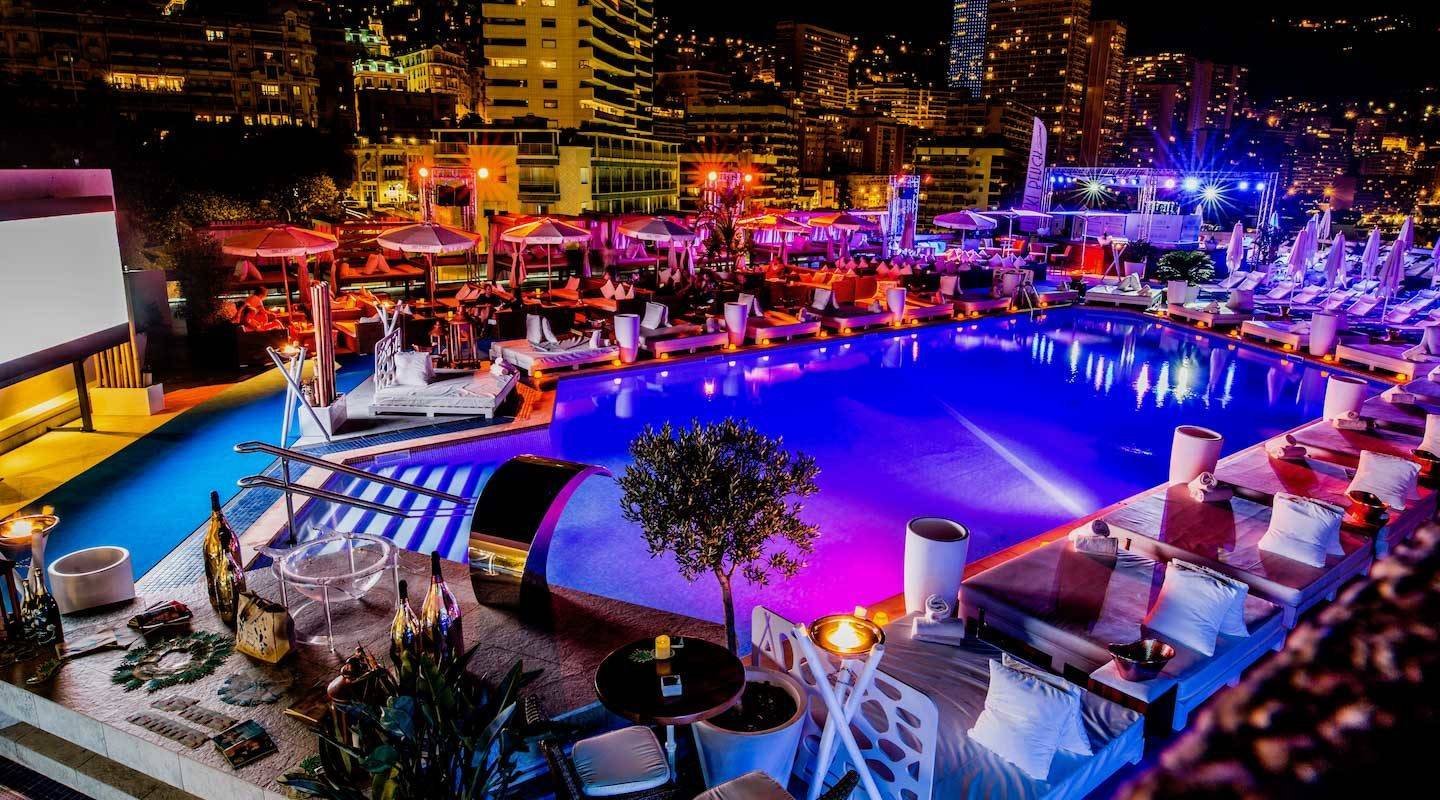
When the engines fall silent, the principality becomes a stage. Le Bar Américain at the Hôtel de Paris is where many evenings begin. Thursday ends at La Rascasse, on the corner that gives it its name, where the track turns into a dance floor. Friday and Saturday belong to Jimmy’z, where a reserved table is not optional, to the Amber Lounge and to the terraces around the harbour, with private team dinners and sponsor nights filling the rest of the calendar.
Le Bar Américain, at the Hôtel de Paris: where many Grand Prix evenings begin.
Sunday evening, after the race, is the most crowded of all. For many, the better choice is a quiet dinner along the coast while the principality empties. For those who stay, it is the last night at Jimmy’z and the last toast at the Rascasse.
Grand Prix nights begin on the terraces and end at sunrise.
Beyond the track
The week has free hours, and Monaco is small enough to use them on foot. The Casino de Monte-Carlo and the Place du Casino deserve a visit by day and by night. On the Rock, the old town, stand the Prince’s Palace and the Oceanographic Museum, built into the cliff above the sea. The Jardin Exotique has one of the finest views over the principality.
The Casino de Monte-Carlo: the most photographed corner in Formula 1 runs past its door.
Beyond its borders, the Riviera is minutes away. Èze and its garden at the top of the rock, Villefranche and its bay, Cap-Ferrat and the Villa Ephrussi de Rothschild, Menton and its gardens, and a little further Saint-Paul-de-Vence and the Fondation Maeght. A day before or after the race in any of them changes the rhythm of the trip.
When and how to book
Monaco is booked in layers, and each layer closes earlier than the one below it. Paddock Club places, terraces and yacht berths go first, often in the year before the race. Rooms on the circuit follow, usually with minimum stays across the whole weekend. Restaurant tables for Thursday and Saturday, helicopter slots and the late-night tables at the clubs come last, but not much later. For 2027, the arrival of the sprint adds one more variable: with action on Friday and Saturday, more people will want the full weekend, and fewer will be content with Sunday alone.
In practice, those who want the full week should secure race access and accommodation before the end of 2026, leave transfers and tables for early 2027, and confirm everything again once the official timetable is published.
The calendar around it also deserves a look. Monaco comes a fortnight after the Canadian Grand Prix in Montreal, on 21 to 23 May, and two weeks before Portugal, at Portimão, on 18 to 20 June. For those who want to make a season of it, the Riviera in early June is the natural pause between the two.
Practical notes
Entry. Monaco is reached through France and follows Schengen rules. Check the requirements for your nationality before travelling, including the European Union’s new electronic entry systems.
Currency. Euro.
Time. Central European Summer Time, two hours ahead of UTC in June.
Weather. Early Mediterranean summer: warm, sunny days and mild evenings. Bring sun protection, a hat and a light layer for the boat at night.
What to wear. By day, smart casual and comfortable shoes, because the week involves a great deal of walking and many stairs. In the Paddock Club and on the terraces, smart casual. In the evening, a jacket for dinner and for the Casino’s salons.
Moving around. During sessions, many areas of the circuit are open only to ticket holders, and the footbridges decide where you can cross. Keep the map of your seat and your exit to hand.
Luggage. The less, the better. Helicopters have limits, and the principality was not built for large suitcases.
Frequently asked questions
When is the Monaco Grand Prix 2027?
From 4 to 6 June 2027, round eight of the Formula 1 season. Arriving on Thursday 3 June is recommended.
Is the 2027 Monaco Grand Prix a sprint weekend?
Yes. For the first time, Monaco hosts a sprint race, on Saturday, before qualifying for the Grand Prix. The main race is on Sunday.
What is the best way to reach Monaco during race week?
Fly into Nice and take a helicopter to the Monaco heliport, a flight of around seven minutes. By road, the journey can take hours during race week.
Where is the best place to watch the Monaco Grand Prix?
It depends on the race you want to see. The Paddock Club offers the most complete experience; terraces above the Casino and the hairpin show the cars up close; the swimming pool grandstand shows speed; and a yacht in the harbour offers the most famous setting on the calendar.
How far in advance should I book?
Race access and accommodation, six months to a year ahead. Transfers and tables, a few months before. In 2027, because of the sprint, demand for the full weekend is likely to be higher.
The details
When: 4 to 6 June 2027, round eight of the Formula 1 season, arriving Thursday 3 June. Format: sprint weekend, the first in Monaco. Circuit: Circuit de Monaco, 3.337 km, 78 laps in the Grand Prix. Arrival: Nice Côte d’Azur airport, then helicopter to the Monaco heliport in Fontvieille. Tickets and official timetable:Automobile Club de Monaco and Formula 1. Hotels:Monte-Carlo Société des Bains de Mer. The full week:WAYFARER Agency, Monaco Grand Prix 2027.
In Monaco, the privilege is not seeing the race up close. It is arriving in seven minutes, booking in the right order and, on Sunday, having a place that does not depend on the traffic of a city that never quite stops being a city.
From St Andrews and Royal County Down to Cabot Saint Lucia, Hirono and Tara Iti, eleven courses that justify the journey, with how to get a tee time and where to sleep afterwards.
From the Hôtel de Paris in Monte-Carlo to Raffles in Singapore and a Mandarin Oriental in Bangkok marking 150 years, the grand hotels that have stayed relevant for more than a hundred years without surrendering their identity.