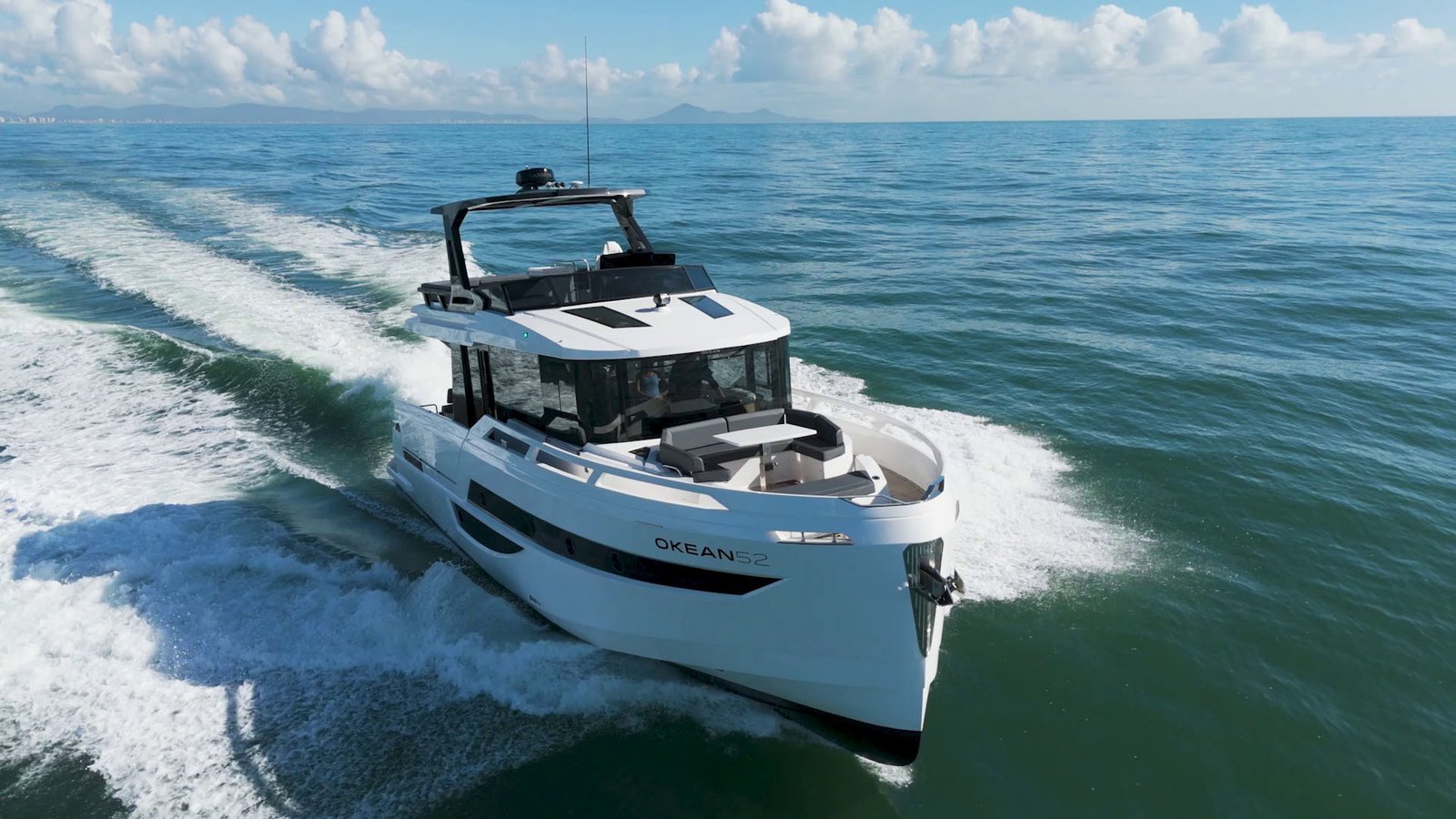
The OKEAN 52 changes its relationship with the water by changing its width. Its opening side decks are not simply another place to put a chair. They turn the edge of the vessel into an adjustable part of the living arrangement.
The change in numbers
OKEAN’s published specification gives an overall length of 15.86 metres and a beam of 4.40 metres. With the decks open, maximum beam reaches 6.20 metres: an increase of 1.80 metres across the vessel. The stated draft is 1.27 metres. Those figures give the opening mechanism a scale that a photograph alone cannot establish.
The extra width concerns the deployed deck arrangement, not a permanently wider hull. It changes the space available around the social areas and their connection with the water. It does not, by itself, prove a gain in stability, fuel economy or cruising performance.
Three cabins, two kinds of space
The builder lists three cabins and two bathrooms, with accommodation for six and an optional additional sleeping position. The design, credited to Paolo Ferragni, places this overnight programme within a vessel also organised around circulation between enclosed lounges and open deck.
Those requirements are related but not identical. A boat used for an afternoon gathering needs accessible shared space. Several nights aboard make the relationship between cabins, bathrooms and the kitchen more consequential. An opening platform changes the first arrangement; it does not remove the demands of the second.
A boundary that must still work as equipment
Opening decks remain working components on a boat. Their permitted operating conditions belong to the vessel’s manuals and the crew’s procedures, not to an architectural reading of the layout. Engine options and fitted equipment also need to be identified for the particular vessel before performance is compared.
For the Itajaí-based builder, the clearest design proposition is therefore measurable and limited: the boat can offer a wider occupied edge without carrying that entire width in its closed configuration. The silhouette is one view of the OKEAN 52. Its changing plan is another.
The change from a 4.4-metre to a 6.2-metre beam describes the deck’s geometry when opened; it does not describe a larger interior. That distinction is central to reading the OKEAN 52. The boat can change its relationship with the water during the day without acquiring additional cabins at night.
Its three-cabin arrangement and the folding sides answer separate questions. One concerns how people sleep and share the accommodation; the other concerns circulation and occupation of the outer deck. The appeal lies in that separation of tasks. A terrace-like edge is an architectural proposition, while draft, handling and the conditions in which the panels may be used remain operational questions. Dimensions explain the design more precisely than an unsupported claim that expansion improves every aspect of life aboard.
Four Seasons, Aman, Maybourne, Belmond and Mandarin Oriental now sell the journey as part of the stay, from helicopter transfers into London to 23-day circumnavigations at $238,000 a head. Who flies, why, and what is really being bought.
At the back of Los Angeles International Airport sits a terminal with no queue, no crowd and no gate. What PS costs, who uses it, and why travellers who do not fly private have decided to pay not to wait.
Gabriel Silveirado’s account follows the relationship between rooms and sea. The ship’s deck plan adds a practical reading of its restaurants, shared spaces and private terraces.
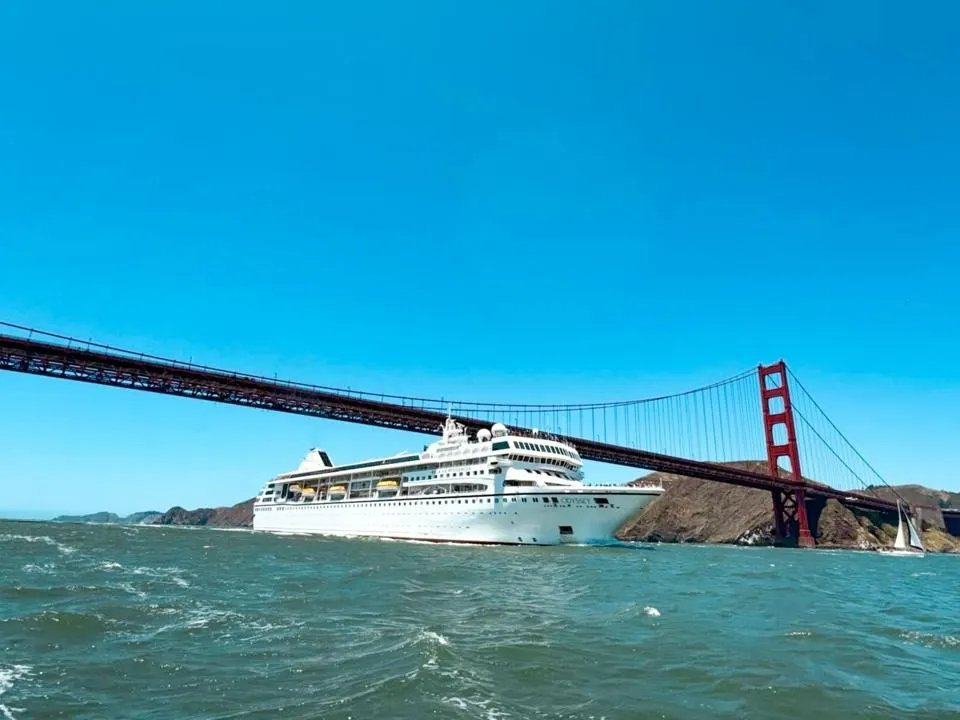
Two years after leaving Belfast, the Villa Vie Odyssey is more than 85 per cent sold and has a sister ship, Legacy, due in early 2029. Inside the idea of a home that never stays in one port.
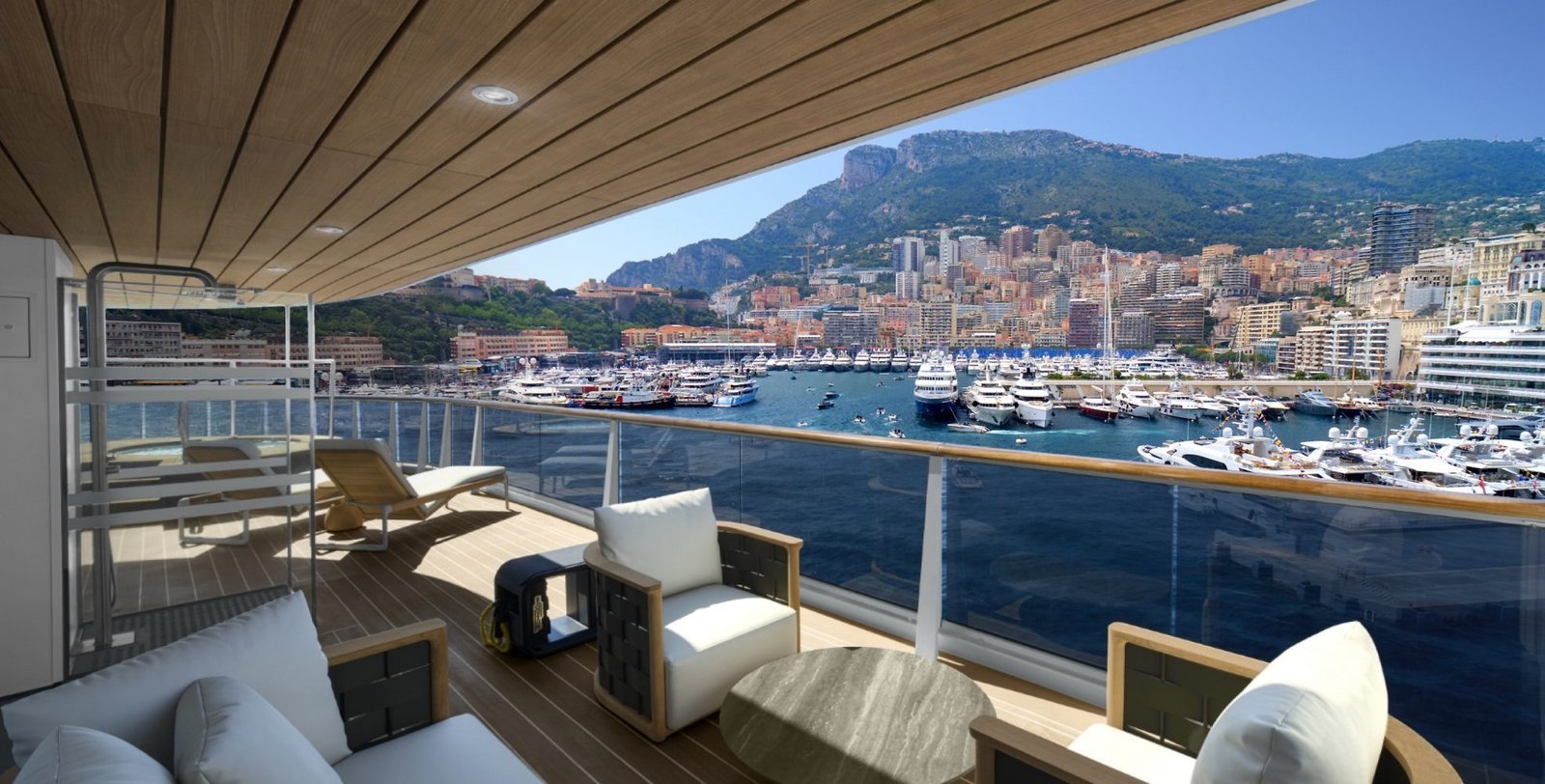
From 2 to 7 June 2027, EXPLORA I moors in Port Hercule, about 150 metres from the circuit, as the only ship of its kind in the harbour. What the Paddock Club and Triple Crown packages include, what they cost, and how the ship fits into the rest of the week.