Praxis lands in Uruguay: a “digital nation” tries to become a neighbourhood
Praxis, the online community that calls itself the first digital nation, has chosen the coast beside Colonia del Sacramento for its first physical settlement. The town next door has a three-century head start.
Every city begins as a wager on the opposite shore. In 1680 the Portuguese founded Colonia del Sacramento across the water from Buenos Aires to contest the Río de la Plata with Spain. Three and a half centuries later the same coast is receiving a wager of a different kind, written in code and financed from New York.
On 22 September 2026, Praxis, the American organisation that presents itself as the world’s first “digital nation”, confirmed that it had chosen Uruguay for its first physical community. The site is +Colonia, a waterfront development of some 515 hectares beside the UNESCO-listed historic quarter. The projected investment is USD 1 billion over the first years. Dryden Brown, its 30-year-old co-founder, has said he plans to move there in December.
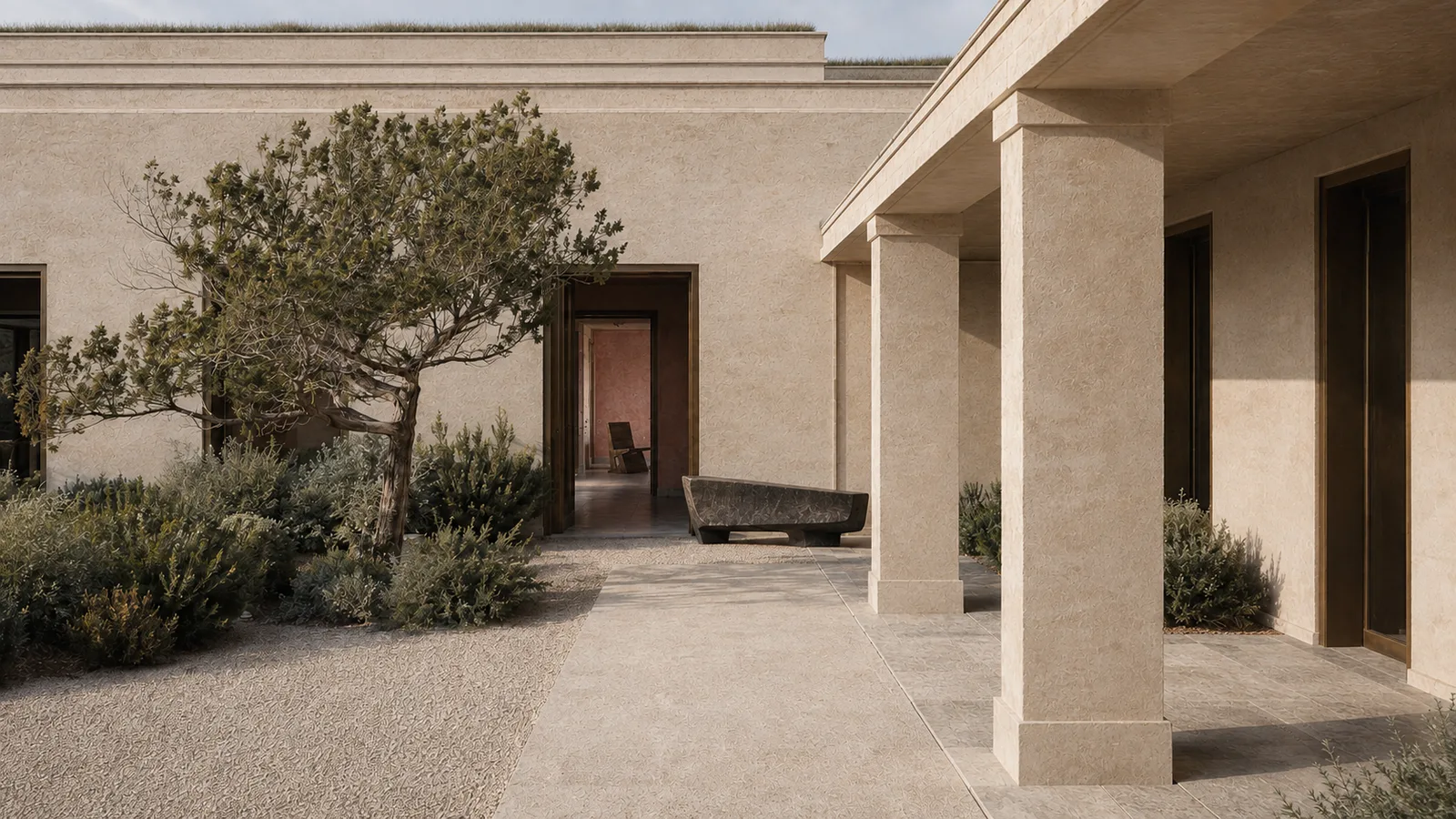
The arrival courtyard, concept study. Image: Praxis
From the screen to the dunes
Until now Praxis has existed mainly as a network: more than 150,000 members worldwide, founders, investors, technologists and artists, gathered at dinners and parties and around an idea familiar in Silicon Valley, that if inherited institutions no longer serve, a cohesive community can build new ones. Of that base, around 2,700 members have formally declared an intention to move to, or invest in, the Uruguayan site.
Uruguay was not the first destination. Praxis once spoke of a Mediterranean city and later explored Greenland, where the conversation went no further. Colonia offers what earlier attempts did not: land, a partner with construction already under way and a country known for institutional stability, with Buenos Aires about an hour away by ferry and Montevideo along the coast.
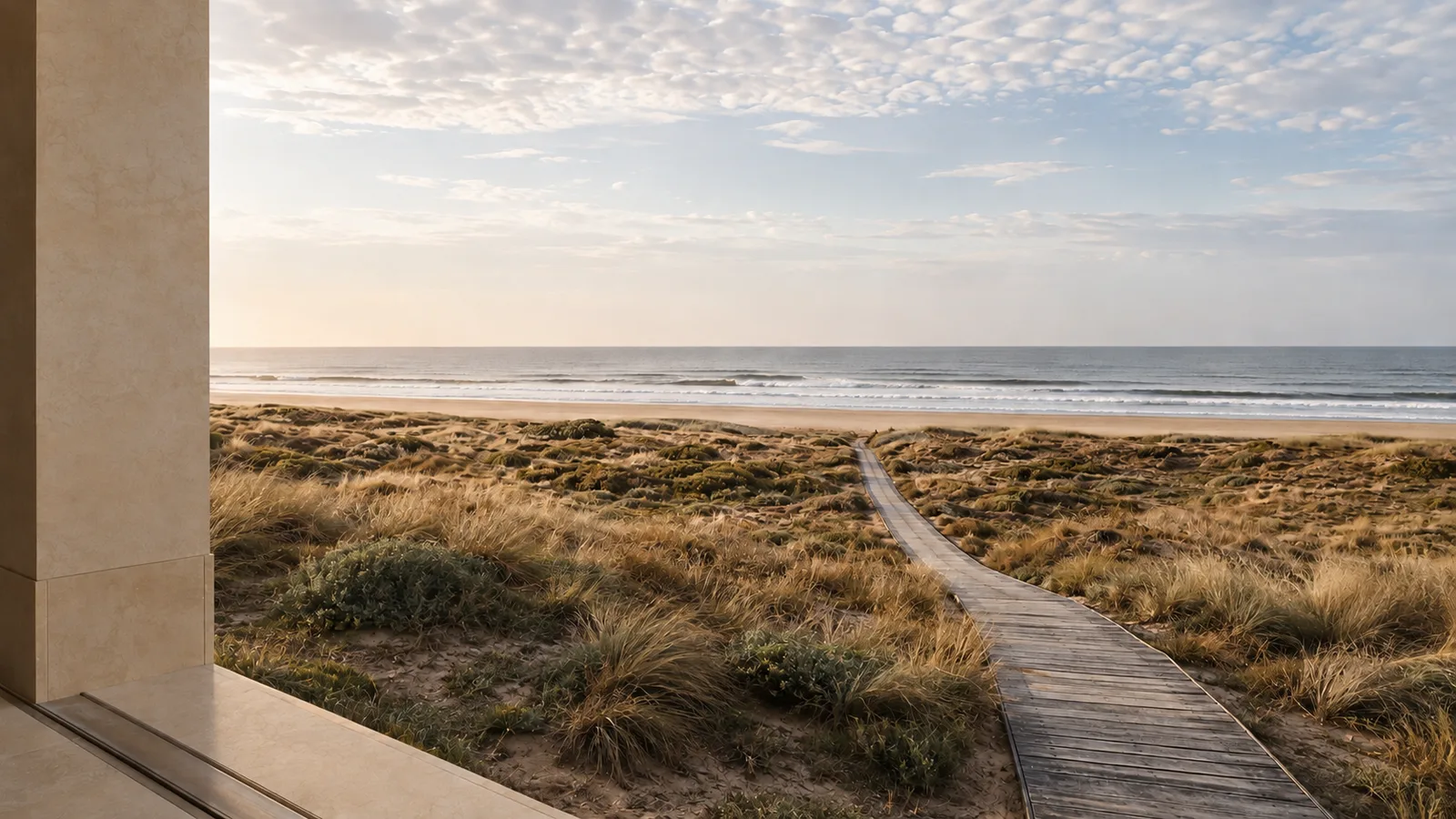
The dune, the boardwalk and the river, concept study. Image: Praxis
What is meant to be built
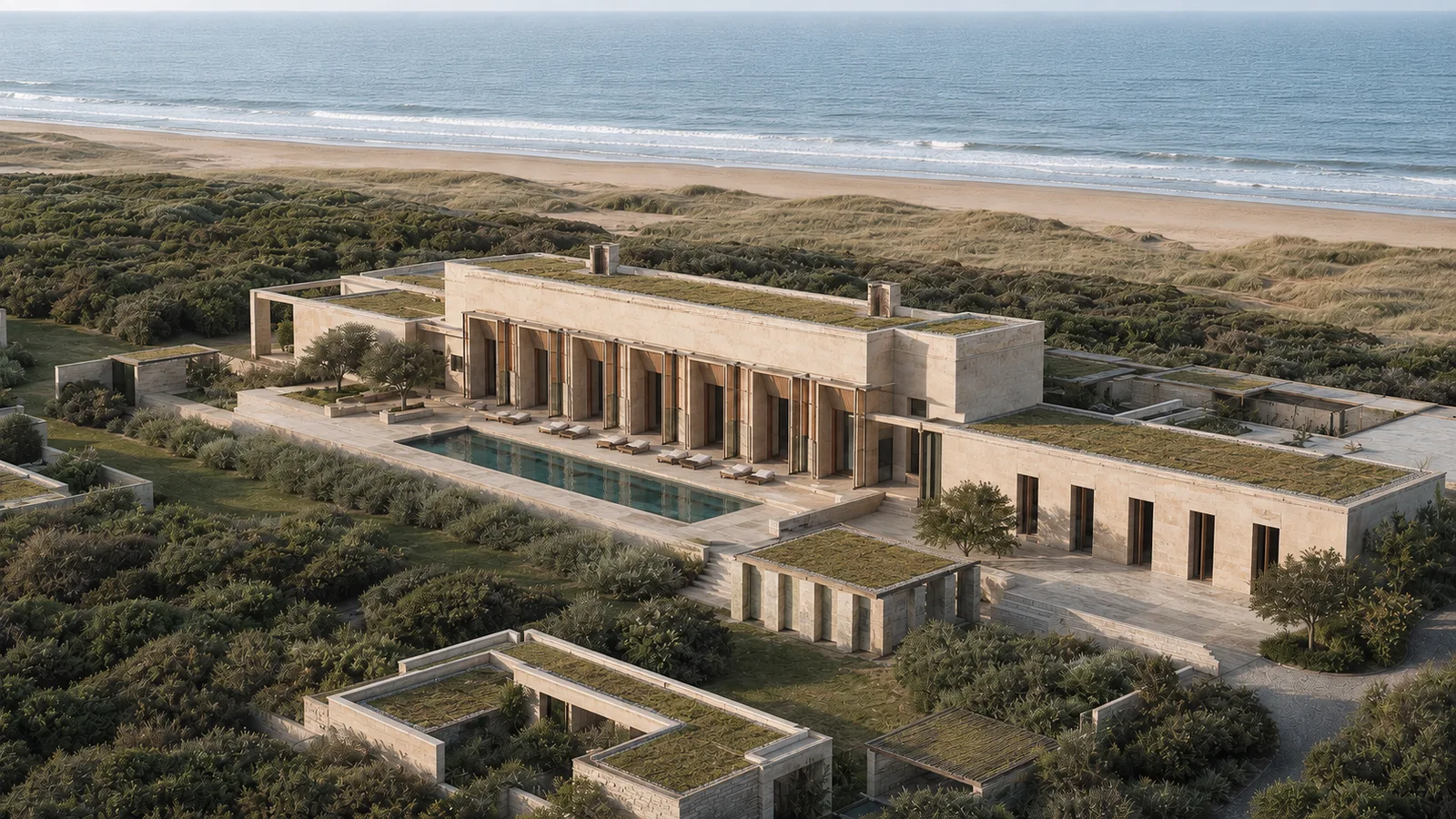
The first phase describes a waterfront neighbourhood of private residences and a resort, with restaurants, squares, a promenade and a beach club, studios for music, photography and film, galleries and workshops. A fellowship programme for young artists, musicians, designers, writers and founders is part of the plan; fellows are expected to be among the first to arrive, living in buildings +Colonia has already completed while the Praxis quarter takes shape around them. The land itself will be acquired in stages, after subdivision: the developers expect the first purchase to close in 2027, within a first phase of roughly 350,000 square metres of buildable area.
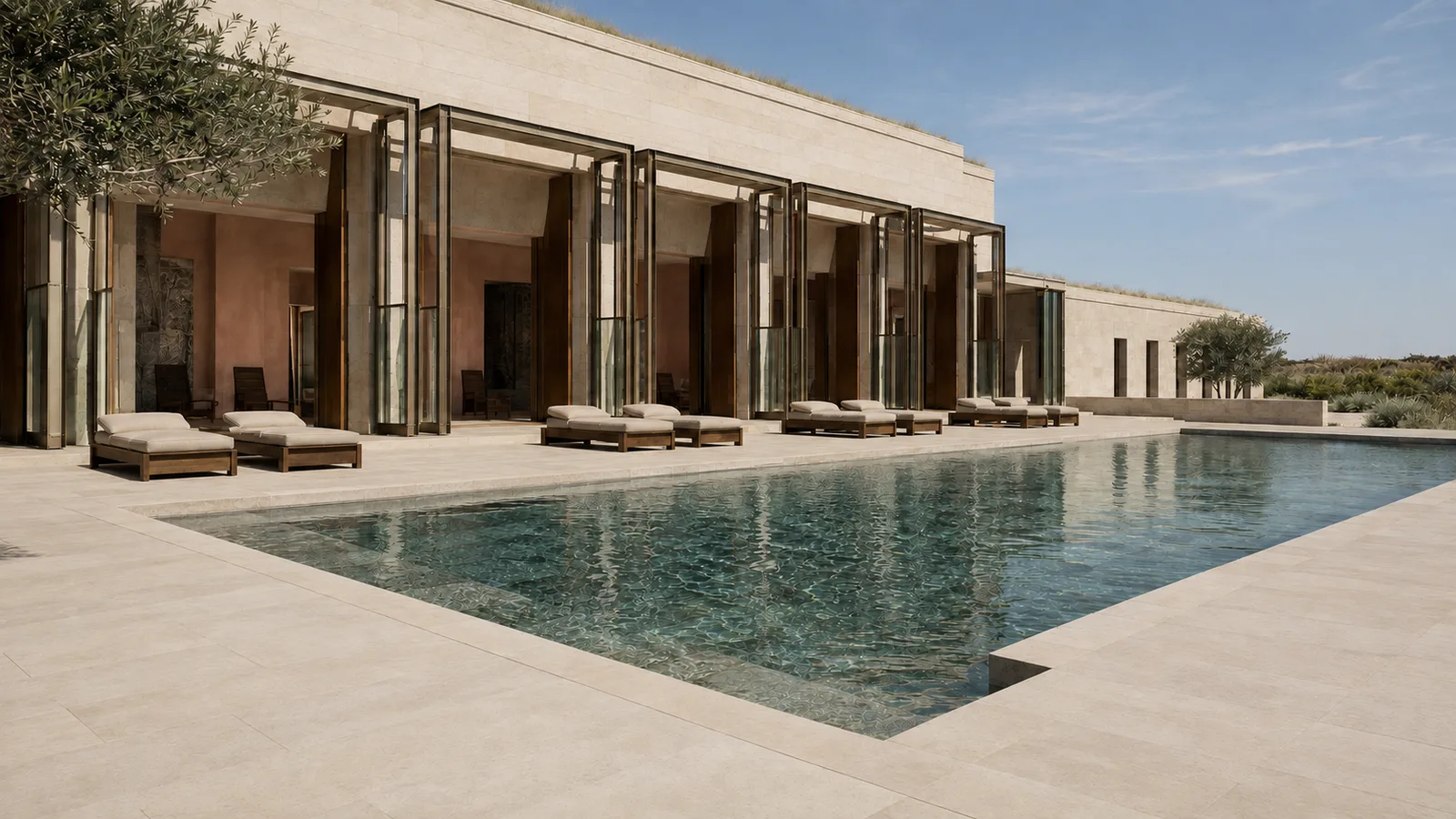
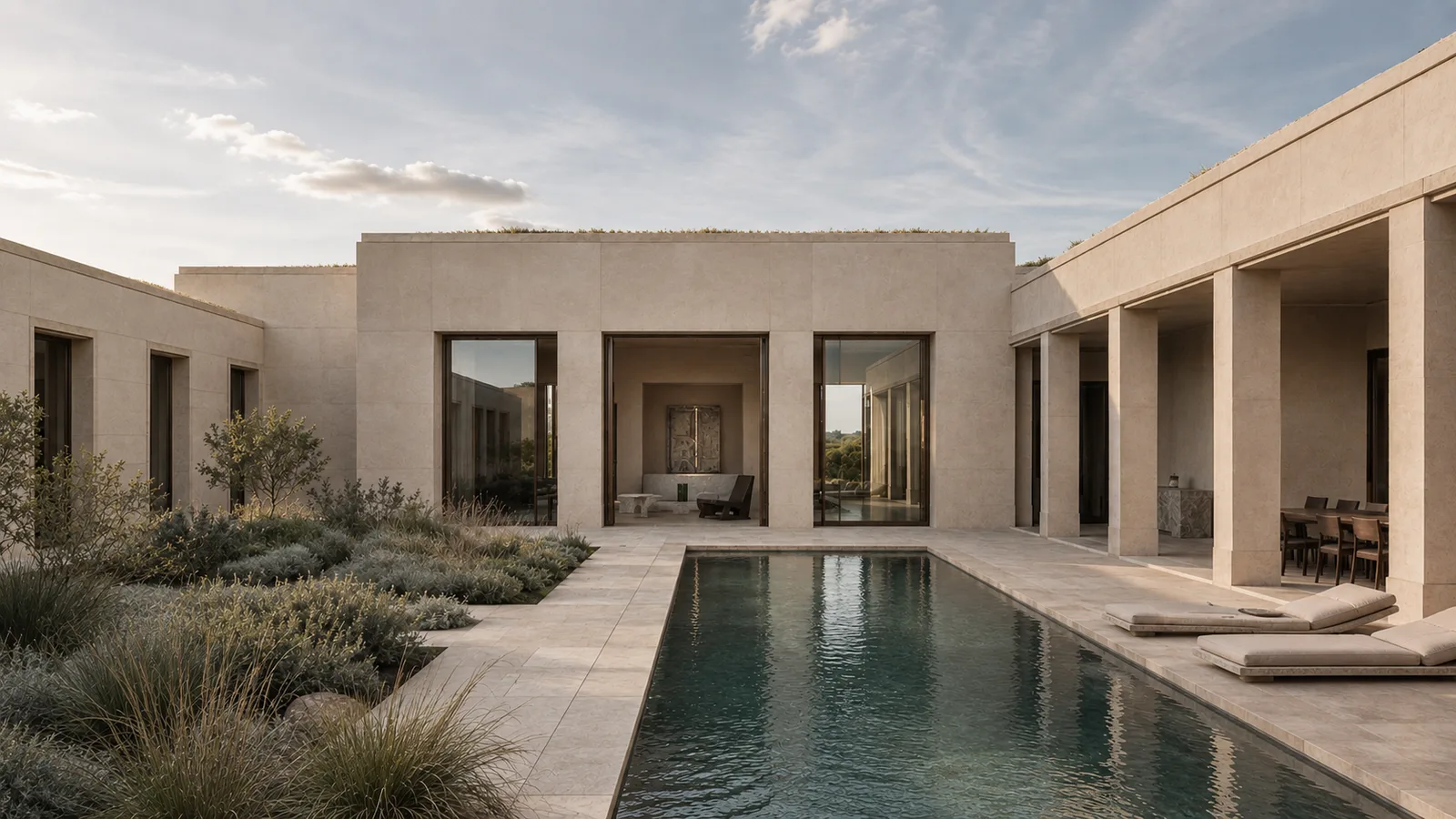
The main pool, concept study. Image: Praxis
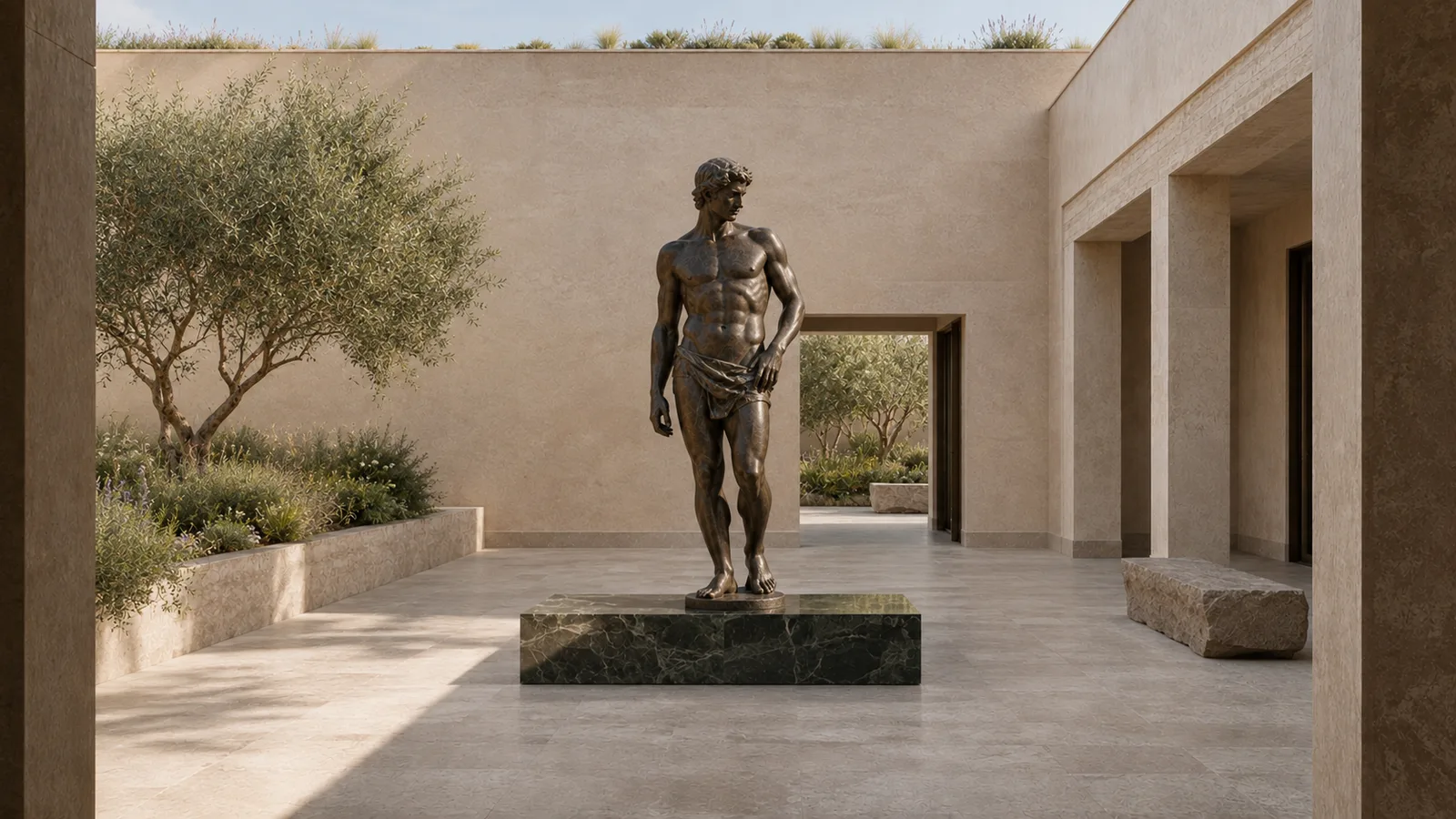
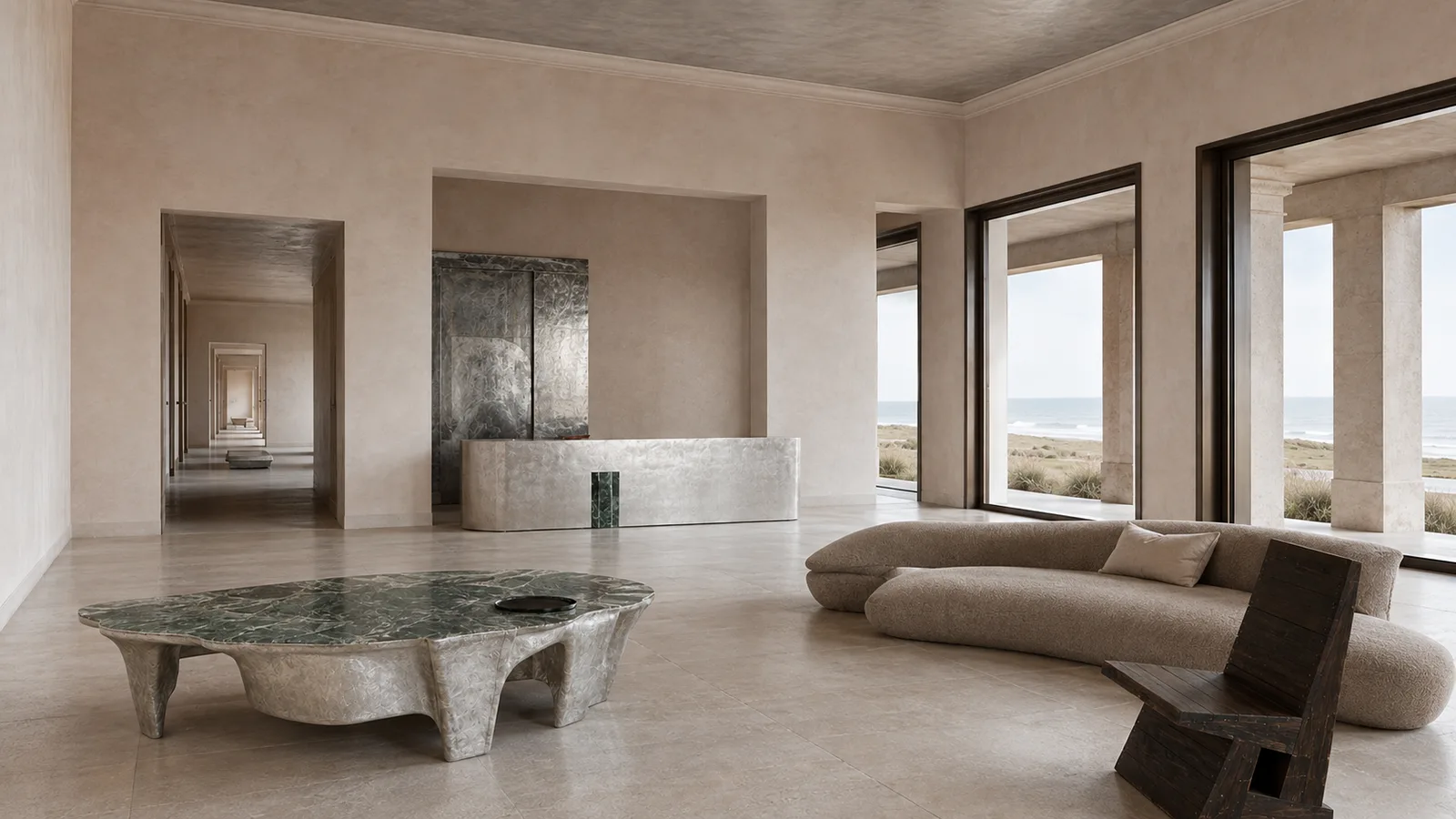
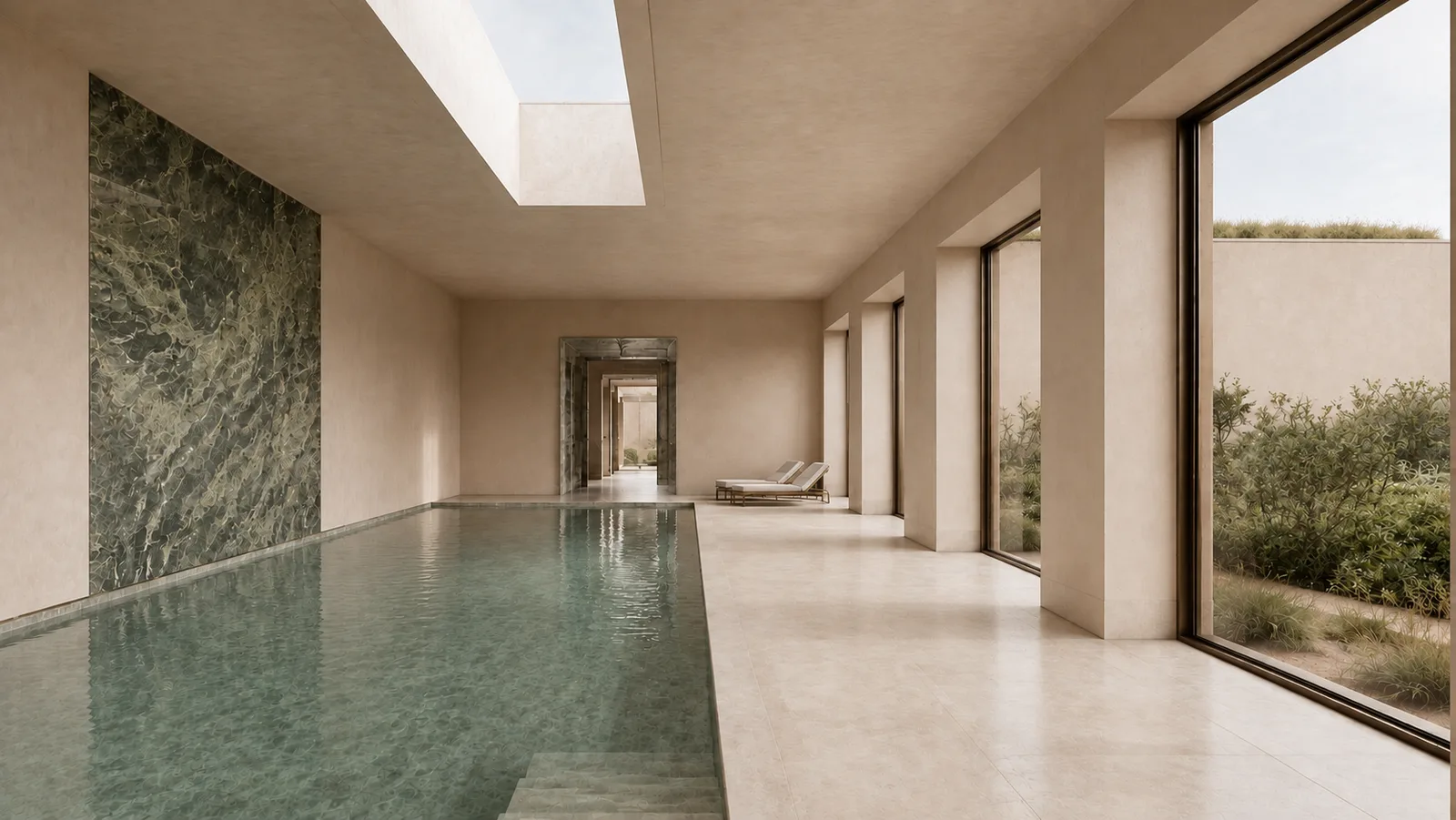
The architecture is the most revealing part of the proposal. The published studies cite Italian Rationalism: stone and bronze, colonnades, quiet courtyards, a long pool stepping down towards the sand. It is an aesthetic of permanence, drawn to look as though it has always been there. It is not a neutral choice. Rationalism flourished in the Italy of the 1930s, and Praxis has never hidden that its project involves restoring a particular vision of Western civilisation.
The renderings promise permanence. Permanence is the one thing a render cannot supply.
The sculpture courtyard, concept study. Image: PraxisThe grand salon, concept study. Image: Praxis
A nation inside another country’s law
Behind the serene renderings is a history that divides opinion. Praxis grew up close to the network state movement, internet-organised communities that one day hope for territorial autonomy, and critics have described it as a utopia for the few, ideologically close to some of the internet’s harder-edged subcultures. Brown rejects that label. The obvious precedent is Próspera in Honduras, which operated under special legal rules until a new government repealed them and the project ended in international arbitration.
In Colonia, no sovereignty has been promised. Brown says Praxis will operate within Uruguayan law, and +Colonia, led by its founder and chief executive Eduardo Bastitta, says the project is advancing within the national and departmental regulatory framework. What is taking shape is less a parallel state than a planned neighbourhood, with digital tools that let residents propose and fund shared projects.
A residence courtyard, concept study. Image: Praxis
The test of ordinary life
For now the numbers are promises. A billion dollars is an investment intention, and declared interest is neither a signed deed nor a granted residence permit. The real test will come after the launch, in the seasons without parties, when a community born in a feed has to deal with building sites, neighbours, winter on the river and life beside a small historic town with its own rhythm and its own memory.
The spa, concept study. Image: Praxis
Colonia del Sacramento spent centuries being fought over by whoever arrived from across the water. It learned to wait. Its stone streets, laid out by the Portuguese as the ground required, have outlasted empires far more certain of themselves than any start-up. Praxis promises the future. The town next door holds something rarer, which is time. In the years ahead we will see who learns from whom.
The writer and designer behind Kitten maps a Los Angeles of small rituals: the counter at Petit Trois, the red booths of Musso & Frank, a panorama painted by hand and, above all, the car.
From the Pony Line bar at the Four Seasons to Julia's 22 seats in Villa Crespo, by way of Coppola's hidden garden, Casa Cavia and the Colección Amalita: a Buenos Aires for those who take their time.
Brickell no longer empties at six. Residential towers by Arquitectonica and Adrian Smith + Gordon Gill, and dining rooms from Amazónico to Seia, have turned Miami's banking district into a place people choose to live.