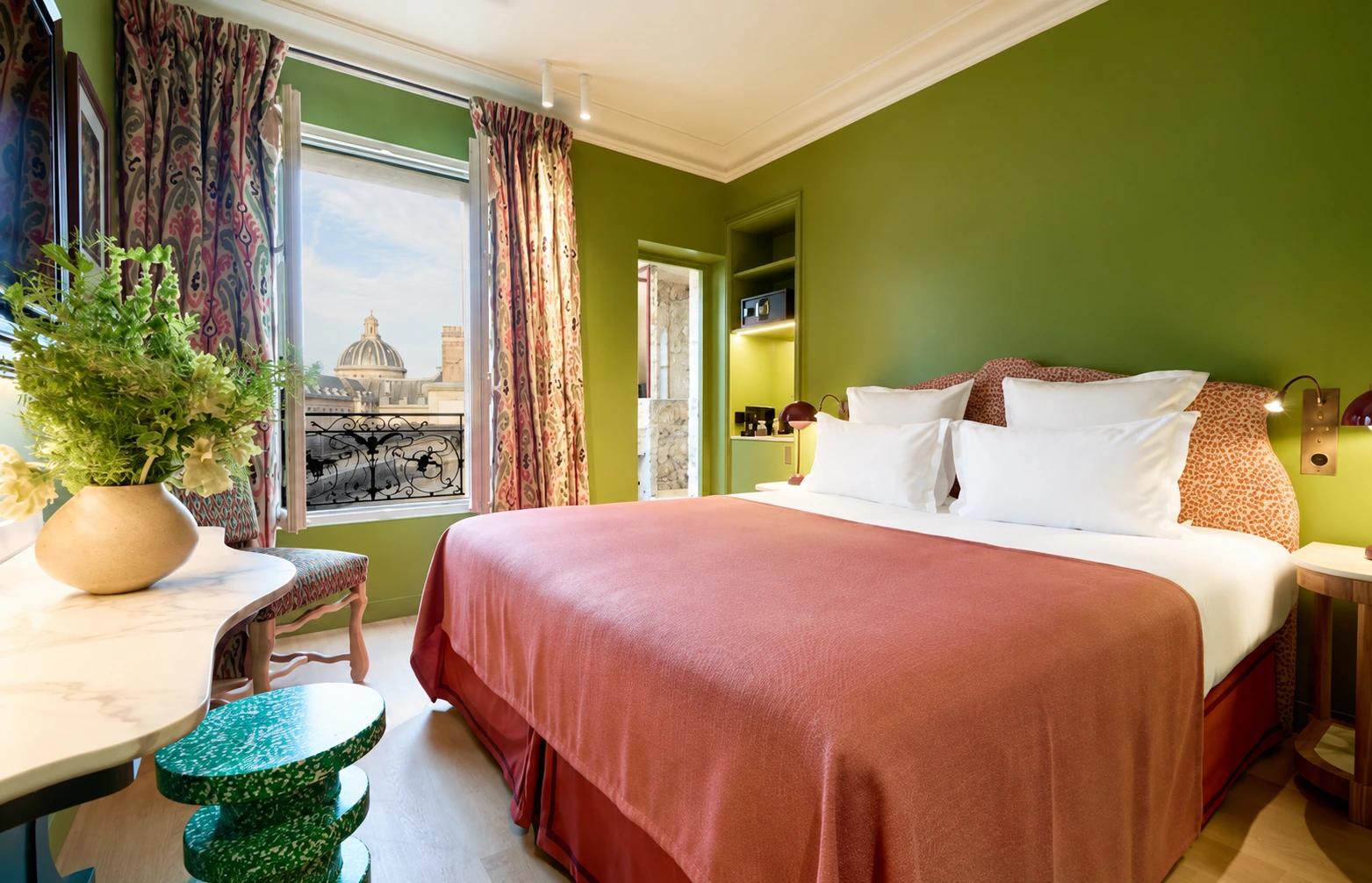
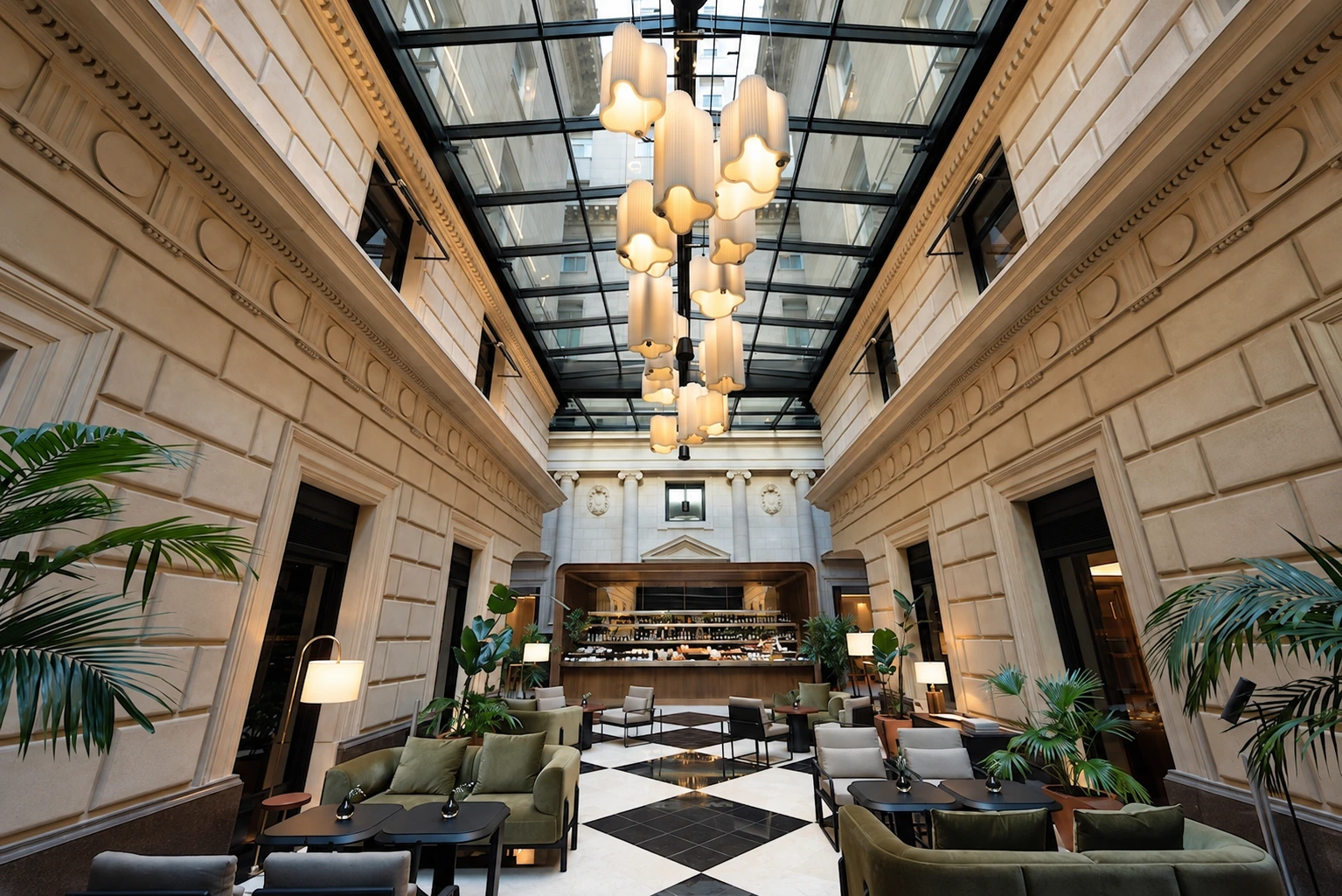
HÔTEL PRINCE DE CONTI. Guest room. Archive. Photo: Joan Dastarac. / Original reporting by Luiza Rodas.
HOTELS
Hôtel Prince de Conti does not need to compete with Paris to make a stay worthwhile. At 8 rue Guénégaud, between the Monnaie de Paris and the Institut de France, the small hotel gives the surrounding neighbourhood a larger role in the day.
Luiza Rodas’s visit tested that proposition without a crowded itinerary. Walking, reading and returning to streets she already knew became the programme. The account is a stay in a particular part of Paris, not an attempt to cover the city through a list of obligatory stops.
Twenty-three rooms
The seventeenth-century hôtel particulier contains twenty-three rooms and suites. Alexandra and Julie Marang’s family group, Paristory, manages the address. That limited scale affects the guest’s relationship with the house, though it does not make every room or stay identical.
Timber, substantial fabrics and a restrained palette carry the historical reference indoors. Contemporary comfort works within the proportions rather than requiring the property to resemble a newly built palace hotel.
Diptyque bathroom products supply a small connection with the neighbourhood. The fragrance house was founded on boulevard Saint-Germain in 1961, so the detail returns the district to the room rather than introducing a completely unrelated amenity story.
The walk is the programme
Pont Neuf, the Institut de France and the Bibliothèque Mazarine give the immediate surroundings a particular intellectual and architectural density. Crossing the river changes the route towards the Louvre; staying on the Left Bank brings galleries and bookshops into the same walk.
Rue de Seine’s galleries and La Palette supply different forms of looking and pausing. Individual opening hours require checking, and a café’s historical associations should not be mistaken for proof that every famous name sat at a particular table.
Familiar streets, another speed
Rodas describes noticing façades she had passed before, writing and reading without appointments controlling the day. The hotel makes that narrower field of attention possible by remaining a useful base rather than demanding to become the principal attraction.
Travelling can mean changing how a familiar place is inhabited. Prince de Conti’s scale gives that decision somewhere to begin and somewhere to return.
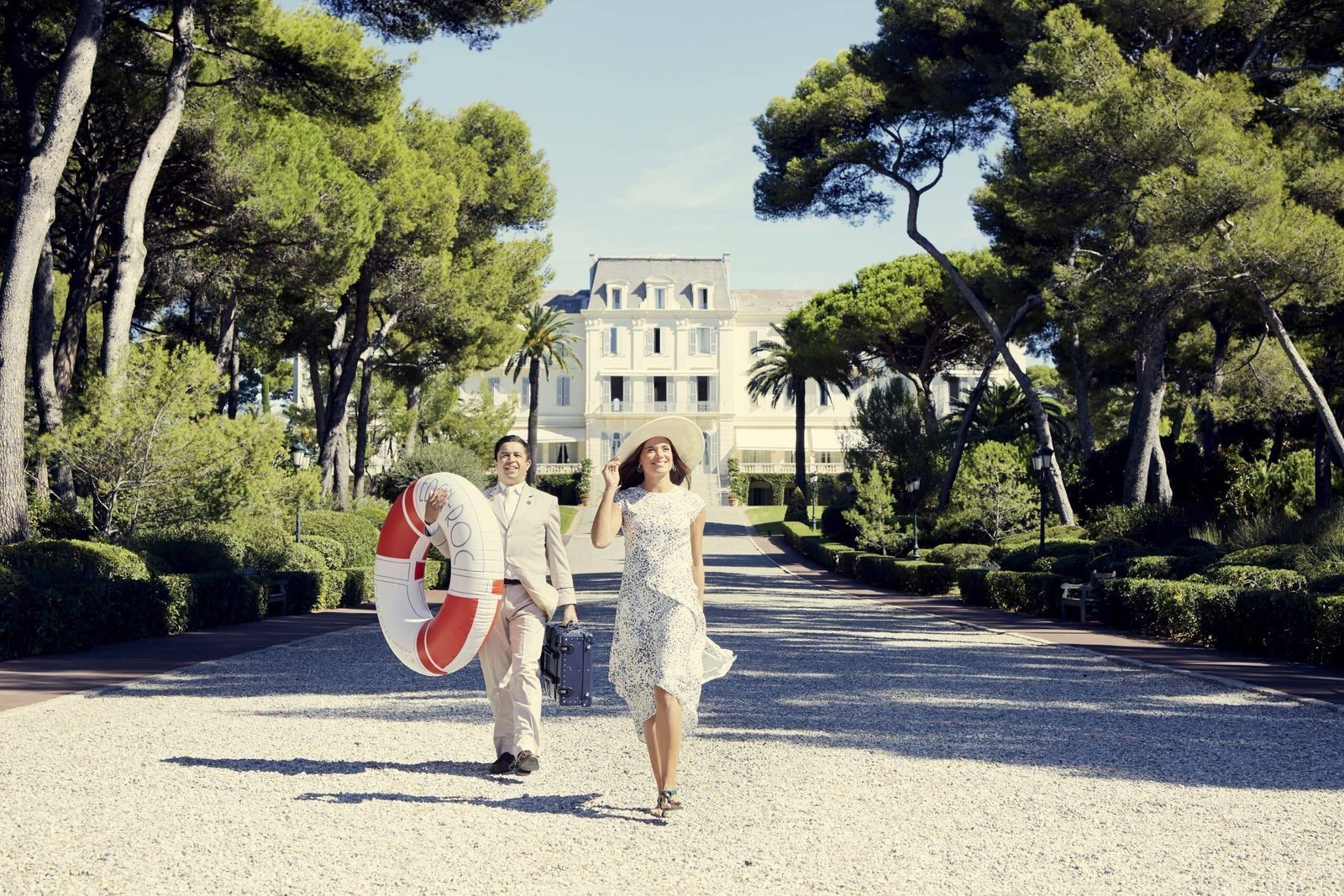
Four Seasons, Aman, Maybourne, Belmond and Mandarin Oriental now sell the journey as part of the stay, from helicopter transfers into London to 23-day circumnavigations at $238,000 a head. Who flies, why, and what is really being bought.
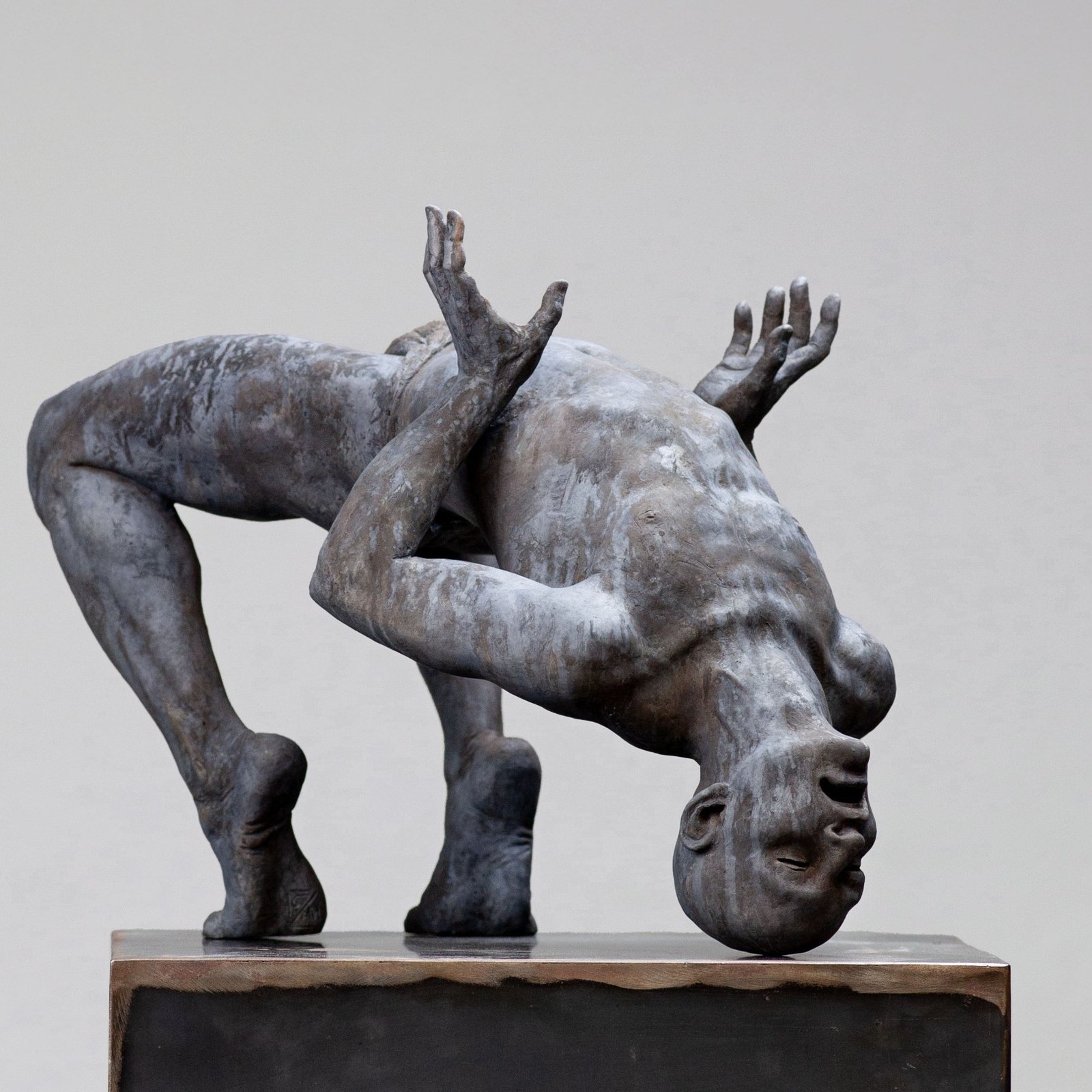
Airlifted by helicopter to the summits, monumental bronzes by Coderch & Malavia turn Courchevel's slopes into an open-air gallery, with Arman back in 1850.
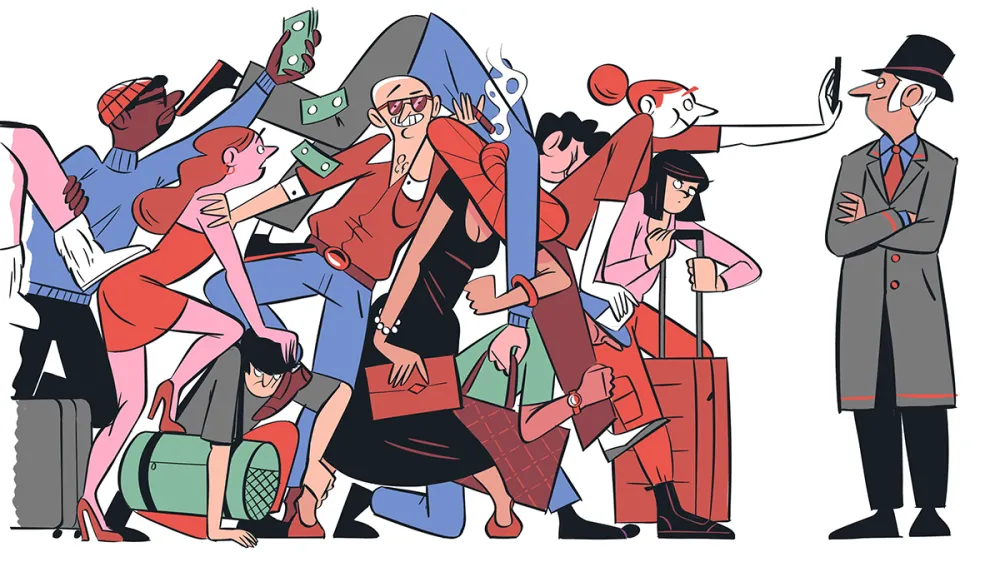
At a handful of the world's most sought-after hotels and villas, money buys an application, not a room. Advisers now build dossiers to prove their clients belong.
On Arroyo, the hotel brings Fernanda Schuch’s interiors and Argentine artists into a historic vertical landmark. Its strongest identity comes from the relationship between the building and the city.